Exodus 5
A Nitana Vure · Tap a verse to see its cross-references.
E Moses e Aron Ru Matai e Parao
1Muri e Moses e Aron ru lakea ne Parao ru takia, “E BAKOVI DAGI, a Vure ne huriki a Israel, i taki go longo ne ria, ri gi lakea na tabeke i ngeki ri gi vasileki.”
2Pali e Parao i koli, i ta maea, “E rei ra BAKOVI DAGI iea? Pali i navai ga longototoa ne mua a Israel mu gu vano? Iau i uka ma a lohoka vona a BAKOVI DAGI ne mua, i uka ma a ngaru mua mu gu vano.”
3Lakea ru ta maea, “A Vure ne huriki a Hibru i bele ne maria. I taki maria miri gi tuli e huriki a Israel mi gi laho na parava ge tolu lakea na tabeke i ngeki, mi gi habi a nihabi ne BAKOVI DAGI a Vure ne mia. O longo ne mia mi gi vano. Mia i uka ma mi gi vano, bara i vakahale mia na gilanga dagi o na vabinga dagi.”
4Pali a hariki o Egipto i taki e Moses e Aron, “I navai muru ngaru ni rata e huriki ri gi ha na leho ne ria? Muru tuli hamule ria na leho! 5Ngane mu ala kupo hateka, mu ngaru ni hataro a leho ne mua.”
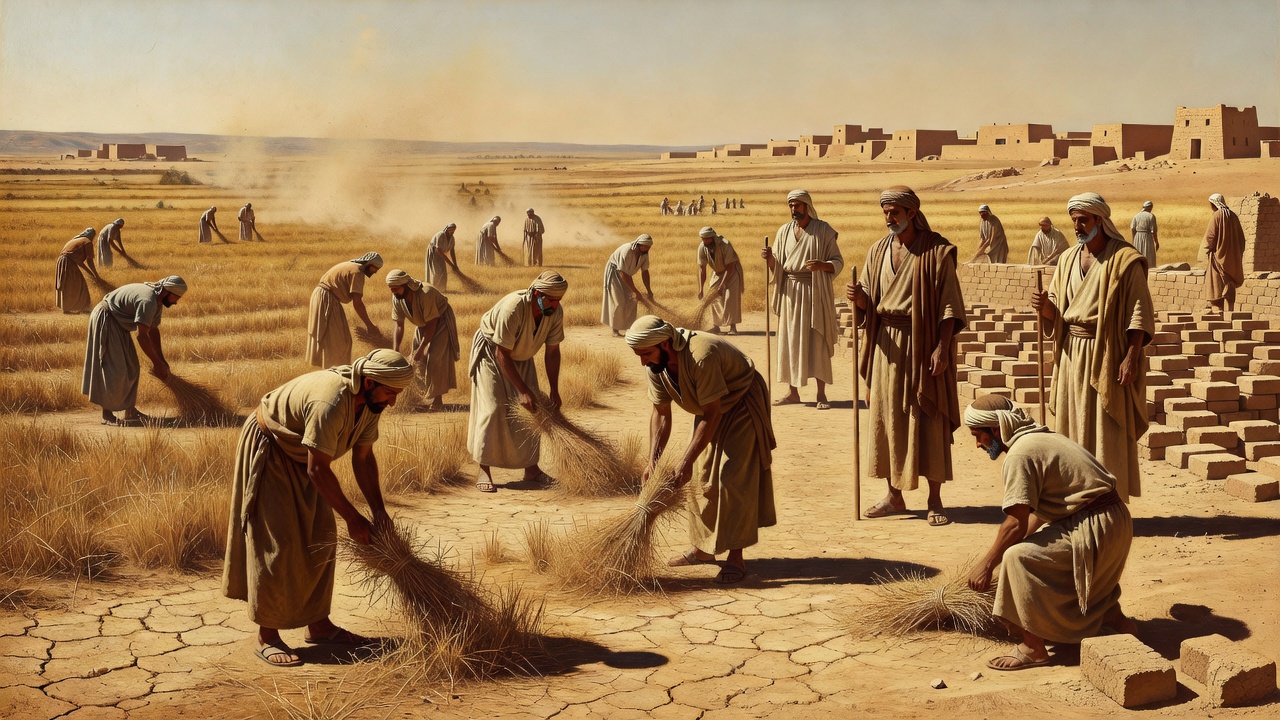
6Na parava iea e Parao i vakuku e huriki a matakari na vorakato, i ta maea, 7“Naha ni habi a varili ge kere ne huriki a Israel ri gi rata a brik, i manga a hini ri rata vakaroro. Ria kunana, ri gi vano ri gi bole a varili. 8Pali mu taki ria ri gi rata a naguna brik ra ri rata vakaroro. Naha ni kali mule o ge popote a brik ri gi rata. Re huriki nga ri tuha malulu, lakea ri ngaru ni vano ri gi habi a nihabi na Vure. 9Mu habi a leho ge kupo ne ria. Mu rata ria ri gi leho hateka, nahea ri gi longo mai a maka ngava taminga.”
10Muri e huriki a matakari ri taki e huriki a Israel, ri ta maea, “E Parao i taki mia, nahea mi gi habi tabu a varili ne mua. 11Mu vano mu matakana a varili, mu rata a brik ge manga a hini muga, naha ni rata ge popote.” 12Lakea ri laho viliha o Egipto ri matakana a varili ri gi rata a brik vona. 13E huriki a matakari na vorakato ri ta hinituhana ri ta maea, “A leho mu rata ge manga a leho mu rata muga na tahuna mi habi a varili ne mua.” 14Lakea ri ubi e huriki a matakari ne Israel ni ru ri gi matakari a leho, ri ta maea, “I navai i uka ma mu rata a brik ge manga a hini mu rata muga?”
15Muri e huriki a matakari ne Israel ri lakea ne Parao, ri ta maea, “I navai o rata maea mia? 16Ra mia, i uka viri ge habi a varili ne mia, pali ni taki mi gi rata a brik. Ngane ri ubi mia. Mi uka a maregoa. A maregoa i tabuli ne huriki a viri vomu.”
17Lakea e Parao i taki ria, “Mu tuha malulu! Mu kolomare mu ngaru ni lakea na tabeke i ngeki mu gu habi a nihabi ne BAKOVI DAGI. 18Mu hamule, mu leho. A varili i uka ma ni gi habi ne mua. Pali mu rata a brik ge palupulupu manga a hini mu rata muga.”
19E huriki a matakari ne Israel ri longoa a nitane Parao ri gi rata a brik ge manga a hini ri rata vakaroro. Ngane ri lohoka vona a maregoa dagi i bele ne ria pali. 20Na tahuna ri pea e Parao ri vano ri matavisi e Moses e Aron ru dava ria. 21Lakea ri taki e Moses e Aron, “E BAKOVI DAGI i matai pali a narone marua, bara i ratapile marua, a vuhuna muru ratea e Parao turane huriki a bolekori vona, ri luhoi mia ta mia a maki tavula. Ra marua, ngane muru vakarike a hatene Parao bara i rabalaki mia.”
E Moses i Vasileki na Vure
22Muri e Moses i lakea tabu ne BAKOVI DAGI i ta maea, “BAKOVI DAGI, i navai o rata hale e huriki a viri vomu? I navai o rudu iau a valai? 23I vakatubu na tahuna a habi a ngava vomu ne Parao, i valai i harena mona, e Parao i vakavora hateka ria. Pali i uka ma o ratea tara maki ge tuhori ria.”
Did you know?
Harder Work After Pharaoh's Refusal
- Easton's Bible Dictionary (1897) says the Pharaoh of the Exodus was probably Menephtah I, the fourteenth and eldest surviving son of Rameses II, but it treats the identification as still an open question: some scholars, it notes, favor Seti II, whose reign it describes as beginning peacefully and ending in sudden disaster. The entry says he resided at Zoan, where he received Moses and Aaron in the interviews recorded in Exodus.Sources: Pharaoh (of the Exodus) · the Bible text itself
- Easton's Bible Dictionary (1897) places Jacob's arrival in Egypt probably about 350 years before Moses was born. It says a Hyksos king, from a pastoral Semitic people of Asia and called a shepherd king, received the family favorably and assigned them Goshen, the best of the land; in this chapter Pharaoh treats the people of Israel, now numerous, as laborers he will not let go.Sources: Moses · the Bible text itself
- Pharaoh answers the request to hold a feast in the wilderness by no longer supplying straw for the bricks, while still requiring the same daily quota. The people scatter through the land of Egypt to gather stubble, and the Israelite foremen whom Pharaoh's taskmasters had set over them are beaten when that quota is not met.Sources: the Bible text itself
Notes written with AI assistance from open sources (Theographic Bible Metadata, CC BY-SA 4.0; Easton’s Bible Dictionary, public domain) and reviewed before publishing.
Places in this chapter
Only places identified with high confidence are shown (90% or more according to the scholarly sources compiled by OpenBible). Period map: DARE (Digital Atlas of the Roman Empire), CC BY 4.0; modern map: © OpenStreetMap contributors; places: OpenBible.info (CC BY 4.0).
Credits and license for this translation
A Nitana Vure
Genesis, Exodus, Leviticus, Numbers, Deuteronomy, Joshua, Ruth, Jonah, and the New Testament in the Bola language of Papua New Guinea
Sampela hap Buk Baibel long tokples Bola long Niugini
copyright © 2011 Wycliffe Bible Translators, Inc.
Language: Bola
Translation by: Wycliffe Bible Translators
This translation is made available to you under the terms of the
Creative Commons Attribution-Noncommercial-No Derivatives license 4.0.
You may share and redistribute this Bible translation or extracts from it in any format, provided that:
You include the above copyright and source information.
You do not sell this work for a profit.
You do not change any of the words or punctuation of the Scriptures.
Pictures included with Scriptures and other documents on this site are licensed just for use with those Scriptures and documents.
For other uses, please contact the respective copyright owners.
2014-12-03
Source: http://png.bible/bnp/ · eBible.org