Exodus 24
A Nitana Vure · Tap a verse to see its cross-references.
A Vinara ni Vakatora
1Muri e BAKOVI DAGI i takia e Moses, “A ngaru ioe, e Aron, e Nadap, e Abihu turane huriki a gare ne Israel ri ala ravulu polorua, mu sike valai na lolo, mu pesi basi, mu kavurike iau. 2Ioe kikeri o valai tabukoi nau. E huriki a matakari nahea ri gi valai tabukoi; e huriki a bakovi a ngatavine ria ranga nahea ri gi valai tabukoi.”
3E Moses i vano i vakalongo e huriki na maka vinara ne BAKOVI DAGI, lakea ri ta taku ri ta maea, “Mi gi ramai a ngava lobo e BAKOVI DAGI i taki.” 4Lakea e Moses i here puru na puhu a ngava lobo e BAKOVI DAGI i taki.
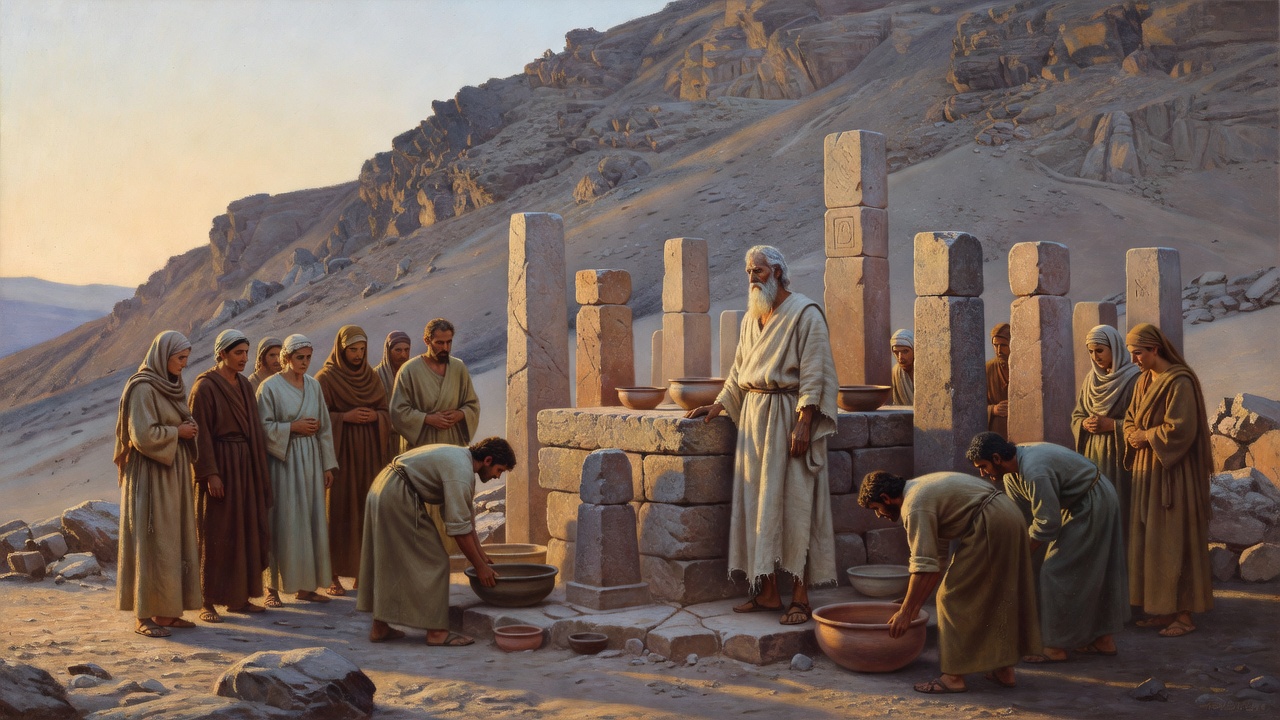
Na parava muri e Moses i hadongo na hatelanga pokopoko i haea a dede na gagana lolo. I ru tabukoi na dede a kedo i ravulu a polona i rua, ga kilakila na kabu ne Israel. 5Muri i rudu ranga koma tamuhane ne Israel, ri habi a nihabi gutu-vuro ne BAKOVI DAGI. Ri rabalaki a bulmakau karaba ne vona a nihabi na nivalemu turana Vure. 6Muri na nihabi, e Moses i bole a darana bulmakau i guru puru na tavila ranga, i voro tamali langa na dede ranga. 7Muri i bolea a Puhu na Ngava Dagi, i gi poloa ne huriki. Ri longoa ri ta maea, “Mi gi ramai kunanea a nitane BAKOVI DAGI.”
8Muri e Moses i bolea a dara i tabuli na tavila i voro tamali langa ne huriki. Lakea i ta maea, “Ra dara iea i vakatorea a ngava dagi e BAKOVI DAGI i ratea ne mua na tahuna i habi a nitana ne mua.”
9Muri e Moses, e Aron, e Nadap, e Abihu turane huriki a gare ne Israel ri ala ravulu polorua ri sike na lolo, 10ri masia a Vure ne huriki a Israel. Ri masia i pesi langa na maki i mata manga a dala ni rata na kedo tara parahidi gomagoma ni gale a sapira. I gomagoma i manga a hunu. 11Muholi ri masia a Vure, pali i uka ma i ratapile e huriki a gare ne Israel. Muri ri kani ri ninu vonga.
E Moses i Sike na Lolo e Sinai
12E BAKOVI DAGI i takia e Moses, “O sike valai na lolo, o pesi tabukoi nau. A here pali na kedo i rua a vinara nau. Ga habi vomu a kedo nga i rua, o tovo e huriki vona.” 13Muri e Moses i longo maia a nitana, i bolea a vora vona e Iosua ru sike na lolo na Vure. 14E Moses i taki e huriki a gare, “Mu dava koea miri gi sike taro na lolo, muri miri gi hamule valai. E Aron e Hur ru gu made turane mua. E rei i tahoka a maregoa, ge lakea ne rua ru gu pelekadoa.”
15Muri e Moses i sike na lolo, a bubu i kavitagua a lolo. 16A nipara na Vure i paraia a lolo. Na parava i polotara a bubu i kavitagua a lolo. Na poloruana parava e BAKOVI DAGI i ta tala na bubu, i galea e Moses. 17E huriki a Israel ri masia a nipara ne BAKOVI DAGI i manga a kanono na mapana lolo. 18E Moses i dili na bubu i laho sike na lolo, i made vonga na parava i ravulu va.
Did you know?
The Covenant at Mount Sinai
- Easton's Bible Dictionary (1897) says Mount Sinai, also called Horeb, was the mountain district the Hebrews reached in the third month after the Exodus, where they remained encamped for about a year. It notes that the last twenty-two chapters of Exodus, all of Leviticus, and Numbers 1–11 record what took place during that stay.Sources: Mount Sinai
- The LORD tells Moses to come up with Aaron, Nadab and Abihu, and seventy of Israel's elders, yet Moses alone is to approach, while the others worship at a distance and the people do not go up. Nadab was Aaron's eldest son and Abihu his second; Easton's Bible Dictionary (1897) notes that the two brothers went with their father and the elders only part of the way up the mountain.Sources: the Bible text itself · Aaron · Nadab · Abihu
- Moses then climbs farther with Joshua, his attendant, and leaves Aaron and Hur with the elders so that anyone with a dispute can go to them. Easton's Bible Dictionary (1897) calls Joshua Moses' servant, who accompanied him part of the way up Sinai, and identifies Hur, the husband of Miriam, as the man associated with Aaron in charge of the people while Moses was absent on the mountain.Sources: the Bible text itself · Joshua · Hur
Notes written with AI assistance from open sources (Theographic Bible Metadata, CC BY-SA 4.0; Easton’s Bible Dictionary, public domain) and reviewed before publishing.
Credits and license for this translation
A Nitana Vure
Genesis, Exodus, Leviticus, Numbers, Deuteronomy, Joshua, Ruth, Jonah, and the New Testament in the Bola language of Papua New Guinea
Sampela hap Buk Baibel long tokples Bola long Niugini
copyright © 2011 Wycliffe Bible Translators, Inc.
Language: Bola
Translation by: Wycliffe Bible Translators
This translation is made available to you under the terms of the
Creative Commons Attribution-Noncommercial-No Derivatives license 4.0.
You may share and redistribute this Bible translation or extracts from it in any format, provided that:
You include the above copyright and source information.
You do not sell this work for a profit.
You do not change any of the words or punctuation of the Scriptures.
Pictures included with Scriptures and other documents on this site are licensed just for use with those Scriptures and documents.
For other uses, please contact the respective copyright owners.
2014-12-03
Source: http://png.bible/bnp/ · eBible.org