Exodus 14
A Nitana Vure · Tap a verse to see its cross-references.
E Huriki a Israel Ri Lahopolo a Dari Vururu
1Muri e BAKOVI DAGI i takia e Moses, 2“O taki e huriki a Israel ri gi hamule, ri gi rata a mada tabukoi na tanga e Pihahirot. Ra tanga iea i pesi na kurukuruna tanga e Migdol, a Dari Vururu, tabukoi na tanga e Balsepon. 3E Parao bara i luhoi e huriki a Israel ri ruru na tabeke i ngeki, i uka hini ri gi lakea vona. 4Iau ga ratea e Parao ge madihi a hatena ge lili ria. Pali iau bara ratapilea turana a tara na vabinga vona, ga vakadagia a ragu na maki a ratea vona. Muri e huriki a Egipto bara ri lohoka vona, iau kunana e BAKOVI DAGI.” E huriki a Israel ri longototoa a nitane Bakovi Dagi, ri hamule.
5Na tahuna e Parao ni vakalongo ne huriki a Israel ri ha, e Parao turane huriki a bolekori vona ri pulo a niluhoi ne ria, ri deke, ri ta maea, “I navai si matataro e huriki a Israel ri vano? Ngane i uka viri ge leho ne hita.” 6Lakea e Parao i bolea a karis vona, i gale palupu a tara na vabinga vona. 7I vulaki a maka vagana karis i 600 ne Egipto, turane huriki ri vakanunu ria. 8E BAKOVI DAGI i ratea e Parao a hariki o Egipto i gigitora, i nunu muri ne huriki a Israel, i matakana ria. Pali e huriki a Israel ri lohoka vona pali, ri mulangi, ri vivi ri vano. 9A tara na vabinga ne Egipto turana a maka hos a karis, ri nunu muri ne huriki a Israel. Ri pakarau ria na tahuna ri malo na dahana Dari Vururu, tabukoi na tanga e Pihahirot e Balsepon.
10Na tahuna e Parao turana a tara na vabinga vona ri valai tabukoi, e huriki a Israel ri matai ria, ri mangenge hateka, ri galea e BAKOVI DAGI ge tuhori ria. 11Lakea ri tahatea e Moses, “I navai o tuli valai mia koea na tabeke i ngeki? O luhoi e huriki a Egipto ri uka a hini ri gi tanu e huriki ri mate vona, o bole valai mia koea na tabeke i ngeki mi gi mate? I kamumu hateka mi gi made o Egipto mi gi mate vonga. 12Na tahuna si tababana o Egipto, mi taki ioe nahea si gi ha, si gi made vonga ge hita a vorakato ne ria. Ngane i hale hateka si gi mate tavula koea na tabeke i ngeki.”
13Lakea e Moses i taki ria, “Naha ni mangenge. Mu hatenono, bara mu matai a maki e BAKOVI DAGI ge rata ge korimule mua. E huriki a Egipto mu matai mona, muri i uka ma mu gu matai tabu ria. 14E BAKOVI DAGI bara i vaubi ni tuhori mua. Pali mua i uka ma mu gu ratea tara maki, bara mu matanono kunana.”
15Muri e BAKOVI DAGI i takia e Moses, “I navai o tangi valai nau? O taki e huriki a Israel ri gi malaga ri gi laho. 16O toto rikea a kodo vomu o toto langa na dari, ge vakalipida na tabeke ge rua, ge lahopolo na mahasi e huriki. 17Iau ga rata e huriki a Egipto ge madihi a hatene ria, ri gi valili ne mua a Israel. Muri ga ratapilea e Parao turana a tara na vabinga vona ra ri rike na karis a hos. A maki ga ratea bara vakadagi a ragu vona. 18Ga ratapilea e Parao, muri e huriki a Egipto bara ri matakilaka nau, iau kunana e BAKOVI DAGI.”
19Muri a agelo na Vure ra i muga a tara na vabinga ne Israel, i pe a hini muga i lukumuri na bitone ria. A bubu tara i pe a hini muga i pesi muri. 20Na rodo malaku, a bubu i pesi mavonga na kurukuruna tara ne Israel, a tara ne Egipto. Ra bubu i ratea a tabeke i pesi vona e huriki a Egipto i uvo hateka, pali a tabeke i pesi vona e huriki a Israel i palala. Lakea e huriki a Egipto i uka ma ri lakea tabukoi ne huriki a Israel.
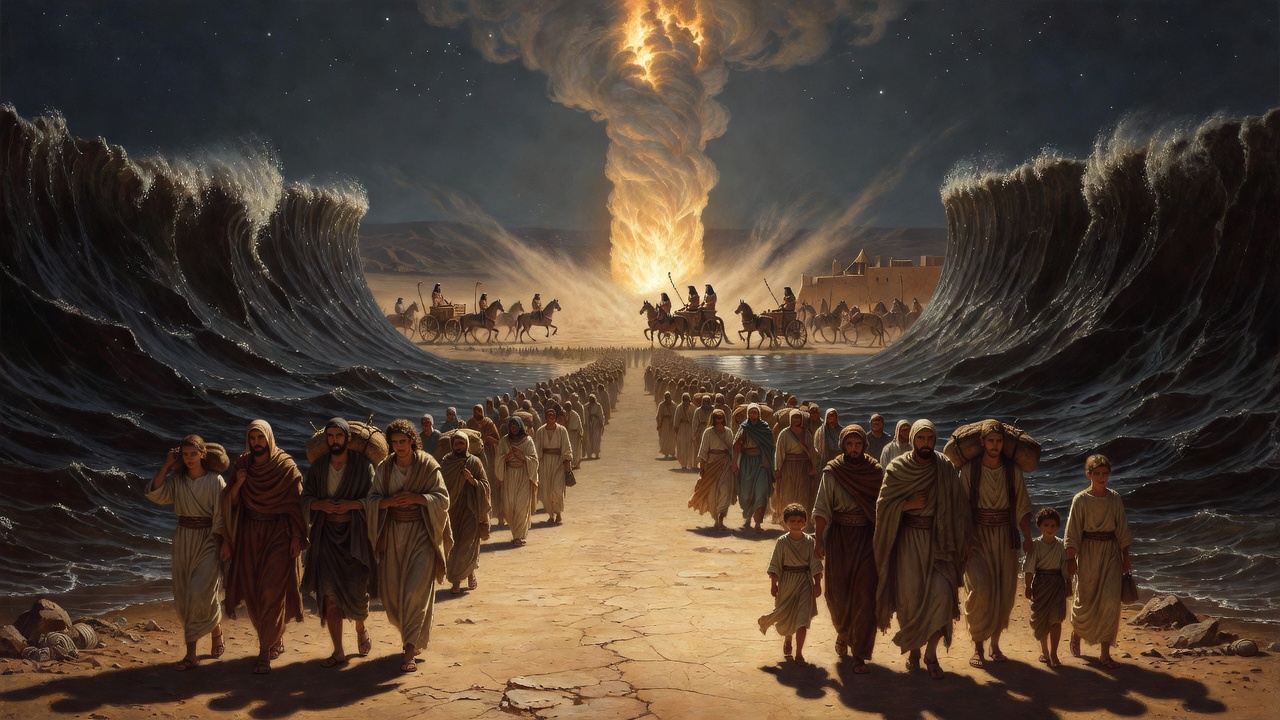
21Muri e Moses i toto langa na dari a limana. Na rodo e BAKOVI DAGI i ratea a vilu dagi i pori valai na nirikena haro, i tugu mulea a dari i vakalipida na tete i rua. 22Lakea e huriki a Israel ri laho polo na tabeke i mahasi na kurukuruna. A dari i pesi manga a nure na kanene ria, na maurine ria.
23E huriki a Egipto ri nunu muri ne ria, turane huriki ri rike na hos a karis, ri dili na kurukuruna dari. 24Na malabeonga e BAKOVI DAGI i made na bubu a kanono, i matapuru na tara na vabinga ne Egipto i vakaviliha a niluhoi ne ria, ri varoru. 25I rata a maka parere na karis i koro vona a kokota, ri keri ni nunu. Lakea ri ta maea, “Si hamule! E BAKOVI DAGI i tuhori e huriki a Israel ri vaubi ne hita. Si ha malaviriri, si pe mule ria.”
26Muri e BAKOVI DAGI i takia e Moses, “O toto langa na dari a limamu ge hamule mai a murina a dari, ge kavitagu e huriki a Egipto turana a maka karis a hos ne ria.” 27Lakea e Moses i toto langa na dari a limana. Na hatelanga a dari i hamule mai a murina. E huriki a Egipto ri toni ni ha, pali ri keri, lakea e BAKOVI DAGI i vakapasiri ria, ri mate. 28A dari i hamule mai a murina i kavitagu e huriki a tara na vabinga ne Parao, turana a maka karis a hos ne ria, ra ri nunu muri ne huriki a Israel, i uka tara viri ge mahuri. 29Pali e huriki a Israel ri laho polo na hini i mahasi, ri bele na tabeke tara. A dari i pesi manga a nure na kanene ria, a maurine ria.
30Na parava iea kunana e BAKOVI DAGI i korimule e huriki a Israel na limane huriki a Egipto. E huriki a Israel ri matai a maka podane huriki a Egipto ri vatabulihi na lavu na Dari Vururu. 31Na tahuna e huriki a Israel ri masia a nitora dagi ne BAKOVI DAGI i rata virihi e huriki a Egipto vona, ri mangenge ne BAKOVI DAGI ri longototoa turana a vora vona e Moses.
Did you know?
Israel trapped between Pharaoh and the sea
- Israel was told to turn back and camp before Pi-hahiroth, between Migdol and the sea, directly opposite Baal-zephon, so that Pharaoh would think the wilderness had boxed them in. Pi-hahiroth means place where the reeds grow, though the Septuagint and the Coptic read farmstead, and Baal-zephon means Baal of the north.Sources: the Bible text itself · Pi-hahiroth · Baal-zephon
- Easton's Bible Dictionary (1897) describes Baal-zephon as an Egyptian town on the shores of the Gulf of Suez, probably modern Jebel Deraj or Kulalah on the western shore, and notes that Egyptian Baal-zapuna was a place of worship. Some have identified Pi-hahiroth with Ajrud, a fortress between Etham and Suez. The entry on Pi-hahiroth adds that the condition of the Isthmus of Suez at the time of the Exodus is not exactly known, so Pi-hahiroth and Israel's other camps in Egypt cannot be definitely located; the isthmus has been formed by deposits of the Nile.Sources: Baal-zephon · Pi-hahiroth
- Easton's Bible Dictionary (1897) says the Pharaoh of the Exodus was probably Menephtah I, the fourteenth and eldest surviving son of Rameses II, and that he resided at Zoan, where his interviews with Moses and Aaron recorded in Exodus took place. The same entry still treats it as an open question whether Seti II or his father Menephtah was that king, and notes that some judge the evidence to favor Seti II.Sources: Pharaoh (of the Exodus)
Notes written with AI assistance from open sources (Theographic Bible Metadata, CC BY-SA 4.0; Easton’s Bible Dictionary, public domain) and reviewed before publishing.
Places in this chapter
Only places identified with high confidence are shown (90% or more according to the scholarly sources compiled by OpenBible). Period map: DARE (Digital Atlas of the Roman Empire), CC BY 4.0; modern map: © OpenStreetMap contributors; places: OpenBible.info (CC BY 4.0).
Credits and license for this translation
A Nitana Vure
Genesis, Exodus, Leviticus, Numbers, Deuteronomy, Joshua, Ruth, Jonah, and the New Testament in the Bola language of Papua New Guinea
Sampela hap Buk Baibel long tokples Bola long Niugini
copyright © 2011 Wycliffe Bible Translators, Inc.
Language: Bola
Translation by: Wycliffe Bible Translators
This translation is made available to you under the terms of the
Creative Commons Attribution-Noncommercial-No Derivatives license 4.0.
You may share and redistribute this Bible translation or extracts from it in any format, provided that:
You include the above copyright and source information.
You do not sell this work for a profit.
You do not change any of the words or punctuation of the Scriptures.
Pictures included with Scriptures and other documents on this site are licensed just for use with those Scriptures and documents.
For other uses, please contact the respective copyright owners.
2014-12-03
Source: http://png.bible/bnp/ · eBible.org