Acts 27
Hen alen Apudyus · Tap a verse to see its cross-references.
Hen chacha nanginyéyan an Pablo ad Roma
1Angkay hiyachi yag inumchah hen anchi ag-agaw way ekatchéén mepééy ah Pablo ya hen tapen anchichay farud ad Italia way mepasango hen anchi kangatowanay Are way Cesar. Wat emporangcha chicha an Julio way ihay kapetan hen sorchachun Are Cesar ta hiya hen mangetnod an chicha. Ya haénay Lucas, nàyéyà agé, 2ya wacha agé hen ihay ifani way eMacedonia way narpod Tesalonica way ah Aristarco hen ngachanna. Angkay hiyachi yag hinénggép-ani amin hen ihay papor way narpod Adrumeto way nesasaggana way maligwat way manchag-ochag-oh hen kafabréfabréy hen anchi provinsiyan hen Asia.
3Angkay nafigat hen lummigwatanni, nanchag-oh hen anchi luganni ad Sidon, yag ammag na-anoh eman ah Julio an Pablo te uray no filang way farud hiya, chana chillu eparufus way mampangagéhad hen anchi papor way i mangila hen tapen anchichay ifana ad Sidon ah manmangiliyancha an hiya.
4Angkay hiyachi way kasen lummigwat hen luganni, chaat agé fumab-ali way cha mihib-at hen papor, wat nepapelet way enlekawni hen falin hen anchi lota way Chipre ta machìligan-ani. 5Yachi way nanlurugan-ani yag lenawhanni hen anchichay lota way Cilicia ya Pamfilia ya an-aniyat umchah ad Melea way fabréy hen sakopon Licia. 6Angkay ad Melea, inchahan kapetan Julio hen ihay safaliy papor way narpod Alejandria way éméy ano ad Italia, wat nan-aton-ani amin.
7Angkay hiyachi, gapo ta napegsa hen anchi fali, wat émméy ah kamanay ag-agaw way ammag cha péy-apéy-an hen anchi papor way éméy. Wat napaligatan-ani yag an-aniyat homag-én ad Ganido. Ngém gapo ta anni cha hib-atén hen anchi fali, iggayni igachang way éméy te enengwani hen chinìligan hen anchi lota way Creta wat lenawhanni hen anchi lota way hommeloheloan hen chanum way ekatchéén “Salmon.” 8Yachi yag empengepengetni way éméy ya an-anig naligatan way térén ya an-aniyat narég umchah hen anchi cha metàtàchan hen papor way ekatchéén “Kahàniyan hen Papor” way ahag-én hen anchi fabréy ad Lasea.
9Angkay hiyachi yag nataktataktak-ani ad Kahàniyan way ingganah narpas hen anchi lagsak hen Judio way Sosobfotan, wat looh inumchah hen anchi furan way aggaégyat ah manaranan hen papor gapon fali. Wat tinugutugun Pablo chicha way mangaliyén, 10“Inib-a, enlasin-o way aggaégyat no etoroytaaw way éméy ad uwan. Te no ilurudtaaw, sigurachu way matarà hen chuar way karga ya machachael agé hen antoy papor, yag awni agé yag wachay maofor an chitaaw amin.” 11Ngém hen anchi kapetan, iggayna afuroton hen enalen Pablo, te hen enalen hen anchi nangempapor ya hen anchi cha manmaneho hen enafurotna. 12Yag gapo agé ta faén ano ammay ah iggawan hen papor ad Kahàniyan no agiléd, wat laychén hen anchichay chùchùar way nanlurugan way pachasénni koma way manchakpos ad Fenicia no mafalin, te un-unnina ano ad Fenicia way sakopon hen Creta te machichìligan hen anchi papor ahchi.
Hen nafaliyan hen anchi papor ah fayfay
13Angkay hiyachi, kaman paat cha mafég-as hen fali te cha mane-ed hen yawyaw wat ekat hen anchichay chan manehowén ammay ano, wat mafalin etoroyni way éméy ad Fenicia. Yachi yag lenapchùcha hen anchi toy-on hen papor yag an-aniyat lumigwat way cha mangempengepenget way mempa-aklep ad Creta. 14Yachi yag ammag iggay mahen-awniyan yag inluginaat hen anchi ammag manongod way fali way mihib-at way narpod Creta way nan-apet ad chaya. 15Yachi yag ammag teneweng hen anchi fali hen papor, wat anchag achi makamaneho gapon anchi fali, wat anchag entachun ta egad hen fali hen mempayana. 16Yachi way nachìligan-ani ah aket hen nepachonganni hen anchi akettoy way lota ad Cauda, yachin nawayaanni way nangempaghép hen anchi fangka way cha gayuchun hen anchi papor, ngém nampaligat-ani chillu way nangempaghép. 17Angkay nepaghépchi yag anchaat fédféchén hen achar hen anchi papor ta achi mafarakyang. Yag gapo ta émégyatcha no magat ammag ichagah hen anchi papor hen anchi pommepeled way gahar way ahag-én ad Libia, empahcha hen anchi chakar way fanchila way cha mangentorong hen anchi papor ta egad hen fali ah mempayana.
18Angkay nawakas way ammag achi paat mafégfég-as hen anchi fali, inlugicha way mangentap-ar hen anchi karga ah fayfay. 19Yag angkay kasen nawakas agé way ammag hiyahiya chillu, wat ancha agég entap-ar hen aminay marabten way lamentan hen anchi papor. 20Yachi yag émméy ah kamanay ag-agaw way ammag hommehellang ad uchu way maid maila ah init ya umat agén taraw ya ammag séréd hen anchi fali, wat an-anig nangenanggay amin te maid poros namnamani way matagu.
21Angkay hiyachi way nafayag way anchag iggay nangnangan hen anchichay ininggaw hen papor, tommàchég ah Pablo way mangamulid an chicha way mangaliyén, “Chàyu way inib-à, non anyu koma enafurot hen enalè ta iggaytaaw lummigwat ad Creta, maid angkay natarà ah kok-owa ya iggaytaaw amin maligatan. 22Ngém tàén, pas-éményu paat hen hamhamàyu, te maid angkay matéy an chitaaw te an yanggay hen antoy papor hen machachael. 23Innilàha te ad arubyan, ah Apudyus way nangen-awa an haén ya hiya hen chà chayawén, empalena hen anghelna way mangimfaga an haén way mangaliyén, 24‘Achia cha émégyat Pablo, te achia matéy te masapor chillu mepasangoa an Are Cesar ad Roma. Yag hen ség-ang Apudyus an hea, halimunana agé hen anchichay karuganno ta maid agé matéy an chicha.’ 25Wat hiyachi, inib-à,” way ekat Pablo, “émhép koma hen hamhamàyu te manokchù met ah Apudyus way ammaana way ammaan hen imfagana an haén. 26Ngém hen mekaman, ichurun hen fali hen antoy papor hen ihay akettoy way lota way nanggagawa hen fayfay.”
27Angkay hiyachi way émméy ah ustoy chuway chuminggu hen cha chillu mempafangchafangchan hen anchi fali an chàni hen anchi fayfay way Adriatico, yag yachi way gawan ménat chi lafi, yag lenènan hen anchichay chan maneho way cha-ani peet homag-én hen lota. 28Wat anchaat uy-uyun hen kamang ah mangamangancha hen ka-adcharém hen chanum, yag chuwanporo way chupa hen ka-adcharémna. Angkay na-awni way enkasencha, émméy yanggay ah hemporo ya lemay chupa. 29Yachi yag émmégyatcha te magat mesagud hen anchi papor hen anchi apehorhor, wat inuy-uycha hen opat way toy-on hen emot hen anchi papor ta matoy-onan yag anchaat manluwaru ta pegpega paat yag pommaway.
30Angkay hen anchichay chan chunu hen papor, penachascha way mangentat-allingéb way lomayaw, wat anchag inuy-uy hen anchi fangka way manluganancha koma way lomayaw te hen lasoncha, icha ano igga hen tapenay toy-on hen hongad hen papor. 31Ngém enlasin Pablo hen hamhamàcha, yag annaat ifaga hen anchi kapetan ya hen anchichay sorchachuna way mangaliyén, “No taynan hen annachay chan chunu hen antoy papor wat maid angkay namnamataaw way matagu.” 32Yachi yag senongpatat hen anchichay sorchachu hen hilun hen anchi fangka wat na-anud.
33Angkay hiyachi way tég-angay pomaway, enà-arò Pablo hen anchichay tatagu ta mangancha koma, ekatnéén, “Ustoy chuway chuminggu ad uwan way maid poros nangnangananyu gapoh hamhamàyu ya chanagyu. 34Wat panga-aseyu paat ta mangan-ayu ta omorheayu, te maid angkay matarà ah uray ihà-an an chitaaw.” 35Yachiy enalen Pablochi yag annaat aran hen tenapay yag nanyaman an Apudyus hen sangwanan amin hen anchichay tatagu ya annaat pet-angén yag inlugina way mangan. 36Wat seném-ém tot-owa hen hamhamà amin hen anchichay tapena yag anchaat agé amin mangan. 37Hen aminay ininggaw hen yachiy paporat, émméy ah chuwanggasot ya pitunporo ya éném way tatagu. 38Angkay nagipoh-ani amin, entap-archa ah fayfay amin hen anchi tapenay karga way fégah ta yumagyagpaw hen anchi papor.
Hen nachachaelan hen anchi papor
39Angkay pommaway, wacha hen maila way lota, ngém maid innilan hen anchichay chan ammah papor no henochi way lota. Ngém wachan innilacha way huyù hen fayfay way ammay hen tarantagna te paginahar, wat ekatchéén pachaséncha no mafalin way mempatàchang hen papor an nadchi. 40Wat hen enkamancha, ginhatcha hen hilun hen anchichay toy-on way manaynan ah fayfay yag inigsancha way nangùfad hen anchi nigagallotan hen ipayna. Yag anchaat pasadsachén hen anchi fanchila way ininggaw hen hongadna ta way én-énnén hen yawyaw way mangintùyud. Wat inlugin hen anchi papor way màmàéy hen penget hen tarantag. 41Ngém ammag nesaguchat agé hen hongadna hen anchi pommepeled way gahar, yag ammag nelafù way achi màéy. Yag chaat agé ichagachagah hen napegsa way challuyun hen anchi emotna, wat cha marakarak yag cha metap-atap-ar hen anchi chengchengna.
42Angkay hen anchichay sorchachu, ekatchéén pédténcha koma amin hen anchichay farud te awni yag tumifùcha way omawid. 43Ngém ah kapetan Julio, empawana te achina laychén way matéy ah Pablo. Wat imfagana way amin hen anchichay nangila way tumifù, mampég-ahcha ah fayfay ta tumifùcha way mamangpango way tomàchang hen tarantag. 44Waman hen anchichay tapena, ancha an umunud ano way pomaud hen tabra ono heno way nachael way away way narpon anchi papor. Wat yachi hen enkamanni way tommàchang yag an-aniyat matagu amin.
Did you know?
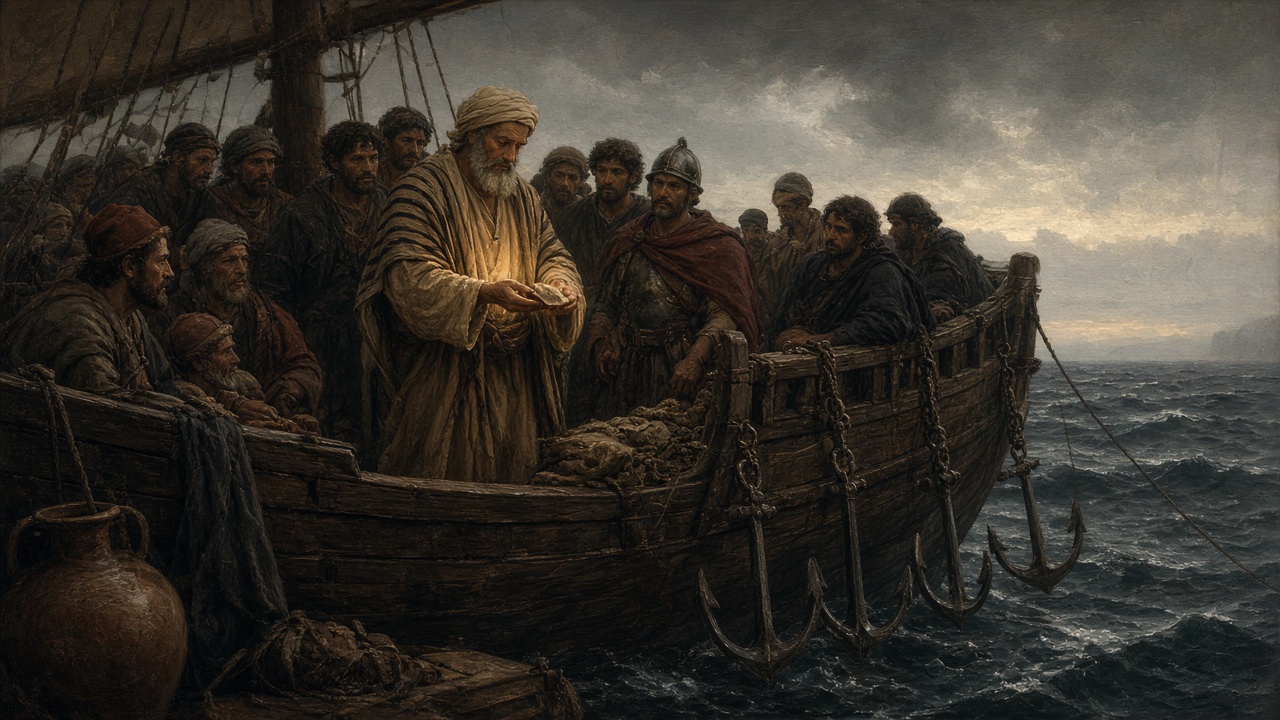
Storm and Shipwreck on the Way to Rome
- Paul and the other prisoners did not sail straight to Italy. At Caesarea they boarded a ship of Adramyttium, a city on the coast of Mysia in Asia Minor, bound for ports along the coast of Asia, a name Easton's Bible Dictionary takes in this verse as probably Asia Minor, and that ship carried them only as far as Myra in Lycia. There the centurion put them aboard an Alexandrian ship sailing for Italy; the dictionary notes that it was rare for a ship to sail from any port of Palestine direct to Italy.Sources: Adramyttium · Asia · the Bible text itself
- The prisoners were handed over to Julius, a centurion of the Imperial Regiment. Easton's Bible Dictionary identifies him as centurion of the Augustan cohort, or the emperor's body-guard, and describes his courteous regard for Paul. At Sidon, about twenty-five miles north of Tyre, he let Paul visit friends and receive care; later he blocked the soldiers' plan to kill the prisoners so that Paul's life would be spared.Sources: Julius · Sidon · the Bible text itself
- After Cnidus the ship worked along Crete, one of the largest islands in the Mediterranean, about 140 miles long and 35 broad, which Paul visited on this voyage to Rome. The account says the voyage had already become dangerous because it was after the Fast, and Fair Havens was unsuitable for wintering. One chronology dates the start of the journey to Rome to AD 56 and the shipwreck in the storm to AD 57.Sources: Crete · Journey to Rome begins · Paul is shipwrecked by a storm · the Bible text itself
Notes written with AI assistance from open sources (Theographic Bible Metadata, CC BY-SA 4.0; Easton’s Bible Dictionary, public domain) and reviewed before publishing.
Places in this chapter
- Italy · 41.892, 12.485 · verses 1, 6
- Adramyttium · Today: Oren · 39.501, 26.933 · verse 2
- Asia · 38.400, 28.300 · verse 2
- Thessalonica · Today: Thessaloniki · 40.638, 22.946 · verse 2
- Sidon · Today: Sandikli archaeological site in Sidon · 33.561, 35.372 · verse 3
- Cyprus · 35.000, 33.000 · verse 4
- Cilicia · 36.913, 34.892 · verse 5
- Lycia · 36.733, 29.900 · verse 5
- Myra · 36.259, 29.985 · verse 5
- Pamphylia · 37.000, 31.000 · verse 5
- Alexandria · 31.183, 29.896 · verse 6
- Cnidus · 36.686, 27.375 · verse 7
- Crete · 35.310, 24.893 · verses 7, 8, 12, 13, 14, 21
- Salmone · Today: Cape Sideros · 35.316, 26.312 · verse 7
- Fair Havens · Today: Kaloi Limenes · 34.930, 24.800 · verses 8, 12
- Lasea · Today: Lasaea · 34.941, 24.811 · verse 8
- Cauda · Today: Gavdos · 34.833, 24.083 · verse 16
- Syrtis · Today: Sidra · 31.500, 18.000 · verse 17
- Adriatic Sea · Today: Adriatic and Ionian Seas · 38.000, 19.000 · verse 27
Only places identified with high confidence are shown (90% or more according to the scholarly sources compiled by OpenBible). Period map: DARE (Digital Atlas of the Roman Empire), CC BY 4.0; modern map: © OpenStreetMap contributors; places: OpenBible.info (CC BY 4.0).
Credits and license for this translation
Hen alen Apudyus
New Testament in Balangao
copyright © 1982 Wycliffe Bible Translators, Inc.
Language: Balangao
Translation by: Wycliffe Bible Translators, Inc.
Copyright Information
© 1982, Wycliffe Bible Translators, Inc. All rights reserved.
This translation text is made available to you under the
terms of the Creative Commons License: Attribution-Noncommercial-No Derivative Works.
( http://creativecommons.org/licenses/by-nc-nd/3.0/ )
In addition, you have permission to port the text to different file formats, as long as you
do not change any of the text or punctuation of the Bible.
You may share, copy, distribute, transmit, and extract portions
or quotations from this work, provided that you include the above copyright
information:
You must give Attribution to the work.
You do not sell this work for a profit.
You do not make any derivative works that change any of the actual words or punctuation of the Scriptures.
Permissions beyond the scope of this license may be
available if you contact
us with your request.
The New Testament
in Balangao
© 1982, Wycliffe Bible Translators, Inc. All rights reserved.
This translation is made available to you under the terms of the
Creative Commons Attribution-Noncommercial-No Derivatives license 4.0.
You may share and redistribute this Bible translation or extracts from it in any format, provided that:
You include the above copyright and source information.
You do not sell this work for a profit.
You do not change any of the words or punctuation of the Scriptures.
Pictures included with Scriptures and other documents on this site are licensed just for use with those Scriptures and documents.
For other uses, please contact the respective copyright owners.
2014-08-06
Source: http://ebible.org/blw/ · eBible.org