2 Corinthians 9
Lalang hu Dios · Tap a verse to see its cross-references.
1Kenà en kinahanglan ha sulatan ku pa inyu mahitenged hu pagbulig hu taglised ha mga tumutuu 2ta natun-an kud en ha agkabayà kaw gayed agbulig. Aman impasigalbu kud inyu duun hu mga taga-Macedonia ta inikagiyan ku sidan ha sinyu sa diyan ta probincia ta Acaya nangandam kaw en sugud dà su nauna ha tuig. Tumenged hu adagi ha kabayà nuy hu pagbulig nadasig daan sa kadakelà kandan. 3Ba agsuguen ku iman diyan haini sa mga suled taw ta daw sa pagpasigalbu day mahitenged inyu kenà lalang dà ta laus ha naandam kaw en gayed. 4Ta kan ku amin dumuma kanak ha taga-Macedonia daw maahà dan ha hurà kaw man diay kaandam, aman magayhaan kay gayed daw bisan daan sinyu tumenged hu pagsalig day inyu ha impagalbu day en. 5Aman nahenà-henaan ku iman ha kinahanglan ha ipauna ku diyan haini sa mga suled taw ta daw mabuligan kaw kandan hu pagpangandam taena ha insaad nuy. Ku maandam en haini ku makadiyan a asem matun-an dan ha sa pag-ila nuy kenà pineges ta inyu gayed ha pagbayà.
Sa Pagkakalalagan
6Timan-i nuy ha sa atiyuay dà sa igpamegas din atiyuay dà daan sa agkalegtay din, ba saena ha madakel sa igpamegas din madakel daan sa agkalegtay din. 7Kinahanglan ha sa kada sabuwa mag-ila sumalà hu kandin ha agkabayaan, kenà sinunul daw pineges ha paagi ta sa agkabayà-bayaan hu Dios iyan haena sa malipayen hu pag-ila. 8Sa Dios makahimu gayed hu pag-ila inyu labaw pa dì hu kinahanglanen nuy ta daw harì kaw pagkulangan daw magkalalagan kaw pa daan. 9Ta sa insulat ha lalang hu Dios tagyanaen
“Saena ha tag-ila duun hu makaluluuy sa pagkakalalagan din harì gayed agkalipatan.”
10Sa Dios ha iyan tag-ila hu binhì duun hu agpamegas ta daw amin din makaen mag-ila daan inyu hu bisan inu ha kinahanglanen nuy daw dumakel pa gayed ta daw madakel daan sa mabuligan nuy. 11Panalanginan kaw hu Dios ta daw sigi kaw kalalagan, daw tumenged taena ha bulig nuy ha ighat-un day madakel gayed sa magpasalamat duun hu Dios.
12Sa mga amut nuy makabulig en gayed hu mga kinahanglanen hu mga tumutuu. Kenà iyan dà hayana ta madakel pa sa magpasalamat duun hu Dios. 13Ku natun-an hu mga etaw ha kalalagan kaw dayeen dan gayed sa Dios ta maahà dan ha matinumanen kaw tumenged ta tinuuwan nuy sa Maayad ha Tultulanen mahitenged ki Cristo daw kalalagan kaw diyà ta kandan daw duun hu duma ha mga etaw. 14Pinaagi taini palanggaen kaw kandan daw mag-ampù sidan inyu tumenged hu adagi ha grasya ha in-ila inyu hu Dios. 15Pasalamatan taw gayed sa Dios tumenged hu pag-ila din kanuy hu Batà din ha tungkay gayed mahal.
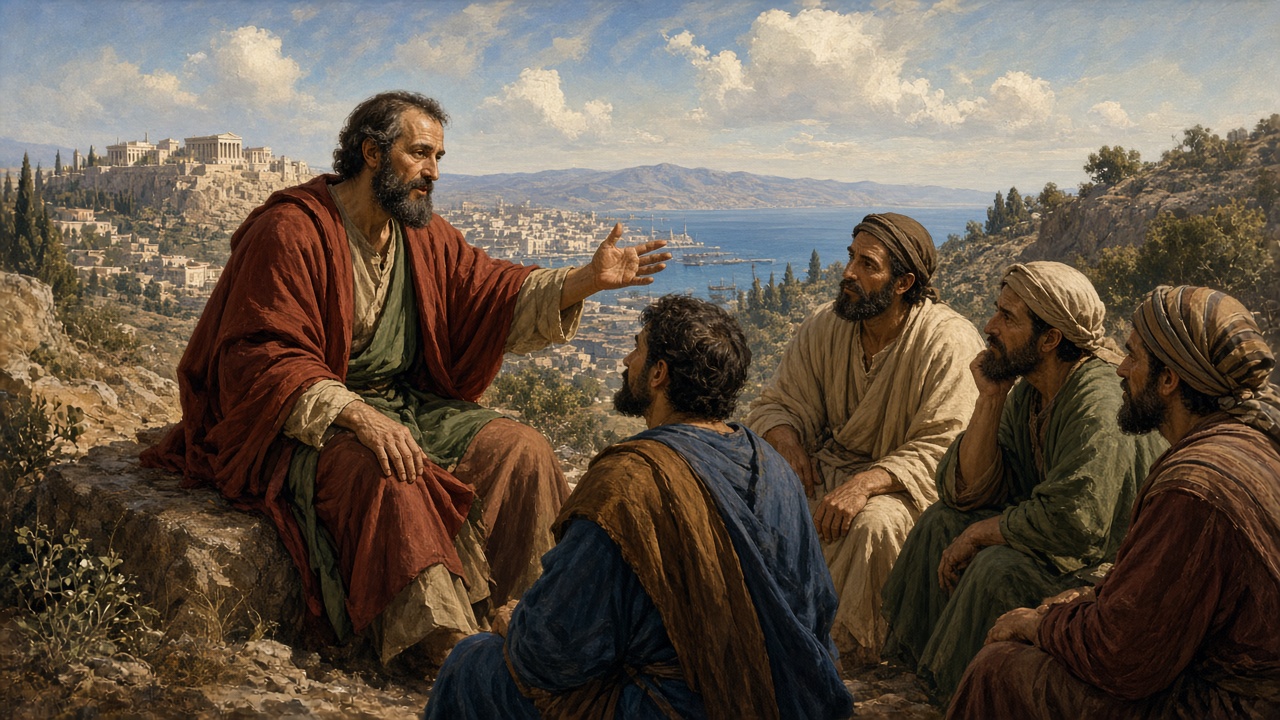
Did you know?
Generosity between Achaia and Macedonia
- Macedonia was a Roman province lying north of Greece, and Achaia was the other of the two provinces into which the Romans divided Greece, applying that name to the whole Peloponnesus and the south. Writing to believers in Achaia, Paul says he has been boasting to the Macedonians that they were ready to give.Sources: Macedonia · Achaia · the Bible text itself
- Paul says that since the previous year the people of Achaia had been ready to give, and that their zeal had stirred most of the Macedonians to do the same. He is sending the brothers ahead so that his boast about them will not prove empty if any Macedonians come with him and find them unprepared.Sources: the Bible text itself
- The name Achaia originally referred to a narrow strip of territory in Greece, northwest of the Peloponnesus. In the New Testament the name is always used in the later, wider sense that the Romans gave it, for the southern province as a whole.Sources: Achaia
Notes written with AI assistance from open sources (Theographic Bible Metadata, CC BY-SA 4.0; Easton’s Bible Dictionary, public domain) and reviewed before publishing.
Places in this chapter
- Jerusalem · 31.777, 35.234 · verses 1, 12
- Achaia · 38.720, 22.540 · verse 2
- Macedonia · 41.600, 22.540 · verses 2, 4
Only places identified with high confidence are shown (90% or more according to the scholarly sources compiled by OpenBible). Period map: DARE (Digital Atlas of the Roman Empire), CC BY 4.0; modern map: © OpenStreetMap contributors; places: OpenBible.info (CC BY 4.0).
Credits and license for this translation
Lalang hu Dios
New Testament in Binukid
copyright © 1986 Wycliffe Bible Translators, Inc.
Language: Binukid
Translation by: Wycliffe Bible Translators, Inc.
Copyright Information
© 1986, Wycliffe Bible Translators, Inc. All rights reserved.
This translation text is made available to you under the
terms of the Creative Commons License: Attribution-Noncommercial-No Derivative Works.
( http://creativecommons.org/licenses/by-nc-nd/3.0/ )
In addition, you have permission to port the text to different file formats, as long as you
do not change any of the text or punctuation of the Bible.
You may share, copy, distribute, transmit, and extract portions
or quotations from this work, provided that you include the above copyright
information:
You must give Attribution to the work.
You do not sell this work for a profit.
You do not make any derivative works that change any of the actual words or punctuation of the Scriptures.
Permissions beyond the scope of this license may be
available if you contact
us with your request.
The New Testament
in Binukid
© 1986, Wycliffe Bible Translators, Inc. All rights reserved.
This translation is made available to you under the terms of the
Creative Commons Attribution-Noncommercial-No Derivatives license 4.0.
You may share and redistribute this Bible translation or extracts from it in any format, provided that:
You include the above copyright and source information.
You do not sell this work for a profit.
You do not change any of the words or punctuation of the Scriptures.
Pictures included with Scriptures and other documents on this site are licensed just for use with those Scriptures and documents.
For other uses, please contact the respective copyright owners.
2014-08-06
Source: http://ebible.org/bkd/ · eBible.org