Acts 27
KƗLӘ-MƗNDƗ KƗ SƗGƗ · Tap a verse to see its cross-references.
Kaw Pol Rom tɨ
1Lokɨ uni ndude kadɨ j-aw kɨ bato kɨ Itali tɨ, ɨyə̰i Pol əi kɨ ndəgɨ dangay je kɨ rangɨ ji nje kun dɔ ɓutɨ asɨgar je kɨ ɓu kɨ ɓari-e nə Julɨyusɨ, me ɓutɨ tɨ lə Ogusɨtɨ kadɨ ngəm-de. 2J-al me bato tɨ kɨ Adɨrami tɨ, kɨ a un rəbɨ kɨ a̰y ngangɨ lo kɨ Aji tɨ. Lokɨ j-ɔtɨ j-ɨsɨ j-aw, Arɨsɨtarkɨ kɨ Təsalonɨkɨ kɨ dɔnangɨ Masəduwan tɨ e səje naa tɨ. 3Lo ti go tɨ, jɨ re jɨ tḛḛ Sɨdo̰. Lo kɨn tɨ no̰o̰, Julɨyusɨ kɨ ɨndə kəmne go Pol tɨ majɨ ngay, ɨyə̰ ta rəbɨ ade kadɨ aw rɔ made je tɨ kadɨ rai sie. 4Go tɨ, j-ḭ j-ɨlə dɔje, j-un kadɨ dər kɨ ɓari-e nə Sɨpɨr. Jɨ təl be, tadɔ nəl un-je kɨ gogɨ gogɨ. 5J-aw j-ɨndə ba bo ɓasi kadɨ Sɨlɨsi tɨ əi kɨ Pampɨli gangɨ. J-aw jɨ tḛḛ Mɨra, dɔnangɨ tɨ kɨ Lɨsi. 6Lo kɨn tɨ, nje kun dɔ ɓutɨ asɨgar je kɨ ɓu, ɨngə bato kɨ Aləgɨjandɨri tɨ, kɨ ɨsɨ aw Itali tɨ, ə adɨ j-al me tɨ.
7Jɨ ra ndɔ ngay dɔ ba tɨ. Bato a̰y ngɔdɨ ndə̰y ndə̰y ba be, nɨngə j-ɨngə ko̰ ngay ɓəy taa jɨ tḛḛ ɓe bo tɨ kɨ Nɨdɨ. Nəl ɔgɨ-je kaw kɨ kəte, adɨ jɨ tḛḛ kɨ rəbɨ kɨ gɨn dər tɨ kɨ Kɨrətɨ, kaw kɨ kadɨ Salmone tɨ. 8Lo kɔtɨ kəte e lo tɔl naa. J-ɔtɨ ndə̰y ndə̰y j-ɨndə kadɨ lo bɨtɨ taa jɨ re jɨ tḛḛ lo tɨ madɨ kɨ ɓari-e nə: «Ta ba kɨ Majɨ», ɓasi kadɨ ɓe bo tɨ kɨ ɓari-e nə Lase.
9Kagɨ lo man ngay dɔje tɨ. Dɔkagɨlo kɔgɨ rɔ nḛ kuso kɨ nay kul tɨ ka də tɔ, adɨ kaw kɨ kəte lə bato ka təl re nga̰ kɨ asɨ koy dəw. 10E mbata kɨn ə, Pol ndəjɨ-de ə nə: «Kama je, m-o kadɨ kɨn ə re jɨ ndɨgi kadɨ j-uni ta mba ləje kɨ kəte ə, e mba kɨ nḛ je a tuji tɨ. Nɨngə e bato kɨ nḛ je kɨ me tɨ par ə a tujɨ al, darɔje wa ka a tujɨ tɔ.» 11Nə nje kun dɔ ɓutɨ asɨgar je kɨ ɓu oo ta lə Pol al, oo ta lə njé kuwə ngandɨ bato je əi kɨ kɨ bo kɨ dɔde tɨ yo. 12Ta ba kɨn majɨ kadɨ dəw ɨsɨ tɨtɨ dɔkagɨlo kul tɨ al, adɨ dɨje ngay ndɨgi kadɨ n-awi tə re to ban wa nɨngə n-tḛḛi dɔ dər tɨ kɨ Kɨrətɨ, kɨ ɓari-e Pənɨsɨ. Ta ba kɨn tu rɔne kɨ lo kur kadɨ tɨ, ḭ gɨn ɓe tɨ bɨtɨ kɨ dɔ ɓe tɨ. E ə kadɨ n-ɨsi tɨ kadɨ tə kagɨ lo kul gangɨ dɔde tɨ tɨtɨ.
13Lo kɨn tɨ, ngon nəl madɨ ɨlə, ḭ kɨ gɨn ɓe tɨ be re, adɨ oi kadɨ ndɨgɨ ra ləde a tɔl tane majɨ. Be ə, ḭḭ taai tuti bato, ə ɨləi dɔde kɨ kadɨ dər tɨ kɨ Kɨrətɨ ngɔsi ngɔsi ɨsɨ awi. 14Nə ndə̰y ba go tɨ par ə, nəl kɨ bo madɨ kɨ ɓari-e nə Ərakɨlo̰ ḭ kɨ dɔ dər tɨ, re osɨ dɔde tɨ. 15Nəl un bato dɔne tɨ. Lo kuwə bato nangɨ tae tɨ goto, j-ɨyə̰ rɔje kɨ jie tɨ adɨ aw səje kɨ no̰o̰ par. 16J-aw jɨ tḛḛ gɨn dər tɨ, kɨ ɓari-e nə Koda. Lo ka kɨn taa nəl dɔje tɨ, adɨ j-ɨngə ta rəbɨ j-ɨndə-n jije dɔ ngon bato tɨ. 17Lokɨ njé ra kɨlə me bato tɨ uni-e ɨndəi me bato tɨ kɨ bo ɓa, doləi bato kɨ bo ka kɨn kɨ kɨlə ɓɨndɨ ɓɨndɨ. Jɨ ɓəl kadɨ j-aw j-ɔsɨ dɔje yangɨra tɨ kɨ Sɨrtɨ, adɨ uni gɨndɨ ngɔ kɨ dɔɔi bato tɨ ɨləi-e dɔ man tɨ, go bato tɨ. E be ə, nəl aw səje kɨ no̰o̰. 18Nəl rɔ səje kɨ tɔgɨne ngay, adɨ lo ti dɔ tɨ, dum dɔde ə, ɓuki nḛ je madɨ kɨ me bato tɨ kɔ. 19NDɔ kɨ ko̰ mɨtə go tɨ, ɔyi nḛ kɨ rɔ bato tɨ kɨ jide ɓuki kɔ. 20NDɔ ngay, j-asɨ kadɨ j-o kadɨ al nɨm, j-asɨ kadɨ j-o mee je al nɨm. Nəl nay kɨ lo kɨlə tɨ kɨ tɔgɨne, adɨ dəw kɨ ɨndə mene dɔ tḛḛ tɨ goto. MBa lə Pol kɨ kaw Rom|src="paul4-bw.eps" size="span" loc="ACT 27.1-28.16" copy="GPS" ref="27.1-28.16"
21J-uso nḛ al kagɨ lo ngay, ə Pol ḭ a taa dan dɨje tɨ, əl-de ə nə: «Kama je, kɨn ə re oi ta ləm ə j-ɨsɨ Kɨrətɨ tɨ ba ə, nḛ je a tujɨ je, nay kɔ je be al. 22Nɨngə kɨ ɓasɨne kɨn, m-ɨlə dɨngəm mesi tɨ kadɨ uwəi tɔgɨsi ba, tadɔ dəw kɨ a tujɨ dansi tɨ goto. Nḛ kɨ a tujɨ, e bato kɨ gɨn je tɨ. 23Luwə ləm kɨ m-ɨsɨ m-ra kɨlə ɓəə lie kɨn, malayka lie kare tḛḛ hɔy kɨ rɔm tɨ kondɔ ne əl-m ə nə: 24“Pol, ɨɓəl nḛ madɨ al. Ɨɓəl al tadɔ, sɔbɨ kadɨ a a no̰ Səjar tɨ. Nɨngə Luwə a ajɨ dɨje pətɨ kɨ əi səi me bato tɨ adi.” 25E be ə ngakom je, m-dəjɨ səsi kadɨ ɨləi mesi nangɨ. Madɨ mem Luwə ləm kadɨ a tḛḛ səje təkɨ əl-n. 26Nə j-a jɨ tɔli taje majal dɔ dər tɨ.»
27Je me lo kɨ ndɔ tɨ kɨ ko̰ dɔgɨ gɨde sɔ, nə nəl un je aw səje kɨ dɔ ba bo tɨ kɨ ɓari-e Adɨrɨyatɨkɨ. Lokɨ jɨ tḛḛ dan lo tɨ, njé ra kɨlə me bato tɨ ooi kadɨ je ɓasi kɨ dɔnangɨ. 28Lokɨ ɨləi nḛ kɨ kadɨ dəw gər-n ku man nɨngə, ɔdi nangɨ asɨ tatɨ ji dəw kutɨ joo. Lokɨ awi kɨ kəte sa̰y ndə̰y nɨngə, ɨləi ɓəy ɓa, ɔdi nangɨ lo tatɨ ji dəw tɨ dɔgɨ gɨde mi. 29Ɓəli kadɨ j-aw j-ɔsɨ rɔje mbal madɨ tɨ, adɨ ɓuki gɨndɨ kɨ dɔɔi bato sɔ kɔ, ə ɨsɨ ngɨnəi kadɨ lo ti law. 30NJé ra kɨlə me bato je tɨ sangi rəbɨ kɨyə̰ bato kadɨ n-a̰yḭ-naa, adɨ uni ngon bato ɨndəi dɔ ba tɨ nɨngə, uni gɨrə əi nə n-a n-awi kadɨ n-dɔɔi go kɨlə gɨndɨ kɨ dɔɔi no̰ bato tɨ. 31Nə Pol əl nje kun dɔ ɓutɨ asɨgar je kɨ ɓu nɨm, asɨgar je wa nɨm ə nə: «Kɨn ə dɨje kɨn ɨsi səje me bato tɨ ba al ə, dəw kare ka a tḛḛ dansi tɨ al.» 32Be ə, asɨgar je gangi kulə ngon bato ka kɨn ə ɨyə̰i-e adɨ aw.
33Kəte ɓəy taa kadɨ lo ti, Pol ɨlə dɨngəm me dɨje tɨ pətɨ ə nə: «Oi, ndɔ dɔgɨ gɨde sɔ ɓone kɨ ɨsɨ ɨngəmi, kɨ kanjɨ kadɨ usoi nḛ. 34Nɨngə kɨ ɓasɨne kɨn, m-dəjɨ səsi kadɨ uni nḛ usoi, tadɔ e kɨn ə a ra səsi kadɨ tə ɨtḛḛi kajɨ tɨ. M-əl səsi təkɨ ngon bɨsɨ dɔ dəw kare dansi tɨ a osɨ kɔ al.» 35Lokɨ Pol əl-de ta ba nɨngə, un mapa ra oyo Luwə dɔ tɨ ta kəm dɨje tɨ pətɨ ɓa uso. 36Lo kɨn tɨ no̰o̰ nga ə, dɨje pətɨ uwəi rɔde nga̰ usoi nḛ. 37Pətɨ, je dɨje ɓu joo kɨ dɔ sɨri gɨde mehḛ me bato tɨ. 38Lokɨ usoi nḛ dani majɨ ɓa, ɓuki gəme kɔ kadɨ bato ɔle kəl.
39Lokɨ lo ti, njé kuwə ngandɨ bato je gəri lo al. Nə nḛ kɨ ooi e sɨl ba kɨ aw tɔl ta nḛ dɔ yangɨra tɨ par. Ə uni ndude kadɨ n-rai ndə̰y ndə̰y tə re to ban ə n-awi kɨ bato tɨtɨ. 40Nɨngə tuti gɨndɨ je kɨ dɔɔi bato tɨ, ɓuki ba, ə ai dɔ tɨ no̰o̰ tuti kɨlə kɨ dɔɔi nḛ ləl bato je tɔ. Go tɨ, ɔyi kɨbɨ kɨ nje kuwə nəl taa. Ɔyi taa kadɨ tə nəl sur bato aw sie kɨ dɔ yangɨra tɨ ka kɨn. 41Lokɨ ɨsɨ awi ɓa, ɔsi bato dɨbi yangɨra tɨ kɨ tɔgɨ man kɨ ḭ yo je nḛ je re ɔsɨ naa tɨ adɨ a. No̰ bato dɨbɨ yangɨra tɨ tuti tuti adɨ lo kadɨ ɔtɨ kəte goto. Nɨngə goe kɨ gogɨ, man re kɨ tɔgɨne ɨndə tujɨ-n tɔ. 42Asɨgar je adi ndude asɨ-naa kadɨ tə n-tɔli dangay je nə tə kɨ madɨ dande tɨ ḭ ur me man tɨ a̰y aw. 43Nə nje kun dɔ ɓutɨ asɨgar je kɨ ɓu ndɨgɨ kajɨ Pol, adɨ ɔgɨ-de dɔ kadɨ rai ndɨgɨ ləde. Adɨ ndune kadɨ dɨje kɨ gəri kal man tosi me man tɨ kəte, awi kɨ dɔ yangɨra tɨ. 44Nɨngə kadɨ ndəge je ɨsi dɔ kagɨ tɨ je, dɔ nusɨ bato tɨ je, uni gode. E be ə, dɨje pətɨ awi tḛḛi dɔ yangɨra tɨ kɨ kanjɨ kadɨ nḛ madɨ ra-de.
Did you know?
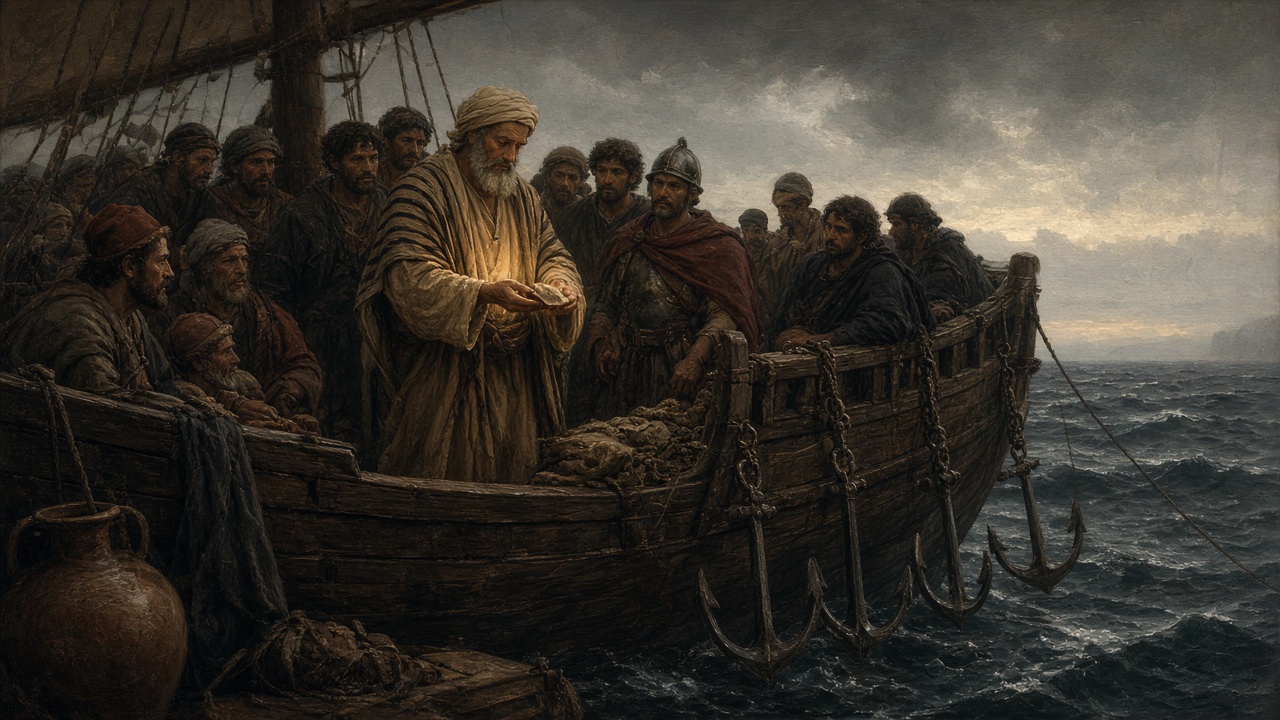
Storm and Shipwreck on the Way to Rome
- Paul and the other prisoners did not sail straight to Italy. At Caesarea they boarded a ship of Adramyttium, a city on the coast of Mysia in Asia Minor, bound for ports along the coast of Asia, a name Easton's Bible Dictionary takes in this verse as probably Asia Minor, and that ship carried them only as far as Myra in Lycia. There the centurion put them aboard an Alexandrian ship sailing for Italy; the dictionary notes that it was rare for a ship to sail from any port of Palestine direct to Italy.Sources: Adramyttium · Asia · the Bible text itself
- The prisoners were handed over to Julius, a centurion of the Imperial Regiment. Easton's Bible Dictionary identifies him as centurion of the Augustan cohort, or the emperor's body-guard, and describes his courteous regard for Paul. At Sidon, about twenty-five miles north of Tyre, he let Paul visit friends and receive care; later he blocked the soldiers' plan to kill the prisoners so that Paul's life would be spared.Sources: Julius · Sidon · the Bible text itself
- After Cnidus the ship worked along Crete, one of the largest islands in the Mediterranean, about 140 miles long and 35 broad, which Paul visited on this voyage to Rome. The account says the voyage had already become dangerous because it was after the Fast, and Fair Havens was unsuitable for wintering. One chronology dates the start of the journey to Rome to AD 56 and the shipwreck in the storm to AD 57.Sources: Crete · Journey to Rome begins · Paul is shipwrecked by a storm · the Bible text itself
Notes written with AI assistance from open sources (Theographic Bible Metadata, CC BY-SA 4.0; Easton’s Bible Dictionary, public domain) and reviewed before publishing.
Places in this chapter
- Italy · 41.892, 12.485 · verses 1, 6
- Adramyttium · Today: Oren · 39.501, 26.933 · verse 2
- Asia · 38.400, 28.300 · verse 2
- Thessalonica · Today: Thessaloniki · 40.638, 22.946 · verse 2
- Sidon · Today: Sandikli archaeological site in Sidon · 33.561, 35.372 · verse 3
- Cyprus · 35.000, 33.000 · verse 4
- Cilicia · 36.913, 34.892 · verse 5
- Lycia · 36.733, 29.900 · verse 5
- Myra · 36.259, 29.985 · verse 5
- Pamphylia · 37.000, 31.000 · verse 5
- Alexandria · 31.183, 29.896 · verse 6
- Cnidus · 36.686, 27.375 · verse 7
- Crete · 35.310, 24.893 · verses 7, 8, 12, 13, 14, 21
- Salmone · Today: Cape Sideros · 35.316, 26.312 · verse 7
- Fair Havens · Today: Kaloi Limenes · 34.930, 24.800 · verses 8, 12
- Lasea · Today: Lasaea · 34.941, 24.811 · verse 8
- Cauda · Today: Gavdos · 34.833, 24.083 · verse 16
- Syrtis · Today: Sidra · 31.500, 18.000 · verse 17
- Adriatic Sea · Today: Adriatic and Ionian Seas · 38.000, 19.000 · verse 27
Only places identified with high confidence are shown (90% or more according to the scholarly sources compiled by OpenBible). Period map: DARE (Digital Atlas of the Roman Empire), CC BY 4.0; modern map: © OpenStreetMap contributors; places: OpenBible.info (CC BY 4.0).
Credits and license for this translation
KƗLӘ-MƗNDƗ KƗ SƗGƗ
New Testament in Bedjond (CD:bjv:Bedjond)
copyright © 2011 Wycliffe Bible Translators, Inc.
Language: Bedjond
Translation by: Wycliffe Bible Translators, Inc.
Copyright Information
© 2011, Wycliffe Bible Translators, Inc. All rights reserved.
This translation text is made available to you under the
terms of the Creative Commons License: Attribution-Noncommercial-No Derivative Works.
( http://creativecommons.org/licenses/by-nc-nd/3.0/ )
In addition, you have permission to port the text to different file formats, as long as you
do not change any of the text or punctuation of the Bible.
You may share, copy, distribute, transmit, and extract portions
or quotations from this work, provided that you include the above copyright
information:
You must give Attribution to the work.
You do not sell this work for a profit.
You do not make any derivative works that change any of the actual words or punctuation of the Scriptures.
Permissions beyond the scope of this license may be
available if you contact
us with your request.
The New Testament
in Bedjond
© 2011, Wycliffe Bible Translators, Inc. All rights reserved.
This translation is made available to you under the terms of the
Creative Commons Attribution-Noncommercial-No Derivatives license 4.0.
You may share and redistribute this Bible translation or extracts from it in any format, provided that:
You include the above copyright and source information.
You do not sell this work for a profit.
You do not change any of the words or punctuation of the Scriptures.
Pictures included with Scriptures and other documents on this site are licensed just for use with those Scriptures and documents.
For other uses, please contact the respective copyright owners.
2021-11-01
Source: http://ebible.org/bjvNT/ · eBible.org