Luke 10
A Xuxubus Maxat · Tap a verse to see its cross-references.
Jisas ixo tile a pitnö ma ninöng ne sangaun ma ninöng ne tödi
1Ma melamu xö nang a Orong ixo pere kos a pitnö ma ninöng ne sangaun ma ninöng ne nangadi xabise ma ixo tile idi ninöng ninöng sila re ine xöbo lagunon kirip nang ixo eka nuan uwe. 2Ma ixo tengen te idi, “A nien iri maruxo xirip ma iri oleleng, nexalik a nausen mon idi abo tene tinörön. Io, mum morobo seng a Tamana ina nien maruxo bara irabo tile rebo tene tinörön urungan kö komo re ine. 3Mum moro wan. E tile rewe e mum xarnang a bung barok kö sipsip urungan kaluluon köbo wuluwun axe. 4Ganim e mum pua xikip pe tuluwok bara re rat. Me mum bele kip pe sandel tua xuxulas. Me mum korobo öga lo re öng kö ngas.
5“Ma nang bara mu morobo laxa xere gunon, sinila ne laa, mu morobo tengen, ‘A malum irabo kis kö ina gunon na.’ 6Ma nang bara re tödi möxö malum nangen nang ee, a malum pe mu irabo kis lömö re ine. Nang bara kaim, mu morobo kip puxus a tinenge re mu bara a malum i karabo kis kö ina tödi na. 7Me mu morobo kis kö ina gunon, ma a lasanene nang te tabaa e mu min, mu morobo en ma morobo inim, möxösa, i töxödös bara a tene tinörön irabo kip a xinixun te ine. Me mu bele wan nana urungan köbo gunon kabise.
8“Ma nang bara mu morobo laxa xö önga lagunon ma te öga e mu, mu morobo en a lasanene nang te tagur sik ke mu. 9Mu morobo ölanglanga abo miniset nang te kis singan, ma morobo töngösen idi bara, ‘A kingdom kö God iri lörörö re mum.’ 10Ma nang bara mu mo laxa xö önga lagunon ma tokobo öga e mu, io, mu morobo wan urungan köbo ngas möxö ina lagunon na ma morobo tengen, 11‘A kabus iat möxö ina lagunon te mum nang ibo parap kö xexe maa, maa me us tewe xalik e maa rua öwösö ulamun a tatalien saban mum moxo pet te maa. Inexalik morobo maras kö ina laa na, bara a kingdom kö God iri lörörö.’ 12E tengen te mum, God irabo ömokorot köba e Sodom kö axana bung möxö warkurai. Inexalik a ömokorot möxö ina lagunon nang kaim kö öga lo e mu, irabo taxin köba xö ömokorot te ine.
13“A maris se mum mee Korasin! A maris se mum mee Betsaida! Möxösa niang bara abo lalaa lölös ne auwuwus nang e xo pet tö mum, texere pet bölök ki Tair ma Saidon, idi texere sige abo xönö man biling ma texere urup idi ma xako rua osen bere idi tere dödöm puxus. 14God irabo pet a warkurai taxin kö nangadi mee Tair me Saidon kö axana bung möxö warkurai. Ma lamun irabo pet a warkurai nang i taxin köba re mum abo Betsaida mabo Korasin. 15Me mum mee Kaprenaum, mum bele döxömen bara tabo ii öxaa e mum urso lömö. Kaim, mum morobo wan su arixe uri xö pu xö xönö möxö minet.
16“Ewenene nang i ölangen a tinenge re mum, ine bölök i ölangen a tinenge re e. Me ewenene nang i wan talu e mum, ine bölök i wan talu e. Me ewenene nang i wan talu e, ine bölök i wan talu a öng niang ixo tile e ura.”
17Ma pitnö ma ninöng ne sangaun ma ninöng toxo wanot baling ma axanan ma toxo tengen, “Orong, mem me rengrengen a esem, mabo tano saban iat te tame e mem.”
18Ine ixo balu, “E xo pere e Satan ixo subu xarnang a siek meriso xö watmaep. 19E re tabaa e mum ma lölös sua wawas abo si mabo kalamasang ma ra wawas ösu a lölös kirip kö iuo re ire, ma kaim pe laa irabo ögarin e mum. 20Inexalik, ganim e mum pa axanan bara abo tano saban te tame e mum. Ma lamun mum morobo mana axanan bara abo ese mum e God iri geet tuso xö watmaep.”
21Xö ina axana bung Jisas ixo wöwö ma axanan meringan kö Töxödös ne Tanono ma ixo tengen, “E ölet nöngön, Mama, a Orong möxö balana kubu ma öxöno lagunon, möxösa, nöngön u xo umungen abo lalaa na xalik a nangadi nanase ma u xo osen öwösö re idi nang kaim idi ma nanase. Mee, Mama. U xo pet bie, möxösa, i mumuu a mamaa re nöngön.
22“A Tamake ixo tabaa e ma abo lalaa xirip. Kaim pe öng i ösöxö bara ewe ina Barok, ma lamun a Tamana xalik mon, ma kaim pe öng i ösöxö ewe ina Tamana, ma lamun a Barok kalik mon arixe me idi ewe nang a Barok ixo pere kos lo rua öwösö e Tamana urungan te idi.”
23Io, ine ixo tawuxus urungan köbo bak ne ausu re ine ma ixo tengen suxume re idi, “Irabo deek kö idi nang te pere a lasa mum mo werwere. 24Möxö e tengen te mum bara a oleleng ne propet ma abo king toxo mamaa rua werwere a lasa mum mo werwere, ma lamun idi kaim kö werwere. Me idi toxo mamaa rua ölangen a lasa mum mo ölangen, ma lamun kaim idi xo ölangen.”
Ewe a unsaxam tunon?
25Ma xö önga bung melamu, önga tödi ixobo ösöxö ödeek sik abo warkurai te Moses, ixo taru kaa rua könönöin e Jisas. Ma ixo tengen, “Tene ausu, a lasanene nang arabo pet tua xikip a to ulorexe?”
26Jisas ixo balu, “A lasanene toxo geet köbo warkurai te Moses? Ma nang u kos, u kip bara bule?”
27Ine ixo balu, “‘Örobo mamaa ulamun a Orong, a God te nöngön, kö kat kirip pe nöngön, ma xö tanono e nöngön, ma xö lölös se nöngön, ma xö dinödöm pe nöngön,’ ma, ‘Örobo mamaa lamun a öng kabise xarnang u mamaa lamun nöngön iat.’”
28Jisas ixo balu, “Nöngön u balu ödeek. Örö pet bie me nöngön örobo to.”
29Ma lamun ine ixo mamaa rua ösöxö ödeek bara ine i töxödös, io, ixo ose e Jisas, “Ewenene a töke?”
30Jisas ixo balu ine bira, “A önga tödi ixo önan su meringan Jerusalem urungan Jeriko nang abo duöng pililo toxo se ine ma toxo didii rewe abo man kalik ine me idi toxo paxat ine ma toxo wan kalik ine bara irabo met. 31A pris ixo muu ösu ina ngas, ma nang ixo pere ina tödi, ixo wan lelebes ma ixo saxit ine xö lawa xabise. 32Io, önga tene tinörön möxö marapun te Lewi, nang ixo wanot kö ina xönö ma ixo pere ine, ixo wan lelebes bölök ma ixo saxit ine. 33Ma lamun önga Samaria nang ine ixo önan, ixo ot kö ina xönö nang a tödi ee, ma nang ixo pere ine, a balana ixo muu ine. 34Ma ixo wan urungan te ine ma ixo linge a wel ma wain köbo ruxuruk kine ma ixo kubus pi. Io, ixo bulus öxaa ina tödi xö dongki re ine ma ixo kip lo ine urungan kö gunon ne osee ma ixo balaure ine. 35Ma xö bung kabise ixo kip lo a nine tuluwok ma ixo isik kö tamana ina gunon osee ma ixo tengen, ‘Örö balaure ine, ma nang bara arabo baling, e rabo balu wuxus a tuluwok ke nöngön nang u xo top ine min.’
36“Ewenene mere idiet narun u döxömen bere ine a tönö ina tödi ewe nang abo duöng pililo toxo se ine?”
37Ma tödi nanase xöbo warkurai te Moses ixo balu, “A öng nang ixo marse ine.”
Me Jisas ixo tengen te ine, “Örö wan ma örö pet bie.”
Maria ixo pere kos lo a dedeek
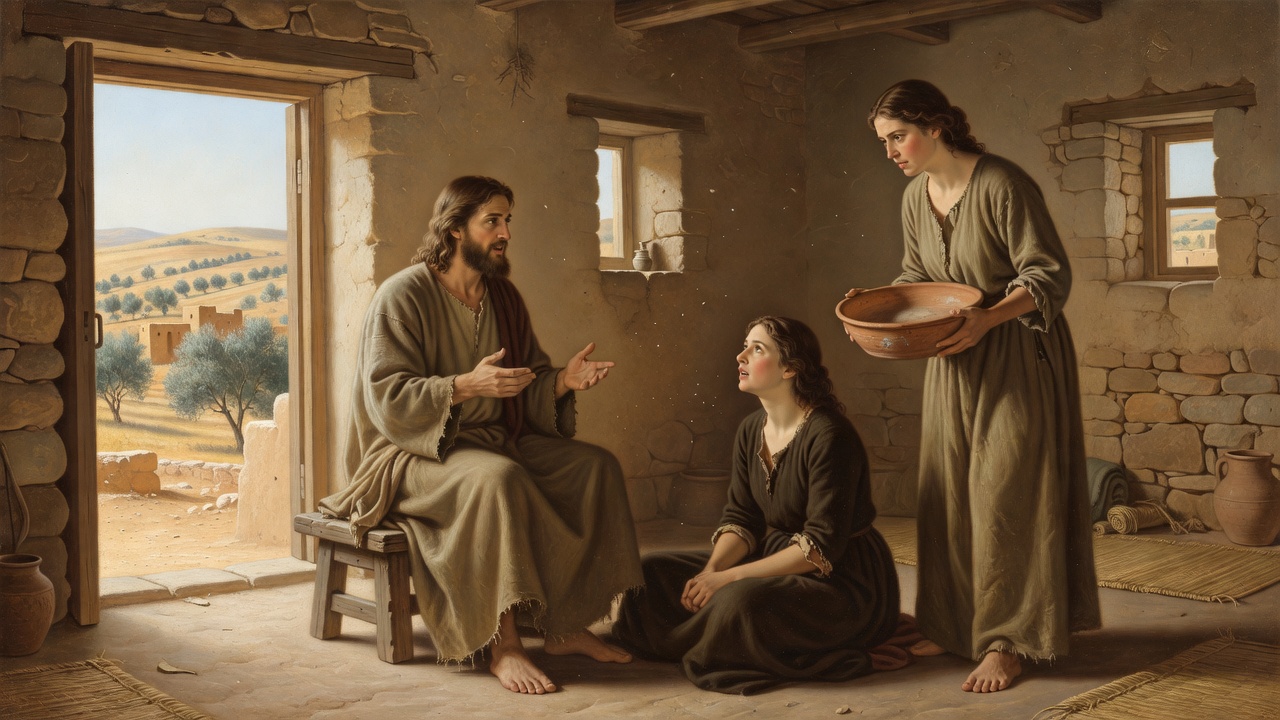
38Ma nang e Jisas mabo bak ne ausu re ine toxo önan kö inuan te idi, ine ixo ot kö önga lagunon. Ma önga une a esene iang e Mata ixo öga lo ine urungan kö gunon te ine. 39Me ine ma önga tönö ine, a esene iang e Maria, ewe nang ixo kis lörörö xö xexene a Orong ma ixo ölangen a lasa nang e Jisas ixo rengrengen. 40Ma lamun e Mata ixo madung sik mabo tinörön nang ixo wewet. Me ine ixo ot pösöt e Jisas ma ixo ose ine, “Orong, nöngön u kobo döxömen bara a tönö e i wan kalik e mabo tinörön. Örö tengen te ine bara ira top e.”
41Orong ixo balu, “Mata, Mata, u dödöm köba lamun abo lalaa oleleng ma i öriip a balam. 42Ma lamun önga laa xalik mon u sasaxan ulamun. E Maria iri pere tus lo a lasa i deek, ma takarabo kip tewe xalik ine.”
Did you know?
The mission, the towns, and Martha and Mary
- Easton's Bible Dictionary (1897) identifies Chorazin, named in this chapter's woes along with Bethsaida and Capernaum, with Kerazeh, about two and a half miles up the Wady Kerazeh from Capernaum. It says that after Jesus was expelled from Nazareth, Capernaum became his own city. The chapter compares those towns with Tyre and Sidon; the dictionary calls Sidon the first home of the Phoenicians on the coast of Palestine and the mother city of Tyre, about twenty-five miles north of Tyre.Sources: the Bible text itself · Chorazin · Capernaum · Sidon
- Easton's Bible Dictionary (1897) gives the name Martha as meaning bitterness, and says that she, her sister Mary, and their brother Lazarus lived at Bethany, with Martha probably the eldest. Because this passage calls the house hers, the dictionary notes that some have supposed she was a widow and that her brother and sister lodged with her. It describes her as anxious and bustling in caring for her guest, unlike Mary, who sat at Jesus' feet and listened.Sources: the Bible text itself · Martha · Mary (sister of Lazarus)
- The Lord appoints seventy-two others and sends them two by two ahead of him, and an event chronology dates that sending to AD 29. When they return, rejoicing that even the demons submit in his name, he says he saw Satan fall like lightning from heaven. Easton's Bible Dictionary (1897) explains the name Satan as adversary or accuser, and notes that the New Testament uses it interchangeably with the devil more than thirty times.Sources: the Bible text itself · 70 Sent Out · Satan
Notes written with AI assistance from open sources (Theographic Bible Metadata, CC BY-SA 4.0; Easton’s Bible Dictionary, public domain) and reviewed before publishing.
Places in this chapter
- Sidon · Today: Sandikli archaeological site in Sidon · 33.561, 35.372 · verses 13, 14
- Tyre · 33.271, 35.196 · verses 13, 14
- Jericho · Today: Tell el Alayiq · 31.852, 35.436 · verse 30
- Jerusalem · 31.777, 35.234 · verses 30, 38
Only places identified with high confidence are shown (90% or more according to the scholarly sources compiled by OpenBible). Period map: DARE (Digital Atlas of the Roman Empire), CC BY 4.0; modern map: © OpenStreetMap contributors; places: OpenBible.info (CC BY 4.0).
Credits and license for this translation
A Xuxubus Maxat
The New Testament in the Usen dialect of the Barok language of Papua New Guinea
Nupela Testamen long tokples Borok long Niugini
copyright © 2016 Wycliffe Bible Translators, Inc.
Language: Barok
Dialect: Usen
This translation is made available to you under the terms of the
Creative Commons Attribution-Noncommercial-No Derivatives license 4.0.
You may share and redistribute this Bible translation or extracts from it in any format, provided that:
You include the above copyright and source information.
You do not sell this work for a profit.
You do not change any of the words or punctuation of the Scriptures.
Pictures included with Scriptures and other documents on this site are licensed just for use with those Scriptures and documents.
For other uses, please contact the respective copyright owners.
2023-05-04
Source: http://png.bible/bjk/ · eBible.org