Acts 16
A Xuxubus Maxat · Tap a verse to see its cross-references.
1Io, Pol ixo wanot Derbe ma meringan ixo wan Listra, ma önga bak ne ausu a esene e Timoti ixobo xisixis singan. A nago re ine a Judeia ma a tene nunu, ma lamun a tata re ine a Grik. 2Abo Kristien kirip kölöme Listra me Aikoniam toxo etöngösen bara e Timoti ine a tödi mamaran. 3Pol ixo mamaa rua lalamus e Timoti ra nuan. Io, ine ixo kuru a lewene aine, möxösa, abo Judeia ewe nang tobo xisixis singan, idi xirip toxo ösöxö bara tata rine a Grik. 4Io, nang idiet toxobo önan kölöme xöbo lagunon taxin, idiet toxobo isik urungan köbo tene nunu abo warkurai niang abo aposol mabo sisila ne lotu ringan Jerusalem toxo bulus bara rua nangadi ra mumuu. 5Io, a nunu xö marakörö ne lotu ixo tuu lölös ma a xinoxos ixo önan kaa xöbo bungbung kirip.
Pol ixo pere a winawara xö Tanono
6Idiet toxo wan kölöme xirip kö distrik Pirigia ma provins Galesia, nang a Töxödös ne Tanono kaim kö mamaa re idiet ta atöngösen ma tinenge deek kö provins Esia. 7Ma nang idiet toxo ot lörörö distrik Misia, idiet toxo mamaa ra nuan laxa xö provins Bitinia, inexalik a Tanono e Jisas kaim kö öbala idiet. 8Io, idiet toxo wan saxit Misia ma toxo wan su urungan Toroas. 9Xina bung kö dömön, Pol ixo pere a winawara möxö önga tödi mee Masedonia, ixo tuu sik ma ixo seseseng bira, “Örö miang ura Masedonia ma örö top e mem.” 10Melamu mon kö winawara re Pol, meet moxo tagur iat mon ta nuan uruso Masedonia, möxösa, e meet moxo ösöxö bere God ixo kuwe e meet tua atöngösen ma tinenge deek kingan tidi.
Ringan Pilipai Lidia ixo nunu
11Meet moxo kakaa xö mön mee Toroas ma moxo wan töxödös u Samotares. Ma xö bung melamu meet moxo wan Niapolis. 12Io, meringan Niapolis meet moxo wan urungan Pilipai, a xönö lagunon taxin mee distrik Masedonia. Abo Rom toxo pet e Pilipai xarnang a lagunon te idi me meet moxo kis singan kö uleng ne bung.
13Xö bung Sabat meet moxo wan su xö marame möxö lagunon taxin urungan kö ari, nang meet me döxömen bere meet marabo wawara siwin te xönö rua sineseng. Meet moxo kis su ma moxo urulo ra tinenge ma balixilik ewe nang toxoro ot etok kingan. 14Öng mere idi ewe nang ixo ölangen e meet, e Lidia, a öng nang ixobo lolotu wösöt e God. Ine mee Taiataira ma ixobo rörörön kö man dadan leklek. A Orong ixo sawang a balana ine rua xikip lo a tinenge re Pol nang ixo rengrengen. 15Io, melamu, ine arixe mabo nangadi möxö gunon tine, idi toxo kip baptais, ma ixo seng ölölös e meet tua nuan urungan kö gunon tine. Ine ixo tengen, “Nang bara muot mo döxömen bere e a tene nunu xö Orong, muot moro miang ma moro kis so xö gunon te e.” Me ine ixo ölölös e meet ta nuan.
Toxo bulus e Pol me Sailas kö gunon ne aömokorot tiso Pilipai
16Önga bung meet moxo önan uruso xö xönö möxö sineseng, meet moxo esuo ma önga balik tultul, niang a tano saban ixo kis sine. Io, nang a tano saban ixobo tabaa ine ma lölös sua atöngösen lamun abo lalaa irabo wanot melamu. Ine ibo rörön ot a tuluwok taxin te idi nang tobo unan sik ine. 17Ina balik ixo muu e meet kirip arixe me Pol, ma ixo xukup bira, “Inabo nangadi na, idiet abo tultul kö pu xö God niso lömö saxit, ewe idiet te rengrengen a ngas sua nang e God irabo öro mum könan.” 18Ine ixo wewet bira xö oleleng ne bung, ot nang e Pol ixo laie me ine ixo tawuxus ma ixo tengen kö tano saban, “Xö esene Jisas Krais, e tengen bara örö wan su xalik ine.” Ma saxit mon a tano saban ixo wan lie ine.
19Ma bere idi nang toxo unan sik ina balik, toxo ösöxö xulen bara ngas se idi möxö wewet ot a tuluwok ixoro wan, toxo tödik e Pol me Sailas ma toxo ösat idu uruso xö xönö möxö misik kua tinuu mesila ridi nang tobo sila sik ma lölös. 20Idi toxo lamus ot idu uruso mesila xöbo tene warkurai mee Rom ma toxo tengen, “Nine tödi na, idu a nine Judeia, me idu toxo öraru a kinis saban kö lagunon te ire. 21Me idu te sasat ot a marakörö rua mumuu a mangana tatalien. Ma lamun, nang bara ire tabo ömaraxen lo bara tabo wewet muu inabo tatalien na, ire tabo lexe abo warkurai te ire a nangadi mee Rom.”
22A marakörö toxo tuu arixe ma toxo egot midu. Io, abo tene warkurai, idi toxo erile bara tabo didii ana man te idu ma bara tabo dangat idu. 23Io, nang toxo dangat oleng idu, toxo bulus ölaxa idu xö gunon ne aömokorot, ma toxo tengen ölölös kö tödi ixobo balaure ina gunon tua winawara wi ödeek idu. 24Melamu xöbo tinenge lölös kirip, a tödi möxö winawara wi a gunon ne aömokorot ixo bulus ölaxa idu uruso kölöme saxit kö gunon ne aömokorot ma ixo kubus ölölös abo xexedu urungan kö xönö iaa.
25Xö luono dömön, Pol me Sailas toxo seseseng ma toxo sösö mabo sinö urungan te God, mabo nangadi xabise nang toxo kut dik idi, toxo ölangen idu. 26Ma saxit mon a gie raxin ixo ot ma ixo ögigie ina gunon ne aömokorot. Mabo marame xirip toxo tamasawang mabo xinubus lölös se idi xirip toxo tawalas. 27A tödi möxö winawara wi a gunon ne aömokorot ixo laran ma ixo pere abo marame möxö gunon ne aömokorot ixoro tamasawang, ma ixo döxömen bara abo tödi kölöme tere ulo rup. Io, ixo sat ösu a sele ma ulik bara irabo se öbaling ine. 28Inexalik, Pol ixo kup, “U bele sese öbaling nöngön! Mem kirip angen na!”
29A tödi möxö winawara wi a gunon ne aömokorot ixo kup ulamun te bibio. Ine ixo ulo laxa ma ixo subu ma dinedee mesila re Pol me Sailas. 30Io, ine ixo lamus ösu idu ma ixo ose idu, “Nine tödi raxin, a lasa arabo mana pet ta xikip a to runon?”
31Idu toxo balu bira, “Örobo nunu xö Orong e Jisas, nang e God irabo öro nöngön, nöngön arixe me idi niang kö gunon te nöngön.” 32Io, idu toxo tengen a tinenge xö Orong urungan te ine ma urungan te idi xirip bölök nang kö gunon te ine. 33Xina axana bung iat kö dömön, a tödi möxö winawara wi a gunon ne aömokorot ixo lamus lo idu ma ixo tos abo ruxuruk ke idu. Me idi barama xirip kö gunon tine, toxo kip baptais. 34A tödi möxö winawara wi a gunon ne aömokorot ixo lamus ölaxa idu xö gunon te ine ma ixo tabaa idu ma nien. Ine ixo wöwö ma axanan, möxösa, idiet barama toxoro nunu re God.
35Xö puxu abo tene warkurai toxo uguran abo duöng tinörön te idi uruso xö tödi möxö winawara wi a gunon ne aömokorot ma a tinenge bira, “Ölanglanga ösu ina nine tödi niang.” 36A tödi möxö winawara wi a gunon ne aömokorot ixo tengen te Pol, “Abo duöng möxö tene warkurai te tile a tinenge bara e ra ölanglanga ösu e mu. Na mu mo eöt ta nuan. Mu moro wan ma bala malum.”
37Inexalik, e Pol ixo tengen köbo duöng tinörön, “Idi toxo dangdangat e maa xö wawara xö nangadi ma kaim kö ölangen ödeek bang a tinenge re maa. Idi toxo tewe ölaxa e maa xö gunon ne aömokorot. Inexalik maa me kip ese bara a nine Rom e maa. Ma na idi te eka irewe ömalus e maa? I kebeöt iat! Idi iat tabo mana wanot ma tabo lamus ösu e maa.”
38Abo duöng tinörön toxo tengen ina tinenge xöbo tene warkurai, ma nang idi toxo ölangen bara e Pol me Sailas idu mee Rom, idi toxo buut. 39Idi toxo wanot ma toxo wöwörö ma malum urungan te idu, ma toxo wan su arixe midu xalik a gunon ne aömokorot. Ma toxo seng idu ra nuan kalik a lagunon taxin niang. 40Ma nang e Pol me Sailas toxo wan su xalik a gunon ne aömokorot, idu toxo wan laxa uruso xö gunon te Lidia. Me idu toxo xisixis singan bang ma toxo esuo mabo Kristien ma toxo öxaxat idi. Io, idu toxo wan lo im.
Did you know?
From Lystra to Philippi
- At Lystra, Paul met Timothy, a disciple of whom the brothers in Lystra and Iconium spoke well, the son of a believing Jewish woman and a Greek father. Wanting him as a companion, Paul had him circumcised on account of the Jews there, who knew that his father was Greek. Easton's Bible Dictionary (1897) says Timothy probably lived in Lystra and seems to have been converted during Paul's earlier visit.Sources: the Bible text itself · Timotheus
- After being kept from speaking in the province of Asia, Paul and his companions traveled through Phrygia and Galatia. At the border of Mysia they were not permitted to enter Bithynia, so they went down to Troas, Mysia's chief port on the northwest coast of Asia Minor, a city named for ancient Troy about four miles to the north. There a night vision of a man of Macedonia pleading for help led them to sail to that Roman province north of Greece.Sources: the Bible text itself · Mysia · Troas · Macedonia
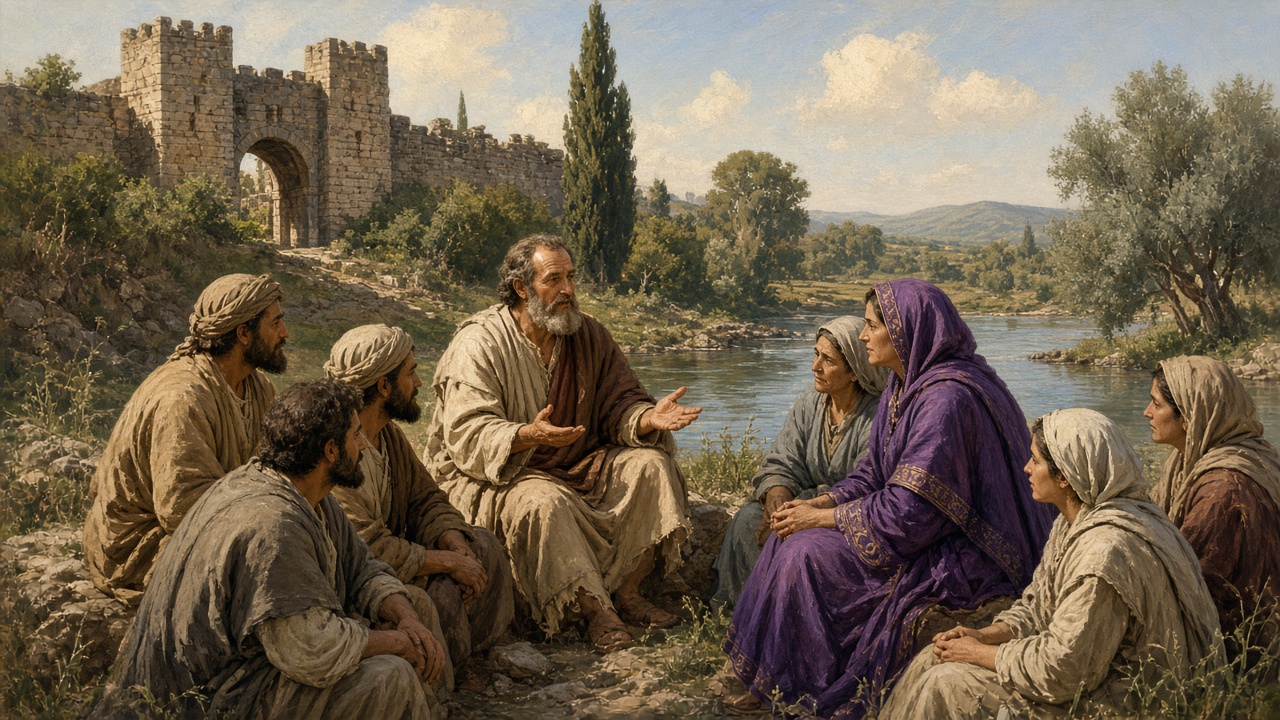
- In the Roman colony of Philippi, Paul and his companions found a customary place of prayer by the river outside the city gate, where women had gathered. Among them was Lydia, a dealer in purple cloth from Thyatira and a worshiper of God; after she and her household were baptized, she persuaded the travelers to stay at her house. Easton's Bible Dictionary (1897) describes her as a proselyte of considerable wealth and as the first person in Europe to embrace Christianity.Sources: the Bible text itself · Lydia
Notes written with AI assistance from open sources (Theographic Bible Metadata, CC BY-SA 4.0; Easton’s Bible Dictionary, public domain) and reviewed before publishing.
Places in this chapter
- Lystra · Today: Tel Lystra · 37.602, 32.338 · verses 1, 2
- Iconium · Today: Konya · 37.872, 32.492 · verse 2
- Jerusalem · 31.777, 35.234 · verse 4
- Asia · 38.400, 28.300 · verse 6
- Galatia · 39.267, 32.983 · verse 6
- Phrygia · 39.000, 31.000 · verse 6
- Bithynia · 40.500, 31.000 · verse 7
- Mysia · 40.000, 28.500 · verses 7, 8
- Troas · Today: Alexandria Troas · 39.752, 26.159 · verses 8, 11
- Greece · 37.972, 23.727 · verse 9
- Macedonia · 41.600, 22.540 · verses 9, 10, 12
- Neapolis · Today: Kavala · 40.935, 24.415 · verse 11
- Samothrace · Today: Samothraki · 40.450, 25.583 · verse 11
- Philippi · 41.012, 24.285 · verse 12
- Thyatira · Today: Akhisar · 38.920, 27.837 · verse 14
Only places identified with high confidence are shown (90% or more according to the scholarly sources compiled by OpenBible). Period map: DARE (Digital Atlas of the Roman Empire), CC BY 4.0; modern map: © OpenStreetMap contributors; places: OpenBible.info (CC BY 4.0).
Credits and license for this translation
A Xuxubus Maxat
The New Testament in the Usen dialect of the Barok language of Papua New Guinea
Nupela Testamen long tokples Borok long Niugini
copyright © 2016 Wycliffe Bible Translators, Inc.
Language: Barok
Dialect: Usen
This translation is made available to you under the terms of the
Creative Commons Attribution-Noncommercial-No Derivatives license 4.0.
You may share and redistribute this Bible translation or extracts from it in any format, provided that:
You include the above copyright and source information.
You do not sell this work for a profit.
You do not change any of the words or punctuation of the Scriptures.
Pictures included with Scriptures and other documents on this site are licensed just for use with those Scriptures and documents.
For other uses, please contact the respective copyright owners.
2023-05-04
Source: http://png.bible/bjk/ · eBible.org