2 Corinthians 8
A Xuxubus Maxat · Tap a verse to see its cross-references.
A arabaa ne tuluwok köbo Judeia
1Abo töke kölöme re Krais, mem me mamaa rua ömaras e mum ulamun a abalamu nang God iri isik köbo marakörö ne lotu xö boxönö na Masedonia. 2Ma i turunon bara a kinadik taxin ixo öxadik köbanin idi, ma lamun idi toxo wöwö sik arixe ma axanan, io nang, idi toxo bala taru rua inerabaa ma oleleng. Ma i laa tataun nang bara idi te kis ne maris köba. 3E tengen ömaras bara idi toxo erabaa eöt ma nang idi te eöt bara tabo pet bie, ma lamun inabo inerabaa ixo saxit belek kö nang idi toxo eöt tua isik. 4Xö mamaa re idi iat idi toxo seng e mem bere mem marabo ömaraxen lo idi bara idi bölök tabo laxa xö ina tinörön ne rorop urungan kö nangadi runon kö God kirip nang Judeia. Idi toxo perexulen lo bara a lalaa nang irabo öaxanan idi, niang bara idi te laxa xö ina tinörön. 5Me idi kaim kö wewet xarnang e mem moxo döxömen sik bie. Kaim. Idi toxo araun iat bang kua isik a to re idi urungan kö Orong ma re mem, möxösa, God ixo maa bara idi tabo pet bira. 6Io nang, mem moxo öxaxat e Taitus bara irabo tuu arixe me mum rua öxawam ina tatalien ne inemarse, möxösa, ine a öng ewe ixo urulo ina na mesila. 7Ma i turunon, mum mo wöwö xöba ma abo lalaa xirip. Mum ma nunu raxin, a tatalien möxö atöngösen, ma a nanase. A bala mum i lelewi xöba rua rorop ma i taxin a mamaa re mum ura re mem. Xarnang mum mo talien sik bie, i deek bere mum morobo ölasan bölök e mum kö ina tinörön ne inemarse na.
8E kaim kö isik ke warkurai lölös sö mum nang e xo tengen bira. Kaim. E maa bara e rabo öt a inemarse re mum arixe me idi xabise ewe nang te lelewi xöba sik bie, lamun e rabo ösöxö bara a inemarse re mum i turunon bara kawaim. 9Mum mo ösöxö sik a inemarse re Jisas Krais, a Orong ke ire. Ine ma kinis ne asuono orong, ma lamun ixo kip lo a kinis ne tanaa rua gene e mum, lamun mum morobo kip lo a kinis ne asuono orong meringan kölöme xö kinis ne tanaa re ine.
10Xö dinödöm pe e i wawara bara na im mum morobo mana öxawam ina tinörön nang mum moxoro urulo kölöme xö awat nang iri kawam. Mum moxo sisila ne lagunon tua mamaa rua inerabaa me mum bölök möxö sisila ne lagunon tua wewet bira. Xarnang abo mamaa re mum ixo lelewi xöba rua wewet bira, i deek bere mum morobo öxawam ina tinörön möxö inerabaa eöt mabo lalaa re mum nang mum mo eöt tua arabaa min. 12Io, nang a öng i mamaa rua arabaa, God irabo ömaraxen lo a inerabaa re ine eöt ma nang a önga tödi i eöt tua isik. God i karabo döxömen lo abo lalaa a önga tödi i kebeöt tua isik. 13E kobo mamaa bara arabo pet öwawaxan a to re idi a nangadi xabise me mum morobo kip lo a tiip. Kaim. E mamaa bara abo mangana kinis se mum kirip irabo önga mangana mon. 14Na im abo bubulus taxin te mum irabo öwöwö a sasaxan te idi, io nang, abo bubulus se idi belek, nang bara irabo taxin, irabo öwöwö abo sasaxan te mum kö axana bung melamu. Nang bara ire te talien bira, abo kinis se ire irabo önga mangana mon 15xarnang a tinenge xö God nang toxo geet i tengen: “Ewe a öng nang ixo iiögun a oleleng, a xinixip pe ine i kobo saxit a sasaxan te ine, me ine nang ixo iiögun aulik, i koxobo sasaxan.”
Pol ixo tile e Taitus uruso Korin
16Me e tengen deek urungan kö God, ewe ine iri öraru a balna e Taitus sua gene mum xarnang i öraru a balna e bölök. 17Ma turunon bere Taitus ixo aut kö sineseng ke mem bara irabo wan urungan te mum, ma lamun i raru bölök a balna rua gene mum. Io nang, i maa bara irabo wan urungan te mum, möxösa, ine iat i mamaa bie. 18Me mem me maa rua ritile ine arixe ma ina tönö ire. Kölöme xö tinörön te ine möxö tinenge deek, ina tönö iri kip a ese raxin kaluluonin a nangadi ne lotu kölöme xöbo lagunon kirip. 19Ma kaim bere nangang kalik mon. A marakörö ne lotu möxöbo lagunon idi toxo pere kos ine bara irabo wan arixe me mem nang e mem marabo xikip nanin ina arabaa ne inemarse. Mem me balaure ina arabaa rue ire tabo ölet a Orong iat ma bara ire tabo osen a lelewi kölöme xöbo bala ire rua isik a rorop, 20bara kaim arixe re öng irabo eöt tua tengen ögarin e mem köbo mangana abalamu re mem kö ina arabaa raxin. 21Mem me maa bara marabo pet te önga mangana ngas nang i töxödös. Ma kaim bara xö winara xö Orong kalik mon. Mem me mamaa bara irabo töxödös bölök kö wawara xö nangadi.
22Me mem me tile a tönö ire arixe me idu. Mem moxo könönöin ine xöbo mangana lalaa xirip ma moxo perexulen a lelewi xö balana rua isik a rorop, ma lamun na im a balana i lelewi xöba rua rorop, möxösa, ine iri bulus a dinödöm pe ine kölöme re mum. 23Me Taitus, ine a ais se e nang i tuu arixe me e xöbo tinörön nang maa bo wewet kaluluonin e mum. Ina nine töde, idu a nine tene tinörön möxö marakörö ne lotu möxöbo lagunon, ma a tinörön te idu i isik a aölelet urungan te Krais. 24Io nang, mum morobo osen urungan te idiet bara a mamaa re mum i turunon. Me mum morobo osen urungan te idiet bölök a unine nang mem me ölet e mum. I deek bara mum morobo talien bira lamun bara a marakörö ne lotu möxöbo lagunon tabo maras ulamun e mum.
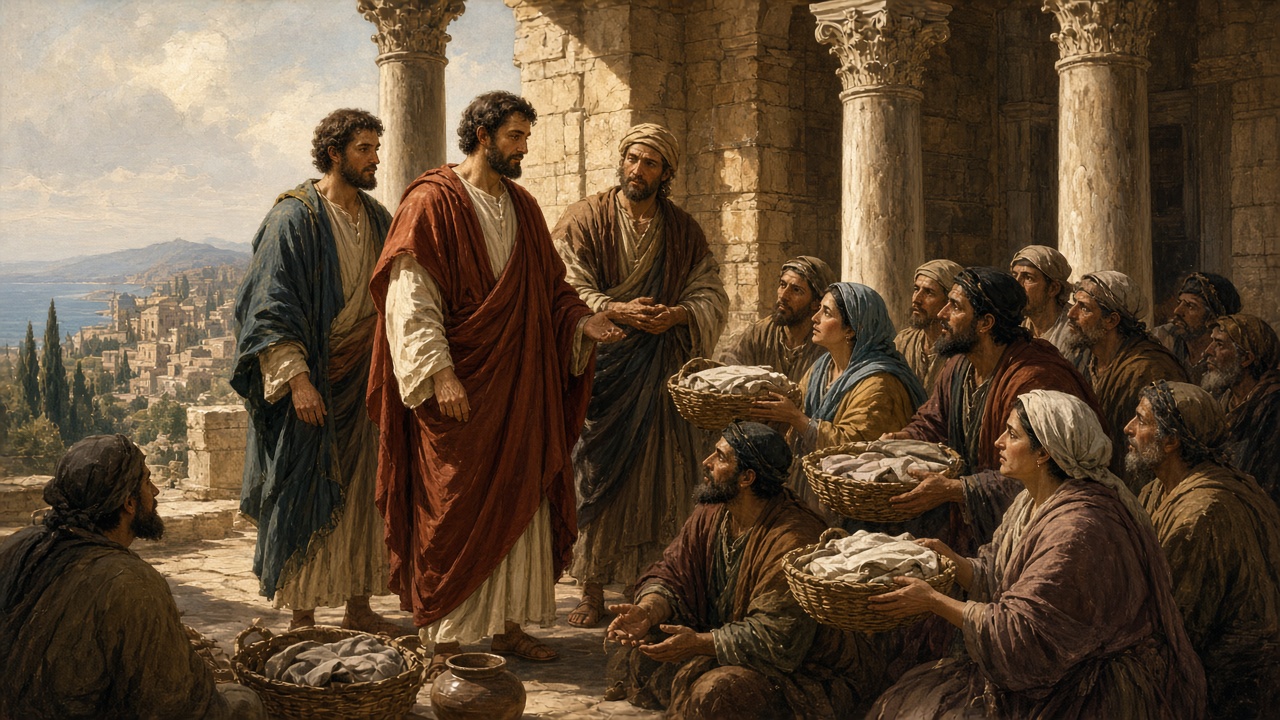
Did you know?
Generosity and the Jerusalem Collection
- In New Testament times Macedonia was a Roman province north of Greece. Paul was summoned by the vision of a man of Macedonia to preach the gospel there, and this chapter tells the Corinthians how those churches, in a terrible ordeal and deep poverty, gave joyfully and even beyond their ability.Sources: Macedonia · the Bible text itself
- Titus, whose name nowhere occurs in Acts, appears to have been a Gentile chiefly engaged in ministering to Gentiles. From Ephesus, Paul sent him to Corinth to forward the church's contributions for the poor saints at Jerusalem; in this chapter Paul urges him to complete that work, and Titus is coming eagerly of his own accord.Sources: Titus · the Bible text itself
- Along with Titus, Paul is sending a brother praised by all the churches for his work in the gospel and chosen by them to accompany the offering, and another brother whose earnestness has been proven many times and in many ways. He explains that this care is meant to avoid criticism of how the generous gift is administered, so that they do what is right not only in the eyes of the Lord but also in the eyes of other people.Sources: the Bible text itself
Notes written with AI assistance from open sources (Theographic Bible Metadata, CC BY-SA 4.0; Easton’s Bible Dictionary, public domain) and reviewed before publishing.
Places in this chapter
Only places identified with high confidence are shown (90% or more according to the scholarly sources compiled by OpenBible). Period map: DARE (Digital Atlas of the Roman Empire), CC BY 4.0; modern map: © OpenStreetMap contributors; places: OpenBible.info (CC BY 4.0).
Credits and license for this translation
A Xuxubus Maxat
The New Testament in the Usen dialect of the Barok language of Papua New Guinea
Nupela Testamen long tokples Borok long Niugini
copyright © 2016 Wycliffe Bible Translators, Inc.
Language: Barok
Dialect: Usen
This translation is made available to you under the terms of the
Creative Commons Attribution-Noncommercial-No Derivatives license 4.0.
You may share and redistribute this Bible translation or extracts from it in any format, provided that:
You include the above copyright and source information.
You do not sell this work for a profit.
You do not change any of the words or punctuation of the Scriptures.
Pictures included with Scriptures and other documents on this site are licensed just for use with those Scriptures and documents.
For other uses, please contact the respective copyright owners.
2023-05-04
Source: http://png.bible/bjk/ · eBible.org