Jonah 4
Sunbin-Got em Kitakamin Weng · Tap a verse to see its cross-references.
Sunbin-Got so Yona so Aso im Weng Bokolew Bokolew Kesiliw em Sang te.
1Keko beli, Yona e digaka kesomi, Sunbin-Got elo kaisuw keleweko, bokolewomele: 2“Yawe kutaka! Nem weng kale kame kilila! Ne kal kelite: Ku ibolow folok kinkin so Sunbin-Got kute te. Ku fongate akate kaisuw kelinba kesomi, kawtiw nulo ibolow mutuk fian duyemkabelew kasike, nulo anggil ilum duyemeko, fongate yeninba kekabelew Sunbin-Got kute te. Sua kel e, nakalem am dim bomi, fon uninba kebisi ding kabalak e, ne kilele kal kesite: “Ku kom ibolow fukunin be iti alwol kelewokolew sako!”, angbomi, bisi te! 3Yawe kutaka! Nem finik so bomin e gal kenembe kasike, nemisik kuanbili kano!”, dangse kale. 4Dangei, Yawe e yan weng bokolewomele: “Eke, Yona! Kom kaisuw kebelew be kukalem ken kebelew baka bani?”, dangse kale.
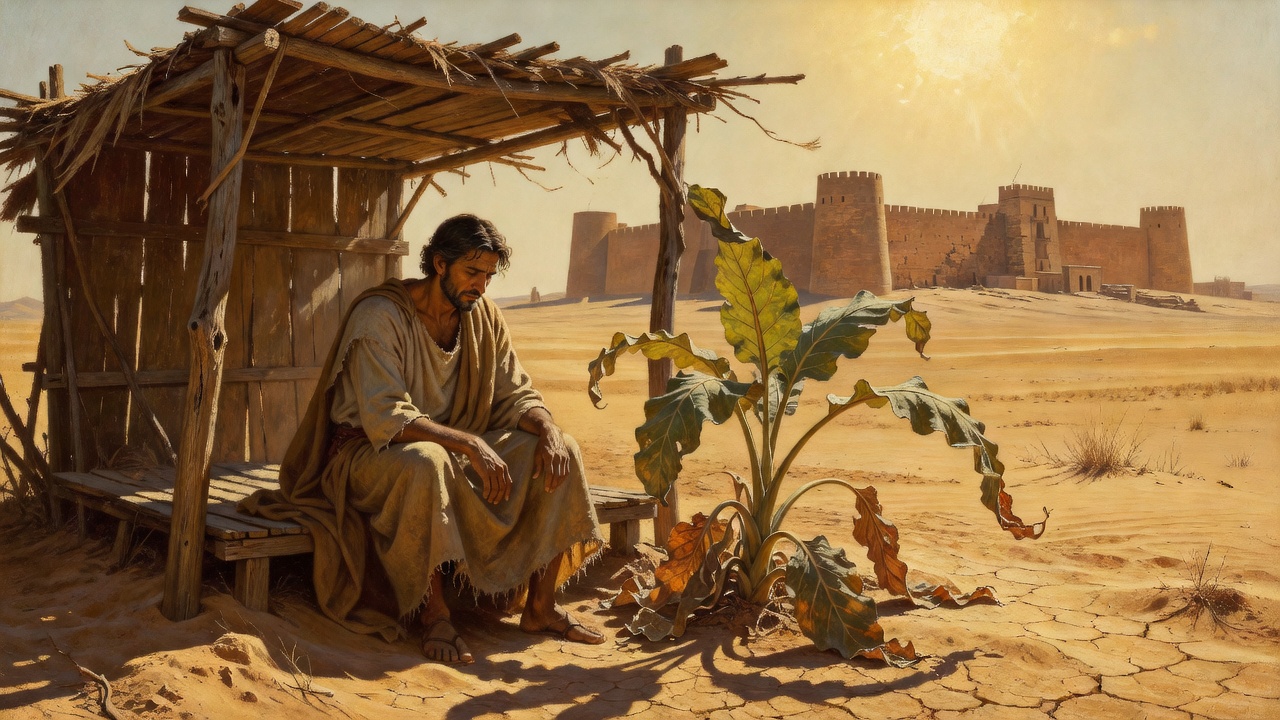
5Dangeko beli, Yona e abiw mutuk fian be koleweko, abiw mutuk fian beem ataan talakabe dulum elo uneko, menew am gel mak kanis doung kanel doung gesomi, teinsomelei, abiw mutuk fian beelo kiineng angeko, “Nomin eisneng mak keloke yako!”, angeko, atemse kale. 6Atemsomelei, Yawe Sunbin-Got e “Ataan mamin abe beem menew dulewkemin beem mongom ete te!”, angomelei, e sok til basi so mak Yona em mit mewso dukulei, e beem afak kel teinsomi, kalfongse kale. |alt="Jonah sitting in shade" src="ABSOT17.tif" size="col" ref="Yona 4:6" 7Kalfongsomelei, akaleko, iti kutim danei, Sunbin-Got e dak emdiw eisneng mak dabalalei, e uneko, sok til beelo dakilei, e getse kale.
8Kaneko beli, ataan fian dukule ding dim e, Sunbin-Got e ataan telbe dim elote ataan mamin so inim mak dabalase kale. Dabalalei, Yona em kak dim mamin kuw tingting kelewbelei, e kak olok olok kelei, em kiin felfel so kesomi, fom mitomin kis keko, bokolomele: “Nem finik so bomin e gal kenembe kasike, nemisik kuanbili kano yo!”, angse kale. 9Angei, Sunbin-Got e Yona elo bokolewomele: “Eke, Yona! ‘Sok dakilei, gete kai!’, angomi, gal kelew sako? Kom kaisuw kebelew be kukalem ken kebelew baka bani?”, dangse kale. Dangei, e yan weng bokolewomele: “No! Ne fein kane bi eli a! Feinka! Kanemsi kuw kae! Kasike, kaisuw fian kuw kebi kae! Mesem kuano ya!”, dangse kale. 10Dangei, Yawe e elo bokolewomele: “Kutaka! Ku kilele ibolow fukunolewka! Taw makmak akaleko, get kembe eisneng gel fong eisneng kaleem dulum elote ku kinkin ibolow kelewbelew kate, kusik beem dulum elote aluwbinba kebelewi, emikel kuw talfut kesomi, emikel kuw iti getse te. 11Kaneko kasike, nakati Ninibe abiw mutuk fian beem kunum waneng fufu banban 120 tausen (120'000) kel iso, ikalem am dim samal banban biso, alik alik biim dulum elote sakik ibolow folok so keyembi te. Feinka! Kawtiw bi nem kiin dim e, ‘Kukuw ken baka! Kukuw wa baka!’, angeko, teifuluko, kal kelinba ke alakabiliw kasike.”, dangse kale.
Did you know?
Jonah's Anger and God's Compassion
- Jonah admits that he originally attempted to flee toward Tarshish precisely because he knew God is gracious, compassionate, slow to anger, and relents from sending disaster. His distress arose when God chose to spare Nineveh rather than destroy it.Sources: the Bible text itself · Tarshish
- Nineveh, the flourishing capital of the Assyrian empire, is described at the conclusion of the book as home to more than 120,000 people who cannot discern between their right and left hand, along with many cattle. God highlights this massive population to contrast divine compassion with Jonah's concern for a single withered plant.Sources: the Bible text itself · Nineveh
Notes written with AI assistance from open sources (Theographic Bible Metadata, CC BY-SA 4.0; Easton’s Bible Dictionary, public domain) and reviewed before publishing.
Places in this chapter
- Nineveh · 36.359, 43.153 · verse 11
Only places identified with high confidence are shown (90% or more according to the scholarly sources compiled by OpenBible). Period map: DARE (Digital Atlas of the Roman Empire), CC BY 4.0; modern map: © OpenStreetMap contributors; places: OpenBible.info (CC BY 4.0).
Credits and license for this translation
Sunbin-Got em Kitakamin Weng
The New Testament and part of the Old Testament in the Bimin Language of Papua New Guinea
Nupela Testamen na sampela hap Oldpela Testamen long tokples Bimin long Niugini
Copyright © 2008 Bible Society of Papua New Guinea
Language: Bimin
Translation by: Wycliffe Bible Translators
This translation is made available to you under the terms of the
Creative Commons Attribution-No Derivatives license 4.0.
You may share and redistribute this Bible translation or extracts from it in any format, provided that:
You include the above copyright and source information.
You do not make any derivative works that change any of the actual words or punctuation of the Scriptures.
Pictures included with Scriptures and other documents on this site are licensed just for use with those Scriptures and documents.
For other uses, please contact the respective copyright owners.
2016-10-03
Source: http://png.bible/bhl/ · eBible.org