Jonah 1
Sunbin-Got em Kitakamin Weng · Tap a verse to see its cross-references.
About this book
About Jonah
- Jonah, whose name means “a dove,” was the son of Amittai of Gath-hepher and a prophet of Israel. Easton's Bible Dictionary (1897) holds that he wrote the book himself. His ministry is placed very early in the reign of Jeroboam II: he was contemporary with Hosea and Amos, or possibly earlier, and so may have been the oldest of the prophets whose writings survive.Sources: Jonah · Amittai · Easton: Jonah, Book of
- The book professes to tell what actually happened to the prophet. Some critics have read it as a parable or allegory rather than history, because miracle is so prominent and the form is narrative rather than prophecy, or because they deny miracles altogether. Easton's Bible Dictionary (1897) instead treats it as history, attaching great weight to the mention of Jonah in Matthew 12:39-40 and Luke 11:29.Sources: Easton: Jonah, Book of
- Jonah was commissioned to go to Nineveh, described as a great and populous city and the flourishing capital of the Assyrian empire, but he sailed from Joppa, Judea's chief seaport, to flee toward Tarshish. Where Tarshish lay is disputed: some place it in the east, on the Indian coast, some identify it with Carthage, and Easton's dictionary takes it to be a Phoenician port in Spain.Sources: Easton: Jonah, Book of · Nineveh · Joppa · Tarshish
- Easton's outline has four movements: the divine commission, disobedience, and punishment; Jonah's prayer and deliverance; a second commission, the Ninevites' repentance, and God's sparing mercy; and Jonah's anger at that mercy, followed by a rebuke. The same dictionary notes that Nineveh was spared for more than a century after his mission.Sources: Easton: Jonah, Book of
- As a prophet of Israel, Jonah foretold the restoration of the kingdom's ancient borders. A biographical note presents him both as a missionary to Nineveh and as a type of the Son of man. The book of Nahum is taken up almost entirely with denunciations of that city, and Zephaniah also predicts its destruction.Sources: Jonah · Nineveh
Notes written with AI assistance from open sources (Theographic Bible Metadata, CC BY-SA 4.0; Easton’s Bible Dictionary, public domain) and reviewed before publishing.
Sunbin-Got em Emisik Ding e Yona elo Weng Bokolewse em Sang te.
Yona e Kunuw Fian em Tem Uneko, Fon Unse em Sang te.
1Kunum mak em wiin e Yona, Amitai em min alenale kale. Belei, deiw mak ding mak kelei, Yawe Sunbin-Got e elo weng mak bokolewomele: 2“Ne atemite: Abiw mutuk fian Ninibe kawtiw kunum waneng i sili sili kukuw wa kuw kebiliwi, yetebi kasike, ku kame unesomi, abiw kasel biilo kulo sowete bokokemoki weng kitil weng mak bokoko, ilo duyemolewka!”, dangse kale. 3Dangse kate, Yona e Yawe em weng kililinba kesomi, em weng bokolewse weng beelo sakalaw keko, weng bo bo kelewko, elo koleweko, sak fon unomin ibolow kese kale. Kesomelei, “Talsis abiw mutuk fian kalo uno!”, angeko, Yoba abiw mutuk fian kalo fon unesomelei, siw dim unomin deiw fense kale. Deiw fen atemsomelei, kunuw unomin deiw weneko, Talsis abiw mutuk fian kalo fon unse kale.
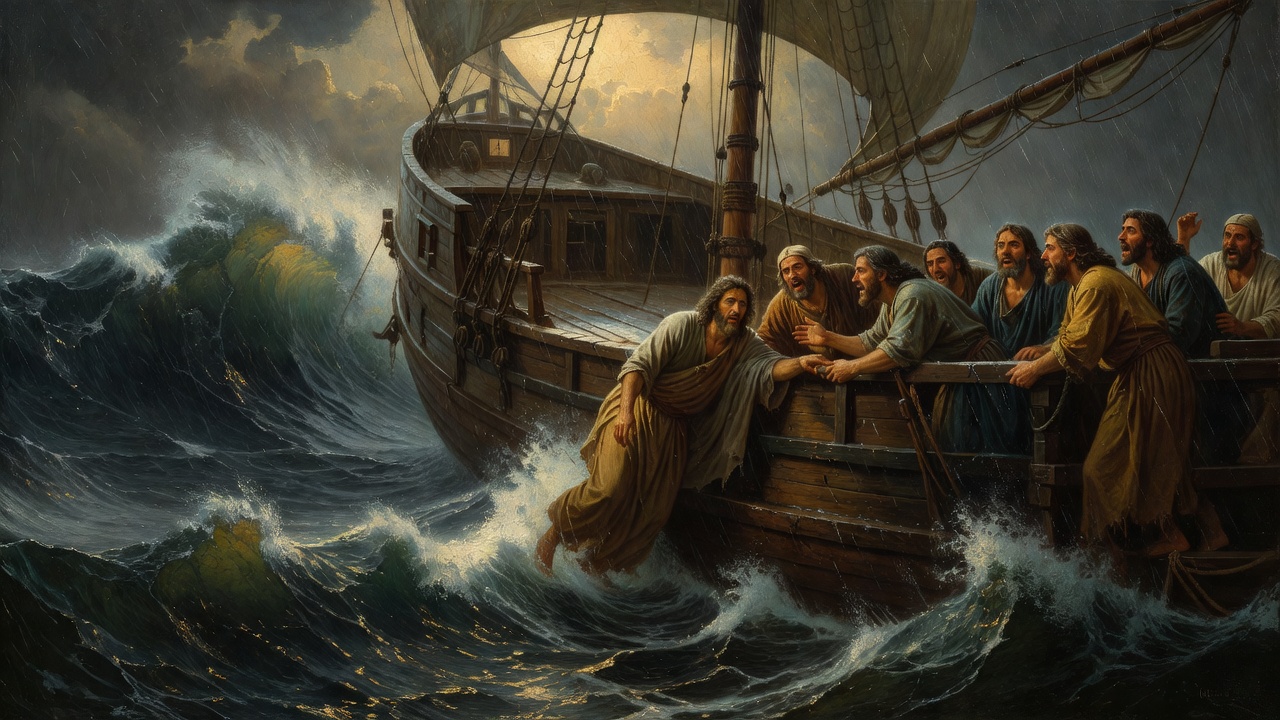
4Beli, em unbe ding dim e, Yawe e suuk inim kitil nam mak dabalalei, e teleko, kunuw okmun dim unbiliw biilo fimdi famde dakal dukulomin kis so kelewse kale. 5Kelewei, kunuw dim beem aluwbamin kunum i finganin fian fian mak kuluko, ikalem amen amen kuw ikalem dasuw-got ilo gaayemeko, bokolomeliw: “Ibo yake! Nulo dokoyemina o!”, |alt="ship" src="C099.tif" size="span" ref="Yona 1:5" ange ange keko, men mesesem angom be daktineko, kuse ok ok dasiliw kale. Dasiliw beem ding dim be, Yona e kunuw beem tem afak kel kiinok ilum sen mak diw diw akalse kale. 6Akalbelei, kunuw beem dekakabe kunum mak teleko, bokolewomele: “Wee kutaka! Ku nolom ete nanbow angeko, akalbelew a? Fongate akate komikal kukalem got elo gaalew kano, e nulo yetemeko, nulo kinkin keyemsomi, dokoyemoke kasike, ok be alik alik nulo kanelom yenei, nu kuanoluw te!”, dangse kale.
7Dangei, aso i Yona em be dim be koleweko, mali kawtiw im biliw dim katiw elo unsiliw kale. Uniwi, kunuw dim beem aluwbabiliw kunum i weng tekeko, bokolomeliw: “Kanem sen ete kelei, nu kuanomin kis kebuluw be fenuma!”, angeko, ikalem selew selew kukuw gelewsomi, atemiwete: Yona em wiin ete fitew kelei, atemsiliw kale. 8Atemsomi, elo dakalalomeliw: “Kutaka! Ku ilum ding tele kaleem mongom e nulo kilele bokoyema! Kom aluwbamin e nimtew a? Ku nal elote telew a? Ku nalem kayak a? Kom kunum mongom e kante a?”, dangeko, Yona elo dakalasiliw kale. 9Dakalaliwi, Yona e ilo yan weng bokoyemomele: “Ne Kibulu kunum nete te. Ne Yawe Sunbin-Got em aluwbamin kunum kebomi, akalem wiin daolewkabi kunum nete te. E abiil tikin kayak kebomi, okmun fian kale so, kawin so alik alik dukuse Sunbin-Got ete te.”, yangse kale. 10Yangeko, weng makso bokoyemomele: “Ne Sunbin-Got em nelo bokonemse weng be kililinba keko, em weng sakalaw keko, weng bo bo keleweko, fon telesi te.”, yangse kale. Yangei, i em yan weng be kiliko, finganin fian fian mak kesomi, bokolewomeliw: “Ibo! Nimtew angom ete ku kanekembelew a?”, dangsiliw kale.
11Dangsiliw ding kabalak e, suuk so inim so be kitil nam kesomelei, ok fasuko, fole fole keko, katiw une kalak une keme kasike, i Yona elo dakalalomeliw: “Kame, nu nono keluw ete, ok fole fole be singdet daking banimoke a?”, dangsiliw kale. 12Dangiwi, e yan weng bokoyemomele: “Nem sen beem dulum elote ok inim be nulo yenomin keeme kasike kame, yu nakalem ete galuko, ok da konemina! Konemiw kano, ok fole fole kebe be singdet banimoke te.”, yangse kale. 13Yangei, i em weng bokolewse weng be kilisiliw kate, elo gelewinba kesomi, kun kuluko, melmel sen bingeko, bukeko, benggew dulum elo unomin kesiliw kale. Kate, i ki kelinba kesiliw kale. Nimtew angom? Ok fole fole kebe be abiil abiil unesomelei, itel fian kese kasike.
14Keko beli, kunuw dim beem aluwbamin kunum i Yawe elo gaaneko, menew falit weng mak bokolewomeliw: “Yawe Sunbin-Got kutaka! Ku kanelom nulo gal keyemomi, nulo yenewi, nu kuanokoluw te! Sunbin-Got kutaka! Nu kom aluwbamin kunum beelo akokow kelewsomi, ‘Kiol kukuw gelewkabe kunum kebe sako?’, angeko, kal kelinba kekabuluw te. Kate ku kukalem ibolow fukunin kuw gelewbelewi, nu kame kilele atemeko, kal kebuluw te. Kasike kame, nu kunum beelo okmun da kolewuw tewe, ku nulo kanelom kawtiw yemin kunum im yan wa duyemokolew te!”, dangsiliw kale. 15Dangesomeliwi, i Yona elo galu debele uneko, okmun fole fole kebe beem tem kuse dasiliw kale. Elo dasiliw ding dim kabalak e, sin tew kame tew ok fole fole keembe be tete daking singdet banimse kale. 16Kaneko beli, kunuw beem aluwbabiliw kunum bi kanese be atemeko, Yawe em angan finganin fian fian mak kuluko, Yawe elo “Weso! Seyo!”, dangeko, samal anko, elo dulewsomi, fawtuk ayem weng mali mak Yawe elo bokolewsomi, dulewsiliw kale.
17Beem ding dim bakate, Yawe e Yona em ibolow beelo fukuneko, elo dokoleweko, dol fian sel mak dabalalei, e teleko, Yona elo kunil kolewse kale. Kolewei, e dol kulin tem kel belei, taw akal kutiliw akal yemamas kel ding kese kale.
Did you know?
Jonah Flees from the Lord
- Jonah, the son of Amittai from Gath-hepher, is also recorded in 2 Kings 14:25 as a prophet active in the northern kingdom of Israel during the reign of Jeroboam II. God instructed him to travel east to Nineveh, the prominent and populous capital of the Assyrian empire, to preach against its wickedness.Sources: Jonah · Amittai · Nineveh · the Bible text itself
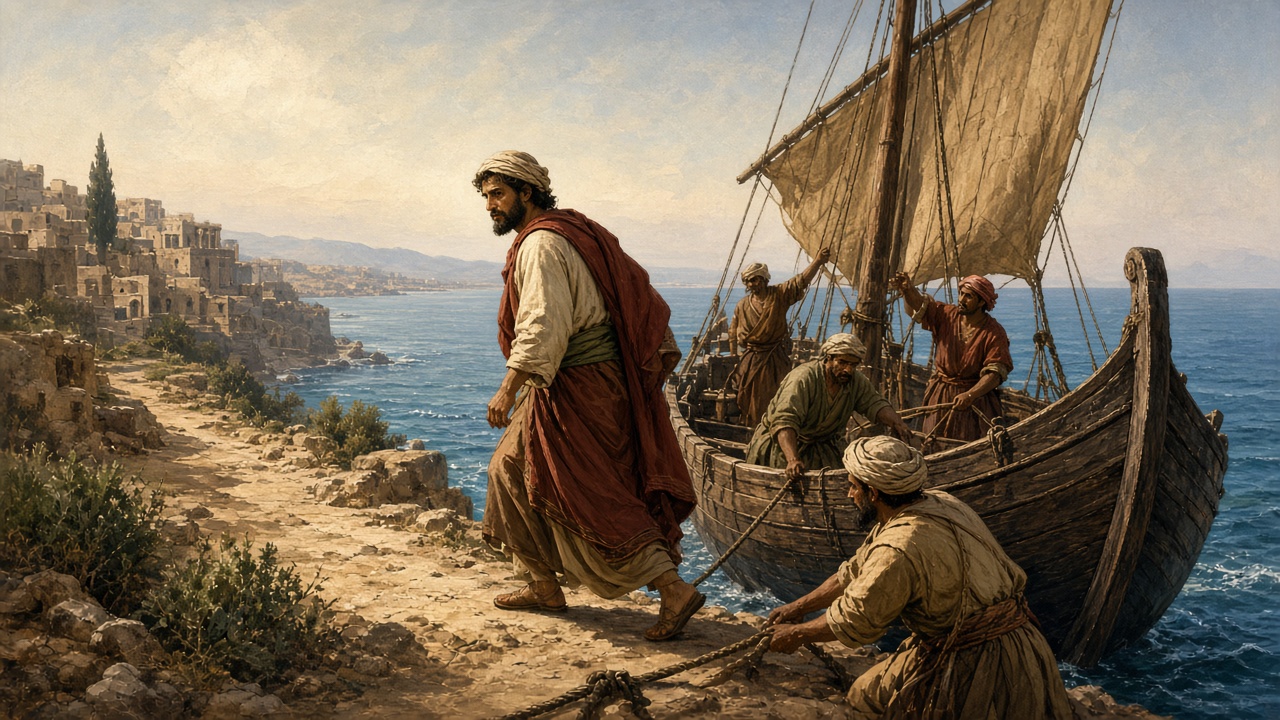
- Rather than traveling northeast overland to Nineveh, Jonah journeyed down to the Mediterranean seaport of Joppa to board a ship for Tarshish. Tarshish is traditionally identified as a Phoenician trading port located far to the west in southern Spain, representing the exact opposite direction.Sources: Joppa · Tarshish · the Bible text itself
- The sailors aboard the cargo ship came from polytheistic backgrounds, each calling out to his own deity during the violent tempest. After throwing the ship's cargo overboard to lighten the vessel, they turned to the ancient practice of casting lots to determine who was responsible for the calamity.Sources: the Bible text itself
Notes written with AI assistance from open sources (Theographic Bible Metadata, CC BY-SA 4.0; Easton’s Bible Dictionary, public domain) and reviewed before publishing.
Places in this chapter
Only places identified with high confidence are shown (90% or more according to the scholarly sources compiled by OpenBible). Period map: DARE (Digital Atlas of the Roman Empire), CC BY 4.0; modern map: © OpenStreetMap contributors; places: OpenBible.info (CC BY 4.0).
Credits and license for this translation
Sunbin-Got em Kitakamin Weng
The New Testament and part of the Old Testament in the Bimin Language of Papua New Guinea
Nupela Testamen na sampela hap Oldpela Testamen long tokples Bimin long Niugini
Copyright © 2008 Bible Society of Papua New Guinea
Language: Bimin
Translation by: Wycliffe Bible Translators
This translation is made available to you under the terms of the
Creative Commons Attribution-No Derivatives license 4.0.
You may share and redistribute this Bible translation or extracts from it in any format, provided that:
You include the above copyright and source information.
You do not make any derivative works that change any of the actual words or punctuation of the Scriptures.
Pictures included with Scriptures and other documents on this site are licensed just for use with those Scriptures and documents.
For other uses, please contact the respective copyright owners.
2016-10-03
Source: http://png.bible/bhl/ · eBible.org