Genesis 40
Sunbin-Got em Kitakamin Weng · Tap a verse to see its cross-references.
Yosew em Kiin Dem Mongom Kaim Dim Dase em Sang te.
1Beli, deiw mak ding mak kelei, Isiw aneng fian em emisik kamok fian em kak wiin so kunum alew mak i ikalem kamok em kiin dim elo sen so kesiliw kale. 2Mak wiin so kunum be akalem kamok em wanin ok dalewbin kak kunum kelei, mak e akalem kamok em belet wanin fulewkabe kak kunum kese kale. Aso biim sen beem mongom e emisik kamok fian be aso ilo kaisuw fian mak keyemeko, 3aso ilo sok so ge koyemeko, akalem wonuk so kunum biim kak kunum em sok am tem kel da koyemse kale. Koyemse sok am ka kel e, sua kel akate Yosew elo da kolewsiliw kale. 4Keko beli, sok am tem beem wonuk so kunum im kak kunum be sok am yemde talsiliw kunum alew biilo Yosew em teing dim da koyemse kale. Koyemei, aso i sok am tem kel bomeliwi, ding fensiliw kale.
5Kaneko beli, mililiw mak kabalak e, Isiw aneng fian em emisik kamok fian beem ok dalewbin kak kunum so, beem belet wanin fulewkabe kak kunum so, aso im sok am tem biliw ding dim ka e, mak akal amen kiin dem mak sense, mak akal amen kiin dem mak sense kale. Aso i kiin dem sensiliw kate, aso i ikalem kiin dem beem mongom e kal kelinba kesiliw kale. 6Kesomeliwi, kutim danse ding kabalak e, kunum alew bi sakik ilum so teinbiliwi, Yosew e aso ilo yetemse kale. 7Yetemeko, aso ilo dakalalomele: “Wee! Yutaka! Kaso yu nimtew angom ete ilum sakik so teinbiliw a?”, yangse kale. 8Yangei, aso i yan weng mak bokolewomeliw: “Nu kiin dem mak senomeluwi, atemuw kate, num kale buluw dim bakate, mali kawtiw mak dolon keko, kiin dem sen kembuluw beem mongom e nulo kilele bokoyeminba kebiliw kasike.”, dangsiliw kale. Dangiwi, Yosew e bokoyemomele: “Yom kiin dem sen kembiliw be nelo bokonemina! Nakalem Sunbin-Got ete kuw kiin dem sen beem mongom kayak ke alakabe kasike.”, yangse kale.
9Yangei, ok dalewbin kak kunum be emisik keko, akalem kiin dem sense sang be Yosew elo bokolewse kale. E bokolewomele: “Ne wain ais sen teing alemsal so mak atem kembi te. Ais sen be kon kalis ange kembe kate, em dim e iti kon so bokbok so dem so tebelei, atem kembi te. Atebi ding dim bakate, dem be guluw keko, yom kelei, atem kembi te. 11Keko beli, Isiw aneng fian beem emisik kamok fian em wain ok sen nem teing dim aluweko, wain ais beem dem kawtol dubelet keyemeko, wain ok sen tem elo kelewsomi, Isiw aneng fian beem emisik kamok fian elo dulewsomi, atem kembi.”, dangse kale. 12Dangei, Yosew e elo kiin dem beem mongom e kaim dim dako, bokolewomele: “Kiin dem beem mongom e kanekote: Wain ais em teing alemsal bi alemsal ding beem kiskiw te. 13Alemsal ding mak banimei, Isiw aneng fian em emisik kamok fian e teleko, kom kak kon bing kekemeko, kulo kamde uneko, kukalem suaem aluwbamelew dim beelo ‘Ku iti aula!’, kangoke te. 14Kame, ku kilila! Kom uneko, iti ken abin teinokolew em ding dim e, ku nem ibolow akal fukunemolewka! Fukuneko, Isiw aneng fian beem emisik kamok fian beelo weng kal kelewsomelewi, e nelo kut da konemoka! 15Nimtew angom? Ne Kibulu aneng fian em kayak kate, mali kunum mak i nelo yakut kenemsomi, Isiw aneng fian kalo nemde telesomeliwi, kunum mak nelo on kisol so wese te. Kate kame, i nelo sak mongom banim beem dulum elote sok am tem da konemiwi, ne kale bika.”, dangse kale.
16Dangei, belet wanin fukabe kak kunum e kililete: Yosew e akunum beem kiin dem em mongom e kiol kuw sileleko, mongom ken kuw bokolewse kasike, akati Yosew elo bokolewomele: “Nakati kiin dem mak beemdiw sen kembi te. Nemi kanekote; Belet wanin wen gekbiliw men alemsal mak belei, nem kak dim dukuko, de unembi te. 17Nem de unembi tikin men dim kawtem e Isiw aneng fian em emisik kamok fian beem ibolow kelewkabe abal wanin be abuliwi, ne de unembi te. Kate, nem unembi ding dim be, awon mali mak teleko, abal wanin beelo yakut binge binge kemiwi, yetem kembi te.”, dangse kale. 18Dangei, Yosew e elo yan weng bokolewomele: “Kiin dem beem mongom be kanekote: Men alemsal bi yemamas kel ding beem kiskiw te. 19Yemamas kel ding banimei, Isiw aneng fian beem emisik kamok fian beem wonuk so kunum i teleko, kulo kamdeko, nang wanin sok gi kokemokoliw te. Kokemiwi, awon i teleko, kom fom dim teineko, wanokoliw te.”, dangse kale.
20Keko beli, alemsal kel ding dim banimei, Isiw aneng fian beem emisik kamok fian beem auk elo dukusu ding kese kale. Kelei, kawtiw i beem ibolow fukunsomi, wanin fian mak fusomi, emisik kamok fian beem weng afak kunum waneng alik alik i ka tele ka tele kesomi, wanin wansiliw kale. Wansomeliwi, e akalem sok am da koyemse kak kunum alew biim dulum elote “Ilo yemde telina!”, angesomi, ilo wensanbiliw kunum waneng alik alik im kiin dim kel mo koyemse kale. 21Mo koyemsomi, Isiw aneng fian beem emisik kamok fian be akalem wain ok dalewbin kak kunum beem dulum elote “Elo iti kolewina!”, yangei, fein, e iti akalem aulamele beem dim kalo iti aluwbam unse kale. 22Kanese kate, emisik kamok fian be akalem belet wanin fulewkabe kunum beelo wonuk so kunum im teing dim dalei, i elo sok gi kolewsiliw kale. Gi kolewsomeliwi, Yosew em aso ikalem kiin dem sensiliw beem dulum elote “Kaneloke te!”, yangse weng be ki fein kese kale.
23Kese kate, ok dalewbin kak kunum be Yosew em ibolow fukuninba kesomi, elo akokow kelewse kale.
Did you know?
Dreams in Pharaoh's Prison
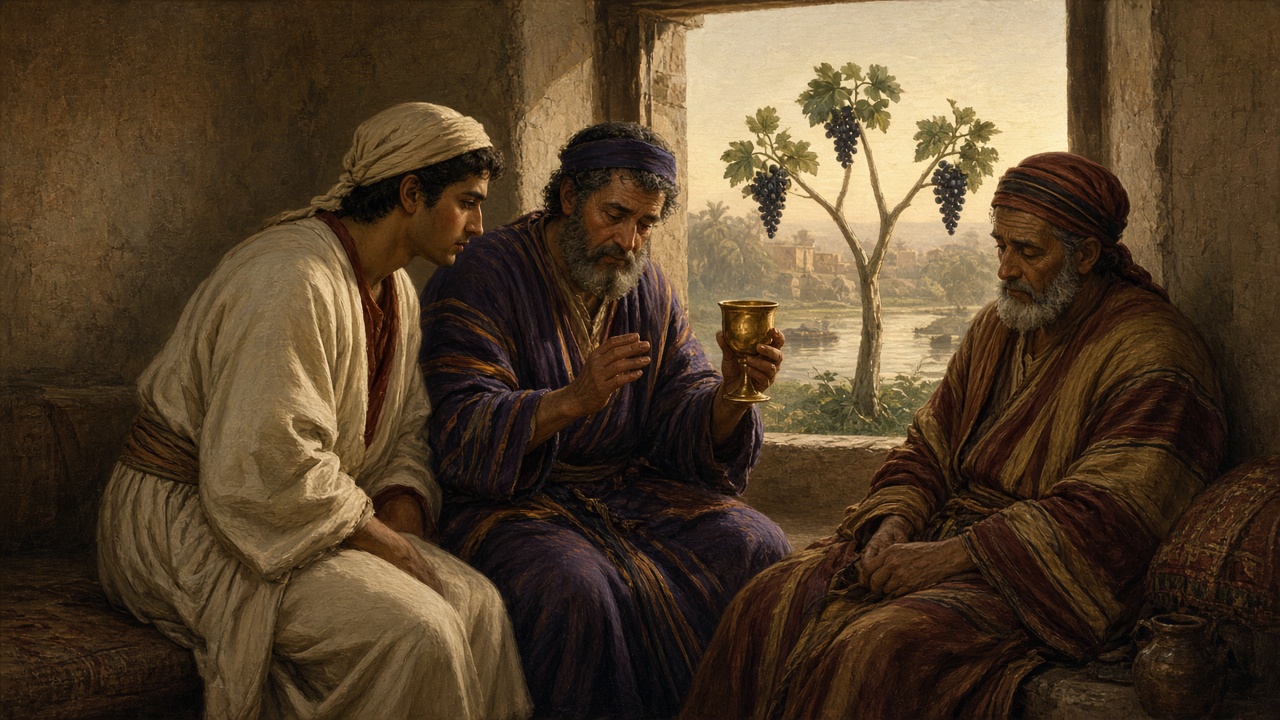
- Pharaoh was angry with two officers, the chief cupbearer and the chief baker, and put them in the house of the captain of the guard, the same prison where Joseph was confined. The captain assigned them to Joseph, who became their personal attendant.Sources: the Bible text itself
- On the same night the cupbearer and the baker each dreamed, and Joseph said that interpretations belong to God. He took the three branches and the three baskets to mean three days: Pharaoh would lift up the cupbearer's head and restore him, but lift off the baker's head and hang him on a tree. On the third day, Pharaoh's birthday, the king held a feast for his officials, restored the cupbearer, and hanged the baker.Sources: the Bible text itself
- Joseph asked the cupbearer to remember him and mention him to Pharaoh after his restoration. He said he had been kidnapped from the land of the Hebrews and had done nothing for which he should have been put in the dungeon. Easton's Bible Dictionary (1897) identifies the Pharaoh of Joseph's days as probably Apopi, or Apopis, the last of the Hyksos kings; some argue instead that Joseph came to Egypt later, under Thothmes III.Sources: the Bible text itself · Pharaoh (of Joseph)
Notes written with AI assistance from open sources (Theographic Bible Metadata, CC BY-SA 4.0; Easton’s Bible Dictionary, public domain) and reviewed before publishing.
Places in this chapter
Only places identified with high confidence are shown (90% or more according to the scholarly sources compiled by OpenBible). Period map: DARE (Digital Atlas of the Roman Empire), CC BY 4.0; modern map: © OpenStreetMap contributors; places: OpenBible.info (CC BY 4.0).
Credits and license for this translation
Sunbin-Got em Kitakamin Weng
The New Testament and part of the Old Testament in the Bimin Language of Papua New Guinea
Nupela Testamen na sampela hap Oldpela Testamen long tokples Bimin long Niugini
Copyright © 2008 Bible Society of Papua New Guinea
Language: Bimin
Translation by: Wycliffe Bible Translators
This translation is made available to you under the terms of the
Creative Commons Attribution-No Derivatives license 4.0.
You may share and redistribute this Bible translation or extracts from it in any format, provided that:
You include the above copyright and source information.
You do not make any derivative works that change any of the actual words or punctuation of the Scriptures.
Pictures included with Scriptures and other documents on this site are licensed just for use with those Scriptures and documents.
For other uses, please contact the respective copyright owners.
2016-10-03
Source: http://png.bible/bhl/ · eBible.org