Genesis 32
Sunbin-Got em Kitakamin Weng · Tap a verse to see its cross-references.
1Unei, Sekow so akalem angin iso, alik bikati unsiliw kale. Biim unbiliw ding dim bakate, Sunbin-Got em yemdakamin finik mali mak Sekow em fukun teliwi, 2e ilo yetemeko, bokolomele: “Sunbin-Got em yemdakamin finik im aneng kale eli!”, angeko, aneng ka em wiin e “Makanaim” dangse kale.
Sekow so Iso so Yelew biim Sang te.
3Beli, Sekow e em weng afak kunum mali mak yemdako, “Nakalem fik Iso em fukun unina!”, yangesomi, imisik yemdase kale. Imisik yamdase ding dim e, e ilo Idom kawtiw im aneng fian Seil abiw kalo yamdako, 4bokoyemomele: “Yu nakalem fik Iso elo weng mak delew unina! Delew uneko, elo bokolewomeliw: ‘Kom weng afak kunum Sekow e weng mak bokokemomele: ‘Ne nukalem mam Alaban em aneng kalo uneko, ka kel kakow kunum atew kebisomi, kakabisi te. Kate kame, ne aneng ka e iti kolew teleko, 5nakalem bulmakao so, donki so, siwsiw so, meme so, weng afak kunum waneng iso, nakalem angin alik alik biso makuw kubul yemde telbi te. Kame, ne kalan kunum biilo imisik yemdalii, i kom fukun teleko, kulo nem talbi beem weng kal bakakem teliw te.’, kom ning ete kange te.”, dangina!”, yangeko, ilo yemdase kale. Yangei, i fein weng kal be delew unsiliw kale.
6Delew unesomeliwi, i iti telesomi, Sekow elo weng kal delew teleko, bokolewomeliw: “Nu king Iso elo atemuw te. Kame e, e akalem 400 wonuk so kunum iso foleko, telei, alik i ikalem aneng koleweko, deiw kel tele tele kelokoliw te.”, dangsiliw kale. 7Dangiwi, Sekow e im dangsiliw weng be kiliko, finganin fian sel mak kesomi, ibolow fukunin tiaktiak kuw kelewse kale. Kelewsomi, akalem kunum waneng so, akalem siwsiw so, meme so, bulmakao so, kamel so, alik alik angom bi, amen kuw keyemeko, mali da mali da alew angin keyemse kale. 8Keyemsomi, ibolow fukunomele: “Fik Iso e teleko, angin mali mak biilo ganeko, ilo yene tewe, angin mali mak bi fon unokoliw kate!”, angeko, ibolow kese kale.
9Kanelewsomelei, Sekow e Sunbin-Got elo bokolewomele: “Yawe kutaka! Ku nem awalik Abalakam so, aatim Aisak so, yelim biim Sunbin-Got kute te. Ku nelo bokonemomelew: ‘Ku iti uneko, kukalem angin so, kukalem kawin aneng kalo una o! Unew tewe, ne kulo ken kekemboki te.’, nangselew te. 10Ne baluw em banim kunum kate, ku diwkuw diwkuw nelo ibolow folok kukuw so, ibolow mutuk dukanembin kukuw so, kukunemsomi, nelo wiin so kunum kenemselew te. Nem Yoldan bang beelo dikeko, mali elo unsi ding dim kabalak e, ne tokfol kuw auleko, danong unsi kate kame, kunum mongom alew mak kesomi, yemde telbi te. 11Kae! Yawe kutaka! Ne fik Iso beem angan elo finganin fian mak keli te. Nimtew angom? Iso e wonuk so kunum iso foleko, nakalem kalel kusel so, muluwel so alik alik nulo yenomin telbe kasike! Ku nem kangbi weng beelo kiliko, dokonema! 12Feinka! Sua kel e, ku nelo bokonemomelew: ‘Ne ken kukuw kuw kekemomi, kom kailokolew muluwel dow biilo kawin yas atew banso banso keyemoki te. Keyemii, mali kawtiw i ki keko, ilo nam teing bokoliw te.’, nangselew kasike.”, dangse kale.
13Dangei, mililiw danei, Sekow e akalem samal biim mit uneko, tugul aliw kakalew bomin so mak kulusomi, “Ilo fik Iso elo sak dulewoki te!”, angeko, ibolow fukunse kale. 14Kuluse samal bi kanekote: Siwsiw imok em fufu e mali em duan kel keyemsomi, siwsiw yanggus im fufu 200 kel keyemsomi, meme imok ikati mali em duan kel keyemsomi, meme yanggus ikati 200 kel keyemsomi, 15kamel yanggus so ikalem men so, im fufu 30 kel keyemsomi, bulmakao yanggus im fufu e 40 kel keyemsomi, bulmakao imok im fufu e king kel keyemsomi, donki yanggus im fufu e mali em duan kel keyemsomi, donki imok em fufu e king kel keyemsomi, fik elo tokoko, dulewomin memen keyemse kale. 16Keyemsomelei, e samal mongom biilo amen amen kuw koyemeko, mali mongom mongom bi akalem weng afak kunum mali mak im teing dim dako, bokoyemomele: “Yu samal mongom amen amen bi kuluko, yomisik uneko, nakalem fik Iso em fukun unoliwka! Unokoliw kate, samal mongom samal mongom dolon amen amen awet so yemde unoliwka!”, yangse kale. 17Yangei, e emisik fol unakabe weng afak kunum elo bokolewomele: “Nakalem fik Iso elo deiw kel tele tele keko, atemewi, e kulo dakalalomele: ‘Ku nimin kunum kate? Ku nal elo samal ban kaliso unbelew a?’, kange tewe, 18ku elo yan weng bokolewomelew: ‘Nem kamok kutaka! Samal ban kale kom weng afak kunum Sekow em samal te. Ete samal bi sak kom teing dim elo dabalale te. Akalem akati ibik toloke te.’, dangolewka!”, dangse kale. 19Dangeko, emteben em ibik gelewbiliw weng afak kunum alik alik ilo weng ki makmak kuw bokoyemeko, bokoyemomele: “Nakalem fik Iso atemiw tewe, weng ki makmak kuw bokolewoliwka! 20Bokoleweko, iti bokolewomeliw: ‘Kom weng afak kunum Sekow e num ibik mewso tolomin kebe te.’, dangoliwka!”, yangse kale. Nimtew angom? Sekow e ibolow fukunomele: “Ne elo mesesem mesesem eisneng be sak dulewii, e mesesem eisneng be atemeko, akalem kaisuw ibolow be koleweko, nelo menew ibolow so netemeko, ibolow ken kuw kukuw kuw kukunemoka!”, angeko, ibolow fukunse kale.
21Kanesomelei, mililiw ding kabalak be, e akalem weng afak kunum iso, akalem mesesem alik alik biso, imisik fololu yemde uniwi, e emikel kuw aneng ka kel kose kale.
Sekow so Sunbin-Got so Aso im Gansiliw em Sang te.
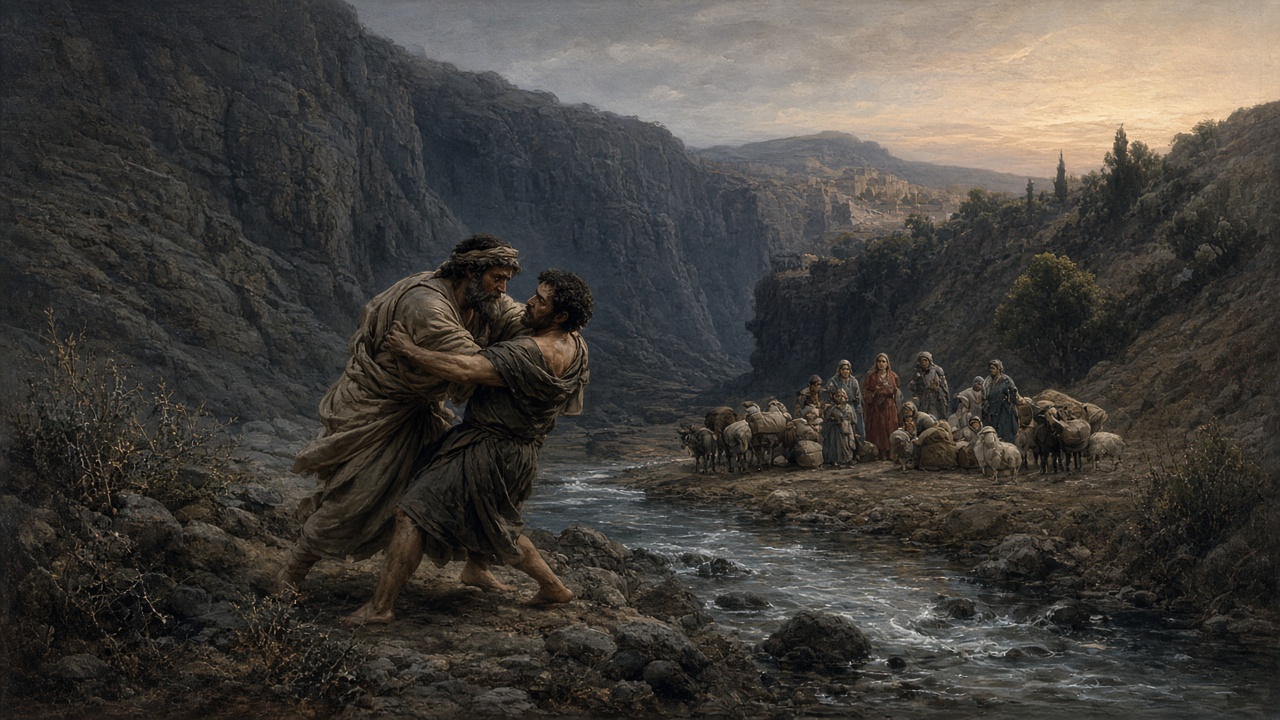
22Beli, mililiw mutuk kese kabalak be, Sekow e moko, akalem kalel kumel alew so, akalem afam weng afak waneng alew biso, akalem guel kel muluwel biso, alik alik biilo yemdalei, i Yabok bang elo dikeko, mali elo unsiliw kale. 23Uniwi, e akalem angin kunum waneng so, akalem mesesem mesesem eisneng beso, alik alik bikati yemdalei, ikati ok be dikeko, mali elo kuw unsiliw kale. 24Uniwi, Sekow akalem e emikel kuw ka kel kose kale.
Ka kosomelei, mililiw ding kabalak be, kunum mak teleko, Sekow elo falal kelewei, aso i gansiliw kale. Ganbomeliwi, aneng kuw danse ding dim bakate, |alt="Jacob wrestling with angel" src="UBSGen32-24.tif" size="col" ref="Talfut Kese 32:24" 25kunum be kal keko, ibolow fukunomele: “Sekow ete kitil kele kai!”, angesomelei, e em kim kun dim kel biti kolewei, em kim kun bing yout kelewse kale. 26Kim kun yout nam keleweko, bokolewomele: “Kame fongate konema! Iti unomin kemika! Aneng dane kasike.”, dangse kale. Dangei, Sekow e yan weng bokolewomele: “Mesik esik ku nelo bamki so keneminba keko, konemew tewe, ne kulo nam kokemii, ku unew te!”, dangse kale. 27Dangei, e elo dakalalomele: “Kom wiin e nelo bokonema!”, dangei, Sekow bokolewomele: “Nem wiin e Sekow nete te.”, dangse kale. 28Dangei, kunum be bokolewomele: “Kom wiin kikis e “Isalael” kangi te. Nimtew angom? Ku Sunbin-Got so, kal so kun so kunum awet so ganeko, kom mel ete kuw kelew kasike.”, dangse kale. 29Dangei, Sekow e elo bokolewomele: “Kame ku kom wiin akati nelo bokonema!”, dangse kate, e yan weng bokolewomele: “Ku nimtew angom nem wiin dakalakabelew a?”, dangeko, yan weng bokolewinba kesomi, sak kuw bamki so kelewsomi, unse kale.
30Keko beli, Sekow e bokolomele: “Ne Sunbin-Got em kiinguen atemi kate, ne kuaninba kesomi, bi te.”, angeko, abiw ka em wiin e “Feniel”, dangse kale. 31Dangei, ataan telei, Sekow e Feniel abiw ka koleweko, tokfol kuw auleko, yout bolbol kem dili unse kale.
32Em dim kanelewse beem mongom ete Isalael kawtiw alik alik i sua akal, kame akal, diwkuw diwkuw samal mali im kim kun dim be waninba kekabiliw te.
Did you know?
At the Jabbok, on the Way to Esau
- Mahanaim means “two camps.” Jacob gave that name to the place near the Jabbok, beyond the Jordan, when the angels of God met him and he said, “This is the camp of God.” There he also divided his people, flocks, herds, and camels into two camps, hoping one might escape if Esau attacked the other.Sources: Mahanaim · the Bible text itself
- The Jabbok, whose name is explained as “a pouring out, or a wrestling,” is a stream east of the Jordan. It joins the Jordan about midway between the Sea of Galilee and the Dead Sea, after a course of about 65 miles through a wild, deep ravine. At its ford Jacob sent his two wives, two maidservants, eleven sons, and all he owned across, then remained alone and wrestled with a man until daybreak.Sources: Jabbok · the Bible text itself
- Jacob sent messengers to Esau in the land of Seir, the country of Edom, calling him lord and himself a servant. Seir is a mountainous region along the east side of the Arabah, from the southeastern end of the Dead Sea toward Akabah, the eastern branch of the Red Sea; the Edomites occupied it, and it was allotted to Esau’s descendants. Esau, the firstborn twin and a hunter, had sold his birthright for red lentil stew and was also called Edom, “red,” while Jacob—whose name means “one who follows on another’s heels,” or “supplanter”—had conspired with his mother to deceive Isaac.Sources: the Bible text itself · Seir · Esau (Edom) · Jacob (Israel)
Notes written with AI assistance from open sources (Theographic Bible Metadata, CC BY-SA 4.0; Easton’s Bible Dictionary, public domain) and reviewed before publishing.
Places in this chapter
- Edom · 30.746, 35.604 · verse 3
- Jordan · Today: Jordan River · 31.761, 35.558 · verse 10
- Jabbok · Today: Zarqa River · 32.115, 35.543 · verse 22
Only places identified with high confidence are shown (90% or more according to the scholarly sources compiled by OpenBible). Period map: DARE (Digital Atlas of the Roman Empire), CC BY 4.0; modern map: © OpenStreetMap contributors; places: OpenBible.info (CC BY 4.0).
Credits and license for this translation
Sunbin-Got em Kitakamin Weng
The New Testament and part of the Old Testament in the Bimin Language of Papua New Guinea
Nupela Testamen na sampela hap Oldpela Testamen long tokples Bimin long Niugini
Copyright © 2008 Bible Society of Papua New Guinea
Language: Bimin
Translation by: Wycliffe Bible Translators
This translation is made available to you under the terms of the
Creative Commons Attribution-No Derivatives license 4.0.
You may share and redistribute this Bible translation or extracts from it in any format, provided that:
You include the above copyright and source information.
You do not make any derivative works that change any of the actual words or punctuation of the Scriptures.
Pictures included with Scriptures and other documents on this site are licensed just for use with those Scriptures and documents.
For other uses, please contact the respective copyright owners.
2016-10-03
Source: http://png.bible/bhl/ · eBible.org