Genesis 20
Sunbin-Got em Kitakamin Weng · Tap a verse to see its cross-references.
Abalakam so, Abimelek so Aso im Sang te.
1Beli, Abalakam e Mamele em ais tem ninit mit ka kel teinse abiw be koleweko, Negew aneng elo unesomi, Kades abiw mutuk fian tele Sul abiw mutuk fian tele, biim tele tele abiw mutuk fian Gelal beem mit mewso teinse kale. 2Em kalo unse ding dim bakate, Abalakam e akalem kalel Sala um dulum elote kaem aneng kasel ilo bokoyemomele: “Sala bu nakalem neng te!”, yangse kale. Yangei, Gelal abiw mutuk fian em emisik kamok Abimelek e akalem weng afak kunum ilo bokoyemomele: “Yu uneko, Sala ulo wamde telina!”, yangei, i fein uneko, ulo wamde teliwi, e ulo kuluse kale. 3Kulusomelei, mililiw ding kabalak e, Sunbin-Got e kiin dem sin teleko, Abimelek elo bokolewomele: “Kulubelew waneng bu nanew kunum em kalel kebu kasike kame, ne kulo kenii, ku kuanokolew te.”, dangse kale. 4Dangse kate Abimelek e Sala ulo woluwei, i akalinba kesiliw kasike, Abimelek e Sunbin-Got elo yan weng mak bokolewomele: “Yakai kutaka! Ku kiol kukuw gelewbiliw kunum waneng ilo yenkabelew sako? 5Abalakam esik nelo bokonemomele: ‘Waneng bu nakalem neng te!’, nangei, waneng bukati nelo bokonemomelu: ‘Kunum be nem fik te!’, nangui, ne wosuko, ulo kulusi te. Feinka! Nem ibolow fukunin akal, nem kukuw akal, alik alik be kiol kuw kebe te!”, dangse kale. 6Dangei, Sunbin-Got e kiin dem sin yan weng mak elo bokolewomele: “Feinka! Kom ibolow fukunin kiol kuw beelo kal kebi kasike, ne ‘Ku kanelom ulo woluwsomi, uso akalokolew te!’, angomi, kilele dokokemsi te. Mesik esik ku wa kukuw keko, nem kiin dim e sili sili kukuw kemokolew kasike. 7Kate kame, waneng bu ukalem imok mit elo wamdalolewka! Nimtew angom? Kunum be nem bontem dim bakabe kunum kebe kasike. E neso weng bokoko, nelo dakalalei, ne kulo dokokemii, ku nam kuanew te. Kate, ku waneng buulo wamdalinba kelew tewe, ne kuso kukalem angin alik alik biso fein yenii, alik alik yu kuanokoliw te.”, dangse kale.
8Dangei, kutim danse ding dim bakate, Abimelek e fongate akate akalem weng afak kunum ilo gaayemei, i teliwi, e ilo Sunbin-Got em kiin dem sang be bokoyemse kale. Bokoyemei, i kiliko, alik alik i finganin fian mak kesiliw kale. 9Keko beli, Abimelek e Abalakam elo gaalewei, e em mit telei, e elo bokolewomele: “Kutaka! Nimtew angom ete ku wa kukuw be neso, nakalem angin biso alik nulo kukuyembelew a? Nomin sili sili kukuw mak ne kulo kekemsi kate? Kom kanebelew beem mongom ete kame neso, nakalem angin so, alik alik nu Sunbin-Got em kiin dim e sen so buluw te. Kawtiw i kanenembelew kukuw beemdiw kanelom kemokoliw te!”, dangse kale. 10Dangeko, iti weng makso bokolewomele: “Nimtew eisneng mak kom ibolow tem une kemei, ku kaneko wa kukuw kenembelew a?”, dangse kale. 11Dangei, Abalakam e yan weng bokolewomele: “Ne finganeko, ibolow fukunite: ‘Aneng kaleem kawtiw i Sunbin-Got em awan finganinba kebiliw kasike, i nelo nesomeliwi, nem kalel ukal tokolu dakinemokoliw te.’, angebi te. 12Angebi kate, Sala bu fein nakalem neng ute te. Alew num aatim e diw kate, um auk ukal amen, nem yem ukal amen kasike, ne ulo kulusi te. 13Keko beli, deiw mak ding mak kelei, Sunbin-Got e nelo gaanemei, ne nakalem angin so aatim kumel so koyemeko, nem akokow aneng mak elo unsi te. Unsi ding kabalak e, ne nakalem kalel Sala ulo bokoumomeli: ‘Sala, ku nelo fein ibolow mutuk fian kenemew tewe, aneng aneng kakamaluw beem biliw kasel ilo bokoyemomelew: ‘Abalakam e nakalem fik te.’, yangbolewka!’, wangsi te.”, dangse kale. 14Dangei, Abimelek e Sala ulo Abalakam em fukun wamdeko, siwsiw so, bulmakao so, sak weng afak kawtiw so kuluko, Abalakam elo duleweko, 15bokolewomele: “Nem aneng be kukalem ete. Kawin beem anung mak ibolow kelew tewe, ka kel sak teina!”, dangse kale. 16Dangeko, Sala ulo bokoumomele: “Kame, kukalem ‘fik’, dangbelew elo on kisol 1'000 dulewbi kasike, on kisol be kom inkal so ilum so kuluselew be atin kuw okilewoka!”, wangse kale. 17Wangeko, iti Abalakam elo bokolewomele: “Abalakam, ku Sunbin-Got eso weng bokoko, nem dulum elo dakalala!”, dangse kale. Nimtew angom? Yawe e Sala ulo ibolow fukunse kasike, e Abimelek em angin im waneng alik alik biilo aul banim fium keyemse kasike. Keko beli, Abalakam em Sunbin-Got eso bokolewse ding kabalak e, Sunbin-Got e em dangse weng be kiliko, Abimelek em kalel so akalem angin im waneng so alik alik ilo dokoyemei, i iti aul kumun so kesiliw kale.
Did you know?
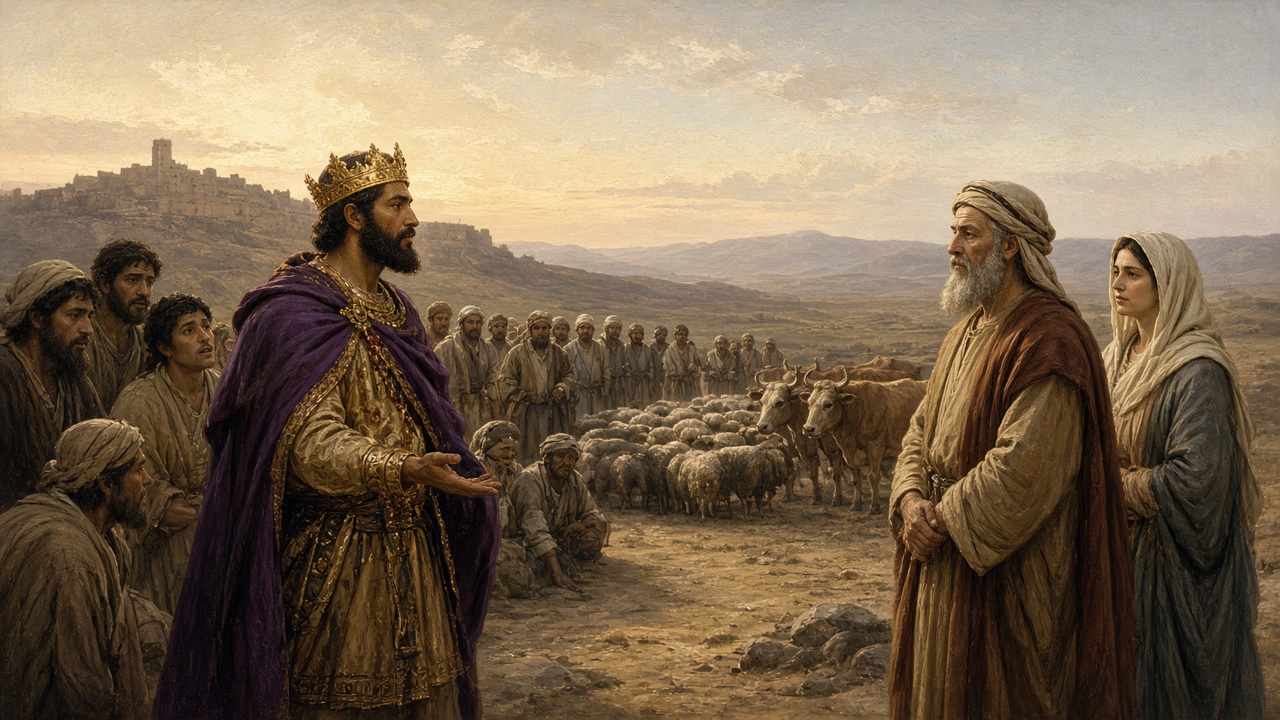
Sister and Wife in Gerar
- Abraham was staying in Gerar, a very ancient town and district on the southern border of Palestine, then ruled by a king named Abimelech. He had journeyed to the Negev, the arid district south of Palestine on the caravan route toward Egypt, and settled between Kadesh and Shur. Shur, a name meaning “wall,” was a desert region on Egypt’s northeastern edge, probably named for the frontier wall the Egyptians built there.Sources: the Bible text itself · Gerar · Negeb · Shur
- When Abraham said that Sarah was his sister, the kinship was not wholly invented: she was also his half-sister, the daughter of his father but not of his mother. Easton's Bible Dictionary (1897) gives the name Sarah as meaning “princess,” and says that name was given when it was announced that she would be the mother of the promised child.Sources: the Bible text itself · Sarah
- The name Abimelech appears again at Gerar in Isaac’s story. Easton's Bible Dictionary (1897) describes that later king as probably the son of the Abimelech Abraham met, and says he rebuked Isaac for a similar deception about his wife Rebekah, which the king discovered by accident. The same work says Gerar seems to have been a rich pastoral country.Sources: Abimelech (King of Gerar) · Gerar
Notes written with AI assistance from open sources (Theographic Bible Metadata, CC BY-SA 4.0; Easton’s Bible Dictionary, public domain) and reviewed before publishing.
Places in this chapter
- Negeb · 31.245, 34.841 · verse 1
Only places identified with high confidence are shown (90% or more according to the scholarly sources compiled by OpenBible). Period map: DARE (Digital Atlas of the Roman Empire), CC BY 4.0; modern map: © OpenStreetMap contributors; places: OpenBible.info (CC BY 4.0).
Credits and license for this translation
Sunbin-Got em Kitakamin Weng
The New Testament and part of the Old Testament in the Bimin Language of Papua New Guinea
Nupela Testamen na sampela hap Oldpela Testamen long tokples Bimin long Niugini
Copyright © 2008 Bible Society of Papua New Guinea
Language: Bimin
Translation by: Wycliffe Bible Translators
This translation is made available to you under the terms of the
Creative Commons Attribution-No Derivatives license 4.0.
You may share and redistribute this Bible translation or extracts from it in any format, provided that:
You include the above copyright and source information.
You do not make any derivative works that change any of the actual words or punctuation of the Scriptures.
Pictures included with Scriptures and other documents on this site are licensed just for use with those Scriptures and documents.
For other uses, please contact the respective copyright owners.
2016-10-03
Source: http://png.bible/bhl/ · eBible.org