Genesis 10
Sunbin-Got em Kitakamin Weng · Tap a verse to see its cross-references.
1Sang be Noa em muluwel Sem o, Kam o, Yafet o, im sang te.
Noa em Muliel Dow im Sang te.
Ok dang fole fole banimse ding kabalak e, Noa em muluwel alemsal bikati muluwel kailsiliw kale.
2Yafet em muluwel im wiin e emisik aul e Gomel, em teben e Magok, Madai, Yawan, Tubal, Mesek, fefe ning ful e Tilas te.
3Gomel em muluwel im wiin e Askenas, Ilifat, Togalma.
4Yawan em muluwel im wiin e Elisa so, Talsis so. Em min Kit e Kit aneng fian kasel im kunum mongom kelei, em min Dodan e Dodan aneng fian kasel im kunum mongom kese kale.
5Keko beli, Yafet em muluwel dow i okmun fian beem beleng so, okgung so, aneng aneng beem kasel kesiliw kale. Kesomeliwi, ikalem angin amen, ikalem weng amen, ikalem abiw aneng amen amen keko, kesiliw kale.
6Kam em muluwel im wiin kanekote: Emisik aul e Kus, em teben e Isiw, Ilibia, Kenan te.
7Kus em muluwel im wiin e Seba, Kabila, Sawta, Alama, Sawteka. Alama min alew dukulomei, im wiin e “Seba so, Dadan so.” yangse kale. 8Kus e min makso dukuko, em wiin e “Nimolot”, dangse kale. E kawin dim em emisik kak kunum wiin kitil so kamok kesomi, 9Yawe em kiin dim kel samal yemin kunum fian kese kale. Kese kasike, kunum waneng i em wiin daolewko, em sang aneng aneng elo bakam unsiliw kale. 10Nimolot be Babilonya aneng fian ka kel abiw mutuk fian mak duku tem duku tem gesomi, im wiin e “Babel, Elek, Akat, Kalne.”, yangse kale. 11Keko beli, Nimolot e Babilonya aneng fian koleweko, Asilia aneng fian kalo unesomi, teleko, ka kel e iti abiw mutuk fian mak duku tem duku tem gese kale. Abiw mutuk fian biim wiin e “Ninibe, Elebototil, Kala, 12Elesen.”, yangse kale. Ninibe abiw mutuk fian koleweko, Kala abiw mutuk fian tele tele biim mutuk dim e e Elesen abiw mutuk fian be gese kale.
13Isiw em muluwel im wiin e “Ilidia, Anam, Elekaw, Nawtu, 14Fatulus, Kasulu, Kilit.”, yangse kale. Kilit e Filistia kunum waneng biim kunum mongom kese kale.
15Kenan em muluwel i wiin e kanekote: Emisik min em wiin e Saidon te. Emteben min em wiin e Kit te. 16Muluwel makso im wiin e Yebus so, Amol so, Gilgas so, 17Kibi so, Alka so, Sini so, 18Albat so, Semal so, Kamat so kesiliw kale. Yangmeli bi kawtiw banso biim kunum mongom kesomi, aneng aneng bayemeleko, ka tein ka tein kesiliw kale.
19Keko beli, Kenan em muluwel dow im abiw mutuk fian duku tem duku tem kesiliw kasike, im aneng fian beem awet e kanekote: Saidon abiw mutuk fian koleweko, falal falal uneko, Galal abiw mutuk fian uneko, Gasa abiw mutuk teleko, Sodom so, Gomola so, abiw mutuk fian alew koleweko, iti falal falal uneko, Adama so, Seboim so abiw mutuk fian alew beelo uneko, Elesa abiw mutuk fian teleko, ka kel ayet kese kale. 20Keko beli, Kam em muluwel dow ikalem angin amen, ikalem weng amen, ikalem abiw aneng amen amen keko, kesiliw kale.
21Beli, Noa em emisik min Sem akati muluwel dukuse kale. E Ebel em muluwel dow biim kunum mongom kese kale. 22Sem em muluwel im wiin e kanekote: Emisik dil e Elam kelei, emteben e Asul so, Alfaksat so, Ilidia so, Alam so kesiliw kale.
23Alam em muluwel im wiin e kanekote: Us, Kul, Getel, Mas.
24Alfaksat e Sela em alew kese kale. Kesomelei, Sela e Ebel dukuse kale. 25Ebel e min alew mak dukuse kale. Mak em wiin “Felek”, dangeko, mak em wiin e “Yoktan”, dangse kale. Ebel em Felek dukuse ding kabalak e, kawtiw i amen amen kesomi, ka tein ka tein kesiliw kasike, min beem wiin so kanesiliw so wiin takiyak molewse kale.
26Yoktan em muluwel i kanekote: Almodat, Selew, Kasalmabet, Yela, 27Kadolam, Usal, Dikala, 28Obal, Abimael, Seba, 29Ofil, Kabila, Yobaw te. Aul muluwel banban bi Yoktan em muluwel ite. 30Ikalem aneng fian e Mesa abiw mutuk fian kalote uneko, Sefal abiw mutuk fian teleko, ataan tele dulum beem amgu mit mewso kese kale.
31Keko beli, Sem em muluwel dow ikalem angin amen, ikalem weng amen, ikalem abiw aneng amen amen keko, kesiliw kale.
32Sang be, kunum mongom Noa beem muluwel alemsal biim mining dow im sang te. Im muluwel dow alik alik i ikalem angin amen amen kesomi, ikalem kawin aneng amen amen kuluko, ka tein ka tein kesomeliwi, kawin fe abiil fe alik alik be geksiliw kale.
Did you know?
The Nations after the Flood
- Genesis 10 follows the families of Noah’s three sons, Shem, Ham, and Japheth, and says that after the flood the nations of the earth spread out from them, grouped by clans, languages, lands, and nations. Japheth’s line is linked with peoples of eastern Europe and northern Asia: Gomer is generally regarded as an ancestor of the Celts and the Cimmerians, who in early times settled north of the Black Sea, and Javan became the Hebrew name that the peoples of the East used for the Greeks, especially those of Ionia.Sources: the Bible text itself · Japheth · Gomer (son of Japheth) · Javan
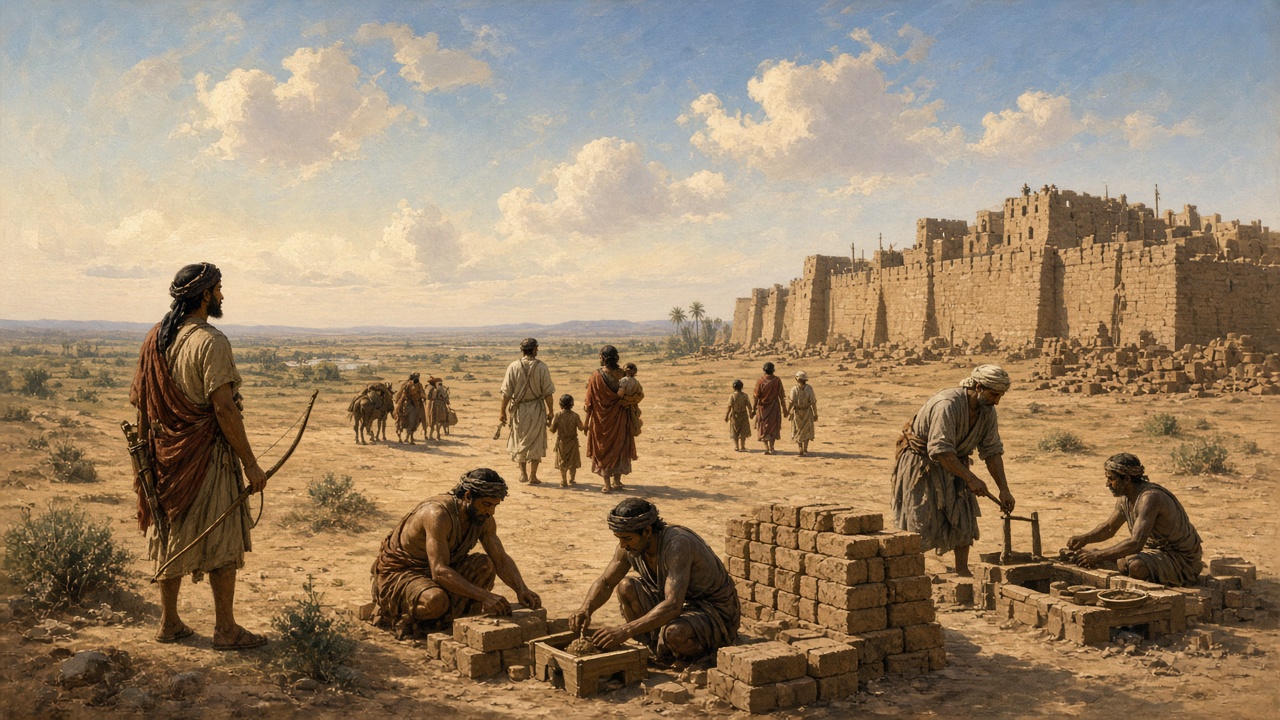
- Cush, a son of Ham, was the father of Nimrod, remembered as a mighty hunter before the Lord, whose kingdom began at Babylon, Erech, Accad, and Calneh in the land of Shinar, probably Babylonia or southern Mesopotamia. From that land he went into Assyria and built Nineveh, Rehoboth-Ir, Calah, and Resen; Calah’s site is probably the Nimrud ruins on the left bank of the Tigris.Sources: the Bible text itself · Shinar · Nineveh · Calah
- Mizraim, the dual form of a Hebrew word for a mound or fortress, may point to Upper and Lower Egypt and is the name the Hebrews usually gave that country; Arabic still calls it Muzr. Shem is called the older brother of Japheth and the forefather of all the sons of Eber, regarded as the founder of the Hebrew people, while an Arab tradition remembers Eber’s son Joktan, Kahtan in Arabic, as the ancestor of tribes of central and southern Arabia.Sources: the Bible text itself · Mizraim · Eber (Heber) · Joktan
Notes written with AI assistance from open sources (Theographic Bible Metadata, CC BY-SA 4.0; Easton’s Bible Dictionary, public domain) and reviewed before publishing.
Places in this chapter
- Erech · Today: Uruk · 31.322, 45.636 · verse 10
- Shinar · Today: Babylonia · 32.543, 44.422 · verse 10
- Assyria · 36.359, 43.153 · verse 11
- Calah · Today: Nimrud · 36.098, 43.329 · verses 11, 12
- Nineveh · 36.359, 43.153 · verses 11, 12
- Canaan · 32.767, 35.333 · verse 19
- Gaza · Today: Tell Harube · 31.504, 34.464 · verse 19
- Sidon · Today: Sandikli archaeological site in Sidon · 33.561, 35.372 · verse 19
Only places identified with high confidence are shown (90% or more according to the scholarly sources compiled by OpenBible). Period map: DARE (Digital Atlas of the Roman Empire), CC BY 4.0; modern map: © OpenStreetMap contributors; places: OpenBible.info (CC BY 4.0).
Credits and license for this translation
Sunbin-Got em Kitakamin Weng
The New Testament and part of the Old Testament in the Bimin Language of Papua New Guinea
Nupela Testamen na sampela hap Oldpela Testamen long tokples Bimin long Niugini
Copyright © 2008 Bible Society of Papua New Guinea
Language: Bimin
Translation by: Wycliffe Bible Translators
This translation is made available to you under the terms of the
Creative Commons Attribution-No Derivatives license 4.0.
You may share and redistribute this Bible translation or extracts from it in any format, provided that:
You include the above copyright and source information.
You do not make any derivative works that change any of the actual words or punctuation of the Scriptures.
Pictures included with Scriptures and other documents on this site are licensed just for use with those Scriptures and documents.
For other uses, please contact the respective copyright owners.
2016-10-03
Source: http://png.bible/bhl/ · eBible.org