Matthew 3
Na Rorongo Ke Toke Eigna a Jisas Krais · Tap a verse to see its cross-references.
Na Agutu Nigna A Jon Siuvitabu I Jiudea
1Leghugna kekeha vinogha, a Jon Siuvitabu ke turughua nigna na agutu kori meleha ke gou i Jiudea. Imanea ke titioni vanira na komi tinoni 2me velera, “Oti tughua na havimiu ke koakoa eigna na maghavu a God keda vunaghi pungusira nigna na komi tinoni ke gharani mai ghohi!” 3A Jon hiri, a profet Aisaia ke titionoa i hau vaghagna iaani,
“Sina mane keda haohaghore heta kori meleha ke gou, ‘Oti kaikalitia na hangana vania a Lod moti vajinoa na bali taetavetigna.’”
4A Jon ke pipisia na pohe ke agutua kori sesehugna na kamel ma na nigna na vovogho ke agutua kori ghuighuligna na kau. Ma na ghagna na vanga na cheche ma na kothogna na mijua. 5Sethe na tinoni i Jerusalem mi kori provins i Jiudea mi tadia na komi meleha ghaghireigna na bea hutu i Jodan kena haidu mai tagna a Jon. 6Imarea kena mai mena tuturi aua na komi paluhadia tagna a Jon me siuvitabura kori bea hutu i Jodan.
7Kori vido a Jon ke reghira mara na Farise mi mara na Sadiusi kena mai mena haga siuvitabu nidia itagna, imanea ke velera, “Ighamu koti dika vaghagna na komi poli! Ehava? Ighamu koti ghaghana gi kotida siuvitabu vamua, ighamu tangomana kotida polo tagna na fate a God keda eia? Boi tangomana nimiu! 8Oti kidi eia na komi fata ke jino bali tateli aua ighamu koti tughua ghohi na havimiu ke koakoa, gi oti mai moti siuvitabu itagua. 9Oti saghoi ghaghana a God keda boi fateghamu eigna koti havi mai kori vikegna a hutuda a Ebraham. Eigna inau ku veleghamu, a God tangomana keda eia na komi ghahira iraani gi kedana ara vinahuhugna a Ebraham. 10Ikeagaieni a God ke kaikaliti ghohi bali fatera na komi tinoni kena boi tughua na havidia, vaghagna ahai ke kaikaliti na toka horuagna na komi ghai. Na komi ghai ke boi toke na sagharodia, imanea keda toka horura me keda soni vanoa kori joto.
11“Na siuvitabu inau ku eia kori bea ke tateli aua ighamu koti tughua ghohi na havimiu ke koakoa. Keana ahai keda mai leghugu keda siuvitabughamu kori Tarunga ke Tabu ma na joto. Imanea ke thaba vano itagua. Inau boi naba kuda hati aua nigna na sadol. 12Imanea vaghagna sina mane ke kaikaliti bali hati aua na ghuighuligna na wit kori ghanogna. Imanea keda hatia na komi ghanogna me boa kori vathegna, keana imanea keda pughulira na komi ghuighuligna kori joto ke teo na thehegna.”
A Jon Ke Siuvitabua A Jisas
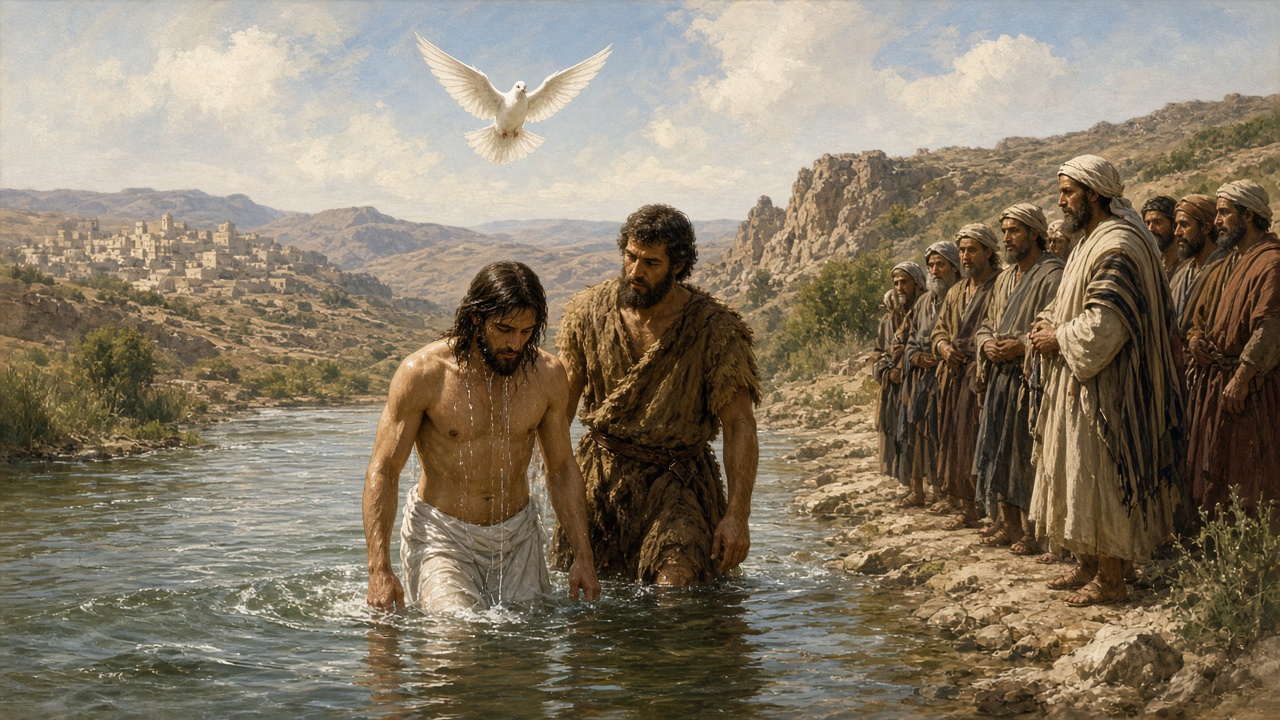
13Jisas ke turughu mai i Galili me vano jufu kori bea hutu i Jodan eigna keda siuvitabu tagna a Jon. 14Keana a Jon ke bosi magnahaghinia keda eia iangeni me veleagna, “Ehava gi o mai itagua eigna kuda siuvitabugho? Ighoe ghua koda siuvitabuu ri.”
15A Jisas ke haghore tughua, “Ikeagaieni e toke gi koda ei vaniu na hava ku kaegho. Roghita koroda leghua vamua na vanohehe nigna a God.” Gi a Jon ke hiia a Jisas me siuvitabua.
16Kori vido a Jisas ke vulahadi kori bea, na maaloa ke hangavi mi manea ke reghia na Tarunga ke Tabu nigna a God ke horu mai vaghagna na bora me togha itagna. 17Ma na ohai haghore ke haghore mai i popo me ania, “Iaani a pukuni dathegu. Inau ku dothovia mu totogo puala eigna.”
Did you know?
Repentance and Baptism at the Jordan
- Matthew identifies John the Baptist as the one spoken of through the prophet Isaiah: a voice calling in the wilderness, “Prepare the way for the Lord.” Easton's Bible Dictionary (1897) records that John’s mission was the subject of prophecy, citing this passage, Isaiah 40:3, and Malachi 3:1, and that he was of priestly descent—his father Zacharias a priest of the course of Abia, and his mother Elisabeth of the daughters of Aaron. A chronology dates both the beginning of John’s ministry and his baptism of Jesus to AD 26.Sources: the Bible text itself · John the Baptist · John the Baptist Begins Ministry · John Baptizes Jesus
- John came preaching in the wilderness of Judea, and people went out to him from Jerusalem, all Judea, and the whole region around the Jordan, confessing their sins and being baptized in the Jordan River. Easton's Bible Dictionary (1897) notes that under the Romans, in the time of Christ, Judea denoted the southernmost of the three divisions of Palestine, as distinguished from Galilee and Samaria, and included the territories of Judah, Benjamin, Dan, Simeon, and part of Ephraim. Jesus came from Galilee—called Galil by the Jews—to the Jordan to be baptized by John.Sources: the Bible text itself · Judea · Galilee
- John warned the Pharisees and Sadducees not to rely on the claim, “We have Abraham as our father,” saying that God could raise up children for Abraham from the stones. Easton's Bible Dictionary (1897) explains the name Abraham as “father of a multitude” and describes him as the son of Terah, named before his older brothers because he was the heir of the promises.Sources: the Bible text itself · Abraham
Notes written with AI assistance from open sources (Theographic Bible Metadata, CC BY-SA 4.0; Easton’s Bible Dictionary, public domain) and reviewed before publishing.
Places in this chapter
- Judea · Today: Judea 1 · 31.777, 35.234 · verses 1, 5
- Jerusalem · 31.777, 35.234 · verse 5
- Jordan · Today: Jordan River · 31.761, 35.558 · verses 5, 6, 13
- Galilee · 32.760, 35.527 · verse 13
Only places identified with high confidence are shown (90% or more according to the scholarly sources compiled by OpenBible). Period map: DARE (Digital Atlas of the Roman Empire), CC BY 4.0; modern map: © OpenStreetMap contributors; places: OpenBible.info (CC BY 4.0).
Credits and license for this translation
Na Rorongo Ke Toke Eigna a Jisas Krais
The New Testament in the Bughotu language of the Solomon Islands
Niu Testament long langguis Bughotu
copyright © 2009 Wycliffe Bible Translators, Inc.
Language: Bughotu
Translation by: SITAG
This translation is made available to you under the terms of the
Creative Commons Attribution-No Derivatives license 4.0.
You may share and redistribute this Bible translation or extracts from it in any format, provided that:
You include the above copyright and source information.
You do not make any derivative works that change any of the actual words or punctuation of the Scriptures.
Pictures included with Scriptures and other documents on this site are licensed just for use with those Scriptures and documents.
For other uses, please contact the respective copyright owners.
2017-11-13
Source: http://ebible.org/bgt/ · eBible.org