Galatians 5
Na Rorongo Ke Toke Eigna a Jisas Krais · Tap a verse to see its cross-references.
Krais Ke Vamamaluhaghita Tagna Na Komi Vetula
1Krais ke vamamaluhaghita eigna katida mono mamaluha tadia na komi vetula. Na vunegna iangeni, oti sokara ngasi moti saghoi ghoi mono saragna na komi vetula vaghagna na tinoni seka.
2Oti vaovarongo mai itagua! Inau a Pol ku veleghamu, gi kotida sogivaughithatha bali mono jino kori matagna God, na hava ke eia a Krais eimiu teo keda hatheghamu. 3Mi inau ku ghoi veleghamu, ahai keda sogivaughithatha, imanea keda leghua na komi fata gougovu ke mono tadia na komi vetula. 4Ahai itamiu ke toatogha ke mono jino kori matagna a God eigna ke leghua na komi vetula, imanea ke pukuni haunia a Krais. Imanea ke taveti sania nigna na dotho a God vaniagna. 5Keana na Tarunga ke Tabu ke vaheta na ghaghanada mi ghita kati adoa a God keda vajinoghita kori matagna eigna kati vaututunia a Krais. 6Kori nida na mono haidu duagna Jisas Krais, na leghuagna na puhi sogivaughithatha boi na fata ke nagho. Na fata ke nagho, ati vaututunia a Krais mati dothovia a God ma na komi tinoni.
7I hau ighamu koti pukuni sokara ngasi kori havimiu duagna a Krais. Ikeaghaieni ahai ke pilaunighamu eigna kotida boi leghua na velepuhi ke tutuni? 8Na pilaunighamugna iangeni boi mai tagna a God eigna imanea ke kiloghamu. 9Reireghi toke ghamu! Eigna ighamu koti adoa ghohi, “Sina ghathi vidogna vamua na isi ke vapotea na falaoa.” 10Keana na vunegna inau ku adoa ighamu nigna na komi tinoni a Lod, inau ku vaututunighamu kotida talu leghua vamua na hava ku velepuhighamu. Ahai ke pilaunighamu me diadikala na ghaghanamiu, a God keda vapara.
11Ara kulagu kiloau, gi keda tutuni inau ku talu titionoa mua na sogivaughithatha na fata ke nagho, ehava na vunegna na komi tinoni Jiu kena talu vaparau na? Keana na vunegna inau ku titionoa na theheagna a Krais kori ghaibabala na fata ke nagho, na komi tinoni Jiu kena dikatadia itagua. 12Arahai kena vadiadikala na ghaghanamiu eigna na sogivaughithatha, e toke vamua gi kedana thahora ghehedia.
13Ara kulagu, a God ke kiloghamu eigna kotida mamaluha tadia na komi vetula. Kari e boi toke gi ighamu kotida toatogha vaghagna iaani, “Na vunegna ighami kiti mamaluha, e toke vamua kitida leghua na komi vanohehegna na tonomami.” Saghoi eia iangeni kari oti veidothovighi moti veihatheghi. 14Na nimami na komi vetula gougovu ighami mara Jiu kena mono saragna sina vetula vamua, “Dothovira na komi tinoni vaghagna ko dothovigho ghehemu.” 15Reireghi toke ghamu! Gi kotida eia vaghagna na komi fata kaukagu ke asi moti veiriurihughi, ighamu kotida vadiadikalaghamu ghehemiu.
Ati Lubatia Na Tarunga Ke Tabu Eigna Keda Batughita
16Inau ku veleghamu, oti lubatia na Tarunga ke Tabu eigna keda batughamu. Gi kotida eia iangeni, teo kotida leghua nimiu na komi vanohehe ke dika. 17Nida na komi vanohehe ke dika ke batughita eigna katida eia na komi fata ke boi magnahaghinighita katida eia na Tarunga ke Tabu. Ma na Tarunga ke Tabu ke batughita eigna katida eia na komi fata ke toke ke boi magnahaghinia katida eia nida na komi vanohehe ke dika. E rua na fata iaani koro thevuioka ma na vunegna iangeni e vahothahaghinighita na eiagna na hava kati magnahaghinia. 18Keana, kori vido na Tarunga ke Tabu ke batughamu, na komi vetula kena boi tangomana na vunaghi pungusighamugna.
19Ighita gougovu kati adoa na komi puhi dika kena eia arahai kena leghua na komi vanohehedia ke dika. Imarea kena nere duadia arahai kena boi ara taudia, mena eia na komi fata ke dika ke magnahaghinia na tonodia, 20mena maimanihihia na komi ngunguju, mena fela, mena thevuioka tadia arahai tavogha, mena rihu, mena tahotha, mena dikatadia, mena vahaihadira ghehedia, mena vathevurura na komi tinoni, 21mena mamagna, mena kou memee, mena eia na komi haidu bali eia na komi puhi ke dika, mena eia kekeha fata mua ke dika. Inau ku veleghamu ghohi iaani, kari ikeagaieni inau ku ghoi veleghamu mua, arahai kena eia na komi fata ke dika iraani, imarea kedana boi haghe kori hughuta nigna a God.
22Keana, kori vido na Tarunga ke Tabu ke batura na komi tinoni, na komi fata iraani keda mono kori havidia: na dotho, na totogo, na soleana, na mono haidu toetoke duadia na komi tinoni, na hatheragna arahai tavogha, na eiagna na komi fata kena velea kedana eia, 23na rongoviragna arahai tavogha, ma na reireghiragna ghehedia tadia na komi puhi ke dika. E teo sa vetula ke velea na komi fata iraani ke boi jino. 24Arahai kena nigna na komi tinoni a Jisas Krais, imarea kena tupipuhia kori ghaibabala nidia na vanohehe ke magnahaghinira na eiagna na komi puhi ke dika. 25Na vunegna na Tarunga ke Tabu ke heghita na havi mathangani, ighita katida leghua na hava ke velea katida eia. 26Ati saghoi tautalunagho, mati saghoi riurihu varihotaghida, mati saghoi veitahothaghi.
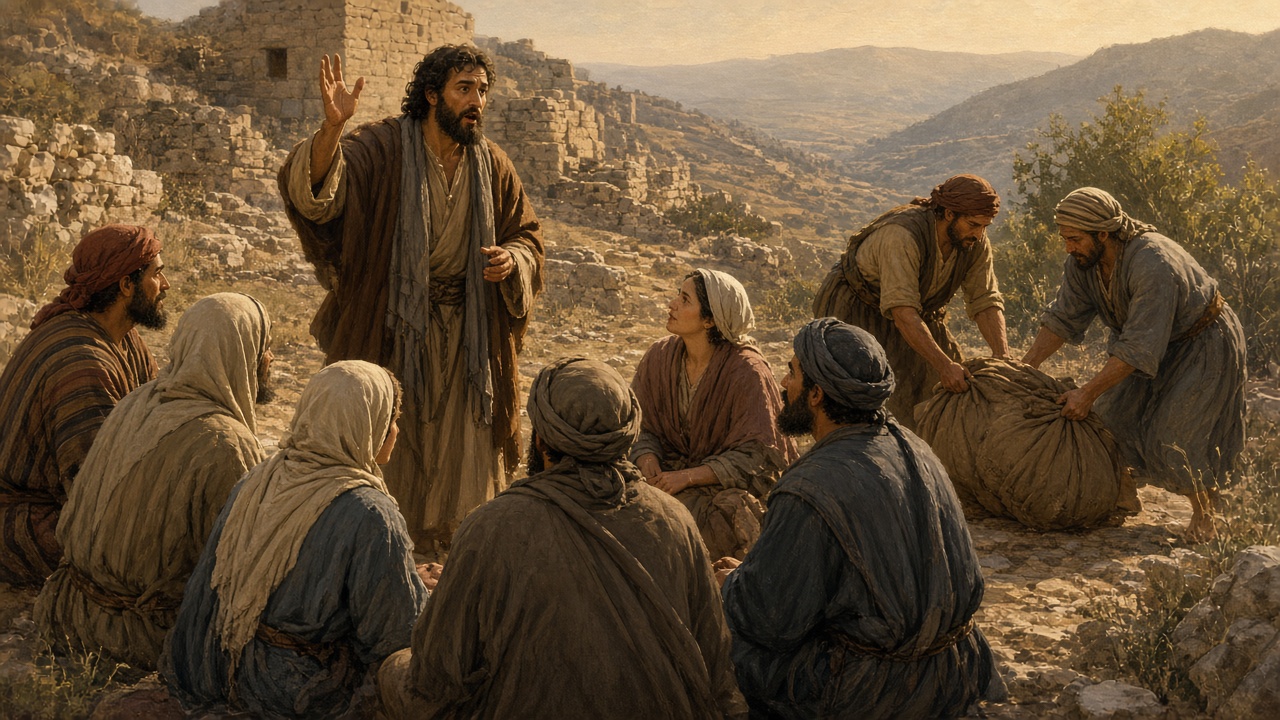
Did you know?
Freedom, the Law, and the Spirit
- The speaker identifies himself as Paul and warns that if those he addresses let themselves be circumcised, Christ will be of no value to them, and that every man who gets himself circumcised is obligated to obey the whole law. A biographical account says that Paul's circumcision-name was Saul, and that the name Paul was probably given to him in infancy for use in the Gentile world, while Saul would be his Hebrew home-name.Sources: the Bible text itself · Paul
- Freedom is set against a yoke of slavery: the chapter says Christ has set them free and tells them to stand firm and not be burdened again by that yoke. They were called to freedom, not as an opportunity for the flesh, but to serve one another in love, and the entire law is fulfilled in the single decree to love one's neighbor as oneself.Sources: the Bible text itself
- Walking by the Spirit is contrasted with gratifying the desires of the flesh, which are opposed to each other. If people are led by the Spirit, they are not under the law; the chapter lists the acts of the flesh and the fruit of the Spirit, and says that against such things there is no law.Sources: the Bible text itself
Notes written with AI assistance from open sources (Theographic Bible Metadata, CC BY-SA 4.0; Easton’s Bible Dictionary, public domain) and reviewed before publishing.
Credits and license for this translation
Na Rorongo Ke Toke Eigna a Jisas Krais
The New Testament in the Bughotu language of the Solomon Islands
Niu Testament long langguis Bughotu
copyright © 2009 Wycliffe Bible Translators, Inc.
Language: Bughotu
Translation by: SITAG
This translation is made available to you under the terms of the
Creative Commons Attribution-No Derivatives license 4.0.
You may share and redistribute this Bible translation or extracts from it in any format, provided that:
You include the above copyright and source information.
You do not make any derivative works that change any of the actual words or punctuation of the Scriptures.
Pictures included with Scriptures and other documents on this site are licensed just for use with those Scriptures and documents.
For other uses, please contact the respective copyright owners.
2017-11-13
Source: http://ebible.org/bgt/ · eBible.org