Hebrews 3
Iwo Surua Mua Wie Pha Bible · Tap a verse to see its cross-references.
Isu ne Moses è de bajo boh ro
1Hanyie shii Hamangkhung-aphuii è ho pha ji ro! Guro Masipho khuiinothek, hanyie shii gathek è yao pha migi pha kho phabi shii Hamangkhung-aphuii è thoh ge pha Isu shii now bo. 2Moses è Hamangkhung-aphuii hò shii awai blia shii migi rek pha duiine, Isu de Hamangkhung-aphuii è hìpha blia rek pha gua Hamangkhung-aphuii shii isiie rek. 3Branthek hanyie è hò rung pha ji ai ne hò è de muna bajo boh ilab mua ro. Ji duiine Isu ne Moses è de muna ilab mua sapho ro. 4Zai, zab pha hò ne hanyie jia è ne rab ro—Chiih-è Hamangkhung-aphuii jia bie ro hanyie è zab pha manathek shii rab. 5Moses ne Hamangkhung-aphuii hò shii khiao duiine isiie rek, chiih-è ai è yao pha mana jithek ne Hamangkhung-aphuii ne phariang shii yao pha rek ro. 6Jishii Masi ne Hamangkhung-aphuii hò pha ilkhi rek shii Dufuii duiine isiie rek. Gethek è nyie shii luthong pha ji shii lububo rek ne migi rek arone gethek ne ai Hamangkhung-aphuii ro hò ro.
Hamangkhung-aphuii ro branthek thung pha
7Ji-è chiihphado, Ragung So è yao pha duiine,
Sudoh na è Hamangkhung-aphuii goh yoi arone,
8ithek è aishii balimuang hà chai pha ruii pha ishak shii,
naro blangthek duiine Hamangkhung-aphuii shii suang rek pha duiine, nathek de lawasdai arek rabo.
9Hamangkhung-aphuii è yao, ithek ne idam shawi shii gu è nyie rek pha ji riig magunde
ithek è gu shii thiisa hà chuajan.
10Chiih-è gu ne jithek pha bran shii lijieg ne yao,
“Ithek ne idang gu shii ilab arek
chiih-è gu muyung shii anuii pha rek.”
11Gu ne lijieg dun chiih-è surua sbang rab:
“Khi hà gu è ithek shii thung pha soh phi pha ji shii ne ithek ne khuchung de akhud mua ruii phro!”
12Gu iijiiakthek, nathek è hanyie de awie pha rey chiih-è migi arek pha isieng Hamangkhung-aphuii è khid pha ji è de lubu gayiig bo. 13Ji phachiang shii nathek hanyie de layog è khinrin ne lawasdai arey yi rabo, “sudoh” Jigigam ji è gethek shii nyayao bamuii pha duiine nathek ne nawaithek chung idang nong rai chid. 14Gethek ro migi ibi shii um pha ji yi iidohè thogdang pha chuh è khoh arone gethek ne zab Masi rog shii iijiiakthek ro.
15Hì ne jigi è nyie yao:
“Nathek ne sdoh Hamangkhung-aphuii goh yoi arone,
nathek ro blangthek è Hamangkhung-aphuii shii suang rek pha ishak shii rek pha duiine nathek ne lawasdai arek rabo.”
16Branthek hanyie è Hamangkhung-aphuii ro goh yoi ne chiih-è aishii ne suang rek pha ne hanyie lei? Moses è Egyph hà noh pho thek ro. 17Idam shawi shii Hamangkhung-aphuii è hanyie shii lijieg? Balimuang hà iy pha layogthek shii lijieg phro. 18Hamangkhung-aphuii è surua sbang rek shii, ithek ne gu è thung pha phi pha soh shii akhud mua phro—Hanyie shii yao pha jine hanyie è suang rek pha ji shii yao ro. 19Chiihphado, gethek doh ro, ithek ji pha soh shii akhud mua, nyieliieshii ithek ne migi arek.
Did you know?
Greater Glory Than Moses
- Hebrews asks its readers to fix their attention on Jesus, the apostle and high priest they confess. He was faithful to the one who appointed him, just as Moses was faithful in all God's house, but Jesus is counted worthy of greater glory than Moses, as the builder of a house has greater honor than the house. Moses was faithful as a servant; Christ is faithful as the Son over God's house.Sources: the Bible text itself
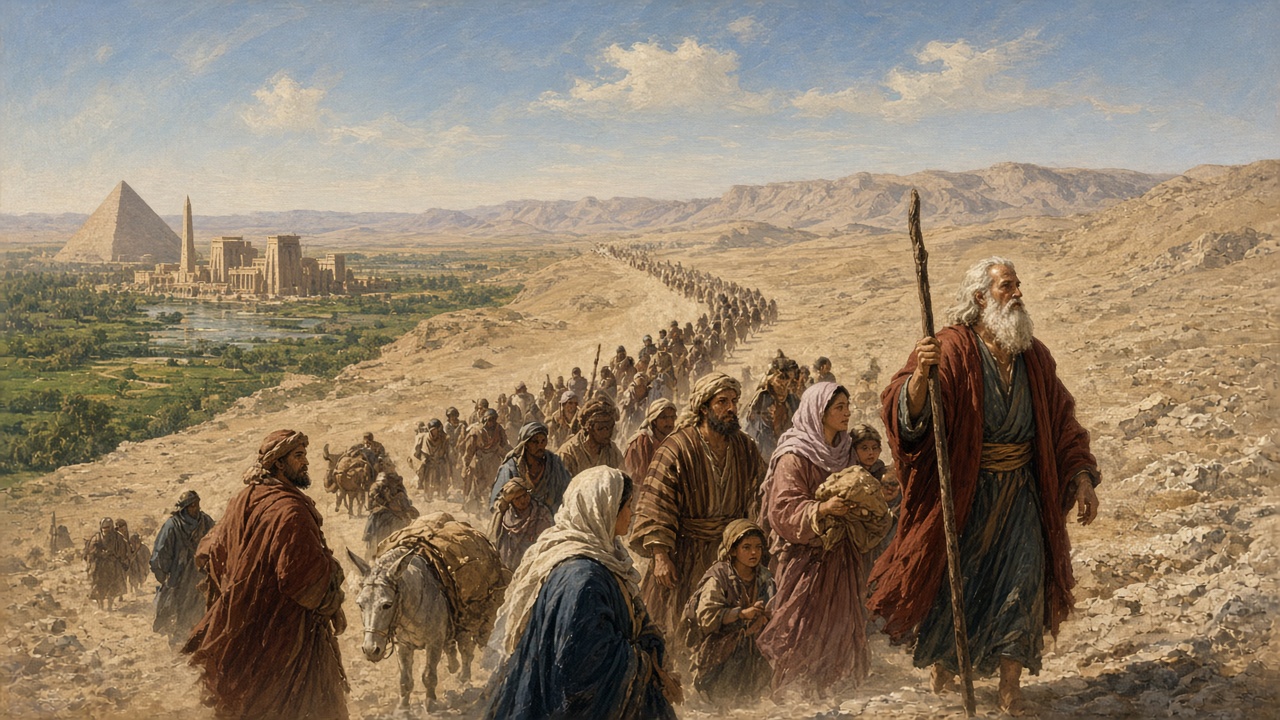
- The warning looks back to the people Moses led out of Egypt. For forty years in the wilderness they tested God, who was angry with that generation and swore they would never enter his rest; their bodies fell in the wilderness. The chapter says that unbelief kept them from entering.Sources: the Bible text itself
- Egypt, the land they left with Moses, is the land of the Nile and the pyramids. Easton's Bible Dictionary (1897) explains the name Moses as Drawn, or links it with the Egyptian word mesu, meaning son.Sources: the Bible text itself · Egypt · Moses
Notes written with AI assistance from open sources (Theographic Bible Metadata, CC BY-SA 4.0; Easton’s Bible Dictionary, public domain) and reviewed before publishing.
Places in this chapter
- Egypt · 30.129, 31.308 · verse 16
Only places identified with high confidence are shown (90% or more according to the scholarly sources compiled by OpenBible). Period map: DARE (Digital Atlas of the Roman Empire), CC BY 4.0; modern map: © OpenStreetMap contributors; places: OpenBible.info (CC BY 4.0).
Credits and license for this translation
Iwo Surua Mua Wie Pha Bible
The Holy Bible in the Bugun language of India, first Bible translation
copyright © 2023 The Word for the World International
Language: Kho (Bugun)
Contributor: The Word for the World Southeast Asia
The New Testament in Bugun
published as
IWO SURUA
Mua Wie Pha Bible
The Word For The World International
This translation is made available to you under the terms of the
Creative Commons Attribution license 4.0.
You may share and redistribute this Bible translation or extracts from it in any format, provided that:
You include the above copyright and source information.
If you make any changes to the text, you must indicate that you did so in a way that makes it clear that the original licensor is not necessarily endorsing your changes.
Pictures included with Scriptures and other documents on this site are licensed just for use with those Scriptures and documents.
For other uses, please contact the respective copyright owners.
Note that in addition to the rules above, revising and adapting God's Word involves a great responsibility to be true to God's Word. See Revelation 22:18-19.
2023-08-31
Source: http://ebible.org/bgg/ · eBible.org