1 Corinthians 10
Iwo Surua Mua Wie Pha Bible · Tap a verse to see its cross-references.
Jangbangthek pha gidieg shii phriie
1Gu ijakthek, hanyie è Moses shii luagieng pha blangthek shii nyie rey pha ji ne, gu nathek shii now yi pha yang ro. Ithek ne zab sakhmiing è ragia rek, chiih-è zab shii wie è Khamuii saig è ragia rek phi ne hiìadun. 2Sakhmiing nane khamuii hà ithek ne zab Moses ro luagiengpho rone khowo yie. 3Zab ne ò luruak pha iweb chie 4chiih-è ithek zab ne ò pha luruak pha kho niing. Ithek ne luruak pha lubao è niing ji ne ithek rog shii wuii gieng; chiih-è ji pha boh lubao ne Masi awai ro. 5Jishii chiihphado de Hamangkhung-aphuii ne ithek è bajo shii ne bushun arek ba ro, chiih-è jiè ithek ro siu-iy jithek ne balimuang lakhung shii dayiingdayang rey dun.
6Thuh, hìthek zab ne gethek shii now yi ne ithek è rek pha awie pha bliathek ji achid yi pha phriie, 7chiih-è ithek giak è rek pha duiine, jangbangthek shii asia rabo, jigigam shii yao pha duiine, “Branthek ne niing ne siulao nane awie pha muniing pha michie hà dugdun.” 8Gethek ne siulao pha ichiig arek rabo, ithek giak è ji rek ne inai jia shii bran itham ichiigna-uom iy dun. 9Gethek ne Ithong shii achai rabo, giakthek è ji rek ne ithek shii phamthek è ua muii. 10Gethek ne phosro arek chid phro, giakthek ithek è rek duiine—Chiih-è ua pha hamangkhliie è ithek shii srobro rekmuii.
11Hìthek zab ithek shii rey pha hì ne ithek gai shii miiriig rey yi, chiih-è ithek è gethek shii phriie pha zey. Jishii gethek ne Jong pha ishak thog sharuii phaji shii sieng ramuii ro.
12Na è chuh è riu rone now arone, achiih yi pha gayiig pha ji ne wieliak ro. 13Zab chai phane nathek è thieg ji pha ichua pha chai ne branthek shii thog ramuii ro. Jishii Hamangkhung-aphuii è awai sbang shii ruii, chiih-è nathek shii chuh rai yi pha ai ne nathek ro blu chuh rai muii pha ji è huak ne achai yi phro, nathek shii chai pha ishak shii, ai è nathek shii zud pha chuh phi ruii phro, chiih-è nathek shii khia pha lumuii de phi ruii phro.
14Ji-è chiihphado, gu ijakthek, jangbangthek shii sia pha ji è ruang rai bo. 15Gu ìd pha bran duiine nathek shii yao ro, gu è nyie yao pha ji ne nawaithek shii chua bo. 16Ithong Michie shii gethek khoh muii pha gog nane gethek è nyie shii Hamangkhung-aphuii shii laso phi pha ji: gethek ji niing mage shii, gethek ne Masi ro ifai pha mathang niing rai. Chiih-è gethek ji pha iweb ji: gethek è chie mage shii, gethek ne Masi ro siu pha mathang ro. 17Nyieliieshii gethek zab ne, ichiih ne iweb jia ro, bajo shii, siu ne jia ro, chiih-è gethek zab ne ò pha iweb shii mathang ro.
18Israel pha branthek shii now bo; hanyie è zid pha khlem shii chie pho ne sraibao shii Hamangkhung-aphuii ro blia pha mathang redun ro. 19Chiihphado, gu miyaosiu ne hì bey, jangbang chiih-è zid pha michie hì ne izai nyiemagunde igongthek bey? 20Asi ro! gu è nyie yao pha ji ne migi arek pha branthek ro sraibao shii zid pha ji ne Hamangkhung-aphuii shii azid pha ibuiithek shii zid ro. Chiih-è gu ne nathek yi ibuiithek ro ijak rey bone ayang ro. 21Na ne Ithong ro gog nane ibuii ro gog ne aniing mua phro; nathek ne Ithong ro thiibliie nane ibuii ro thiiliie shii achie mua phro. 22Gethek ne Ithong shii miegriie rey yi pha yang habey? Gethek ne ai è de bajo gang rone now bey?
23“Ji-è ithek è yao,” gethek ne nyie magungde rek mua phro. Jine izai ro, jishii zab ne wie asi ro. “Gethek ne zab nyarek mua phro—Jishii zab ne aphua phro.” 24Hanyie magungde awai shii wie rey pha ji shii ariig rabo, jishii gaishii wie rey pha ji shii riig bo.
25Nawai khani shii nyie musai um magunde, asai pha nathek ne bajarai shii liu pha ibey zab nyachie mua phro. 26Jigigam shii yao, “Sohnyiak nane ji shii nyie um pha ji zab Ithong ro ro.”
27Migi arekpho è na shii michie chie pha ho chiih-è na è wuii pha phak arone, na ibi shii nyie ruii phi pha ji nawai ro now shii nyie musai asai pha chie bo. 28Jishii giakthek è na shii yao, “Hì pha michie ne jangbang shii zid pha michie ro,” Na shii yao pha chiang nane khani pha chiang è ji pha michie achie rabo. 29Jine nawairo munow asi jishii gai bran ro now ji è ro.
“Wie, chiihphado,” giak jia è yao, guro thaluii pha blia shii è gai bran munow è “nyie rek ne nyoi chid phlei?”
30“Gu è gu michie shii Hamangkhung-aphuii shii laso phi arone, nyie rek ne gu è laso phi pha michie chiang shii gaithek è gu shii snyieng phlei?”
31Wie, na nyie rek magungde, na chie niing magungde, hì zab ne Hamangkhung-aphuii pha biisiie shii rek bo. 32Jewthek nane Gaibranthek shii chiih-è Hamangkhung-aphuii ro charch shii diig rey pha blia arek rabo. 33Gu è rek pha ji duiine rek bo; gu è zab shii sang yi pha rek ne bidiang phro, gu ne gui shii wie pha anow ro, jishii zab shii wie rey yi pha now, jiè ithek de ragia rey mua.
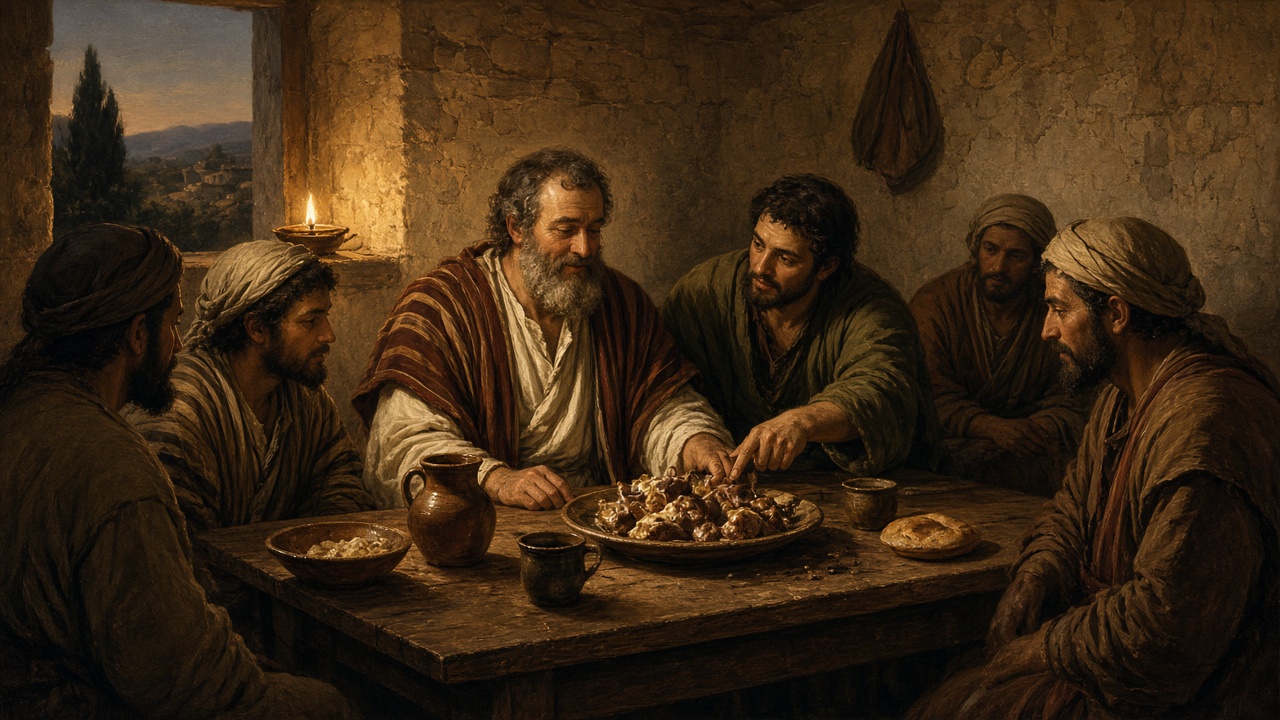
Did you know?
Wilderness Warnings and the Lord's Table
- Paul says he does not want the Corinthians unaware that the forefathers were all under the cloud and all passed through the sea, and that they were baptized into Moses in the cloud and in the sea. They all ate the same spiritual food and drank the same spiritual drink from the spiritual rock that accompanied them, and he says that rock was Christ.Sources: the Bible text itself
- Paul says God was not pleased with most of them, for they were struck down in the wilderness. He lists idolatry, sexual immorality in which twenty-three thousand died in one day, testing Christ, which brought death by snakes, and complaining, punished by the destroying angel, and calls these events examples written down as warnings.Sources: the Bible text itself
- He calls the cup of blessing and the bread that is broken a participation in the blood and body of Christ, and says pagan sacrifices are offered to demons, not to God, so the two tables cannot be shared. Food sold in the meat market may be eaten without raising questions of conscience, for "The earth is the Lord's, and the fullness thereof," but if someone says it was offered to idols, it should be refused for that person's conscience.Sources: the Bible text itself
Notes written with AI assistance from open sources (Theographic Bible Metadata, CC BY-SA 4.0; Easton’s Bible Dictionary, public domain) and reviewed before publishing.
Credits and license for this translation
Iwo Surua Mua Wie Pha Bible
The Holy Bible in the Bugun language of India, first Bible translation
copyright © 2023 The Word for the World International
Language: Kho (Bugun)
Contributor: The Word for the World Southeast Asia
The New Testament in Bugun
published as
IWO SURUA
Mua Wie Pha Bible
The Word For The World International
This translation is made available to you under the terms of the
Creative Commons Attribution license 4.0.
You may share and redistribute this Bible translation or extracts from it in any format, provided that:
You include the above copyright and source information.
If you make any changes to the text, you must indicate that you did so in a way that makes it clear that the original licensor is not necessarily endorsing your changes.
Pictures included with Scriptures and other documents on this site are licensed just for use with those Scriptures and documents.
For other uses, please contact the respective copyright owners.
Note that in addition to the rules above, revising and adapting God's Word involves a great responsibility to be true to God's Word. See Revelation 22:18-19.
2023-08-31
Source: http://ebible.org/bgg/ · eBible.org