Genesis 8
Pura Alkitab · Tap a verse to see its cross-references.
Jar eele angu mulai ava-holong
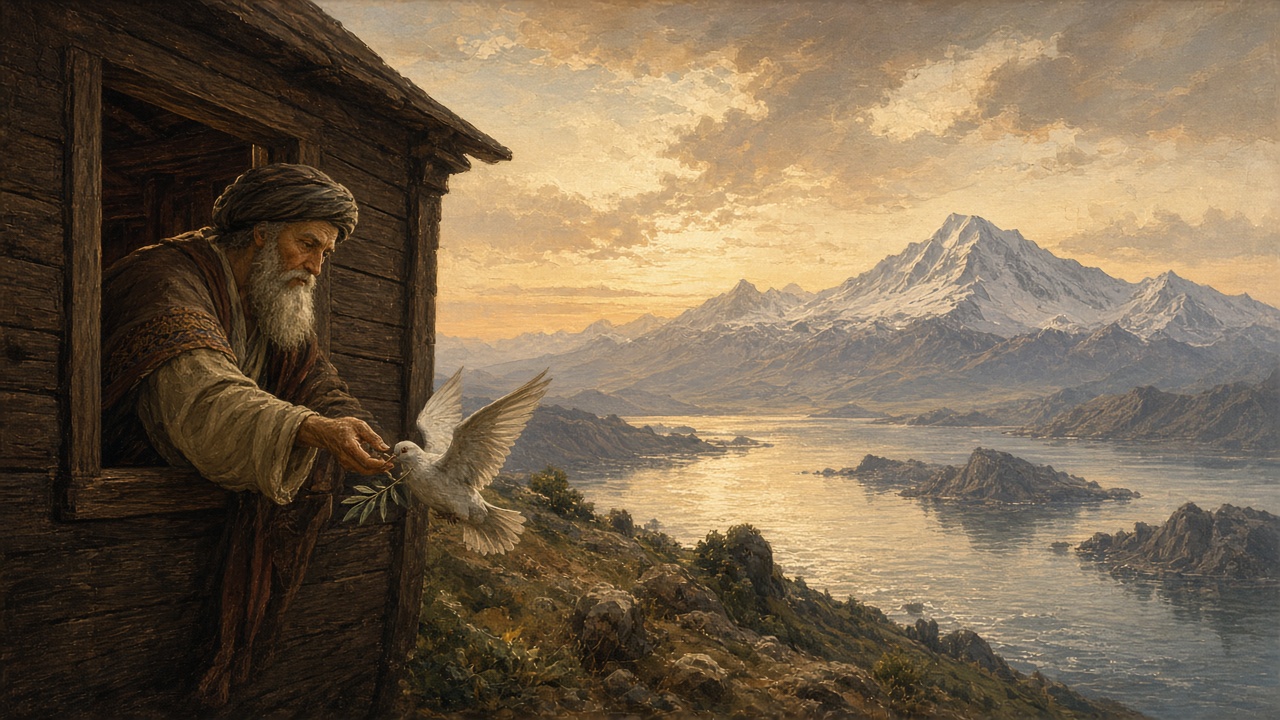
1Aarunge Noh, bot binanta emangpi ba aing veng kampal omimi angu Lahatala Ana bae vengtajebing niang. Angmuse, Lahatala Ana eenar ot por-alolang anga taang boning, senge jar eele angu ening ava-holong. 2Jar eng ba meke iivang teding ang naung emangpi Lahatala Ana vengtering, bot burang viaha ang naung di emangpi Lahatala Ana vengtering, angmuse aanuar eele ba hela angu, barinti. 3Angmuse jar ba por-alolang vengtering angu ava-holong alolang-niang. Bot mietang ratunu ari iising angu sengila muse, jar angu bae talalu balolu niang iila. 4Pas uuru emi bititu, ved emi arinu belta bititu uuru angu omimi muse, kampal angu dol balolu nu ene Ararat angu taang patang. 5Uuru emi arinu ved ehalomang uuru angu omimi muse, jar angu ava holong hela iila, angu ebele, dol balolu ang naung etupa angu, mulai uuling ateing iila.
6Mietang ari buta angu lakal iila muse, Noh ana kampal eganela-viaha angu nu buka. 7Angmuse Noh ana dung karu nu lapas. Dung karu angu aalilit ila-hoa sampe jar angu taata muse, ana bae bale kampal taang Noh ebele ila niang. 8Angmuse Noh ana bot dung molola nu lapas, senge ateing hula, jar angu etatabit ava-holong hela iila ee, niang. 9Aarunge jar angu jedung por-alolang anga emangpi vengtering sehi, angu ebele dung molola angu bae mana iiba harak mimihi niang. Base dung angu bale aalilit kampal taang ila muse, Noh ana atang taning dung angu medit metma kampal mi maso.
10Noh ana ading mietang bititu muse, ana bot kampal taang dung molola angu bale lapas. 11Ved hula baa muse, dung molola angu bale hoa Noh aing harak, bot te saitun evaa varat nu ana tapurut medit metma ai mi baning hoa. Angmuse Noh ana ateing iilat hula, jar ba por-alolang taang angu etatabit ava-holong hela iila. 12Noh ana bot ading sampe mietang bititu muse, ana bot bale dung molola angu lapas. Aarunge dung molola angu bae bale Noh ebele hoa niang iila.
13Uanguveng Noh euumur pas mitung 601, uuru ehalomang, ved ehalomang uuru angu omimi muse, jar ba por-alolang taang teding angu, etatabi taata tila. Angmuse Noh ana kampal eganela-viaha ang naung emangpi buka, bot ana eng uuling se, meke ang naung taata tila. 14Uuru emiaaru, ved emi ari aaru belta bititu, uuru angu omimi muse, por-alolang angu etatabi taata tila.
15Angmuse Lahatala Ana Noh at mateng hula, 16“Noh! Angase iing emangpi ba kampal taang angu, aaung ba kaluar. 17Binanta ba aaing veng hama-hamat kampal taang angu, benangba: binanta gariang, binanta balevang, binanta ba meke taang eera, bot dung rupa-rupa ang naung, emangpi iat kaluar! Senge ini por-alolang anga taang lamal tabaning-taheli tatoang-tatoang, por-alolang anga ening aaving.”
18Angmuse Noh ejangu oleve, oal ang naung, bot oal ejangu ang naung, ing emangpi hama-hamat kampal taang kaluar hela. Binanta ba kampal taang ang naung di, emangpi nu-nut irupa angu eamulung hama-hamat kampal angu taang kaluar hela.
Noh ana sadaka ening metma Lahatala Enang
20Angmuse Noh ana sadaka edoru ohit metma LAHATALA Enang. Binanta ba nehe bae vengpalula niang ang naung, Noh ana iiba medi, sengmuse ana metma sadaka ening doru angu taang edet atepul, senge banang tarima kasi metma LAHATALA Enang. 21Uanguveng LAHATALA Ana sadaka emanema angu rasa muse, Omi etatabit sanang. Angmuse Lahatala Ana Omimi vengpikir hula,
“Angase manusia angu ini jasi-ahala angu ba ening dise, Na bae kutuk metma por-alolang anga enang niang iila. Masiking kiki sehi mi ini mang jasi-ahala anguba vengpikir dise, emangpi ba aabeta angu, Na bae ening amusing-ajelat emenghula Na ening iila angu edadenang niang. 22Por-alolang anga jedung ue sehi se, ooras namuding-natapa, bot ooras eihi avaning; ooras tutung, bot ooras kajavi; ooras bir taata, bot ooras aanuar; bir-kua, bot bir-jala angu, malekang taing telul ebarinti veng niang.”
Did you know?
The Waters Recede
- The ark came to rest on the mountains of Ararat, a name meaning “sacred land” or “high land” for a country on whose mountains the ark settled after the flood. Easton's Bible Dictionary (1897) suggests those mountains were probably the Kurdish range of southern Armenia, though the name is also commonly applied to a high, almost inaccessible peak rising from the plain of the Araxes. In 2 Kings 19:37 and Isaiah 37:38 the Authorized Version renders the name “Armenia” and the Revised Version “land of Ararat,” while Jeremiah 51:27 uses it for central or southern Armenia.Sources: Ararat · the Bible text itself
- Noah’s Hebrew name means “rest,” and in this chapter the ark itself comes to rest as the waters go down. He was the son of Lamech and the grandson of Methuselah, and the father of Shem, Ham, and Japheth. Easton's Bible Dictionary describes him as the connecting link between the old world and the new, and as a second great progenitor of the human family.Sources: Noah · the Bible text itself
- Chronological notes place the Great Flood in 2347 BC, lasting one year; the subsiding of the waters in 2346 BC, over 220 days; and the leaving of the ark in 2346 BC, as a single day. In the chapter itself, the waters have gone down after 150 days and the ark rests on the seventeenth day of the seventh month; on the first day of the first month of Noah’s six hundred and first year the waters have dried up, and by the twenty-seventh day of the second month the earth is fully dry.Sources: The Great Flood · The flood subsides · Leaving the Ark · the Bible text itself
Notes written with AI assistance from open sources (Theographic Bible Metadata, CC BY-SA 4.0; Easton’s Bible Dictionary, public domain) and reviewed before publishing.
Places in this chapter
- Ararat · Today: Urartu · 39.703, 44.300 · verse 4
Only places identified with high confidence are shown (90% or more according to the scholarly sources compiled by OpenBible). Period map: DARE (Digital Atlas of the Roman Empire), CC BY 4.0; modern map: © OpenStreetMap contributors; places: OpenBible.info (CC BY 4.0).
Credits and license for this translation
Pura Alkitab
Genesis, Mark, and Acts in the Pura dialect of the Blagar language of Indonesia
Kejadian, Mark, dan Kisah di Pura dialek bahasa Blagar
copyright © 2016 Unit Bahasa dan Budaya
Language: Pura (Blagar)
Dialect: Pura
Translation by: Wycliffe Bible Translators
This translation is made available to you under the terms of the
Creative Commons Attribution-No Derivatives license 4.0.
You may share and redistribute this Bible translation or extracts from it in any format, provided that:
You include the above copyright and source information.
You do not make any derivative works that change any of the actual words or punctuation of the Scriptures.
Pictures included with Scriptures and other documents on this site are licensed just for use with those Scriptures and documents.
For other uses, please contact the respective copyright owners.
2016-06-28
Source: http://alkitab.pw/beu/ · eBible.org