Zephaniah 1
GODE EA SIA: IDA:IWANE GALA · Tap a verse to see its cross-references.
About this book
About Zephaniah
- Easton's Bible Dictionary (1897) presents Zephaniah, whose name it explains as "Jehovah has concealed" or "Jehovah of darkness," as the son of Cushi and great-grandson of Hezekiah, and as the ninth of the minor prophets. It dates his prophecy to the reign of Josiah, king of Judah (641–610 B.C.), and says he was contemporary with Jeremiah, with whom he had much in common.Sources: Easton: Zephaniah · Zephaniah · Cushi
- Amon, Josiah's father, restored idolatry in Judah, and Easton reads Zephaniah 1:4 and 3:4, 11 as referring to that reign. The same dictionary links Zephaniah 1:4–6 with the worship of Baal and Zephaniah 1:5 with Malcham, described as the national idol of the Ammonites. Josiah, who came to the throne at eight, is presented as later acting against the idolatry that prevailed.Sources: Amon · Josiah · Baal · Malcham
- Easton's Bible Dictionary outlines the book as an introduction announcing judgment on the world and on Israel because of their transgressions (1:1–6), a description of the judgment (1:7–18), an exhortation to seek God while there is still time (2:1–3), judgment on other peoples (2:4–15), what it calls the hopeless misery of Jerusalem (3:1–7), and a promise of salvation (3:8–20).Sources: Easton: Zephaniah
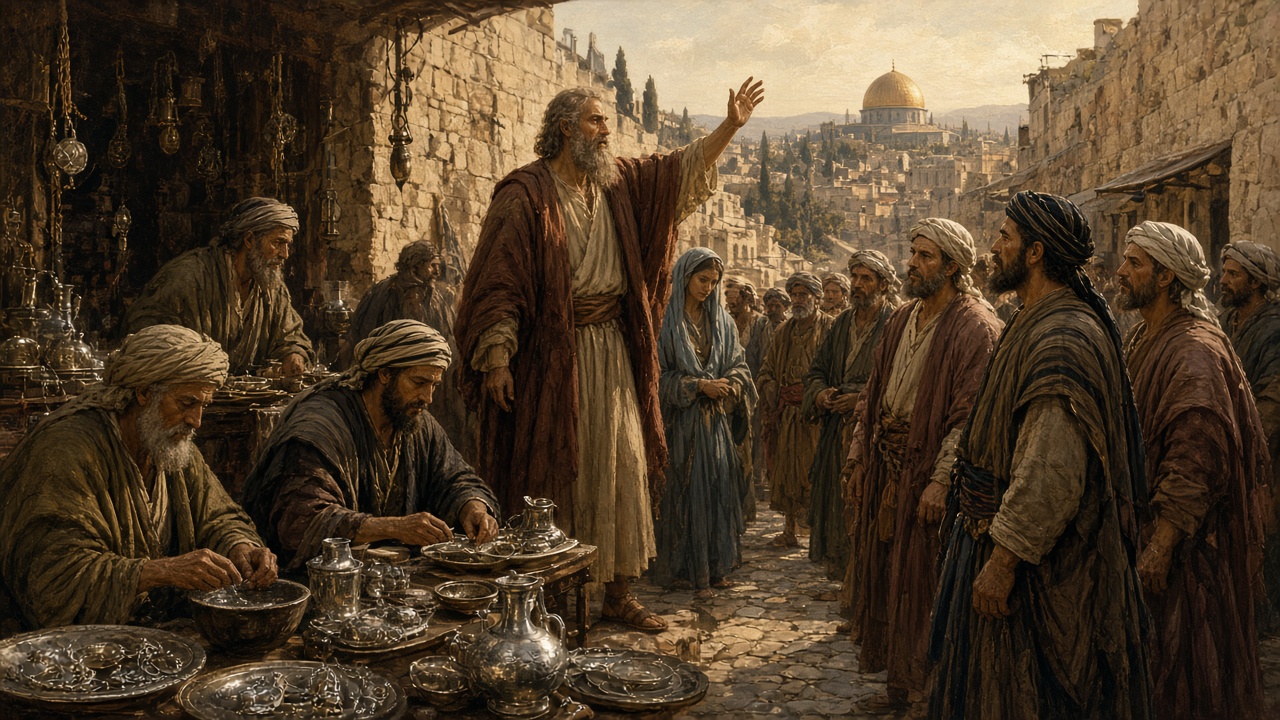
- Zephaniah 1:11 names the Mortar, a place in or near Jerusalem inhabited by silver merchants. It has been conjectured that this was the Phoenician quarter of the city, where traders of that nation lived.Sources: Mortar
Notes written with AI assistance from open sources (Theographic Bible Metadata, CC BY-SA 4.0; Easton’s Bible Dictionary, public domain) and reviewed before publishing.
Sefanaia
1Eso amoga hina bagade Yousaia (A:mone ea mano) da Yuda soge ouligisu, amo esoha Hina Gode da Sefanaiama sia:ne i. (Sefanaia da Giusai amalu Gedalaia amalu A:malaia amalu hina bagade Hesigaia amo ilia egaga fi dunu esalu.)
Hina Gode Ea Fofada:su Eso
2Hina Gode da amane sia:i, “Na da osobo bagadega esalebe liligi huluane gugunufinisisimu. 3Na da dunu fi huluane, ohe fi, sio amola menabo huluane wadela:lesimu. Wadela:i hamosu dunu huluane dafama:ne, Na da wadela:lesimu. Na da dunu fi huluane wadela:lesisia, dunu afae esalebe da hame ba:mu. Na, Hina Gode, da sia:i dagoi.
4Na da Yelusaleme moilai bai bagade fi amola Yuda soge fi huluane ilima se bagade imunu. Na da ilia Ba:ilema nodone sia:ne gadosu hou huluane gugunufinisimudafa. Amasea, dunu huluane da Na hou hame lalegagui gobele salasu dunu (amo da Ba:ilema hawa: hamosa) amo gogolele, bu hamedafa dawa:mu. 5Na da nowa dunu da diasu da:iya gado heda:le, eso amola gasumuni amola oubi amoma nodone sia:ne gadosa, amo fi huluane wadela:lesimu. Amola nowa da Nama nodone sia:ne gadosa, amola ilia lafidili Nama molole fa:no bobogemu sia:sa, be gilisili ogogosu ‘gode’ Moulege ea dioba:le sia:sa, amo amola Na da wadela:lesimu. 6Amola nowa dunu da Nama fa:no bobogelalu bu wadela:i hou amoma sinidigili, amola Nama Na ouligisu amola hou olelesu hame adole ba:sa, amo amola Na da wadela:lesimu,” Hina Gode da amane sia:i.
7Hina Gode Ea Fofada:su Eso amoga E da osobo bagade fi wadela:lesimu amo da gadenesa. Amaiba:le, dilia huluane Ea midadi ouiya:le esaloma. Hina Gode da Ea fi dunu gobele salasu hou defele, medole legemu. E da ha lai dunu amo Yuda soge liligi huluane gegenana lama:ne hiougi dagoi. 8Hina Gode da amane sia:sa, “Amo medole legesu esoga, Na da eagene hawa: hamosu dunu, amola hina bagade ea mano, amola nowa da ga fi ilia sia:ne gadosu hou hamonana, amo huluane ilima se imunu. 9Na da nowa dunu da hame lalegagui agoane nodone sia:ne gadosa, amola ilia ouligisu dunu ea diasu wamolai liligi amoga nabama:ne wamolasa amola medole legesa, amo dunu huluane ilima Na da se bagade imunu.
10Hina Gode da amane sia:sa, “Amo esoga dilia da Yelusaleme moilai bai bagade Menabo Logo Ga:su amoga dibi sia: bagade nabimu. Yelusaleme moilai bai bagade gaheabolo la:idiga, dilia da didigia:su nabimu. Amola agolo damana agolo agebe ea ga: defele nabimu. 11Amo nabasea, dilia moilai bai bagade hagudu la:idi esalebe dunu, didiga:ma amola dima! Bai dilia bidi lasu dunu huluane da bogogia:i dagoi.
12Amasea, amo esoga, Na da gamali lale, Yelusaleme ganodini hogomu. Nowa dunu da hahawane hi hou da defele dawa:lebe, amola ilisu da, ‘Hina Gode da hamedei. E da hawa: hamomu hame dawa:,’ amane sia:sa, amo huluanema Na da se imunu. 13Ilia gagui liligi wamolai dagoi ba:mu, amola ilia diasu wadela:lesi dagoi ba:mu. Ilia da diasu ili gagubi amoga hamedafa fifi ahoanumu, amola ilia waini efe sagabe amo ea waini hano hamedafa nanamu.”
14Hina Gode Ea eso bagade da doaga:mu gadenesa. Amola gadeneidafa amola hedolowane doaga:mu. Amo eso da se nabasu bagadedafa ba:mu. Amola nimi bagade dadi gagui dunu da lobo healeiba:le, didigia:mu. 15Amo eso da ougi ha lasu eso, se nabasu amola bidi hamosu eso, wadela:lesisu amola mugulusu eso, amoga da gasi bagade amola alaloyo amola hadigi da bunumai mumobiga dedebomu. 16Amo esoha gegesu ‘dalabede’ wesu bagade nabimu, amola gegesu dunu ilia halasu fawane nabimu. Ilia da moilai bai bagade gagili sali amola diasu sedade gado gagagula heda:i amoma doagala:beba:le, halasu bagade nabimu.
17Hina Gode da amane sia:sa, “Na da se nabasu bagadedafa dunu fifi asi gala huluane ilima imunu. Amaiba:le, ilia da si dofoi dunu agoane ahoanumu. Ilia da Nama wadela:le hamoiba:le, ilia maga:me da hano agoane sogadigimu, amola ilia bogogia:le, ilia da:i hodo da udigili osoboga dasagia:ma:ne dialumu.”
18Amo esoha, Hina Gode da Ea ougi bagade hou olelesea, ilia silifa amola gouli gagui amo da ili hame gaga:mu. Osobo bagade huluane da Gode Ea ougi lalu agoane amoga wadela:lesi dagoi ba:mu. E da hedolodafa dunu huluane osobo bagade amoga esalebe, amo ilia esalusu dagolesimu.
Did you know?
The Day of the LORD and Judgment on Idolatry
- Zephaniah traces his lineage back four generations to Hezekiah, dating his prophetic ministry to the reign of King Josiah of Judah. Josiah came to power after his father, King Amon, had restored idolatry across Judah before being assassinated by his own servants.Sources: the Bible text itself · Josiah · Amon · Hizkiah
- The chapter denounces religious syncretism in Jerusalem, where people bowed on rooftops to the host of heaven and combined their devotion to the LORD with oaths to Baal and Malcham, the national idol of the Ammonites.Sources: the Bible text itself · Baal · Malcham
- The prophecy specifies landmarks in Jerusalem that would experience turmoil, including the Fish Gate and the Mortar (or Hollow), a district inhabited by merchants who weighed out silver.Sources: the Bible text itself · Fish Gate · Mortar
Notes written with AI assistance from open sources (Theographic Bible Metadata, CC BY-SA 4.0; Easton’s Bible Dictionary, public domain) and reviewed before publishing.
Places in this chapter
- Jerusalem · 31.777, 35.234 · verses 4, 12
- Fish Gate · Today: in Jerusalem · 31.777, 35.234 · verse 10
- Second Quarter · Today: in Jerusalem · 31.777, 35.234 · verse 10
- Canaan · 32.767, 35.333 · verse 11
- Mortar · Today: in Jerusalem · 31.777, 35.234 · verse 11
Only places identified with high confidence are shown (90% or more according to the scholarly sources compiled by OpenBible). Period map: DARE (Digital Atlas of the Roman Empire), CC BY 4.0; modern map: © OpenStreetMap contributors; places: OpenBible.info (CC BY 4.0).
Credits and license for this translation
GODE EA SIA: IDA:IWANE GALA
The Holy Bible in the Bedamuni language of Papua New Guinea
Buk Baibel long tok ples Bedamuni
Copyright © 2000 Tom Hoey
Language: Bedamuni (Beami)
Translation by: Tom Hoey
This translation is made available to you under the terms of the
Creative Commons Attribution Share-Alike license 4.0.
You have permission to share and redistribute this Bible translation in any format and to make reasonable revisions and adaptations of this translation, provided that:
You include the above copyright and source information.
If you make any changes to the text, you must indicate that you did so in a way that makes it clear that the original licensor is not necessarily endorsing your changes.
If you redistribute this text, you must distribute your contributions under the same license as the original.
Pictures included with Scriptures and other documents on this site are licensed just for use with those Scriptures and documents.
For other uses, please contact the respective copyright owners.
Note that in addition to the rules above, revising and adapting God's Word involves a great responsibility to be true to God's Word. See Revelation 22:18-19.
2025-08-30
Source: http://png.bible/beo/ · eBible.org