Job 30
GODE EA SIA: IDA:IWANE GALA · Tap a verse to see its cross-references.
1Be wali na afoha ayeligi dunu da nama habosesesa.
Ilia eda da dunu hamedeiba:le,
ilia da na wa:me amo na sibi wa:i sosodo aligimusa: fidima:ne,
na da logo hame doasimu galu.
2Ilia da gasa guminisi dunu, gasa hameba:le,
na hawa: hamosu hamomu hamedei ba:i.
3Ilia da hame gagui amola ha:aligiba:le,
ilia da gasia hafoga:i sogebiga, hafoga:i ifa difi gagisu.
4Ilia da hafoga:i soge ifalabo liligi a:le fasili, nasu.
Hame hedai ‘isu doa:su’ ifa ea difi amolawane nasu.
5Dunu eno da wamolasu dunuma wele sia:ne, sefasibi defele,
ilima wele sia:ne sefasi.
6Ilia da magufu gelabo, gafulu ganodini dogoi, amo ganodini golasu.
7Ilia da wadela:i sogega sigua ohe defele hulalu.
Ilia da ifalabo haguduga gogodogagini esalusu.
8Ilia da dio hamedene, hamedeidafa dunu esalu.
Eno dunu ilia da sogega gadili sefasi.
9Be wali ilia da misini, nama oufesega:ne habosesesa.
Na da ilima oufesega:su liligi fawane gala.
10Ilia da nama higale hamosa.
Ilia da ili hou da na hou bagade baligisa dawa:.
Amola ilia da misini, na odagia defo adugagala:sa.
11Gode da na gasa hame amola hahani hamoi dagoi.
Amaiba:le, amo hamedei dunu da ougi bagadewane nama doagala:sa.
12Amo dunu wa:i da na odagiaba doagala:sa.
Na iliba:le beda:ga hobeasa.
Ilia da na dafawanedafa hasalima:ne ilegelala.
13Ilia da na hobeamu logo hedofasa.
Ilia na gugunufinisimusa:, logo hogosa.
Ilia logo hedofamu dunu da hame gala.
14Ilia da na gaga:i dobea holelesisi gelabodili nama soagalaguda:sa.
15Na da beda:su hou amoga hasali dagoi.
Na hahawane hou da hedolo fo mabe agoai, asi dagoi ba:sa.
Na bagade gagui hou da mu mobi defele, asi dagoi ba:sa.
16Na da wali bogomu gadenei galebe.
Na se nabasu amo uhimu da hamedei.
17Gasia, na gasa huluane da sesedudaha.
Se da na da:iba:le gadigadidudabe da hame yolesa.
18Gode da na abula mugia gaguli, bebenoagisisa.
19E da na gaguli, fafua gisalugala:sa.
Na hou da osobo gulu hame baligisa.
20Gode! Na da Dima wele sia:sa, be Di da nama hame adole iaha.
Na Dima sia:ne gadosea, Di da na sia: hame naba.
21Di da nama mae asigiliwane hamosa.
Dia gasa huluane amoga nama se iaha.
22Dia da na foga mini masa:ne, logo doasisa.
Di da gibula bobodobe isu amoga, na mini laha.
23Na dawa:! Dunu huluane ilima misunu hou defele,
Di da na bogoma:ne oule ahoa.
24Na da wadela:lesi dagoi.
Di da nama asigima:ne fawane, na edegesa.
Dia abuliba:le nama doagala:sala:?
25Na da bidi hamosu lai dunuma asigiba:le, dinanu.
Amola hame gagui dunuma asigilalu.
26Na da hahawane hou amola hadigi hou nama misa:ne dawa:i.
Be bidi hamosu amola gasi amo fawane nama doaga:i.
27Na da da:i dioi amola se nabasu amoga fawane sagodigi diala.
Na da eso huluane se fawane nabala.
28Na da alaloyo amo ganodini ahoa.
Na da dunu ilia odagiaba wa:legadole, fidima:ne adole ba:sa.
29Na sia: da sigua wa:me amola wida (osadaligi) ilia ga:be defele,
da:i dioi amola fofagi agoai naba.
30Na gadofo da afadenene, bunumai hamoi dagoi.
Na da asugiga dogolosa.
31Na da musa: hahawane gesami hea:su nabi.
Be wali na da disa gugulubi fawane naba.
Did you know?
Humiliation, Physical Suffering, and Desert Outcasts
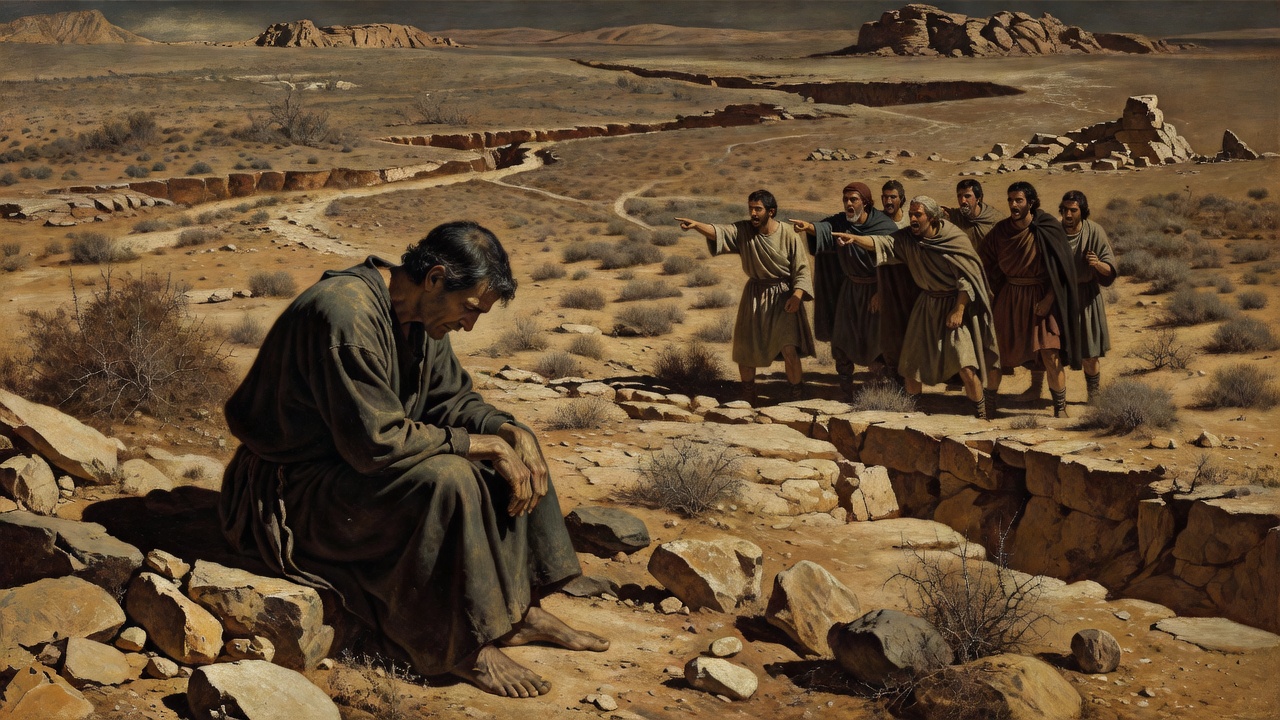
- In this chapter, Job contrasts his previous social standing with his current humiliation at the hands of impoverished outcasts. He describes these men as surviving on the margins of society, foraging for wild mallow and broom tree roots in desolate wadis and rock hollows.Sources: the Bible text itself
- Job uses vivid siege metaphors, picturing his attackers as an advancing army laying ramps and breaking through breaches against him, while he endures severe physical afflictions such as fever, gnawing pain, and blackened, peeling skin.Sources: the Bible text itself
- To convey the isolation and intensity of his grief, Job identifies with the mournful sounds of wilderness creatures, calling himself a companion to jackals and ostriches, while his musical instruments—the harp and flute—are turned entirely to weeping.Sources: the Bible text itself
Notes written with AI assistance from open sources (Theographic Bible Metadata, CC BY-SA 4.0; Easton’s Bible Dictionary, public domain) and reviewed before publishing.
Credits and license for this translation
GODE EA SIA: IDA:IWANE GALA
The Holy Bible in the Bedamuni language of Papua New Guinea
Buk Baibel long tok ples Bedamuni
Copyright © 2000 Tom Hoey
Language: Bedamuni (Beami)
Translation by: Tom Hoey
This translation is made available to you under the terms of the
Creative Commons Attribution Share-Alike license 4.0.
You have permission to share and redistribute this Bible translation in any format and to make reasonable revisions and adaptations of this translation, provided that:
You include the above copyright and source information.
If you make any changes to the text, you must indicate that you did so in a way that makes it clear that the original licensor is not necessarily endorsing your changes.
If you redistribute this text, you must distribute your contributions under the same license as the original.
Pictures included with Scriptures and other documents on this site are licensed just for use with those Scriptures and documents.
For other uses, please contact the respective copyright owners.
Note that in addition to the rules above, revising and adapting God's Word involves a great responsibility to be true to God's Word. See Revelation 22:18-19.
2025-08-30
Source: http://png.bible/beo/ · eBible.org