1 Chronicles 14
GODE EA SIA: IDA:IWANE GALA · Tap a verse to see its cross-references.
Da:ibidi da Yelusaleme Moilai Bai Bagadega Esalu
1Daia soge hina bagade amo Haila:me, da Da:ibidima bidi lasu dunu asunasi. E da Da:ibidima dolo ifa bagohame i. Amola e da Da:ibidi fidima:ne, diasu gagusu dunu amola gelega diasu gagusu dunu ema asunasi. 2Amaiba:le, Da:ibidi da amane dawa:i. Hina Gode da ema hina bagade hou hahamoi dagoi. Amola Hina Gode da Ea fi ilima asigiba:le, Da:ibidi e hina bagade hou amoga hasalima:ne amola bagade gagusu dunu fi esaloma:ne hamoi.
3Da:ibidi da Yelusaleme moilai bai bagadega esala, udadafa enoenoia lai. Amola e da dunu mano amola, uda mano enoenoia lalelegei. 4E da Yelusaleme moilai bai bagadega esaloba, mano dedei goelali lalelelegei, ilia dio da Sia:miua, Sioubabe, Na:ida:ne, Soloumane, Ibaha, Elisiua, Eleba:ilede, Nouga, Nifege, Yafaia, Ilisiama, Bielaiada amola Ilifelede.
Da:ibidi da Filisidini dunu Hasali
8Filisidini dunu da Da:ibidi Isala:ili hina bagade hamoi, amo sia: nabi. Amaiba:le, ilia dadi gagui wa:i da Da:ibidi suguli lamusa: muni ahoanu. Da:ibidi da amo hou nababeba:le, ili disimusa: mogodigili asi. 9Filisidini dunu da Lifa:ime Fago amoga misini gesowai. 10Da:ibidi da Hina Godema amane adole ba:i. “Na da Filisidini dunu doagala:ma:bela:? Di da nama hasalasu hou ima:bela:?”
Hina Gode da ema bu adole i, “Defea! Doagala:ma! Na da dia ili hasalima:ne hamomu.”
11Amaiba:le, Da:ibidi da Ba:ile Bila:isimi moilaiga asili, Filisidini dunu hasali dagoi. E amane sia:i, “Hina Gode da hano heda:le fugagala:be amo defele, na ha lai ilima osa:la heda:i dagoi.” Amaiba:le, ilia da amo sogebi amoga dio “Ba:ile Bila:isimi” asuli. (Amo dawa:loma:ne da “Hasalasu dawa: hina”) 12Filisidini dunu da hobea:iba:le, ilia da ilia loboga hamoi ogogosu ‘gode’ amo fisili, hobea:i. Da:ibidi amola ea dunu da amo gaguli asili, laluga gobele sali.
13Amalalu, Filisidini dunu da Lifa:ime Fagoga bu heda:le, amoga bu gesowale fi dagoi. 14Da:ibidi da bu Hina Godema adole ba:i. Amola Hina Gode da ema bu amane adole i, “Guiguda: amoga ili mae doagala:ma! Be na:iyadodili asili, ‘bolosa:me’ ifa labo aliligi amo gadenene sogebi amoga doagala:musa: momagema. 15Di da ifa balu amoga mogodigisu emo goba gala:be nabasea, doagala:ma. Bai Na da dilima bisili, Filisidini dadi gagui wa:i amo hasalimusa: mogodigili hidadea asi ba:mu.” 16Da:ibidi da Hina Gode Ea hamoma:ne sia:i defele hamoi. E da Filisidini dunu amo Giba moilaiga muni sefasili, Gida moilaiga sefasi dagoi. 17Dunu huluane da Da:ibidi ea nimi bagade hou nabi dagoi. Amola Hina Gode da hamobeba:le, fifi asi huluane da eba:le beda:i.
Did you know?
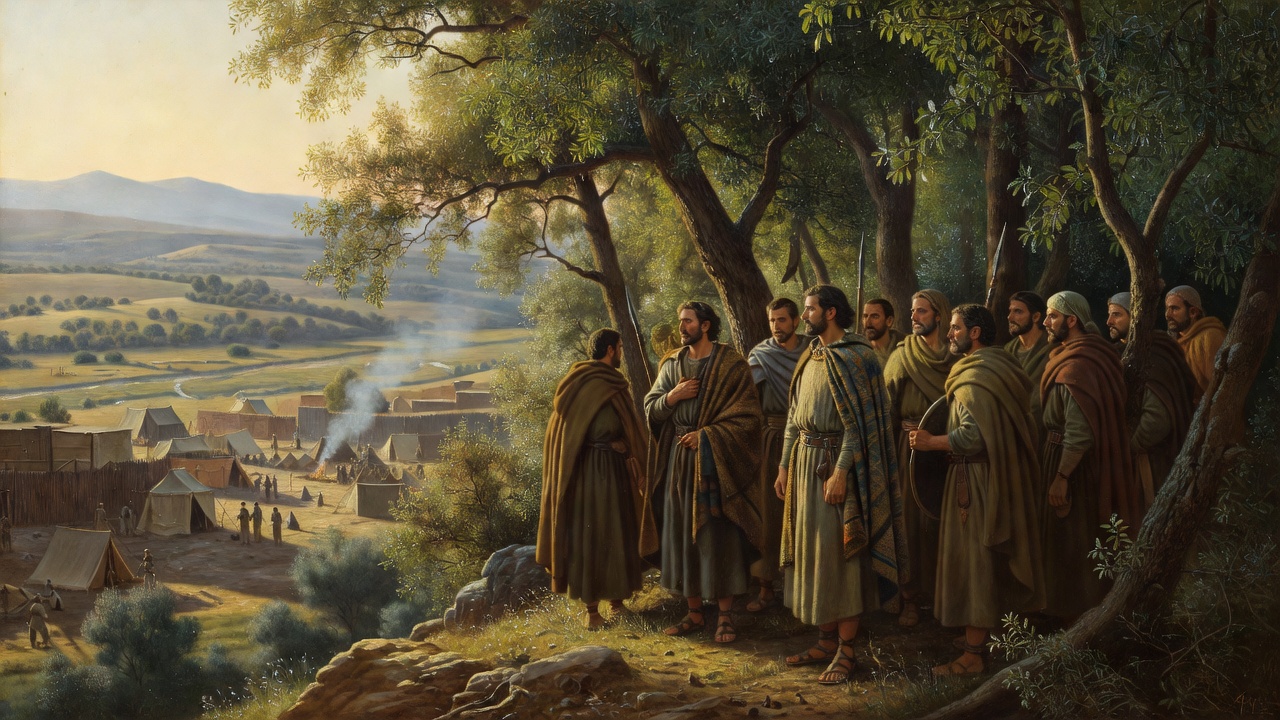
David's Palace and Victories over the Philistines
- The Phoenician coastal city of Tyre was renowned for its maritime commerce and skilled craftsmen. King Hiram provided David with Lebanese cedar logs, stonemasons, and carpenters to build a royal palace in Jerusalem.Sources: Hiram · Tyre · the Bible text itself
- The Valley of Rephaim lay southwest of Jerusalem, providing invaders a natural corridor toward the city. David named the site of his victory Baal-perazim, meaning a bursting through, comparing God breaking through his enemies to a raging flood.Sources: Valley of Rephaim · Baal-perazim · the Bible text itself
- In their second confrontation, David ambushed the Philistine army near a grove of balsam trees and pursued the retreating forces from Gibeon all the way to Gezer on the coastal plain.Sources: Gibeon · Gezer · the Bible text itself
Notes written with AI assistance from open sources (Theographic Bible Metadata, CC BY-SA 4.0; Easton’s Bible Dictionary, public domain) and reviewed before publishing.
Places in this chapter
- Tyre · 33.271, 35.196 · verse 1
- Jerusalem · 31.777, 35.234 · verses 3, 4
- Valley of Rephaim · 31.763, 35.219 · verse 9
- Gezer · Today: Tel Gezer · 31.859, 34.919 · verse 16
- Gibeon · Today: El Jib · 31.847, 35.183 · verse 16
Only places identified with high confidence are shown (90% or more according to the scholarly sources compiled by OpenBible). Period map: DARE (Digital Atlas of the Roman Empire), CC BY 4.0; modern map: © OpenStreetMap contributors; places: OpenBible.info (CC BY 4.0).
Credits and license for this translation
GODE EA SIA: IDA:IWANE GALA
The Holy Bible in the Bedamuni language of Papua New Guinea
Buk Baibel long tok ples Bedamuni
Copyright © 2000 Tom Hoey
Language: Bedamuni (Beami)
Translation by: Tom Hoey
This translation is made available to you under the terms of the
Creative Commons Attribution Share-Alike license 4.0.
You have permission to share and redistribute this Bible translation in any format and to make reasonable revisions and adaptations of this translation, provided that:
You include the above copyright and source information.
If you make any changes to the text, you must indicate that you did so in a way that makes it clear that the original licensor is not necessarily endorsing your changes.
If you redistribute this text, you must distribute your contributions under the same license as the original.
Pictures included with Scriptures and other documents on this site are licensed just for use with those Scriptures and documents.
For other uses, please contact the respective copyright owners.
Note that in addition to the rules above, revising and adapting God's Word involves a great responsibility to be true to God's Word. See Revelation 22:18-19.
2025-08-30
Source: http://png.bible/beo/ · eBible.org