Revelation 11
Godeya꞉ To Nafayo꞉ We · Tap a verse to see its cross-references.
Godeya꞉ dinali sa꞉lan kalu a꞉la꞉yo꞉ mio꞉
1Gode eyo꞉ da꞉fema꞉no꞉ kelego꞉ nowo꞉ nemo꞉wo꞉ dimiakiyo꞉ a꞉la꞉sio꞉, “Ge ha꞉na꞉sa꞉ga꞉ ni malilo꞉ a a꞉no꞉lo꞉, bobalo꞉ so꞉mea꞉no꞉ mu gulu a꞉no꞉lo꞉ da꞉fea꞉bi. A꞉la꞉ta꞉ga꞉ kaluka꞉isale a꞉namilo꞉ dulugu sa꞉la꞉sen a꞉no꞉lo꞉ agela꞉bi. 2Giyo꞉ da꞉feakiyo꞉, ni malilo꞉ a amilo꞉ isagen a꞉no꞉ da꞉fea꞉so꞉bo. Mo꞉wo꞉ isagen a꞉no꞉ ha꞉la꞉ kaluka꞉isalemo꞉ dimi. Iyo꞉ ele do꞉la꞉fo꞉ fa꞉la꞉da꞉in a꞉la꞉ta꞉ga꞉ a꞉la꞉ us a꞉namio꞉, ni amisa꞉n malilo꞉ a꞉no꞉ wa꞉la꞉ sa꞉ndaki, mogagila꞉ma꞉ib. 3A꞉la꞉gakiyo꞉ ni tolo꞉ sa꞉lan kalu a꞉la꞉yo꞉ nofolo꞉wo꞉ alano꞉lo꞉b a꞉la꞉bo꞉ba꞉kiyo꞉, nofolo꞉ so꞉go꞉ ka꞉la꞉sa꞉ga꞉, towo꞉ sa꞉la꞉likiyo꞉, ho꞉leno꞉ 1,260 a꞉la꞉fo꞉ a꞉ma꞉ us a꞉namio꞉ ni towo꞉ sa꞉la꞉melea꞉ki halaido꞉ ta꞉fa꞉no꞉.” Gode eyo꞉ a꞉la꞉sio꞉. 4Godeya꞉ tolo꞉ sa꞉lan kalu a꞉la꞉ a꞉no꞉, nafa a꞉la꞉ o꞉lia꞉ o꞉lif i a꞉la꞉ a꞉no꞉ henfelo꞉ amilo꞉ kalu Alana꞉ anib amilo꞉ kagafo꞉len a꞉no꞉ ko꞉lo꞉ da꞉feaki sio꞉. 5Kalu imilig noma꞉yo꞉ a꞉la꞉ a꞉no꞉ mogagila꞉ma꞉no꞉ dowalega, deyo꞉ mego꞉f a꞉la꞉ma꞉lo꞉ a꞉na handalowaki, de a꞉ma꞉yo꞉ ma꞉ib. Kalu abeyo꞉ a꞉la꞉ o꞉lia꞉lo꞉ gisdo꞉ diab a꞉no꞉ tambo i a꞉no꞉lo꞉ a꞉la꞉soma꞉ib. 6Kalu a꞉la꞉ we Godeya꞉ tolo꞉ sa꞉la꞉likilo꞉ sia꞉mela꞉no꞉ ho꞉len a꞉namio꞉, akina a꞉la꞉ta꞉ga꞉yo꞉ ho꞉no꞉ mo꞉timena꞉kilo꞉ kalitan a꞉no꞉ a꞉la꞉ amio꞉ halaido꞉wo꞉ a꞉lab. A꞉la꞉ta꞉ga꞉ ho꞉no꞉ tambo ho꞉bo꞉ fa꞉la꞉doma꞉kilo꞉ dimidama꞉no꞉ a꞉no꞉lia꞉, henfelo꞉ kaluka꞉isalemo꞉lo꞉ hida꞉yo꞉ ko꞉li ko꞉lilo꞉ dimia꞉no꞉ a꞉no꞉lo꞉, a꞉la꞉ amio꞉ halaido꞉wo꞉ a꞉lab. A꞉la꞉ma꞉lo꞉ asulab au hida꞉yo꞉ a꞉no꞉ wa꞉ka wa꞉ka a꞉dimia꞉liki a꞉la꞉ma꞉no꞉wo꞉ halaido꞉ a꞉lab.
7A꞉la꞉ma꞉yo꞉ Godeya꞉ to sa꞉la꞉leno꞉ edalikiyo꞉, no꞉ mogago꞉ ko꞉lo꞉ hen alu dondo꞉ma a꞉namilo꞉ fa꞉la꞉dowo꞉ a꞉ma꞉yo꞉ a꞉la꞉ o꞉lia꞉ bubakiyo꞉, no꞉ mogago꞉ e tiniaki a꞉la꞉yo꞉ sanala꞉ma꞉ib. 8A꞉la꞉ma꞉ do꞉mo꞉ a꞉no꞉ amisa꞉n alan us a꞉namilo꞉ ha꞉na꞉sen tog a꞉naka ta꞉fo꞉mela꞉ib. Amisa꞉n alan a꞉namio꞉, tamin amio꞉ Kalu Alan a꞉la꞉ma꞉lo꞉wo꞉ a꞉na alu alifa꞉. A꞉la꞉ta꞉ga꞉ amisa꞉n a꞉no꞉ ko꞉lo꞉ bale sa꞉lakiyo꞉, wiyo꞉ nowo꞉ Sodom, nowo꞉ Isib a꞉la꞉sio꞉ 9Ho꞉len otalen a꞉la꞉ta꞉ga꞉ ho꞉len heb us a꞉namio꞉, kaluka꞉isaleyo꞉ henfelo꞉ ko꞉li ko꞉lilo꞉ amilo꞉ san o꞉lia꞉, to ko꞉li ko꞉lilo꞉lo꞉ sa꞉lan o꞉lia꞉, so꞉lo꞉ mio꞉ ko꞉li ko꞉lilo꞉wo꞉ tambo do꞉mo꞉ a꞉no꞉ dalima꞉no꞉wo꞉ ka꞉la꞉sa꞉ga꞉, a꞉no꞉ko꞉ ba꞉da꞉mela꞉ib. 10A꞉la꞉do꞉ gab a꞉namio꞉ henfelo꞉ kaluka꞉isaleya꞉yo꞉ mada o꞉li go꞉ a꞉lakiyo꞉, iyo꞉ sagalaki, egelebo꞉ boba kelego꞉ nolo꞉ dimia꞉li ha꞉na꞉ib. Mo꞉wo꞉ dinali sa꞉lan kalu a꞉la꞉ma꞉yo꞉ henfelo꞉ wilo꞉ sen kaluka꞉isalemo꞉wo꞉ hida꞉yo꞉wo꞉ alan dimia꞉len.
11Ko꞉sega ho꞉len otalen a꞉la꞉ta꞉ga꞉ ho꞉len heb a꞉no꞉ ta꞉ta꞉ga꞉yo꞉, Gode eyo꞉ mela꞉no꞉lo꞉ dimia꞉sen meho꞉ a꞉no꞉ a꞉la꞉mo꞉ dimiabiki, a꞉la꞉ a꞉no꞉ a꞉dasilia꞉ga꞉ kagayabikiyo꞉, kaluka꞉isale iliyo꞉ a꞉la꞉ a꞉no꞉ ko꞉lo꞉ ba꞉daki iligakiyo꞉, tagio꞉ alan doma꞉ib. 12A꞉la꞉tabikiyo꞉ a꞉la꞉mo꞉wo꞉ to nowo꞉ Hebene a꞉la꞉ta꞉ga꞉ halale ho꞉le sa꞉lakiyo꞉ a꞉la꞉sio꞉, “Wena mena.” A꞉la꞉sa꞉lakiyo꞉ kalu a꞉la꞉ a꞉no꞉ ene gis kaluwo꞉ bo꞉fo꞉labiki, kola꞉ go꞉lulia꞉ga꞉ Hebene a꞉na dia꞉ha꞉na꞉ib. 13Wigibole a꞉naka, hiniyo꞉ alan tilakiyo꞉, amisa꞉n usamilo꞉ ayo꞉ do꞉la꞉fo꞉ dialifelo꞉ us a꞉namio꞉, imilida꞉lo꞉wo꞉ dugu ha꞉na꞉sio꞉. Hini tilo꞉ a꞉namio꞉ kaluka꞉isaleyo꞉ daoseno꞉ dom a꞉la꞉fo꞉ a꞉no꞉ tambo yasala꞉. A꞉la꞉gabikiyo꞉ mo꞉sowo꞉ kaluka꞉isale i a꞉no꞉ tagilaki, Gode Hebenelo꞉ a꞉lab a꞉no꞉ ko꞉lo꞉ wabulu sio꞉.
14A꞉la꞉fo꞉ko꞉lo꞉ hida꞉yo꞉ andeb a꞉no꞉ ba꞉da꞉la꞉ga꞉ ko꞉m a꞉la꞉takiyo꞉, hida꞉yo꞉ asol a꞉no꞉ ko꞉na꞉ma fa꞉la꞉doma꞉nigab.
Olo bulu dom a꞉no꞉ folo꞉
15Ma꞉mul kalu dom a꞉ma꞉yo꞉ ene olo buluwo꞉ folabikiyo꞉, Hebene a꞉namio꞉ to nolo꞉ halale sa꞉lakiyo꞉,
“Ni Gode Alan o꞉lia꞉ enedo꞉ Da꞉feyo꞉ Kalu o꞉lia꞉yo꞉
o꞉go꞉ henfelo꞉ wilo꞉ misa꞉ silikilo꞉ bo꞉fo꞉mela꞉no꞉wo꞉, ho꞉lendeyo꞉ fa꞉la꞉dowab ko꞉lo꞉,
a꞉la꞉ma꞉yo꞉ henfelo꞉ kaluka꞉isaleyo꞉ bo꞉fo꞉liki, mela꞉no꞉ mela꞉no꞉ mela꞉ib.”
16A꞉la꞉ta꞉ga꞉ ko꞉go꞉do꞉ kalu do꞉la꞉fo꞉ a꞉la꞉ a꞉la꞉ta꞉ga꞉ fa꞉la꞉da꞉in ko꞉lo꞉ Godeya꞉ milif amio꞉ misa꞉ kalulo꞉ mesa꞉no꞉ fofodo꞉ wa꞉l amilo꞉ sen i a꞉no꞉ gulalu asitaki, misa꞉fu fufudakiyo꞉, Godeya꞉ wiyo꞉ wabulu sa꞉la꞉sen. 17A꞉no꞉ ko꞉lo꞉ wabulu sa꞉lakiyo꞉ a꞉la꞉sio꞉,
“Wiso꞉ mada o꞉m. Gode Alan ge mada halaido꞉le.
Tamin amio꞉ ge elen. O꞉go꞉lo꞉ ge a꞉lab.
Ge go꞉no꞉n halaido꞉wa kagayaki,
henfelo꞉ we tambo o꞉go꞉lo꞉ gi mo꞉mo꞉da bo꞉fo꞉lab ko꞉lo꞉ mada o꞉m.
18Henfelo꞉ kaluka꞉isaleya꞉yo꞉ gemo꞉wo꞉ kulufa꞉yo꞉wo꞉ alan dowo꞉ ko꞉sega,
gadiakilo꞉ kulufa꞉yo꞉ gilo꞉ a꞉no꞉ walama꞉no꞉ ho꞉leno꞉ fa꞉la꞉dowab.
Sowo꞉ kaluka꞉isaleyo꞉ tambo aloba꞉daki dibebema꞉no꞉ ho꞉leno꞉ fa꞉la꞉dowab.
Go꞉no꞉n nanog dia꞉likilo꞉ gi tolo꞉ sa꞉lan kalu o꞉lia꞉,
go꞉no꞉n tilidabu kaluka꞉isale o꞉lia꞉,
gi wiyo꞉ molo asula꞉sen kaluka꞉isale o꞉lia꞉mo꞉wo꞉,
wa꞉l dimia꞉no꞉ ho꞉leno꞉ fa꞉la꞉dowab.
Wabulun kaluwo꞉lo꞉, wilo꞉ma kalu o꞉mo꞉wo꞉lo꞉ dimia꞉ib.
A꞉la꞉ta꞉ga꞉ kaluwa꞉lo꞉ henfelo꞉ kaluka꞉isale nolo꞉ yasa danela꞉lab a꞉no꞉ tambo wa꞉deaki falasila꞉ma꞉no꞉ ho꞉leno꞉lo꞉ fa꞉la꞉dowab.”
19A꞉la꞉sa꞉labikiyo꞉ Godeya꞉ malilo꞉ a Hebenelo꞉ elen a꞉no꞉ togo꞉ kolaetabiki ba꞉ba꞉ amio꞉, i bokisi Gode o꞉lia꞉lo꞉ to saefa꞉ a꞉no꞉ ene malilo꞉ a us a꞉na delena ba꞉ba꞉. A꞉na ba꞉ba꞉ amio꞉, wabelego꞉ tili tandeaki, gun bosolakiyo꞉, fowo꞉ alan dowa꞉sa꞉ga꞉, hini silakiyo, ais hido꞉ alan o꞉lia꞉ tia꞉.
Did you know?
The Two Witnesses and the Great City
- Revelation 11 says that the bodies of the two witnesses will lie in the street of the great city, figuratively called Sodom and Egypt, where their Lord was also crucified. A dictionary entry explains Sodom as Burning, or the walled, a city destroyed by fire from heaven because of its inhabitants' wickedness, a destruction that Scripture frequently recalls. Egypt, the land of the Nile and the pyramids, is likewise described as holding great significance in Scripture.Sources: the Bible text itself
- The two witnesses are empowered to prophesy for 1,260 days, clothed in sackcloth. They are the two olive trees and the two lampstands that stand before the Lord of the earth, and they have power to shut the sky so that no rain falls, to turn the waters into blood, and to strike the earth with every kind of plague.Sources: the Bible text itself
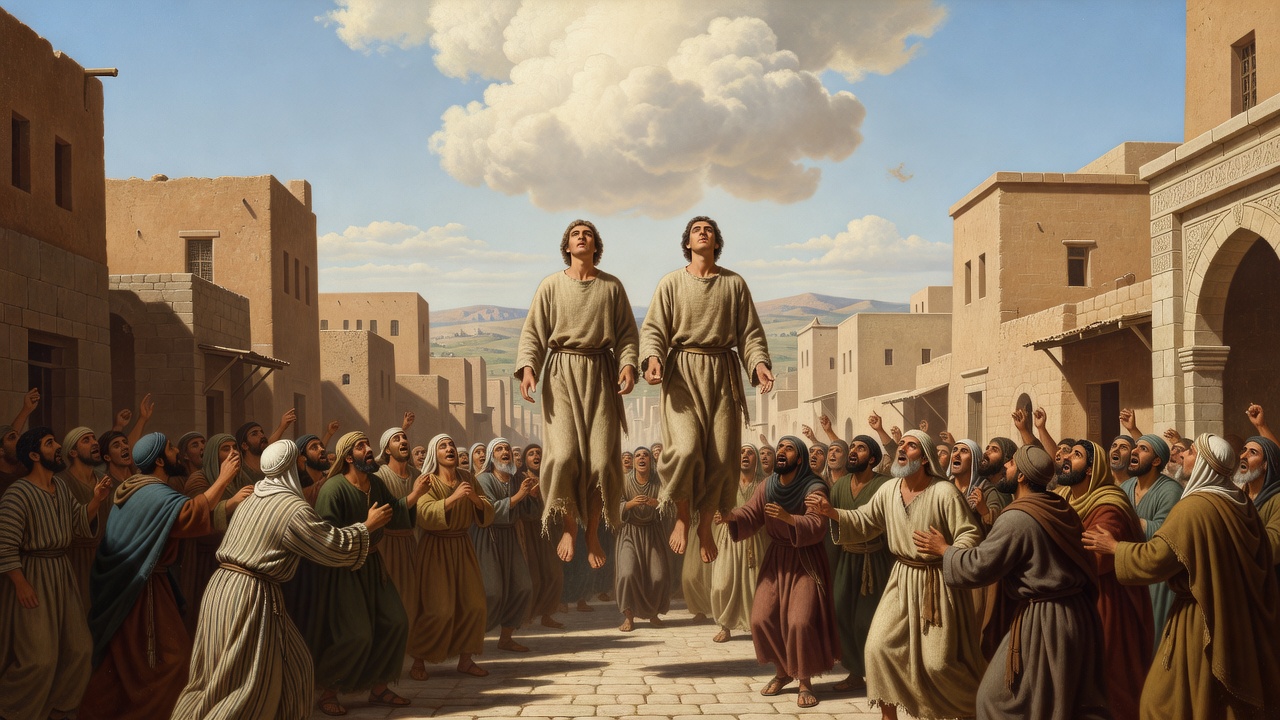
- When the two witnesses finish their testimony, the beast that comes up from the Abyss overpowers and kills them. For three and a half days, peoples, tribes, tongues, and nations view their bodies and will not permit them to be laid in a tomb, while the earth's inhabitants gloat over them, celebrate, and send one another gifts, because the two prophets had tormented them. After that, the breath of life from God enters them; they stand on their feet and go up to heaven in a cloud as their enemies watch.Sources: the Bible text itself
Notes written with AI assistance from open sources (Theographic Bible Metadata, CC BY-SA 4.0; Easton’s Bible Dictionary, public domain) and reviewed before publishing.
Places in this chapter
Only places identified with high confidence are shown (90% or more according to the scholarly sources compiled by OpenBible). Period map: DARE (Digital Atlas of the Roman Empire), CC BY 4.0; modern map: © OpenStreetMap contributors; places: OpenBible.info (CC BY 4.0).
Credits and license for this translation
Godeya꞉ To Nafayo꞉ We
The New Testament, Genesis, and Ruth in the Kaluli language of Papua New Guinea
Sampela hap Buk Baibel long tokples Kaluli long Niugini
copyright © 1998-2022 Wycliffe Bible Translators, Inc.
Language: Kaluli
Translation by: Wycliffe Bible Translators
This translation is made available to you under the terms of the
Creative Commons Attribution-Noncommercial-No Derivatives license 4.0.
You may share and redistribute this Bible translation or extracts from it in any format, provided that:
You include the above copyright and source information.
You do not sell this work for a profit.
You do not change any of the words or punctuation of the Scriptures.
Pictures included with Scriptures and other documents on this site are licensed just for use with those Scriptures and documents.
For other uses, please contact the respective copyright owners.
2025-03-12
Source: http://png.bible/bco/ · eBible.org