Genesis 28
Godeya꞉ To Nafayo꞉ We · Tap a verse to see its cross-references.
1A꞉la꞉fo꞉ko꞉lo꞉ Aisa꞉g eyo꞉ Ya꞉kobo꞉ ho꞉ida꞉sa꞉ga꞉, emo꞉wo꞉ nafale mesa꞉no꞉ towo꞉ sa꞉la꞉sa꞉ga꞉yo꞉, to halaido꞉ nowo꞉ sa꞉laki a꞉la꞉sio꞉, “Ge Ka꞉ina꞉n ga we, mada dia꞉so꞉bo. 2Ko꞉sega ge Mesobotemia hena a꞉ma꞉la꞉ ha꞉na꞉ga꞉, ge ma꞉mu Betuel amisa꞉n a꞉namio꞉, ge babo꞉ Labana꞉ ida꞉ nowo꞉ ge dia꞉ni ha꞉na꞉bi. 3Ga gilo꞉ dia꞉nigab a꞉no꞉ mada nafale dowaki, so꞉wayo꞉ modo꞉ ko꞉lo꞉ sa꞉la꞉la꞉i ha꞉nakiyo꞉, so꞉lo꞉wo꞉ modo꞉ fa꞉la꞉doma꞉ki a꞉la꞉li, Gode Halaido꞉le A꞉lab o꞉mo꞉ dulugu so꞉lo꞉l. 4Godeya꞉lo꞉ Ablahambo꞉lo꞉ dinali sio꞉ a꞉no꞉ ge dia꞉sa꞉ga꞉, ge ma꞉mu ima꞉yo꞉lo꞉ dia꞉ib. A꞉la꞉fo꞉ko꞉lo꞉ hen gelo꞉ mageso꞉lo꞉ sia꞉len welo꞉, ge tambo dia꞉sa꞉ga꞉ bo꞉fo꞉mela꞉ib, mo꞉wo꞉ tamin amio꞉ Gode eyo꞉ Ablahambo꞉ dimi.” Aisa꞉g eyo꞉ Ya꞉kobo꞉ a꞉la꞉dinali sio꞉. 5A꞉la꞉sa꞉la꞉sa꞉ga꞉, Aisa꞉g eyo꞉ Ya꞉kob e Mesobotemia hen a꞉na, Labando꞉wa melea꞉ki iliga꞉fo꞉. Laban e Alam kalu Betuel inso꞉, a꞉la꞉ta꞉ga꞉ La꞉ba꞉gaya꞉ ene aowo꞉ e.
6Aisa꞉g eyo꞉ Ya꞉kob e nafa mesea꞉kilo꞉ to sio꞉ a꞉no꞉ a꞉la꞉ta꞉ga꞉ Ya꞉kob e gayo꞉ a꞉na dima꞉kiyo꞉ Mesobotemia hena iliga꞉fo꞉lo꞉b a꞉la꞉bo꞉, Iso꞉ e da꞉da꞉ga꞉ asulo꞉. A꞉la꞉ta꞉ga꞉ Aisa꞉g eyo꞉ Ya꞉kobo꞉ nafa mesea꞉ki towo꞉ sa꞉lab amio꞉, e Ka꞉ina꞉n ga we dia꞉so꞉boka꞉ a꞉lakilo꞉ sio꞉ a꞉no꞉ Iso꞉wo꞉ dabu. 7A꞉la꞉ta꞉ga꞉ Ya꞉kob e iyalia꞉ anolia꞉ma꞉lo꞉ to sio꞉ a꞉no꞉ kudu ha꞉nakiyo꞉ Mesobotemia hen aneka꞉ a꞉la꞉do꞉ sio꞉wo꞉ Iso꞉ e dabu. 8To sio꞉ a꞉no꞉ asulakiyo꞉, iya Aisa꞉g eyo꞉ Ka꞉ina꞉n gaya꞉ mano꞉ mo꞉beakigo꞉lo꞉b a꞉la꞉bo꞉ Iso꞉ e a꞉na fanda asulo꞉. 9A꞉la꞉fo꞉ko꞉lo꞉ Iso꞉ eyo꞉ ga nowo꞉ a꞉dia꞉ni, Ablahama꞉ inso꞉ Ismaela꞉ e so꞉lo꞉lo꞉wa ha꞉na꞉sa꞉ga꞉yo꞉, Ismaela꞉ ida꞉ Nebayoda꞉ ado Mahalad e a꞉na di.
Ya꞉kob e Betel a꞉na alilaki ofolo꞉
10Ya꞉kob eyo꞉ Bilsiba a꞉na ta꞉ta꞉ga꞉ Halan ha꞉na꞉ni ane. 11Ha꞉na꞉leno꞉ nudabiki, us a꞉namio꞉ alima꞉no꞉ hen nafa nowo꞉ ba꞉da꞉sa꞉ga꞉yo꞉, u nowo꞉ e misa꞉yo꞉ a꞉na dia꞉taki ali. 12E a꞉na alifo꞉liki, ofola ba꞉ba꞉ amio꞉ wo꞉lo꞉ hen wena a꞉la꞉ta꞉ga꞉ Hebene halona ka dowalifo꞉liki, Godeya꞉ ene ma꞉mula꞉ kaluwo꞉ wo꞉l a꞉na tinda꞉liki, nolo꞉ fa꞉la꞉na꞉liki a꞉la꞉lena ba꞉ba꞉. 13Yawe eyo꞉ Ya꞉kob elo꞉ alifo꞉lab aniba kagafo꞉liki a꞉la꞉sio꞉, “Ne Yawe, Ablahama꞉ Godeyo꞉ ne, a꞉la꞉ta꞉ga꞉ Aisa꞉ga꞉ Godeyo꞉ ne ko꞉lo꞉, hen gelo꞉ alifo꞉lab we, ge o꞉lia꞉ ge ma꞉mu i o꞉lia꞉mo꞉ dimia꞉no꞉. 14So꞉wa gilo꞉ sa꞉la꞉la꞉i ha꞉na꞉lab a꞉no꞉ modo꞉ fa꞉la꞉doma꞉ki ta꞉fa꞉no꞉ ko꞉lo꞉, iyo꞉ hena꞉ mu o꞉ngo꞉ fa꞉la꞉doma꞉ib. Iyo꞉ ta꞉i ha꞉nakiyo꞉, hen ofdo꞉ yan doba꞉da꞉yo꞉lo꞉, ofdo꞉ tinan doba꞉da꞉yo꞉lo꞉, eleb doba꞉da꞉yo꞉lo꞉, kini doba꞉da꞉yo꞉lo꞉ modo꞉ ta꞉i ha꞉na꞉ib. A꞉la꞉ta꞉ga꞉ henfelo꞉ amilo꞉ so꞉lo꞉ sab a꞉no꞉ tambo ge o꞉lia꞉ so꞉wa gilo꞉ sa꞉la꞉la꞉i ha꞉na꞉lab a꞉na a꞉la꞉ta꞉ga꞉yo꞉ nafale mesea꞉ki ta꞉fa꞉no꞉. 15Ge hen o꞉bamida꞉ya꞉le ha꞉nalega, ne ge o꞉lia꞉ sia꞉liki bo꞉fo꞉mela꞉no꞉. A꞉la꞉ta꞉ga꞉ tif amio꞉ niyo꞉ ge hen wena a꞉ma꞉la꞉ tililia꞉ mia꞉no꞉. Niyo꞉ ge mo꞉ta꞉fa꞉no꞉ ko꞉lo꞉, to no꞉no꞉ndo꞉ gemo꞉lo꞉ dinali sio꞉ aumbo꞉ niyo꞉ dimidama꞉no꞉.” 16Ya꞉kob e ali a꞉no꞉ ko꞉lo꞉ dasilakiyo꞉ a꞉la꞉sio꞉, “Ne mo꞉asulo꞉ ko꞉sega, Yawe e hen wenamio꞉ hendele a꞉lab.” 17A꞉la꞉sa꞉la꞉sa꞉ga꞉ e tagilaki a꞉la꞉sio꞉, “Hen we mada ko꞉lilo꞉b Hen we Godeya꞉ ene a, a꞉la꞉ta꞉ga꞉ Hebene togo꞉ wena a꞉lab ko꞉lo꞉ ne mada molo asulab,” a꞉la꞉sio꞉. Ya꞉kob e ofolo꞉.|alt="Jacobs dream" src="C020_gr.tif" size="col" copy="© 1997 New Tribes Mission/Foreign Mission Board, Southern Baptist Convention. Used with permission." ref="28.10-15"
18Kea꞉fole a꞉namio꞉, Ya꞉kob eyo꞉ u elo꞉ misase ali a꞉no꞉ da꞉ga꞉lia꞉ga꞉, hen a꞉na gele alifa꞉. Gele alitakiyo꞉ wa ho꞉no꞉ a꞉na tulu alifa꞉. 19Tamin amio꞉ hen a꞉no꞉ “Lus” a꞉la꞉sa꞉la꞉sen ko꞉sega o꞉go꞉ Ya꞉koba꞉yo꞉ hen a꞉no꞉ “Betel” wikilo꞉.
20A꞉la꞉dimida꞉sa꞉ga꞉ Ya꞉kob eyo꞉ a꞉la꞉dinali sio꞉, “Gode giyo꞉ ne o꞉lia꞉ dowaki, nemo꞉wo꞉ helebeso꞉g o꞉lia꞉ ma꞉no꞉ o꞉lia꞉ dimiaki a꞉la꞉ta꞉ga꞉, nelo꞉ ha꞉na꞉labo꞉ gi bo꞉fo꞉la꞉ga꞉ aneyo꞉, ne a꞉ma꞉la꞉ dowa꞉ hen ami ga꞉li tililia꞉ ha꞉nalega, Yawe ge, ni Gode doma꞉no꞉. 22Nilo꞉ u ko꞉lo꞉ gele alito꞉l we, Gode gi ayo꞉ we a꞉la꞉liki da꞉fe alito꞉l. A꞉la꞉ta꞉ga꞉ kelego꞉ Gode gilo꞉ nemo꞉lo꞉ dimiab a꞉no꞉ tambo, niyo꞉ do꞉la꞉fo꞉ aloba꞉da꞉sa꞉ga꞉, heb imilig nowo꞉ Godemo꞉ dimia꞉no꞉.” Ya꞉kob eyo꞉ a꞉la꞉dinali sio꞉.
Did you know?
Jacob's Journey and Dream at Bethel
- Isaac sent Jacob from Beersheba to Paddan-aram to take a wife from the daughters of Laban, his mother Rebekah's brother, rather than from the Canaanite women. Paddan-aram, called the plain of Aram, is commonly regarded as the Mesopotamian district around Haran, where Laban lived; Haran, also called the city of Nahor, was where Abraham stayed after leaving Ur until his father Terah died.Sources: the Bible text itself · Paddan-aram · Haran · Laban
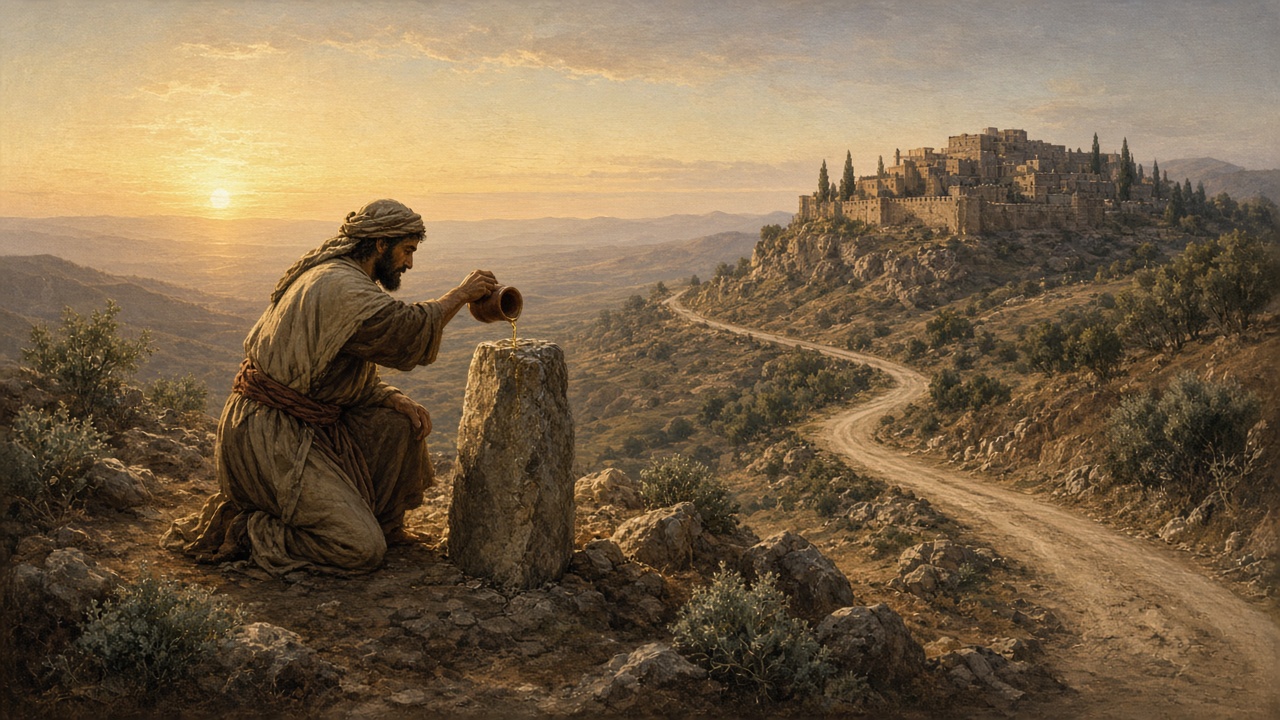
- The place where Jacob dreamed, set up as a pillar the stone he had put under his head, and poured oil on it was the royal Canaanite city of Luz; he renamed it Bethel. Easton's Bible Dictionary (1897) locates Bethel in central Palestine, about ten miles north of Jerusalem, and notes that the name was at first apparently given to a sanctuary in the neighborhood of Luz, and was not given to the city itself until after the tribe of Ephraim conquered it.Sources: the Bible text itself · Luz · Bethel (of Palestine)
- When Esau learned that Isaac had blessed Jacob and ordered him not to marry a Canaanite woman, he went to Ishmael and married Mahalath, sister of Nebaioth and daughter of Abraham's son Ishmael, in addition to the wives he already had. Easton's Bible Dictionary (1897) also calls her Bashemath and notes that Esau's three wives receive different names in the Edomite genealogy of Genesis 36 from those given in the narrative of Genesis 26 and 28.Sources: the Bible text itself · Bashemath
Notes written with AI assistance from open sources (Theographic Bible Metadata, CC BY-SA 4.0; Easton’s Bible Dictionary, public domain) and reviewed before publishing.
Places in this chapter
- Canaan · 32.767, 35.333 · verses 1, 6, 8
- Haran · Today: Harran · 36.864, 39.033 · verse 10
- Luz · Today: Beitin · 31.923, 35.241 · verse 19
Only places identified with high confidence are shown (90% or more according to the scholarly sources compiled by OpenBible). Period map: DARE (Digital Atlas of the Roman Empire), CC BY 4.0; modern map: © OpenStreetMap contributors; places: OpenBible.info (CC BY 4.0).
Credits and license for this translation
Godeya꞉ To Nafayo꞉ We
The New Testament, Genesis, and Ruth in the Kaluli language of Papua New Guinea
Sampela hap Buk Baibel long tokples Kaluli long Niugini
copyright © 1998-2022 Wycliffe Bible Translators, Inc.
Language: Kaluli
Translation by: Wycliffe Bible Translators
This translation is made available to you under the terms of the
Creative Commons Attribution-Noncommercial-No Derivatives license 4.0.
You may share and redistribute this Bible translation or extracts from it in any format, provided that:
You include the above copyright and source information.
You do not sell this work for a profit.
You do not change any of the words or punctuation of the Scriptures.
Pictures included with Scriptures and other documents on this site are licensed just for use with those Scriptures and documents.
For other uses, please contact the respective copyright owners.
2025-03-12
Source: http://png.bible/bco/ · eBible.org