Genesis 16
Godeya꞉ To Nafayo꞉ We · Tap a verse to see its cross-references.
Ha꞉ga eyo꞉ Ismaelo꞉ sa꞉la꞉li
1Ablam ene inga Sa꞉lai eyo꞉ so꞉wayo꞉ Ablambo꞉wo꞉ mo꞉sa꞉la꞉me. Selaiya꞉ ene nanogdo꞉ dian ka꞉isale nowo꞉ ene wiyo꞉ Ha꞉ga, e Isib ka꞉isale ko꞉lo꞉ e o꞉lia꞉ elen. 2A꞉la꞉fo꞉ko꞉lo꞉ Sa꞉lai eyo꞉ Ablambo꞉wo꞉ a꞉la꞉sio꞉, “Ge asuluma. Yawe eyo꞉ ne so꞉wayo꞉ mo꞉sa꞉la꞉lima꞉ki, faino ga ta꞉fo꞉. A꞉la꞉go꞉ko꞉lo꞉ ge ni nanog ka꞉isalelo꞉wa ha꞉na꞉sa꞉ga꞉, e o꞉lia꞉ alila꞉bi. A꞉la꞉dimidalega so꞉wa nilo꞉ sa꞉la꞉lialu aumbo꞉, Ha꞉ga eyo꞉ so꞉wa nolo꞉ sa꞉la꞉ mea꞉nigaba꞉le?” Sa꞉lai elo꞉ to sa꞉lab a꞉no꞉ da꞉da꞉sa꞉ga꞉, Ablam eyo꞉ asulo꞉wo꞉ imilise dowo꞉. 3A꞉la꞉go꞉ko꞉lo꞉ Sa꞉lai eyo꞉ Isib ga Ha꞉ga, ene nanogdo꞉ dian a꞉no꞉ tililia꞉ga꞉, in Ablama꞉ ene inga doma꞉ki dimi. Ho꞉len a꞉namio꞉, Ablam e Ka꞉ina꞉n hen a꞉namilo꞉ seno꞉ donayo꞉ do꞉la꞉fo꞉wo꞉ gulula꞉ 4A꞉la꞉fo꞉ko꞉lo꞉ Ablam e Ha꞉ga o꞉lia꞉ ali ko꞉lo꞉, Ha꞉ga e alelo꞉. E alelab a꞉la꞉bo꞉ asula꞉sa꞉ga꞉yo꞉, eyo꞉ Sa꞉lai ba꞉dakiyo꞉, e o꞉ngo꞉malo꞉ngo꞉ a꞉la꞉asulo꞉. 5A꞉la꞉fo꞉ko꞉lo꞉ Sa꞉lai eyo꞉ Ablambo꞉wo꞉ a꞉la꞉sio꞉, “Ni nanog ka꞉isaleyo꞉ gemo꞉ dimi ko꞉sega, e alelabo꞉lo꞉b a꞉la꞉bo꞉ eneno꞉ asulakiyo꞉, eyo꞉ ne o꞉ngo꞉malo꞉ngo꞉ a꞉la꞉ba꞉ba꞉. A꞉la꞉fo꞉ko꞉lo꞉ nelo꞉ amilo꞉ hida꞉yo꞉ fa꞉la꞉dowab a꞉no꞉, hala dimido꞉wo꞉ geya doma꞉ib. Yawe eyo꞉ na꞉n usamio꞉ halabo꞉ abe dimido꞉wa꞉le a꞉la꞉bo꞉ aloba꞉ma꞉ib.” 6Ko꞉sega Ablam eyo꞉ Selaimo꞉wo꞉ a꞉la꞉sio꞉, “Go꞉no꞉n nanog ka꞉isale a꞉no꞉ ge o꞉lo꞉ biso꞉ ko꞉lo꞉, go꞉no꞉ndo꞉ asulab aumbo꞉, giyo꞉ emo꞉ dimida꞉bi.” Ablam eyo꞉ a꞉la꞉sa꞉labiki, Sa꞉lai eyo꞉ Ha꞉ga emo꞉wo꞉ gadia꞉liki hida꞉yo꞉wo꞉ dimia꞉len ko꞉lo꞉ Ha꞉ga e Sa꞉lai ta꞉ta꞉ga꞉ nai ane.
7E kalulo꞉ma hen a꞉na ha꞉na꞉sa꞉ga꞉, Sul amisa꞉ndo꞉ ha꞉na꞉sen tog anib a꞉na, ho꞉n silo꞉ a꞉lab a꞉nami sen ko꞉lo꞉, Yawe ene ma꞉mul kaluwo꞉ a꞉na galili. 8Ma꞉mul kalu eyo꞉ gamo꞉wo꞉ a꞉la꞉sio꞉, “Ha꞉ga, Selaiya꞉ ene nanogdo꞉ dian ga, ge o꞉ba a꞉la꞉ta꞉ga꞉ mio꞉wo꞉? Ge o꞉bamida꞉ ha꞉naya?” A꞉la꞉dabu ba꞉dabiki, Ha꞉ga e a꞉ma꞉la꞉ sa꞉laki, “Ne, ni misa꞉ ga Selaiyo꞉ ta꞉ta꞉ga꞉ ho꞉no꞉l.” 9A꞉la꞉ta꞉ga꞉ Yawe ene ma꞉mul kaluwa꞉ a꞉ma꞉la꞉ sa꞉laki, “Ge a꞉ma꞉la꞉ ha꞉na꞉sa꞉ga꞉, go꞉no꞉n misa꞉ ga elo꞉ to sa꞉lab au dimidaki, ha꞉ga doma꞉ni ha꞉na꞉bi.” 10A꞉la꞉ta꞉ga꞉ ma꞉mul kaluwa꞉ a꞉sa꞉lakiyo꞉, “Gilo꞉ so꞉wa sa꞉la꞉la꞉i ha꞉nab i a꞉no꞉ modo꞉ fa꞉la꞉doma꞉ki dimidama꞉no꞉ ko꞉lo꞉, kaluwa꞉yo꞉ i agelema꞉no꞉wo꞉ babalema꞉ib.” 11Eyo꞉ to nolo꞉ a꞉kudu sa꞉laki,
“Hendele, ge o꞉go꞉ alelo꞉ a꞉lab ko꞉lo꞉,
Giyo꞉ kalu so꞉wa sa꞉la꞉lia꞉ib.
Gilo꞉ hida꞉yo꞉ a꞉no꞉ Yawe eyo꞉ dabu ko꞉lo꞉,
Gilo꞉ so꞉wa sa꞉la꞉lia꞉nigab a꞉no꞉ ‘Ismael’ wikila꞉bi.”
12“So꞉wa gilo꞉wo꞉ igo꞉ o꞉ngo꞉ dowaki,
E kaluka꞉isale tambo o꞉lia꞉ gis dimidaliki,
Kaluka꞉isale i a꞉no꞉ e o꞉lia꞉yo꞉ gis dia꞉ib.
A꞉la꞉ta꞉ga꞉ ene so꞉lo꞉ o꞉lia꞉yo꞉lo꞉ ha꞉fa꞉nolo꞉bo꞉ mo꞉doma꞉ib.”
13Ha꞉ga eyo꞉ to sio꞉ a꞉no꞉ da꞉da꞉sa꞉ga꞉, a꞉la꞉sio꞉ “Gode nelo꞉ ba꞉da꞉sen a꞉no꞉, o꞉go꞉ niyo꞉ hendele ba꞉ba꞉.” A꞉la꞉asula꞉sa꞉ga꞉, eyo꞉ Yawe ene wi ho꞉gi wikilakiyo꞉ a꞉la꞉sio꞉, “Nelo꞉ Ba꞉da꞉seno꞉ Gode ge.” 14A꞉la꞉go꞉ko꞉lo꞉ kaluka꞉isaleyo꞉ ho꞉n si a꞉no꞉ a꞉la꞉wikilo꞉, “Bil Lahai Loi.” Ho꞉n si a꞉no꞉ Kades amisa꞉n a꞉no꞉ nol, Beled hen a꞉no꞉ nol a꞉lo꞉ us a꞉na elen.
15A꞉ma꞉ fa꞉s amio꞉ Ha꞉ga eyo꞉ Ablama꞉ ene kalu so꞉wayo꞉ sa꞉la꞉liabikiyo꞉, Ablam eyo꞉ “Ismael” wikilo꞉. 16Ha꞉ga eyo꞉ Ablama꞉ so꞉wa Ismaeldo꞉ sa꞉la꞉liab ho꞉len a꞉namio꞉, Ablam e donayo꞉ do꞉la꞉fo꞉ o a꞉la꞉ta꞉ga꞉ do꞉go꞉fela꞉fo꞉ ko꞉lo꞉ gulula꞉.
Did you know?
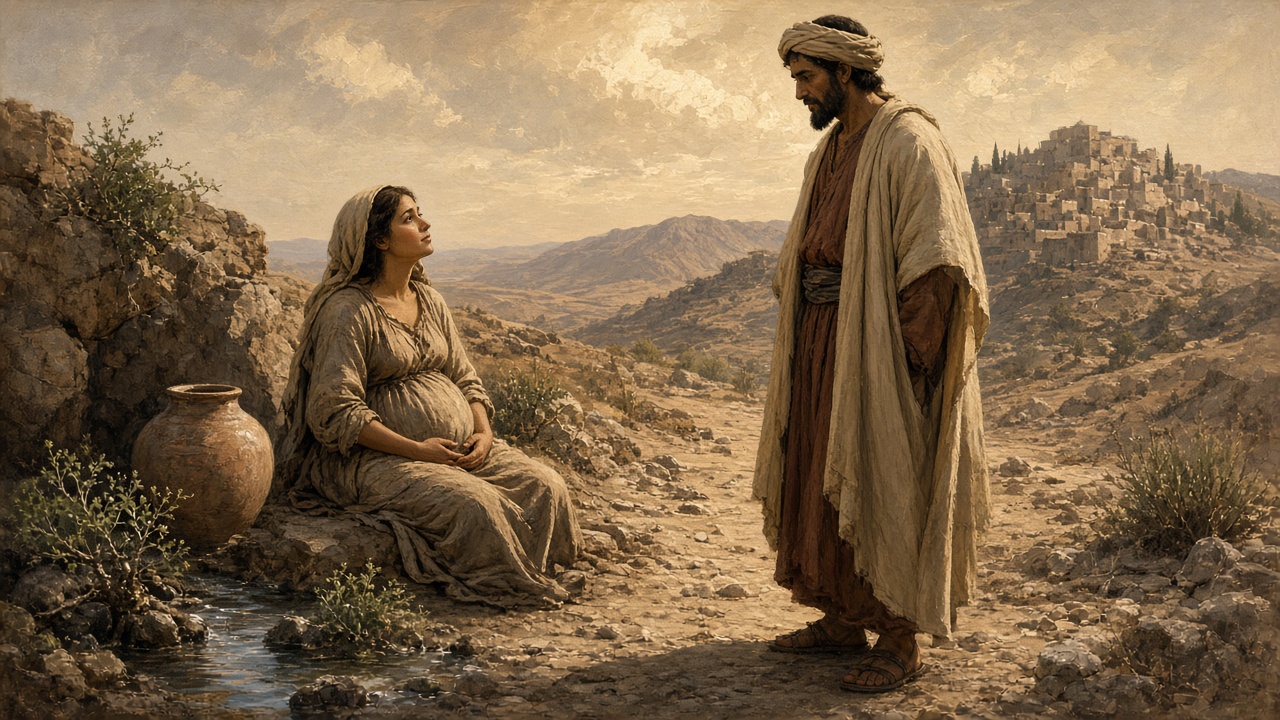
Hagar’s Flight and the Birth of Ishmael
- Hagar, an Egyptian maidservant of Sarai, bears a name understood to mean “flight,” or, according to others, “stranger.” After Abram had lived in Canaan for ten years, Sarai gave her to him as a secondary wife, hoping to build a family through her.Sources: Hagar · the Bible text itself
- When Sarai treated her harshly, Hagar fled along the road to Shur, through the desert that lay between her and Egypt, apparently intending to return to her relatives. The angel of the LORD found her by a spring of water there. Shur, meaning “wall,” was a wilderness on Egypt’s north-eastern border, probably named for frontier fortifications running from Pelusium to Heliopolis.Sources: the Bible text itself · Hagar · Shur
- Hagar called the LORD who spoke to her “the God who sees me,” and the well was named Beer-lahai-roi, “the well of the visible God,” between Kadesh and Bered, a town in the south of Palestine in the desert of Shur. She returned to Abram’s tent, and his eldest son, Ishmael, was born at Mamre when Abram was eighty-six; Abram gave him the name the angel had announced, because the LORD had heard her affliction.Sources: the Bible text itself · Hagar · Bered · Ishmael (Son of Hagar)
Notes written with AI assistance from open sources (Theographic Bible Metadata, CC BY-SA 4.0; Easton’s Bible Dictionary, public domain) and reviewed before publishing.
Places in this chapter
- Canaan · 32.767, 35.333 · verse 3
Only places identified with high confidence are shown (90% or more according to the scholarly sources compiled by OpenBible). Period map: DARE (Digital Atlas of the Roman Empire), CC BY 4.0; modern map: © OpenStreetMap contributors; places: OpenBible.info (CC BY 4.0).
Credits and license for this translation
Godeya꞉ To Nafayo꞉ We
The New Testament, Genesis, and Ruth in the Kaluli language of Papua New Guinea
Sampela hap Buk Baibel long tokples Kaluli long Niugini
copyright © 1998-2022 Wycliffe Bible Translators, Inc.
Language: Kaluli
Translation by: Wycliffe Bible Translators
This translation is made available to you under the terms of the
Creative Commons Attribution-Noncommercial-No Derivatives license 4.0.
You may share and redistribute this Bible translation or extracts from it in any format, provided that:
You include the above copyright and source information.
You do not sell this work for a profit.
You do not change any of the words or punctuation of the Scriptures.
Pictures included with Scriptures and other documents on this site are licensed just for use with those Scriptures and documents.
For other uses, please contact the respective copyright owners.
2025-03-12
Source: http://png.bible/bco/ · eBible.org