Acts 4
Godeya꞉ To Nafayo꞉ We · Tap a verse to see its cross-references.
Bida o꞉lia꞉ Yo꞉n o꞉lia꞉yo꞉ dibolo aya disa꞉
1Bida o꞉lia꞉ Yo꞉n o꞉lia꞉yo꞉ kaluka꞉isalemo꞉wo꞉ o꞉wida꞉lena, Godeya꞉ Malilo꞉ alo꞉ bo꞉fo꞉lowan misa꞉ kalu o꞉lia꞉ Godemo꞉lo꞉ boba so꞉mea꞉sen kalu i o꞉lia꞉, Sadusi kalu o꞉lia꞉, iyo꞉ tambo ya꞉ga꞉, a꞉la꞉lo꞉wa fa꞉la꞉dowo꞉. 2A꞉la꞉ma꞉yo꞉ kaluka꞉isalemo꞉wo꞉ Ya꞉su e a꞉ma꞉la꞉ dasi ko꞉lo꞉, kaluka꞉isale nolo꞉ o꞉li dasima꞉ib a꞉la꞉likilo꞉ wida꞉lab a꞉no꞉ kalu i a꞉no꞉ da꞉da꞉sa꞉ga꞉ mada mo꞉beo꞉. 3A꞉la꞉fo꞉ko꞉lo꞉ iliyo꞉ kalu a꞉la꞉ a꞉no꞉ mo꞉walilima꞉ni ta꞉li ko꞉sega, ofo꞉ tinabiki iliyo꞉ ali mo꞉walilima꞉no꞉ a꞉la꞉ta꞉ga꞉ a꞉la꞉yo꞉ dibolo a usa disalifa꞉. 4Ko꞉sega a꞉la꞉ma꞉lo꞉ to wida꞉lab a꞉namio꞉, kaluka꞉isale modo꞉wo꞉ da꞉da꞉sa꞉ga꞉ tilidabu ko꞉lo꞉ kalu agelo꞉wo꞉ daoseno꞉ bila꞉fo꞉ (5,000.)
5Kea꞉fo Yu ko꞉go꞉do꞉ kalu o꞉lia꞉ elelo꞉ wida꞉sen kalu o꞉lia꞉ Yu misa꞉ kalu iyo꞉ tambo Ya꞉lusalem a꞉na kegea꞉sa꞉ga꞉, bobalo꞉ so꞉mea꞉sen misa꞉ kalu Anas o꞉lia꞉, ene eso꞉lo꞉ nolo꞉lo꞉, a꞉la꞉ta꞉ga꞉ Kaiafaso꞉lo꞉, Yo꞉no꞉lo꞉, Alegsandayo꞉lo꞉, i a꞉no꞉ tambo Ya꞉lusalem a꞉na kegeo꞉. 7Iliyo꞉ a꞉la꞉yo꞉ tililia꞉ga꞉, ilo꞉ a꞉lab us a꞉na ta꞉takiyo꞉, a꞉la꞉mo꞉wo꞉ a꞉la꞉dabu ba꞉ba꞉, “Gaindo꞉ dimido꞉ ko, halaido꞉wo꞉ o꞉ba dia꞉sa꞉ga꞉ dimido꞉wo꞉? Abe wi a꞉la꞉ta꞉ga꞉ dimido꞉wo꞉?”
8A꞉la꞉dabu ba꞉dabiki, Bida e Godeya꞉ Mamayo꞉ wa꞉lifo꞉ ko꞉lo꞉, eyo꞉ towo꞉ imo꞉wo꞉ a꞉la꞉sio꞉, “Yu misa꞉ kalu o꞉lia꞉ ko꞉go꞉do꞉ kalu gio꞉ dabuma. 9Naindo꞉ giliga꞉sen kalu ko꞉lo꞉ asuwa꞉takilo꞉ falele alifa꞉ a꞉no꞉ da꞉da꞉sa꞉ga꞉, giliyo꞉ o꞉go꞉ na꞉no꞉ a꞉na mo꞉walilab ko꞉lo꞉ giyo꞉lo꞉ Isolael kaluwo꞉lo꞉ tambo asuluma꞉ki, niyo꞉ walama꞉no꞉. Kalu giliga꞉sen ko꞉lo꞉ falele alita꞉ga꞉lo꞉ kagayab we, Nasala꞉t kalu Ya꞉su Kelisowa꞉ wi halaido꞉ a꞉ma꞉yo꞉ mada falele alifa꞉. Giliyo꞉ Ya꞉su e i malana sana sowo꞉ ko꞉lo꞉, Gode eyo꞉ e a꞉ma꞉la꞉ a꞉dasi alifa꞉. 11Godeya꞉ bugo꞉wa sa꞉lakiyo꞉, ‘U ko꞉lo꞉ alo꞉ dian ililo꞉ mo꞉beakilo꞉ sandifo꞉ a꞉no꞉, o꞉go꞉ ayo꞉ halaido꞉ dofo꞉melea꞉kilo꞉ u wa꞉la꞉b ko꞉lo꞉ fa꞉la꞉dowo꞉wo꞉ o꞉m. U a꞉no꞉ Ya꞉su e.’ 12Kaluka꞉isale gasilima꞉kilo꞉ Godeya꞉lo꞉ henfelo꞉ wenamilo꞉ iliga꞉fo꞉ kalu nowo꞉ mada aundo꞉ma. Ya꞉su imilise eyo꞉sa kaluka꞉isaleyo꞉ asuwa꞉taki, a꞉ma꞉la꞉ gasilia꞉ib.” Bida eyo꞉ imo꞉wo꞉ a꞉la꞉sio꞉.
13Iliyo꞉ a꞉la꞉yo꞉ mo꞉sugululo꞉ a꞉la꞉asulo꞉ ko꞉sega, to a꞉la꞉ma꞉lo꞉ halaido꞉ sa꞉lab a꞉no꞉ da꞉daki, molo asulo꞉ ko꞉lo꞉, iliyo꞉ kalu a꞉la꞉ we tamin amio꞉ Ya꞉su o꞉lia꞉lo꞉ sia꞉leno꞉ o꞉mo꞉lo꞉b a꞉la꞉bo꞉ a꞉na asulo꞉. 14Ko꞉sega giligo꞉ kalu ko꞉lo꞉ falelo꞉ a꞉no꞉ a꞉la꞉ o꞉lia꞉lo꞉ kagayab a꞉no꞉ iliyo꞉ ba꞉ba꞉ ko꞉lo꞉, iliyo꞉ to halaido꞉wo꞉ a꞉la꞉mo꞉wo꞉ mo꞉sio꞉. 15A꞉la꞉fo꞉ko꞉lo꞉ iliyo꞉ a꞉la꞉yo꞉ ha꞉la꞉ya o꞉hamana a꞉la꞉ta꞉ga꞉, egelebo꞉ towo꞉ a꞉la꞉nenelo꞉, “Niliyo꞉ kalu a꞉la꞉ o꞉mo꞉wo꞉ waga dimidama꞉no꞉wa꞉le? A꞉la꞉ma꞉lo꞉ molo ha꞉na꞉no꞉ dimido꞉ a꞉no꞉ Ya꞉lusalem kaluka꞉isaleyo꞉ tambo o꞉ma asululi ko꞉lo꞉, niliyo꞉ ‘we hendelema’ a꞉la꞉bo꞉ mo꞉sa꞉ma꞉no꞉. 17Ko꞉sega a꞉la꞉ma꞉lo꞉ dimido꞉ a꞉no꞉ kaluka꞉isale nolo꞉ da꞉dabena꞉ki, a꞉la꞉mo꞉wo꞉ towo꞉ halaido꞉ a꞉la꞉sa꞉ma꞉no꞉, ‘Ga꞉go꞉ Ya꞉suwa꞉ wi amio꞉ wa꞉kabiyo꞉ wida꞉so꞉boka꞉’ a꞉la꞉ sa꞉ma꞉nigo꞉l.”
18Iliyo꞉ a꞉la꞉nenela꞉sa꞉ga꞉ dotakiyo꞉, a꞉la꞉yo꞉ a꞉ma꞉la꞉ mena꞉ki ho꞉lelia꞉ga꞉, a꞉la꞉mo꞉wo꞉ a꞉la꞉sio꞉, “Gaino꞉ Ya꞉suwa꞉ wi sa꞉lakiyo꞉ wa꞉kabiyo꞉ mada wida꞉so꞉bo,” a꞉la꞉liki iliyo꞉ halaido꞉ sio꞉. 19Ko꞉sega Bida o꞉lia꞉ Yo꞉n dia꞉ma꞉yo꞉ a꞉ma꞉la꞉yo꞉ a꞉la꞉sio꞉, “Na꞉no꞉ gili to ko kudu ha꞉na꞉no꞉ kibo꞉bowo꞉, Godeya꞉ towo꞉ mo꞉kudu ho꞉no꞉bo꞉lo ko꞉lo꞉, ginino꞉ dinafa alobana ba꞉da꞉bi. 20Mo꞉wo꞉ naindo꞉ ba꞉ba꞉yo꞉ a꞉la꞉ta꞉ga꞉ dabu a꞉no꞉ mada tambo wida꞉mela꞉no꞉ ko꞉lo꞉ mo꞉ka꞉ma꞉no꞉.” 21A꞉la꞉ma꞉yo꞉ a꞉la꞉sa꞉labiki, iliyo꞉ a꞉la꞉mo꞉wo꞉ towo꞉ wa꞉ka halaido꞉ sa꞉la꞉sa꞉ga꞉, a꞉la꞉yo꞉ ga꞉li iliga꞉fo꞉. Mo꞉wo꞉ Ya꞉lusalem kaluka꞉isale ililo꞉ ba꞉ba꞉ a꞉no꞉ Godeyo꞉ wabudabiki, Yu misa꞉ kaluwa꞉yo꞉ a꞉la꞉ falasila꞉ma꞉no꞉wo꞉ mo꞉dowo꞉. 22Mo꞉wo꞉ giliga꞉sen kalu e, donayo꞉ do꞉la꞉fo꞉ fa꞉la꞉da꞉in dota꞉sa꞉ga꞉, molo ha꞉na꞉no꞉ dimidaki a꞉na falele alifa꞉.
Tilidabu kaluka꞉isaleyo꞉ Godemo꞉ dulugu sio꞉
23A꞉la꞉yo꞉ ga꞉li iliga꞉tab amio꞉, tilidabu kaluka꞉isalelo꞉ saba ha꞉na꞉sa꞉ga꞉, bobalo꞉ so꞉mea꞉sen misa꞉ kalu o꞉lia꞉ Yu ko꞉go꞉do꞉ kalu o꞉lia꞉ma꞉lo꞉ sio꞉ a꞉no꞉ a꞉la꞉ma꞉yo꞉ imo꞉wo꞉ tambo malolo꞉ me. 24Iliyo꞉ a꞉no꞉ da꞉da꞉sa꞉ga꞉yo꞉, tambo kegea꞉sa꞉ga꞉ Godemo꞉wo꞉ a꞉la꞉dulugu sio꞉, “Wiso꞉ Alan, ge akino꞉lo꞉, henfelo꞉wo꞉lo꞉, ho꞉no꞉lo꞉ a꞉la꞉ta꞉ga꞉ kelego꞉ tambo usamilo꞉ a꞉lab a꞉no꞉, tambo gi dimido꞉. 25Nili ma꞉mu Da꞉ibid e gi nanogdo꞉ dian kalu ko꞉lo꞉ Godeya꞉ Mamaya꞉ ene halaido꞉wo꞉ emo꞉ dimiabiki, gi to we a꞉na sa꞉sa꞉lo꞉,
“‘Henfelo꞉ kaluka꞉isaleyo꞉ waga mada kulufa꞉yaba꞉le?
Iliyo꞉ Gode o꞉lia꞉ madalilo꞉ babuma꞉no꞉ saetab we, waga nenelaba꞉le?
26Henfelo꞉ amilo꞉ misa꞉ kaluwo꞉ kegea꞉sa꞉ga꞉, Gode o꞉lia꞉ Enedo꞉ Da꞉feyo꞉ Kalu o꞉lia꞉yo꞉ babuma꞉ni dimidaliab.’
27Go꞉no꞉n towo꞉ bugo꞉ amio꞉ a꞉la꞉sa꞉sa꞉lo꞉ ko꞉lo꞉, o꞉g a꞉namio꞉ Ha꞉lod o꞉lia꞉ Fondias Failat o꞉lia꞉ Yu kaluma i o꞉lia꞉ Isolael kalu o꞉lia꞉yo꞉ Ya꞉lusalem wena kegea꞉sa꞉ga꞉, Ya꞉su gili digalo꞉ nanogdo꞉ dian kalu e sana soma꞉no꞉wo꞉ togo꞉ kedo꞉. Ya꞉su e Go꞉no꞉n Da꞉feyo꞉ Kalu ko꞉lo꞉ ililo꞉ kegea꞉sa꞉ga꞉lo꞉ dimido꞉ a꞉no꞉ tambo, mo꞉luwo꞉ go꞉no꞉n asulo꞉ o꞉lia꞉ go꞉no꞉n halaido꞉ o꞉lia꞉ma꞉ saefa꞉ ko꞉lo꞉ fa꞉la꞉dowo꞉. 29A꞉la꞉fo꞉ko꞉lo꞉ Alan ge, Yu misa꞉ kalu ililo꞉ nimo꞉lo꞉ to halaido꞉ sio꞉ a꞉no꞉ asulaki, go꞉no꞉n nanog dian kalu nio꞉, gi towo꞉ halaido꞉ walama꞉ki asuwa꞉ta꞉biyo꞉. 30Gode go꞉no꞉n halaido꞉wa꞉ widakiyo꞉, ginin digalo꞉ nanogdo꞉ dian kalu Ya꞉suwa꞉ wiya ilikiyo꞉, kaluka꞉isaleyo꞉ falele alifelaki, molo ha꞉na꞉no꞉ nolo꞉ dimida꞉lubi.”
31Iliyo꞉ dulugu sa꞉la꞉sa꞉ga꞉ dotabiki, a ilo꞉ sen a꞉no꞉ ida꞉li soda꞉sa꞉ga꞉, Mamayo꞉ i amio꞉ wa꞉litabiki, iyo꞉ mo꞉tagilaki Godeya꞉ towo꞉ halaido꞉ mo꞉mo꞉da wido꞉.
Tilidabu kaluka꞉isaleyo꞉ egelebo꞉ asuwa꞉ta꞉sen
32Tilidabu kaluka꞉isaleyo꞉ asulo꞉wo꞉ imilise dota꞉ga꞉, iyo꞉ “kelego꞉ we na꞉no꞉” a꞉la꞉bo꞉ mo꞉asulaki, tambowo꞉ ua a꞉no꞉ dowo꞉. 33Iliga꞉felo꞉ kalu iliyo꞉ a꞉la꞉widaki, “Alan Ya꞉su E hendele a꞉ma꞉la꞉ dasilia꞉ga꞉, mela꞉no꞉ a꞉laka꞉!” a꞉la꞉likiyo꞉ towo꞉ halaido꞉ wida꞉len ko꞉lo꞉, Gode eyo꞉ ene kelego꞉ nafaleyo꞉ iya ko꞉go꞉lu alifa꞉. 34I usamio꞉ kalu imilig nowo꞉ ma꞉no꞉wo꞉, kelego꞉wo꞉ aundo꞉malo꞉ mo꞉dowo꞉. Mo꞉wo꞉ kalu imilig nowo꞉ kelego꞉lo꞉ma dowalikiyo꞉, kalu noma꞉yo꞉ ba꞉da꞉ga꞉, ene hen o꞉lia꞉ a o꞉lia꞉yo꞉ kililia꞉sa꞉ga꞉, mole a꞉no꞉ iliga꞉felo꞉ kalu o꞉mo꞉ dimi ko꞉lo꞉ iliyo꞉ aloba꞉da꞉sa꞉ga꞉, kelego꞉wo꞉ hebeda꞉lab kalu i o꞉mo꞉ dimia꞉li ane.
36A꞉la꞉gabiki kalu imilig nowo꞉ ene wiyo꞉ Yosa꞉b eyo꞉ a꞉la꞉dimido꞉. Ene mo꞉mio꞉wo꞉ Libai ko꞉lo꞉ hen elo꞉wo꞉ Saibulus. Iliga꞉felo꞉ kalu i a꞉ma꞉yo꞉ ene wi ho꞉gi nowo꞉, Banabas wikilo꞉. Ene wi a꞉ma꞉ ha꞉go꞉ we, nowo꞉ sagalema꞉kilo꞉ asuwa꞉ta꞉sen kalu. 37Banabas eyo꞉ hen heb enedo꞉wo꞉ kililia꞉sa꞉ga꞉, moleyo꞉ dia꞉ya꞉sa꞉ga꞉, iliga꞉felo꞉ kalu i o꞉mo꞉ dimi.
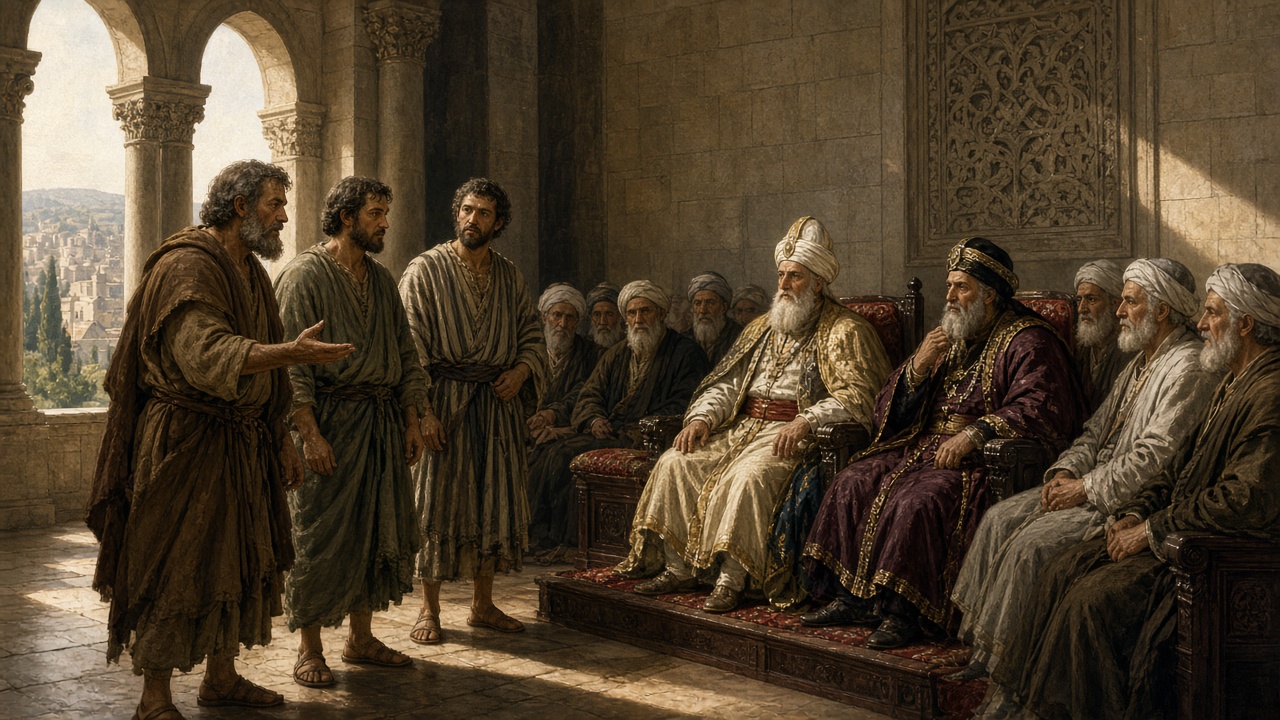
Did you know?
Peter and John before the Sanhedrin
- The priests, the captain of the temple guard, and the Sadducees seized Peter and John because they were teaching the people and proclaiming in Jesus the resurrection of the dead. Caiaphas, who sat with the assembly the next day, belonged to the Sadducees.Sources: the Bible text itself · Caiaphas
- Annas, called high priest here, had held that office from A.D. 7 to 14 until a Roman procurator deposed him. Caiaphas, who had married Annas's daughter, was raised to the office in A.D. 25; even so, some Jews may still have regarded Annas as the legal high priest, since Mosaic law treated the office as lifelong, and Annas was probably president or deputy of the Sanhedrin. John and Alexander, relatives of the high priest and otherwise unknown, sat with them.Sources: the Bible text itself · Annas · John (Relative of the High Priest) · Alexander (Son of Simon)
- Peter, a fisherman from Bethsaida, and John, also a fisherman and a son of Zebedee, were brought before the rulers, elders, and scribes. The council marveled at their boldness when it realized that they were unschooled, ordinary men, and took note that they had been with Jesus.Sources: the Bible text itself · Simon Peter · John the Apostle
Notes written with AI assistance from open sources (Theographic Bible Metadata, CC BY-SA 4.0; Easton’s Bible Dictionary, public domain) and reviewed before publishing.
Places in this chapter
- Jerusalem · 31.777, 35.234 · verses 5, 16
- Nazareth · 32.702, 35.298 · verse 10
- Cyprus · 35.000, 33.000 · verse 36
Only places identified with high confidence are shown (90% or more according to the scholarly sources compiled by OpenBible). Period map: DARE (Digital Atlas of the Roman Empire), CC BY 4.0; modern map: © OpenStreetMap contributors; places: OpenBible.info (CC BY 4.0).
Credits and license for this translation
Godeya꞉ To Nafayo꞉ We
The New Testament, Genesis, and Ruth in the Kaluli language of Papua New Guinea
Sampela hap Buk Baibel long tokples Kaluli long Niugini
copyright © 1998-2022 Wycliffe Bible Translators, Inc.
Language: Kaluli
Translation by: Wycliffe Bible Translators
This translation is made available to you under the terms of the
Creative Commons Attribution-Noncommercial-No Derivatives license 4.0.
You may share and redistribute this Bible translation or extracts from it in any format, provided that:
You include the above copyright and source information.
You do not sell this work for a profit.
You do not change any of the words or punctuation of the Scriptures.
Pictures included with Scriptures and other documents on this site are licensed just for use with those Scriptures and documents.
For other uses, please contact the respective copyright owners.
2025-03-12
Source: http://png.bible/bco/ · eBible.org