Acts 20
Godeya꞉ To Nafayo꞉ We · Tap a verse to see its cross-references.
Fo꞉l eyo꞉ Masedonia o꞉lia꞉ Gilig hen o꞉lia꞉ a꞉na ane
1Kaluka꞉isaleya꞉lo꞉ gadiakilo꞉ halaido꞉ to sa꞉la꞉leno꞉ edabikiyo꞉, Fo꞉l eyo꞉ tilidabu kaluwo꞉ ho꞉le kegea꞉sa꞉ga꞉yo꞉, iyo꞉ halale mesea꞉ki towo꞉ sa꞉lakiyo꞉ “Gio꞉ ta꞉biyo꞉” a꞉la꞉sa꞉la꞉sa꞉ga꞉, e Masedonia hena ha꞉na꞉ni ane. 2E a꞉na fa꞉la꞉dowa꞉sa꞉ga꞉yo꞉, amisa꞉n ko꞉lilo꞉ a꞉na tinia꞉li ha꞉nakiyo꞉, kaluka꞉isaleyo꞉ halale alitakiyo꞉ mano꞉ wida꞉li ha꞉na꞉la꞉ga꞉, Gilig hena fa꞉la꞉dowo꞉. 3E ele otaleno꞉ a꞉naka o꞉sa꞉ga꞉, ho꞉n ko꞉suwa a꞉la꞉ta꞉ga꞉ Silia hena ha꞉na꞉no꞉ asulabiki, Yu kaluwa꞉yo꞉ e a꞉namilo꞉ sa꞉ma꞉no꞉ saetab a꞉no꞉ eneno꞉ da꞉da꞉sa꞉ga꞉, e a꞉ma꞉la꞉ Masedonia hen doba꞉da꞉ ha꞉na꞉ni ane. 4Kalu e o꞉lia꞉lo꞉ aneyo꞉ nowo꞉ Sobata, e Belia amisa꞉n kalu Bilusa꞉ inso꞉. A꞉la꞉ta꞉ga꞉ kalu a꞉la꞉ nowo꞉, Alistakus o꞉lia꞉ Sekudus a꞉no꞉ Tesalonaika kalu. Nowo꞉ Gaius, Debe kalu, a꞉la꞉ta꞉ga꞉ nowo꞉ Timoti. Kalu a꞉la꞉ nowo꞉ Tikikus o꞉lia꞉ Tolofimus a꞉no꞉ A꞉sia kalu. 5Kalu i a꞉no꞉ tamina ha꞉na꞉sa꞉ga꞉, Toloas amisa꞉n a꞉namio꞉, nio꞉ a꞉na galima꞉ni yasisen. 6Sagala꞉sa꞉ga꞉lo꞉ Ma꞉n Mosolo꞉ na꞉sen ho꞉leno꞉ a꞉na eleta꞉ga꞉, nio꞉ ho꞉n ko꞉suwa disa꞉la꞉sa꞉ga꞉, Filibai amisa꞉no꞉ ta꞉ta꞉ga꞉, ho꞉leno꞉ bila꞉fo꞉wo꞉ alita꞉ga꞉yo꞉, iyo꞉ Toloas a꞉na galilia꞉ga꞉, ho꞉len dom a꞉la꞉fo꞉wo꞉ a꞉na sen.
Yutikus e sowo꞉ ko꞉lo꞉ a꞉ma꞉la꞉ dasi alifa꞉
7Doma꞉yo꞉ nio꞉ Ya꞉su Asulo꞉ Ma꞉no꞉ naki kegeo꞉ ko꞉lo꞉, Fo꞉l e oagela꞉yo꞉ ha꞉na꞉no꞉ ko꞉lo꞉, towo꞉ wida꞉li ha꞉na꞉la꞉ga꞉, nulu us a꞉namio꞉ o꞉wida꞉len. 8Nio꞉ a iwalulo꞉ a꞉na kegeakiyo꞉, nafayo꞉ modo꞉ ko꞉lo꞉ da꞉ifo꞉liki, a꞉na wida꞉len. 9Nulu amio꞉ Fo꞉l e mano꞉ wida꞉li ha꞉na꞉labiki, kalu so꞉wa nowo꞉, ene wiyo꞉ Yutikus, e a asol fofodo꞉ a꞉namio꞉ ho꞉ ko꞉lo꞉ gulu a꞉ma꞉ wa꞉l ami siliki da꞉da꞉len ko꞉lo꞉, e mida꞉i ya꞉la꞉ga꞉ ofowo꞉ ha꞉nakiyo꞉, sulufo꞉ tinda꞉ga꞉, hena beseyo꞉. Iliyo꞉ e gasilia꞉ni tiane ko꞉sega, e o꞉ma sowo꞉lo꞉bi ba꞉ba꞉. 10A꞉la꞉fo꞉ko꞉lo꞉ Fo꞉l e tina꞉ga꞉, so꞉wa a꞉no꞉ a꞉ma꞉ wa꞉la fafula꞉fo꞉liki, imo꞉wo꞉ a꞉la꞉sio꞉ “Gio꞉ tagilakiyo꞉ iliga꞉so꞉bo! So꞉wa we o꞉sab.” 11A꞉la꞉bo꞉ sa꞉la꞉sa꞉ga꞉yo꞉, Fo꞉l e a꞉ma꞉la꞉ fa꞉la꞉na꞉sa꞉ga꞉, ma꞉n dowo꞉fa꞉yo꞉ goda꞉sa꞉ga꞉ ua mo꞉no꞉. Ma꞉no꞉ na꞉sa꞉ga꞉yo꞉, Fo꞉l eyo꞉ to man ko꞉ wida꞉liki aneyo꞉, ho꞉le bidabikiyo꞉, e ta꞉fo꞉gane. 12Iyo꞉ a꞉ma꞉la꞉ aya ha꞉nakiyo꞉, so꞉wa a꞉no꞉ mo꞉sowo꞉ ko꞉lo꞉ sagala꞉liki tililia꞉gane.
Fo꞉l eyo꞉ A꞉fesa꞉s sa꞉sdo꞉ bo꞉fo꞉lowan kalumo꞉wo꞉ mano꞉ wido꞉
13Fo꞉l e hena ha꞉na꞉no꞉ asulo꞉ ko꞉lo꞉ eyo꞉ nio꞉ ho꞉n ko꞉suwa hamana꞉ki dimidali ko꞉lo꞉, nio꞉ ho꞉n ko꞉suwa disa꞉la꞉sa꞉ga꞉, e Asos amisa꞉na galima꞉ni, nio꞉ tamina ane. 14Asos a꞉namio꞉, Fo꞉l e galilia꞉sa꞉ga꞉yo꞉, nio꞉ tambo ho꞉n ko꞉suwa disa꞉la꞉sa꞉ga꞉, Mitilini a꞉na ane. 15Ho꞉len no amio꞉, Kios hen aniba ha꞉na꞉la꞉ga꞉ alita꞉ga꞉yo꞉, Samos hen a꞉na fa꞉la꞉dowo꞉. Ho꞉len a꞉ma꞉ fa꞉s amio꞉, nio꞉ ha꞉na꞉la꞉ga꞉, Miletus a꞉na fa꞉la꞉dowo꞉. 16Fo꞉l eyo꞉ Ba꞉ndiko꞉s ho꞉len a꞉namio꞉ Ya꞉lusalemo꞉ e doma꞉no꞉ a꞉lakiyo꞉, e bo꞉bo꞉ge ha꞉naki A꞉fesa꞉s amisa꞉n A꞉sia hen a꞉namio꞉, ho꞉leno꞉ modo꞉wo꞉ mo꞉doma꞉no꞉ asulaki, e tigini ane. 17Miletus a꞉na silikiyo꞉, Fo꞉l eyo꞉ A꞉fesa꞉s sa꞉sdo꞉ bo꞉fo꞉lowan kalu i a꞉no꞉ e a꞉na galima꞉ mena꞉ki, towo꞉ saga꞉fo꞉. 18Iyo꞉ ya꞉sa꞉ga꞉ elo꞉wa fa꞉la꞉dowabikiyo꞉, eyo꞉ imo꞉wo꞉ a꞉la꞉sio꞉, “Ne tamina A꞉sia hen wena ya꞉sa꞉ga꞉, ho꞉leno꞉ tambo gi o꞉lia꞉ silikilo꞉ dimida꞉len a꞉no꞉ gio꞉ asulufo꞉lab. 19Yu kalu iliyo꞉ ne mogagila꞉ma꞉no꞉ saefa꞉ ko꞉lo꞉ ne hida꞉yo꞉ ko꞉li ko꞉lilo꞉ di. Ne Godeya꞉ ene nanog dia꞉li ha꞉na꞉len amio꞉, no꞉no꞉na꞉ma꞉la꞉ ha꞉ga dota꞉ga꞉, ne si ho꞉no꞉ gula꞉liki, Alana꞉ ene nanog dia꞉leno꞉, gio꞉ asulab. 20Niyo꞉ Godeya꞉ mano꞉ kalu kegeo꞉ siwa꞉l amio꞉ kalaba wida꞉sen. A꞉la꞉ta꞉ga꞉ gili ayamio꞉lo꞉ walama꞉ni ya꞉sen. Gilo꞉ asuwa꞉fa꞉no꞉ man a꞉no꞉ niyo꞉ mo꞉go꞉lu alitakiyo꞉, gimo꞉wo꞉ tambo fanda wida꞉sen, a꞉no꞉ gio꞉ asulab. 21Niyo꞉ Yu kalu o꞉lia꞉ Gilig kalu o꞉lia꞉mo꞉wo꞉ hagugu alitakiyo꞉, ‘Gio꞉ asugo꞉ Godemo꞉ nodola꞉sa꞉ga꞉, nili Alan Ya꞉suwa tilidabuma’ a꞉la꞉likiyo꞉ wido꞉.
22“O꞉go꞉ ne Godeya꞉ Mamaya꞉lo꞉ sa꞉lab au kudu ha꞉naki, Ya꞉lusalem ha꞉na꞉nigo꞉l ko꞉lo꞉, a꞉namio꞉ nelo꞉ amio꞉ o꞉bo꞉ngo꞉ fa꞉la꞉doma꞉nigaba꞉le babalab. 23Ko꞉sega imilig nowo꞉ ne asulufo꞉lo꞉l. Amisa꞉n tambo nelo꞉ sia꞉len amio꞉, Godeya꞉ Mamaya꞉yo꞉ nemo꞉wo꞉ sa꞉la꞉li ha꞉nakiyo꞉, ne hida꞉yo꞉ halaido꞉wo꞉ diaki, dibolowa to꞉loma꞉ib a꞉la꞉liki sa꞉la꞉lab. 24A꞉la꞉fo꞉ ko꞉sega, Godeya꞉lo꞉ ha꞉fo꞉ disa꞉lan man a꞉la꞉likilo꞉ to nafa a꞉no꞉ Ya꞉su Alana꞉yo꞉ nemo꞉ walama꞉ki dimi ko꞉lo꞉, niyo꞉ nanog we dimida꞉i ha꞉na꞉la꞉ga꞉ ilililai kibo꞉bowo꞉, ni mela꞉no꞉ we, o꞉li wala꞉ma꞉no꞉ ko꞉lo꞉lab.
25“Ne gi usa sia꞉likilo꞉ Godeya꞉ ene kaluka꞉isale ko꞉lo꞉ bo꞉fo꞉mela꞉no꞉ man a꞉no꞉ widabilo꞉ da꞉da꞉len kalu gio꞉, ne misio꞉ wa꞉kabiyo꞉ mada mo꞉ba꞉ba꞉ib, a꞉la꞉asulo꞉l. 26Kelego꞉ tambo Godeya꞉lo꞉ gimo꞉lo꞉ dimidama꞉no꞉ asulab a꞉no꞉, ne mo꞉gigili kagayaki tambo wida꞉len. A꞉la꞉fo꞉ko꞉lo꞉ gio꞉ soma꞉no꞉lo꞉ doba꞉da꞉ dowalega, halayo꞉ nemaka꞉, a꞉la꞉liki fanda so꞉lo꞉l. 28Ginina꞉ma꞉la꞉yo꞉ dinafa bo꞉fo꞉likiyo꞉, sa꞉s kaluka꞉isaleyo꞉ Godeya꞉ ene inso꞉ Ya꞉suwa꞉ ho꞉bo꞉wa꞉lo꞉ kilili a꞉no꞉lo꞉, dinafa bo꞉fo꞉lubi. Kaluka꞉isale a꞉no꞉, Godeya꞉ sibi o꞉ngo꞉ ko꞉lo꞉, Godeya꞉ Mamaya꞉yo꞉ gimo꞉ bo꞉fo꞉melea꞉ki, gio꞉ a꞉na da꞉feyo꞉. 29Ne ha꞉na꞉ga꞉ dotalikiyo꞉, kalu nolo꞉ ni fa꞉sa ya꞉siakiyo꞉, saila gasa o꞉ngo꞉ ko꞉lo꞉ ya꞉ga꞉, sibiyo꞉ o꞉lusa꞉ndaki, yasala꞉ma꞉ib, niyo꞉ a꞉la꞉asulab. 30A꞉la꞉ta꞉ga꞉ gini sa꞉s usamilo꞉ elen nol a꞉ma꞉yo꞉, tilidabu kaluka꞉isaleyo꞉ e kudu mena꞉ki, susulu sa꞉la꞉lakiyo꞉, mano꞉ dikili walama꞉ib. 31A꞉la꞉dimidama꞉ib ko꞉lo꞉ gio꞉ dinafa bo꞉fo꞉lubi. Dona otalen us a꞉namio꞉, niyo꞉ gimo꞉wo꞉ hagugu sa꞉la꞉likiyo꞉, ho꞉lenowo꞉lo꞉ nuluwo꞉lo꞉ giyo꞉ nofolakilo꞉ wida꞉len a꞉no꞉ ko꞉lo꞉ asulufo꞉lubi.
32“A꞉la꞉fo꞉ko꞉lo꞉ o꞉go꞉ niyo꞉ gio꞉ Godeya꞉ dagiya difa꞉ ko꞉lo꞉ Godeya꞉lo꞉ ha꞉fo꞉ disa꞉lan to man a꞉no꞉ giliyo꞉ asulufo꞉ko꞉ a꞉lalikiyo꞉, to man a꞉ma꞉yo꞉ gio꞉ halale alitakiyo꞉, Godeya꞉lo꞉ malilo꞉ ta꞉felo꞉ kalu nolbo꞉lo꞉ boba kelego꞉ dimi o꞉li aumbo꞉ gimo꞉wo꞉lo꞉ o꞉leo꞉ngo꞉ ka dimia꞉ib. 33Ne kalu noma꞉lo꞉ momado꞉ so꞉g o꞉lia꞉ mole da꞉lab a꞉no꞉ ba꞉da꞉ga꞉yo꞉ mo꞉mesela꞉sen. 34Niyo꞉ no꞉no꞉n asuwa꞉takiyo꞉, na꞉ dagi wema꞉ nanogo꞉ dimida꞉sa꞉ga꞉, ne o꞉lia꞉lo꞉ dowab a꞉no꞉lo꞉ a꞉ma꞉ asuwa꞉ta꞉sen, a꞉no꞉ gio꞉ asulo꞉. 35Giliyo꞉ wa꞉feyo꞉ kalu asuwa꞉foma꞉kiyo꞉, nanog halaido꞉ nilo꞉ dimida꞉sen a꞉no꞉ gio꞉ ko꞉lo꞉ widakigo꞉l. Ya꞉su Alana꞉yo꞉ towo꞉ a꞉la꞉sio꞉, ‘Dimiabdo꞉ ge mada sagalo꞉wo꞉ alan doma꞉ib ko꞉sega diabdo꞉ ge sagalo꞉wo꞉ ha꞉lu doma꞉ib.’ To we giliyo꞉ asulufo꞉lubi.”
36Fo꞉l eyo꞉ to a꞉no꞉ sa꞉la꞉sa꞉ga꞉ edakiyo꞉, iyo꞉ tambo gulalu siliki, Fo꞉l e Godemo꞉ dulugu sio꞉. 37Iyo꞉ tambo ya꞉foda꞉liki fafulakiyo꞉, Fo꞉lo꞉ mimilo꞉. 38Fo꞉l e wa꞉kabiyo꞉ mo꞉ba꞉ba꞉ib a꞉la꞉do꞉ sio꞉ a꞉no꞉ iyo꞉ asulakiyo꞉, nofolo꞉wo꞉ alan dowo꞉. A꞉la꞉fo꞉ko꞉lo꞉ iliyo꞉ e ho꞉n ko꞉suwa disa꞉ma꞉ki, tililia꞉gane.
Did you know?
Farewell on the way to Jerusalem
- Leaving Troas, Paul sent his companions ahead by ship and walked to Assos along the Roman road. Assos was a seaport of Proconsular Asia in Mysia, on the north shore of the Gulf of Adramyttium; the walk was about 20 miles, the sea route about 30, and the island of Lesbos lay about 7 miles offshore.Sources: the Bible text itself · Assos
- Paul sailed past Ephesus to avoid spending time in the province of Asia—the Roman province in western Asia Minor, with Ephesus as its capital—because he hoped, if possible, to reach Jerusalem by the day of Pentecost. He stopped at Miletus, a seaport and the ancient capital of Ionia about 36 miles south of Ephesus, and summoned the elders of the Ephesian church.Sources: the Bible text itself · Asia · Miletus
- Seven men traveled with him: Sopater of Berea, Aristarchus and Secundus of Thessalonica, Gaius of Derbe, Timothy, and Tychicus and Trophimus from Asia. Aristarchus of Thessalonica later shared Paul’s imprisonment in Rome, and Trophimus, an Ephesian, accompanied him on this part of the journey and was with him in Jerusalem.Sources: the Bible text itself · Aristarchus · Trophimus
Notes written with AI assistance from open sources (Theographic Bible Metadata, CC BY-SA 4.0; Easton’s Bible Dictionary, public domain) and reviewed before publishing.
Places in this chapter
- Macedonia · 41.600, 22.540 · verses 1, 3, 6
- Greece · 37.972, 23.727 · verse 2
- Syria · Today: Syria 2 · 33.511, 36.306 · verse 3
- Asia · 38.400, 28.300 · verses 4, 16, 18
- Berea · Today: Veria · 40.518, 22.200 · verse 4
- Thessalonica · Today: Thessaloniki · 40.638, 22.946 · verse 4
- Troas · Today: Alexandria Troas · 39.752, 26.159 · verses 5, 6
- Philippi · 41.012, 24.285 · verse 6
- Assos · 39.491, 26.337 · verses 13, 14
- Mitylene · Today: ancient theater at Mitylene · 39.110, 26.547 · verse 14
- Chios · 38.373, 26.137 · verse 15
- Miletus · 37.531, 27.276 · verses 15, 17
- Samos · 37.750, 26.833 · verse 15
- Trogyllium · Today: Cape Mycale · 37.659, 27.003 · verse 15
- Ephesus · 37.939, 27.341 · verses 16, 17
- Jerusalem · 31.777, 35.234 · verses 16, 22
Only places identified with high confidence are shown (90% or more according to the scholarly sources compiled by OpenBible). Period map: DARE (Digital Atlas of the Roman Empire), CC BY 4.0; modern map: © OpenStreetMap contributors; places: OpenBible.info (CC BY 4.0).
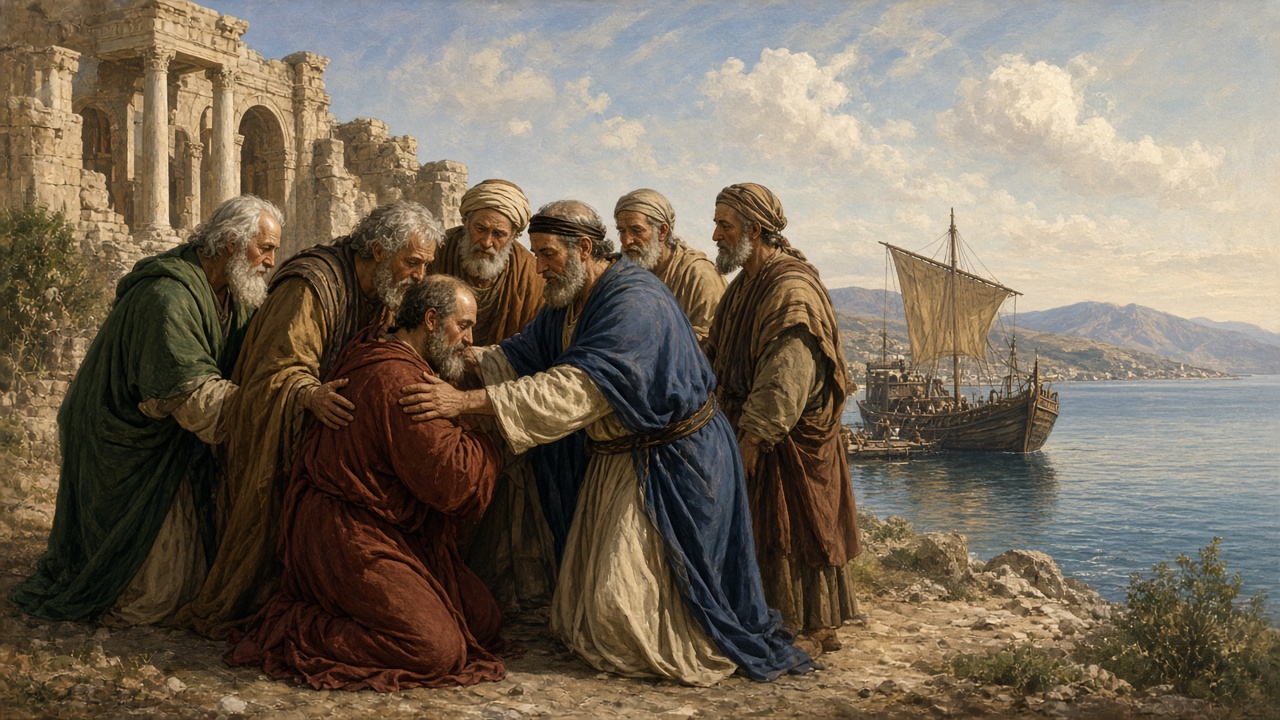
Credits and license for this translation
Godeya꞉ To Nafayo꞉ We
The New Testament, Genesis, and Ruth in the Kaluli language of Papua New Guinea
Sampela hap Buk Baibel long tokples Kaluli long Niugini
copyright © 1998-2022 Wycliffe Bible Translators, Inc.
Language: Kaluli
Translation by: Wycliffe Bible Translators
This translation is made available to you under the terms of the
Creative Commons Attribution-Noncommercial-No Derivatives license 4.0.
You may share and redistribute this Bible translation or extracts from it in any format, provided that:
You include the above copyright and source information.
You do not sell this work for a profit.
You do not change any of the words or punctuation of the Scriptures.
Pictures included with Scriptures and other documents on this site are licensed just for use with those Scriptures and documents.
For other uses, please contact the respective copyright owners.
2025-03-12
Source: http://png.bible/bco/ · eBible.org