Genesis 21
Deo Ele Posanga · Tap a verse to see its cross-references.
Sara ipopo Aisak
1Idio ta Maron imata nanan Sara ngan luanga ei ta ikado kadonga kemi ngan ei lalaede mambe iposa tautaunga ngan mugaeai. 2Sara iapa ta ipopo Abraam ele gergeu aranga. Abraam ei eaba kapei, be Sara ipopo ele gergeu tutui ngan taiko toa mugaeai Deo ikeo pan ngan. 3Ta Abraam iuato gergeu toa iadaoa ipopo oa ieda Aisak. 4Be ado lima ga tol muriai ngan Aisak aea poponga, Abraam ipalu ei mambe Deo ikeo pan ngan. 5Abraam aea rai buno, be iadaoa ipopo inat Aisak.
6Ta Sara ikeo, “Deo ikado ga tinig igelgel ta nanging. Ta panua toa ngada ne tilongo bedane, eine ga tinging pade toman ngan gau.” 7Ta Sara ikeo pade bedane, “Mugaeai sai irangrang ngan ikeo pan Abraam ngan iadaoa Sara ga ipopo ele gergeu ta ipadud ei? Abraam ei eaba kapei na, be gau napopo ele gergeu aranga!”
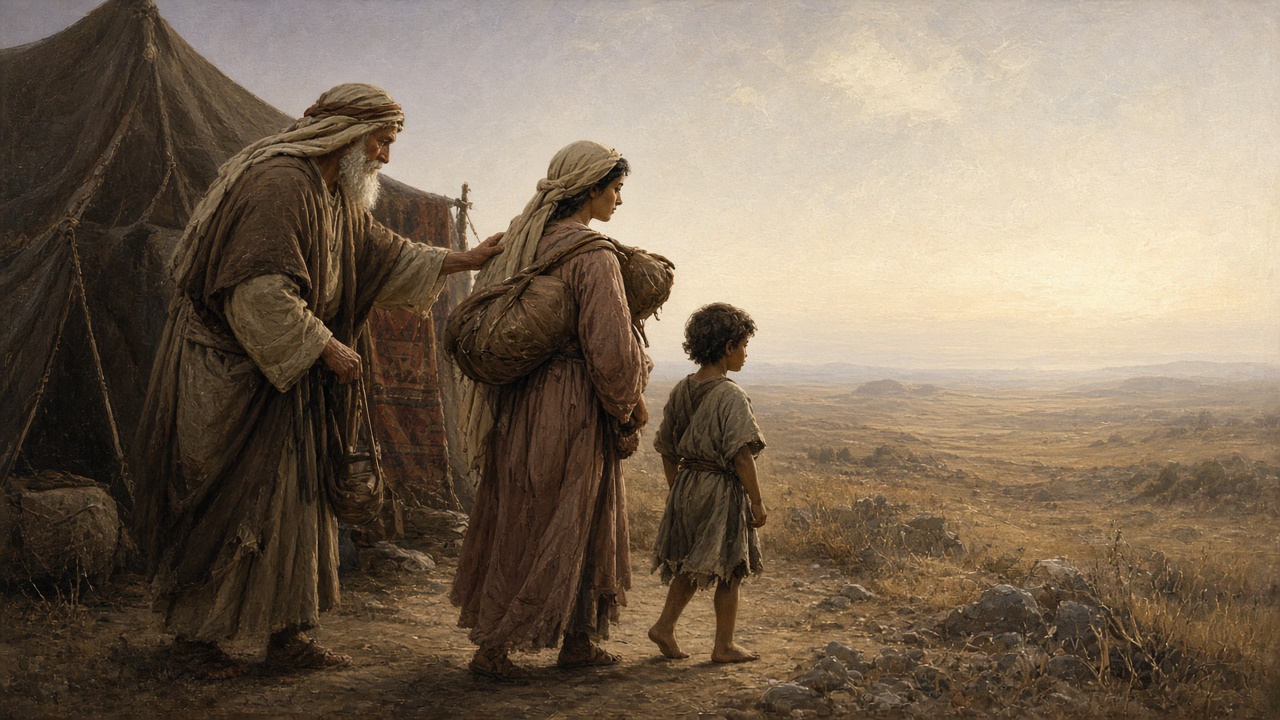
Abraam isuk Agar ga Ismael
8Idio ta Aisak idae kapei ta iaoa tnan tud. Be ngan ado toaiua, Abraam ikado eaneannga kapei ngan imata nanan ele gergeu iaoa tnan tud. 9Be Sara igera gergeu ton Agar, taine Isip aea, igalgalinge paeamao ngan Aisak. 10Tota Sara ikeo pan Abraam bedane, “Suk taine paeaeanga toa ne toman ngan ele gergeu! Ngansa oangga eao mate, irangrang ngan lem danga etangada ila pan gergeu toa oa mao ga mao tau. Gau leg gergeu Aisak ga ibada lem danga toa ngada ne.”
11Be posanga toa ne ikado ga Abraam ilolo ede ga ede tau, ngansa Ismael ei pade Abraam ele gergeu. 12Be Deo ikeo pan Abraam bedane, “Eao lolom ede ga ede ngan gergeu toa oa ga itna padam. Saoa posanga Sara ikeo pago ngan, eao kado, ngansa gid gergeu busa toa naposa tautaunga pago ngan, eine ga tiuot ngan Aisak. 13Be gergeu ton taine paeaeanga, gau ga nakado ga itubtub tiuot alu kapei, ngansa ei pade eao lem gergeu.”
14Io, ado sae gaisala rumaruma Abraam ibada annga idanga ede ga meme itin kukul iuon ngan eau, ta idol Agar ikepeai. Ga kus ta isula ei ga inat ga tila. Ta gisirua tilalala alele ngan tibur modamodanga ieda Berseba.
15Idio ta eau toa ienono ngan meme itin kukul oa kus. Tota Agar idol gergeu toa oa ga idio ieno abei kakauede ipuiai. 16Ga kus ta ila ga tedaoa mambe tutupi ele tapnga ta idio imado. Ngansa ikeo iloleai bedane, “Gau tinig ngan geranga leg gergeu ele matenga mao.” Ei idio imado be itangtang kapei.
17Be Deo ilongo gergeu toa oa itangtang, ta anggelo ton Deo toa imamado buburiai ibaba ga ila pan Agar bedane, “Agar, eao kamado? Mataud mao. Lem gergeu toa ienono nena, Deo ilongo ele tandanga na. 18La soa ei ga idae ta kisi ei ngan bagem. Ngansa gau ga nakado ele gergeu ga itubtub ga tiuot alu kapei.”
19Idio ta Deo ikado ga Agar imata idae ta igera eau ede aea baba. Tota ila ied ngan meme itin kukul ta ibada ga ila pan inat ta iun.
20Idio ta Deo imata kikisi gergeu toa oa ga idae kapei. Ei imamado ngan tibur modamodanga be ele oatainga kapei ngan pandenga aea galgalnga. 21Imamado ngan tibur modamodanga ieda Paran. Be ado ede, itna ibada taine ede Isip aea ga iman iadaoa.
Abraam irau posanga toman ngan Abimelek ta lolod kelede
22Ngan ado toaiua, Abimelek toman ngan ele madidnga paraunga aea ieda Pikol tila pan Abraam ta tikeo bedane, “Ngan danga toa ngada ne eao kakado, Deo ilualua go. 23Tota nakim eao posa tautaunga Deo imatai, ta irangrang ngan eao kado kadonga eta pakakanga pagau mao, ga pagid leg gergeu ga tibutibug mao pade. Ngansa gau leg kadonga kemi ngan eao. Toa bedaoa ta eao manta kado kadonga kemi pagau ga pagid panua ngan tibur kapei togau pade, mambe gau nakado ngan eao ngan ado toaiua eao nama nene ta mamado mambe kaluae ga irangrang ngan labone.”
24Ta Abraam ikeo, “Naposa tautaunga. Gau ga nakado toa bedaoa.”
25Ga kus ta Abraam iselele Abimelek, ngansa ele paeaeanga tisio eau aea baba ede ton Abraam ga iman led. 26Ta Abimelek ikeo bedane, “Gau naoatai mao ngan sai ikado kadonga toa oa. Eao keo pagau mugaeai ngan mao. Patautene nalongo posanga toa ne.”
27Ta Abraam ipan Abimelek ele sipsip ga bulmakao edengada, ta gisirua tirau posanga. 28Ta Abraam ibada ele sipsip taine gereirei lima ga rua, ta idol gid ga tidio rol ngan sipsip padengada. 29Ta Abimelek ibeta Abraam bedane, “Gid sipsip taine gereirei toa eao dol ga tidio rol ne timan saoa aea?”
30Ta ikeo, “Eao bada gid sipsip toa lima ga rua ne. Eine iman kilala ngan pasolannga mambe loloda kelede ngan eau aea baba toa ne, eine gau nalei.”
31Ta gisirua tirau posanga ngan tibur toa oa. Tota tiuato tibur toa oa ieda Berseba.
32Gisirua tirau posanga ngan tibur Berseba ga kus ta Abimelek ga ele madidnga paraunga aea, toa Pikol, tiluagid mulian ga tila led tuangai ngan tibur kapei togid Pilistia. 33Idio ta Abraam iarum abei esel ede ngan tibur Berseba, ta ibaba ga ila pan Maron ta isoa ieda. Ngansa ei Deo toa imamado somisomi ne. 34Ta Abraam idio imamado mole tede ngan tibur togid Pilistia.
Did you know?
Isaac’s birth, Hagar’s departure, and Beersheba
- Abraham was a hundred years old when Sarah bore him Isaac, their only son together, and he circumcised the child at eight days old, as God had commanded. Sarah said that God had made her laugh, and that everyone who heard of this would laugh with her. Easton's Bible Dictionary (1897) notes that a great feast was held when Isaac was weaned, probably when he was about two years old.Sources: the Bible text itself · Isaac
- Hagar, whose name is explained as “flight” or, according to others, “stranger,” was an Egyptian and Sarah’s handmaid, whom Sarah gave to Abraham as a secondary wife. After Isaac’s birth, Abraham sent Hagar and their son Ishmael into the Wilderness of Beersheba with bread and a skin of water. Ishmael later settled in the Wilderness of Paran, a desert tract in the northeastern Sinai Peninsula between the Arabah on the east and the wilderness of Shur on the west, became a great archer, and his mother got him a wife from Egypt.Sources: the Bible text itself · Hagar · Paran
- Beersheba, “well of the oath” or “well of seven,” was named when Abraham and Abimelech swore an oath there over a well that Abraham said he had dug; he set apart seven ewe lambs as a witness, and the two made a covenant. Phicol, chief captain of the army of Abimelech, the Philistine king of Gerar, entered that alliance with Abraham. Abraham then planted a tamarisk at Beersheba and lived for a long time in the land of the Philistines.Sources: the Bible text itself · Beersheba · Phichol
Notes written with AI assistance from open sources (Theographic Bible Metadata, CC BY-SA 4.0; Easton’s Bible Dictionary, public domain) and reviewed before publishing.
Places in this chapter
Only places identified with high confidence are shown (90% or more according to the scholarly sources compiled by OpenBible). Period map: DARE (Digital Atlas of the Roman Empire), CC BY 4.0; modern map: © OpenStreetMap contributors; places: OpenBible.info (CC BY 4.0).
Credits and license for this translation
Deo Ele Posanga
Genesis, Exodus, and the New Testament in the Bariai language of Papua New Guinea
Sampela hap Buk Baibel long tokples Bariai long Niugini
copyright © 2012 Wycliffe Bible Translators, Inc.
Language: Bariai
Translation by: Wycliffe Bible Translators
This translation is made available to you under the terms of the
Creative Commons Attribution-Noncommercial-No Derivatives license 4.0.
You may share and redistribute this Bible translation or extracts from it in any format, provided that:
You include the above copyright and source information.
You do not sell this work for a profit.
You do not change any of the words or punctuation of the Scriptures.
Pictures included with Scriptures and other documents on this site are licensed just for use with those Scriptures and documents.
For other uses, please contact the respective copyright owners.
2012-10-03
Source: http://png.bible/bch/ · eBible.org