Genesis 13
Deo Ele Posanga · Tap a verse to see its cross-references.
Lot itnan Abram
1Idio ta Abram itnan Isip ta ila ngan tibur kapei Negev. Ei ila toman ngan iadaoa ga ele danga sisid toa ngada oa. Be Lot pade ila toman ngan ei. 2Be Abram ele danga sisid busa tau. Ei ele masilau mud busa ga ele silva ga gol pade.
3Idio ta itnan tibur kapei Negev ta ilalala ga ila be ikakado gid saupu edap irabuiai. Ikakado toa bedaoa ga ila iuot ngan tibur toa ienono rabu ngan tuanga Betel ga Ai. Mugaeai ikado saupu ngan 4tibur toa oa ta ipagun popou tenainga aea. Ta Abram ibaba ga ila pan Maron ta isoa ieda toa eoa pade.
5Be Lot ilalala toman ngan Abram, ei pade ele meme ga sipsip ga bulmakao ga paeaeanga busa. 6Be tano toa oa irangrang ngan gisirua tilup ga timado ngan mao, ngansa gisirua led danga sisid busa tau. 7Be ado ede gid panua toa timariala ngan Abram ele masilau mud, aoad parau pagid panua toa timariala ngan Lot ele masilau mud. Be ngan ado toaiua, gid panua Kenan ga gid Peres timamado maitne ngan tibur toa oa.
8Tota Abram ikeo pan Lot bedane, “Longo. Gitarua sing kelede. Be kado paraunga iuot rabu ngan gitarua ga leda paeaeanga. 9Gera, tano kapei ienono. Kemi ngan gitarua tamapoga. Oangga eao kim nasi edap ngan bageda angas, eine gau ga nanasi edap ngan bageda oatai. Be oangga eao kim nasi edap ngan bageda oatai, eine gau ga nanasi edap ngan bageda angas.”
10Io, Lot imata isaoe ta igera tibur Iordan aea dubu kapei, be aea eau busa ga ila irangrang ngan tuanga Soar. Tibur toa oa kemi mambe dadanga ton Maron ga mambe tano togid Isip. (Ngan ado toaiua, Maron ipaeabu ngan tuanga Sodom ga Gomora maitne.) 11Tota Lot isio dubu toa kapei oa ngan tibur Iordan ga iman ei ele. Ta itnan Abram ta ila ngan tibur toa ado ele parangai. Tota gisirua tilup ga timado pade mao. 12Abram idio imado ngan tibur Kenan, be Lot ila imado rabu ngan gid tuanga kapeipei ngan eau Iordan aea dubu kapei. Ta irau ele saupu boloma ngan tuanga Sodom. 13Be gid panua Sodom eine gid panua papaeamao, ta tikakado kadonga sasat paeamao tau Maron imatai.
Deo iposa tautaunga pan Abram ngan tano
14Lot itnan Abram ga ila ga kus ta Maron ikeo pan Abram bedane, “Dae madid ta matam isaoe tibur toa ngada ne ado ele parangai ga ado ele dilngai, pan not ga ila irangrang ngan saut pade. 15Tano toa ngada ne eao gera, eine ga nabada pago ga pagid lem gergeu ga tibutibum. Tano toa ne ga iman gimi ami somisomi ga ilalala ga ila. 16Be gau ga nakado ga lem gergeu ga tibutibum tiuot busa tau mambe riringa tano aea. Ta oangga eaba eta irangrang ngan iuade gid riringa tano aea, eine ga irangrang ngan iuade lem gergeu ga tibutibum pade. 17Io, lalala ga la ta gera tano aea mamarae ga aea babanga, ngansa gau napan ga iman am.”
18Abram itnan saupu toa oa ta ila imado boloma ngan tuanga Ebron, ta irau ele saupu boloma ngan gid abei ouk ton eaba ieda Mamre. Ta ikado popou tenainga aea ngan tibur toa oa ta isoa Maron ieda.
Did you know?
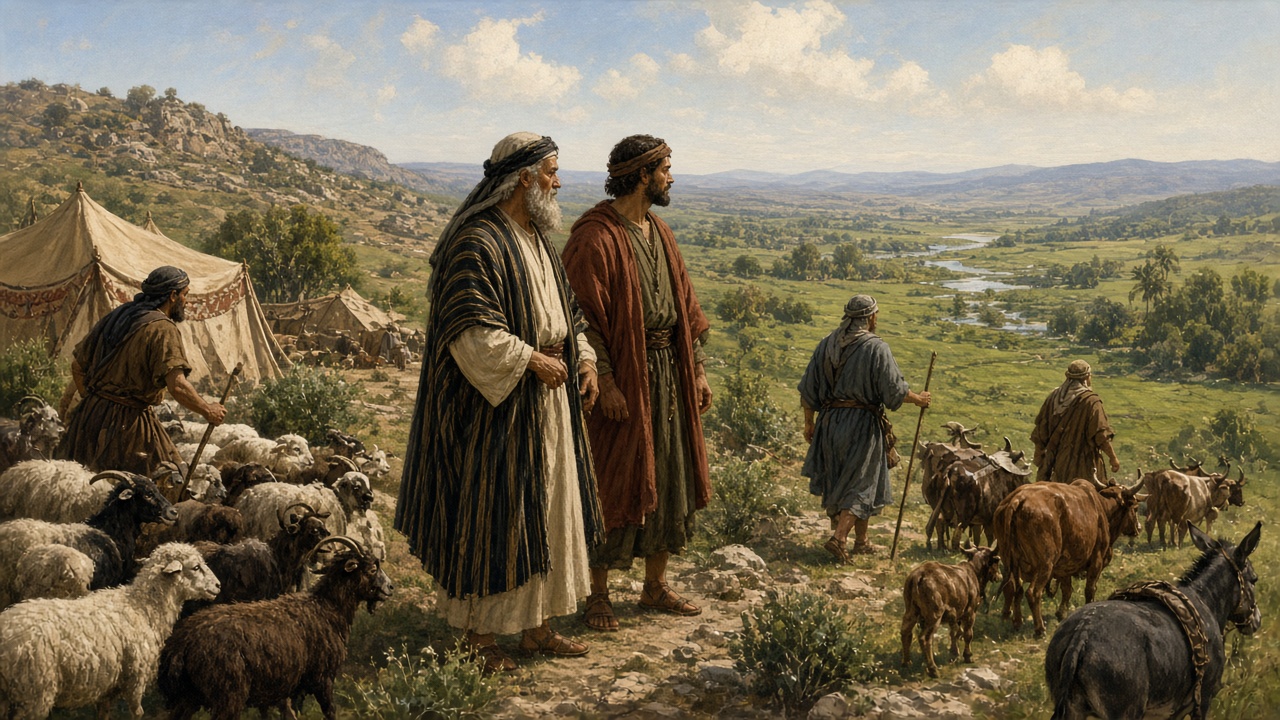
Abram and Lot Separate
- Abram came up from Egypt into the Negev, the arid district south of Palestine through which the caravan route ran from central Palestine to Egypt, and traveled from place to place toward Bethel.Sources: Negeb · the Bible text itself
- He returned to the place between Bethel and Ai where his tent had stood and where he had built an altar, and there he called on the name of the LORD. Easton's Bible Dictionary (1897) describes Bethel, about ten miles north of Jerusalem, as originally the royal Canaanite city of Luz, and holds that the name Bethel was first given to a nearby sanctuary rather than to the city itself until the tribe of Ephraim conquered it. Ai was one of the royal Canaanite cities and lay to the east of Bethel.Sources: Bethel (of Palestine) · Ai · the Bible text itself
- Lot looked out and saw the plain of the Jordan, well watered all the way to Zoar like the garden of the LORD and like the land of Egypt. Easton's Bible Dictionary (1897) calls this the first historical notice of the Jordan, in the account of Abraham and Lot's separation, and places Sodom, toward which Lot pitched his tent, in the vale of Siddim. The chapter notes that the LORD had not yet destroyed Sodom and Gomorrah, a destruction the dictionary attributes to fire from heaven because of the city's wickedness.Sources: Plain of Jordan · Sodom · the Bible text itself
Notes written with AI assistance from open sources (Theographic Bible Metadata, CC BY-SA 4.0; Easton’s Bible Dictionary, public domain) and reviewed before publishing.
Places in this chapter
- Egypt · 30.129, 31.308 · verses 1, 10
- Negeb · 31.245, 34.841 · verses 1, 3
- Jordan Valley · 32.317, 35.570 · verses 10, 11, 12
- Canaan · 32.767, 35.333 · verse 12
- Hebron · Today: Tel Rumeida · 31.525, 35.102 · verse 18
Only places identified with high confidence are shown (90% or more according to the scholarly sources compiled by OpenBible). Period map: DARE (Digital Atlas of the Roman Empire), CC BY 4.0; modern map: © OpenStreetMap contributors; places: OpenBible.info (CC BY 4.0).
Credits and license for this translation
Deo Ele Posanga
Genesis, Exodus, and the New Testament in the Bariai language of Papua New Guinea
Sampela hap Buk Baibel long tokples Bariai long Niugini
copyright © 2012 Wycliffe Bible Translators, Inc.
Language: Bariai
Translation by: Wycliffe Bible Translators
This translation is made available to you under the terms of the
Creative Commons Attribution-Noncommercial-No Derivatives license 4.0.
You may share and redistribute this Bible translation or extracts from it in any format, provided that:
You include the above copyright and source information.
You do not sell this work for a profit.
You do not change any of the words or punctuation of the Scriptures.
Pictures included with Scriptures and other documents on this site are licensed just for use with those Scriptures and documents.
For other uses, please contact the respective copyright owners.
2012-10-03
Source: http://png.bible/bch/ · eBible.org