Genesis 48
Tareka Buka · Tap a verse to see its cross-references.
Iakobo ro korosa gimia-ma Iosepa mere teibo
1Iosepa umoro ta-goi nou abera temeteme ro na-gorobai-rimo nou durupi ubauba se gowamo. Taie Iosepa mere teibo nato giwaboi-maro nou abera negere aboto, Manase ra Eparaimi ra. 2Nou ro na-giwaboi-maro ina neibi na-gorowateai-birimo moto to, taie ata dubu ro ibo Iakobo ato, ‘Oro mere Iosepa totoi-die oro owea ri ou-die.’
Isiraere edi tau ro nato nou durupi egea se gowaibitiwado, pupuwo tato ia se gowamo, hio ito kerebua modobo pua keta rido. Taie nou pupuwo kainai na-gowea umodi to mere imese gerebua-ro 3nou iato gutura Iosepa aboto, ‘Imese pupuwo ia Godi nou ro gorowapotai-ro mo aboto Rusi ato Keineni duriomoro ato na-owamo, mo nou ro korosa iato nomia. 4Nou ro ibo a-garo mo aboto, “Oro mo ro sirio aramio merebusere anama-omio-ri, ibose oro auna abera to ama-ararapoi-ri sirio erere owera urubia oro aboudo amadimo-orobodorai-ri. Oro aramio merebusere mo ro anama-imasouti-ri nedi Keineni duriomoro ro neio nato ama-irowomidirotiti-ri womu tato womu tato to.”
5Oro mere teibo Isipi ato gohau-rido mo ido norowateai-ro neito, abora mo ro a-nutura neitiro mo ia simara mere teibo neitiro to anama-iapoi-mari, Rubeni ra Simioni ra beda sosoro ra mo mere teibo ie, Eparaimi ra Manase ra neitiro mo ro abora mo mere teibo to niapoi-ma. 6Oro arua merebusere ido nama-iwia-ri io oro merebusere ie kaupoti neio aramio merebusere simara goto kere irahidimai-ri pua Keineni duriomoro ato, Manase ra Eparaimi ra neitiro edi aramio merebusere ro neio ro amadimi-imasouti-ri neio goto kere. 7Mo keba tau ato Mesopotamia duriomoro rudo na-nou-ro Eparata sabowa nemou-ro oro mamu buro ipi ato iato garaburai Keineni duriomoro ato. Nou na-garaburai mo auna kamade tato ta-noi, taie mo ro nou bobo to aise nedea Eparata gabo kakate ato.’ (Eparata ata masiro Beterehema.)
8Iedi tau ro nato Isiraere nou idomari teibo timotimo ta-goi-rido, nou mea se kirarowo modobo pua, nou oromano ia ro ta-gorobai. Nou na-giraroweauti Iosepa mere teibo se giwia-ma, nou ro ibo, ‘Beda mere teibo ra nou?’
Ina Iosepa ro iato giwapotai-ma abera aboto, ‘Mo Isipi duriomoro ato na-nimidirotiti mo Godi ro nato nomia-ro nedi mere teibo ro.’
Abera ro ibo, ‘Neito ma-diwosiomai-maro mo aboto mo ro korosa anama-iwai-mari.’
Taie Iosepa mere teibo nou aboto nato giwosiomai-maro. Abera ro na-giohiai-ma nou ro iato gisome-ma, 11nou ibo, ‘Mo ibo ta-nimaragoidirotiti oro mo ro ina owea-ri pua. Kaupoti mo Godi ro ta-nowou-ro neito oro sosoro owea ri oro mere teibo mutu.’
12Taie Iosepa mere teibo egea mere se giwosiomai-maro Isiraere aboudo Iosepa iato a-giroborea sopu to. 13Nou ro Eparaimi Isiraere edi pere sapuwo ro nato gowotobowa ina Manase Isiraere edi tumodi sapuwo ro nato gowotobowa taie imese giwou-maro aramunegere aboto. 14Isiraere iato tu teibo gararahodorai-rido nou edi tumodi tu ro Eparaimi eputa to gedea, ina nou pere tu Manase eputa to gedea, 15taie Isiraere ro Iosepa sapuwo to nou mere teibo korosa iato gimia-ma, ‘Mo aramunegere Aberaham, mo abera Aisaki, neitiro Godi edi ubi tanaro ro ta-isioidirotiti-do. Mo Godi ro ta-nemowotoititi-ro mea mino to mo na-nimidirotiti. 16Godi nou se ie mo imese ubauba aboudo nou ro nowatateawadotiti-ro. Nedi mere teibo ro nou ro korosa ba-mimia-maro. Mo edi masiro ro neitiro ro ba-mobodorai-do, ibose mo aramunegere Aberaham mo abera Aisaki neitiro edi masiro teibo ro neitiro ro ba-mibodoraititi-mado. Neitiro merebusere sirio ba-miwia-do nedi duriomoro gebari ro nato.’
17Iosepa ro na-gowea nou abera dubu edi tumodi tu ro Eparaimi eputa to na-gedea nou auna ubi tato goi. Nou abera negere edi tumodi tu ro nou ro na-gorobai nou ubi ie owagare ri Eparaimi eputa rido owatateai-rie Manase eputa to emedea rie, 18nou ro ibo abera aboto, ‘Oro ro ubauba se osioidiro Idau, Manase mo keba mere nou e. Oro edi tumodi tu ro modobo ie nou eputa to kedea mabu tumodi tu owamo ibo nou pupuwo mutu e, korosa nou ato kiamo ie.’
19Isiraere ro a-gebeiomai, nou ro nato gutura, ‘Mo mere mo umoro ie mo etou tanaro nosioidiro. Manase ibose nou auna anama-owai-ri mo ro. Nou merebusere sirio nou aboudo amadimo-orobodorai-ri. Kaupoti nou neama dubu ohu ia to nou ro amadi-omidiro-ri, nou aramio merebusere neio sirio erere owera urubia nou aboudo amadimo-orobodorai-ri.’
20Taie Isiraere edi saiki ro nato neitiro korosa aise gimia-ma ibo, ‘Korosa idaibo kimio ato Isiraere urubia nama-orowomidirotiti-ri neio ibo ba-miarotiti-mo, “Godi ro Eparaimi ra Manase ra korosa na-gimia-ma idaibo sosoro korosa nou ba-momia oro.”’ Nou idaibo tanaro nou gosioidiro neama a-gewesia nou ro keba to, naramu nou ro saro to gewesia-ro.
21Taie nou ro iato gutura Iosepa aboto, ‘Mo ma-dowea-ro mo taie mo karaburai aupise ie. Oro Godi mutu ama-imidirotiti-ri, oro nou ro ama-owameai-ri nedi duriomoro neido. 22Mo ro goto kere ta-napoi oro aboto, oro naramio aboto mo ro idaibo goto kere apoi pua. Oro Sekemi moro Amore urubia edina na-niwasiri-ro boso ato, oro nou nemapoi.’
Did you know?
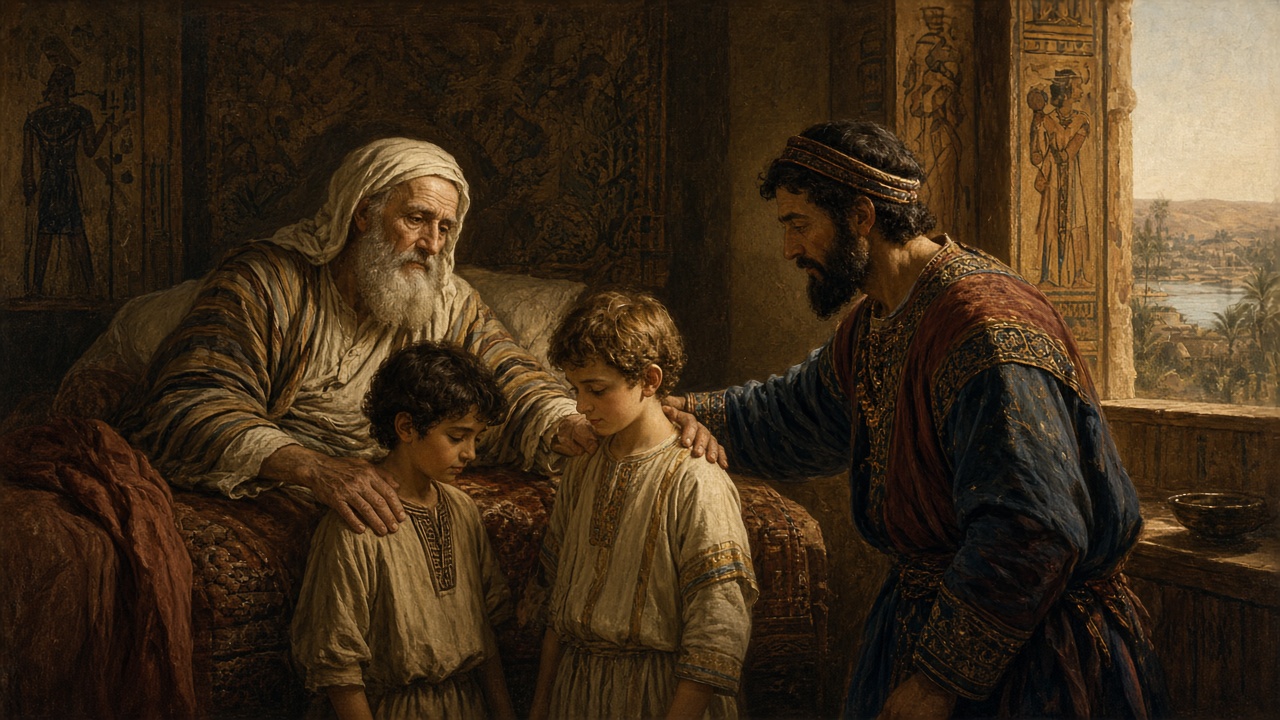
Adoption and Blessing of Ephraim and Manasseh
- Jacob reckons Joseph’s two sons, born to him in Egypt, as his own, on a level with Reuben and Simeon, Leah’s sons. Children born to Joseph after them were to remain Joseph’s, and were to be called by their brothers’ names in the territory they inherited.Sources: the Bible text itself · Manasseh (son of Joseph) · Reuben · Simeon
- Manasseh was the elder son and Ephraim the younger, born in Egypt. The name Ephraim means double fruitfulness, because God had made him fruitful in the land of his affliction. Though Israel could hardly see for age, he crossed his hands, laid his right hand on Ephraim, and insisted that the younger brother would be greater.Sources: the Bible text itself · Ephraim · Manasseh (son of Joseph)
- Jacob recalls that God Almighty appeared to him at Luz in the land of Canaan and blessed him there. Luz was the ancient name of a royal Canaanite city near Bethel, where Jacob halted and received a prophetic vision. He also remembers Rachel, Joseph’s mother, who died to his sorrow on the way back from Paddan—a name found only in this verse, for Padan-aram—and whom he buried beside the road to Ephrath, that is, Bethlehem.Sources: the Bible text itself · Luz · Paddan · Rachel
Notes written with AI assistance from open sources (Theographic Bible Metadata, CC BY-SA 4.0; Easton’s Bible Dictionary, public domain) and reviewed before publishing.
Places in this chapter
- Canaan · 32.767, 35.333 · verses 3, 4, 7, 21
- Luz · Today: Beitin · 31.923, 35.241 · verse 3
- Egypt · 30.129, 31.308 · verses 5, 9
- Bethlehem · 31.704, 35.208 · verse 7
- Ephrath · Today: Bethlehem · 31.704, 35.208 · verse 7
Only places identified with high confidence are shown (90% or more according to the scholarly sources compiled by OpenBible). Period map: DARE (Digital Atlas of the Roman Empire), CC BY 4.0; modern map: © OpenStreetMap contributors; places: OpenBible.info (CC BY 4.0).
Credits and license for this translation
Tareka Buka
Portions of the Holy Bible in the Bamu language of Western Province, Papua New Guinea
Buk Baibel long tokples Bamu long Niugini
copyright © 2023 SIL Papua New Guinea
Language: Bamu
This translation is made available to you under the terms of the
Creative Commons Attribution-Noncommercial-No Derivatives license 4.0.
You may share and redistribute this Bible translation or extracts from it in any format, provided that:
You include the above copyright and source information.
You do not sell this work for a profit.
You do not change any of the words or punctuation of the Scriptures.
Pictures included with Scriptures and other documents on this site are licensed just for use with those Scriptures and documents.
For other uses, please contact the respective copyright owners.
2026-08-26
Source: http://png.bible/bcf/ · eBible.org