Genesis 45
Tareka Buka · Tap a verse to see its cross-references.
Iosepa nakara se geremabowa nou naramio aboto
1Iosepa woko urubia sosoro gabo ato na-goroho modobo pua, nou niro turi koko se korobidiro aboto. Taie nou do ie nou ro woko urubia aboto kiaia, ‘Mo aboudo urubia sirio neido maragare-mo.’
Taie neio iato aise garagare-rimo nou aboudo, nou naramio neio kawakawa se geremeserai-rimo, Iosepa abato, imese gorowotoi nou ubi ie neio aboto eremabowa rie.
2Nou auna ia idobi giroto naramio sosoro gabo ato. Isipi urubia ro nou idobi ta-gemewidiro-rimo, ina nou idobi kiroto owera nato gorobodorai eputa dubu moto ato na-gorowomidiro edi urubia sirio ro neio ro iato girorowai-rimo. 3Nou ro iato gutura naramio aboto, ‘Mo masiro Iosepa ie. Mo abera modobo ato a-womidiro ra?’
Nou naramio ro na-girowai-rimo nou beda sosoro owera to garo neio ro modobo pua nou owera wisa samo to kemowameai aboto, mabu neio auna tere ro giwati.
4Taie Iosepa ro ibo neio aboto, ‘Nirimagare peteibi mo aboto aupise dosiomai-birimo.’ Taie neio nou aboto aupise iato gosiomai-rimo.
Nou ro iato gimowapotai ibo, ‘Mo nou e nio neama naramu. Mo masiro Iosepa. Mo nio ro na-nawoto-rimo ata sabowa mere sosoro ie Isipi duriomoro to mo nou e. 5Kaupoti mo beda sosoro na-woto-rimo nou sapuwo to nio kimaragoidiro ubauba iwia ate, ibose nio nakara se eremosurupo ate. Nedi tanaro ro na-gororosioidiro mo Godi ro nemeiriai-ro keba gabo moro to urubia sogoi pamo aboudo iwatateai ri. 6Abora netewa teibo kisimisi ta-goroporeai-do nedi duriomoro nato, pari ohona mea se isuwoduti pua, ina arua 5 kisimisi tiamo-die, urubia pari ohona ibouti-ri pua, idabuti-ri pua, imese duriomoro gebari nou ororo ia se ama-owamotiti-ri, 7ina nou do ie nio sapuwo to mo Godi ro nemeiriai-ro keba moro to nio aramio merebusere sirio irowomidirotitiwai ri, Godi ro edi pupuwo tanaro ro ta-gitamuai kisioidiro. 8Ina ibo pua mo nio ro kemeiriai neito Godi nakara se mo nou ro nemeiriai-ro. Abora Pero edi namabu sirio ro, mo nou namabu abera to nararasoro. Isipi duriomoro gebari mo ro niauri, mo Godi ro ohu to ta-nowioidiro. Nou edi moto gebari ro mo ro nemeauri, mo keba dubu nou e. 9Nio abora neido ba-dasiriai-mo hio ito! Idau ibo ba-demowapotai-mo, “Oro mere Iosepa ibo utura-die ‘Mo Godi ro auna gabamani to ta-nowomi Isipi duriomoro ato. Oro mo aboto samo ito ba-dodori-ro, 10oro Goseni duriomoro ato ama-omidiro-ri, mo gomo ato. Oro aramio merebusere, oro ia, oro sipisipi, nanigosi, burumakau, oro beda mutu nakomu ra aise ba-diaubai-ro. 11Oro mo ro nato nama-iaurititi-ri nedi 5 kisimisi ro na-wou-dioumo sogoi kisimisi. Idaibo sosoro oro aramio merebusere, oro sowake urubia, kiwoubua namabu, daro oro ia modobo pua sogoi ro kiwati.’”
12Nio ro mo abora simara idomari to ti-niauri-dumo, ibose mo Beniamini ro ti-niauri-die, mo abora nedi dubu ro na-naro nio aboto owera mo Iosepa ie. 13Idau ba-demowapotai-mo ibo mo abora auna to nomidiro ibose Isipi duriomoro mo ro niauri. Nio ro ba-demowapotai-mo etou tanaro giauri-rimo nato. Nio abora dasiriai-mo, nou ba-dadabuai-rimo neito samo to ba-dowou-rimo mo aboto.’
14Taie Iosepa nou neido na-gosiomai Beniamini nou ro aise gohiai idobi iato gemerete. Beniamini ro ibose naramu ta-gemerete idobi. 15Taie naramio Iosepa ro iato giohi ina iato gisome, ata kohiai iato kosomea ie neito gorowati idobi mutu. Taie naminiramio kaupoti moro to na-garadabuai-rimo owera iato geremowagomea-rimo. Taie.
Pero umoro goi Iosepa naramio sapuwo to
16Pero nou simara gabamani urubia mutu neio umoro na-goi-rimo Iosepa naramio ta-gou-diomo neio auna ia kamade ro giwati.
17Taie Pero ro nato gutura Iosepa aboto ibo nou naramio kimowapotai ibo, ‘Nio namabu ba-dimidai-mo doniki ohu ato ba-ditomo-mo nio ba-dorowameai-mo Keineni duriomoro to. 18Nio abera negere ba-dowou-rimo ibose nio upi merebusere mutu neito atu se ba-dou-rimo. Mo ro mea goto kere nou nama-imia-ri nedi Isipi duriomoro ro nato. Nio nato meamea ia ohona amadimi-ihotiti-ri. 19Nio ro gabo ato koroho namabu ba-dimidai-rimo, nio upi merebusere kiowiti sapuwo to, ibose nio abera oromano ba-dowameai-rimo neito mo aboto. 20Nio kimaragoidiro tato se beda sosoro nakomu ra neito kiwou tato, idaibo namabu nato tiamo sirio ie Isipi duriomoro ato.’
21Taie Isiraere dubu mere sirio ro edi tanaro neio ro aise gosioidiro-rimo ina Iosepa ro iato gimapoi-ibi gabo ato koroho namabu, Pero owera gabo modobo. Nou ro ibose ipi gabo ato kiho ohona iato gimiai-ibi. 22Iosepa ro ibose naramio ta-gimio kiroidiro namabu iworohuti na, Beniamini gomio sirio kiroidiro namabu 5 obotama 5 sodo, ina auna mani iato gimowateai nou ro, 23ibose nou abera negere aboto 10 dubu doniki nou gimeriai Isipi duriomoro rido. Nou ro meamea namabu baiko to ta-gemodiowado, nou gemaremuti doniki ohu ato, ibose nou ta-gimeriai 10 upi doniki. Neio kono baiko, parawa baiko, ibose arua Iakobo ipi gabo ato ihona nou Isipi to kou ato ohona iedi 10 upi doniki ro Iakobo nou mutu gemowou-rimo.
24Taie Iosepa ro nou naramio aboto asiriai-ri iato gutura. Naramio ro Isipi duriomoro na-gemeserai-rimo nou ro neio iato gimowapotai ibo, ‘Nio ipi ato eremaro ate dorogora se ba-dou-mo womu tato korowateai.’
Iosepa naramio a-gou-rimo abera adabuai ri
25Iato Iosepa naramio Isipi duriomoro iato gemeserai-rimo neio abera aboto imese giodori-ro Keineni duriomoro to. 26Nou owera neio ro iato gemowauti-rimo, ‘Iosepa araburai pua nou tomidiro. Nou abora auna gabamani to omidiro Isipi duriomoro ato.’
Neio abera keba se aborabora ro gorobai, nou ro mea se imibiria pua edio owera ro. 27Kaupoti nou naramio ro mea se iato gemowauti-rimo Iosepa ro beda sosoro owera to garo neio aboto. Isiraere iato na-giraroweauti nou ro gabo ato koroho nakomu neio se giauri iedi namabu ro Iosepa ro gimeriai-die nou kowameai sapuwo to Isipi duriomoro to, nou iato keremiro pupuwo neito geremowai. 28Isiraere ro ibo, ‘Mo abora se nimibiria nio owera. Mo mere Iosepa morobise tomidiro. Mo ido karaburai modobo pua keba se mo ro modobo ie nou sosoro woidomari kemowea.’
Did you know?
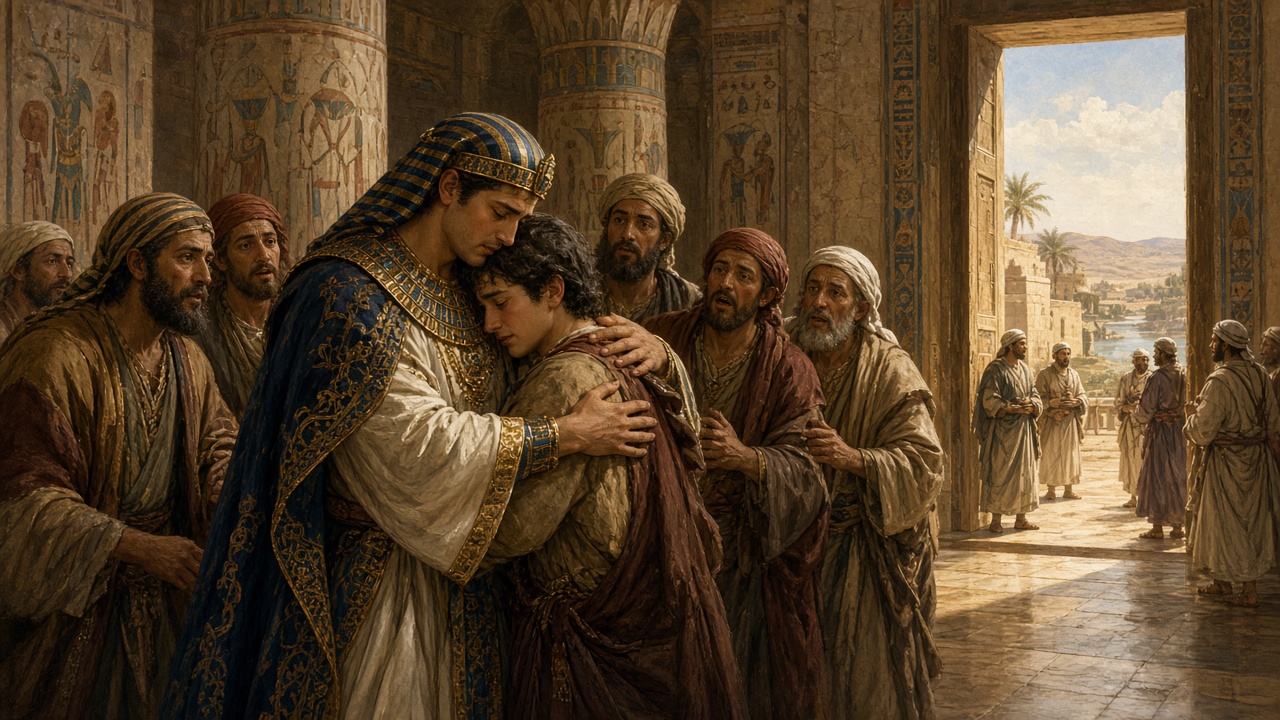
Joseph Reveals Himself to His Brothers
- Goshen, the district where Joseph tells his brothers to settle near him with their children, grandchildren, flocks, and herds, lay east of the Nile and apparently not far from the royal residence. Easton's Bible Dictionary (1897) notes that it is first mentioned in Joseph's message to his father, and that it was also called the land of Rameses, because the towns of Pithom and Rameses lay within its borders.Sources: Goshen · the Bible text itself
- Joseph weeps so loudly that the Egyptians hear him, and Pharaoh's household soon hears of it; Pharaoh and his servants are pleased when they learn the brothers have come, and he offers them the best of the land of Egypt. Easton's Bible Dictionary (1897) says the Pharaoh of Joseph's days was probably Apopi, or Apopis, the last of the Hyksos kings. It adds that Hyksos kings welcomed Asiatic shepherds, whereas older native Egyptians regarded shepherds as an abomination, though some argue that Joseph came to Egypt in the reign of Thothmes III, long after the Hyksos were expelled.Sources: Pharaoh (of Joseph) · the Bible text itself
- Benjamin was the younger son of Jacob by Rachel, and Joseph the elder of her two sons; their mother died giving birth to Benjamin at Ephrath and named him Ben-oni, meaning son of my pain, a name his father changed to Benjamin. At the reunion Joseph embraces Benjamin and weeps, giving him three hundred shekels of silver and five sets of clothes, while each of the other brothers receives a new garment.Sources: Benjamin (patriarch) · Joseph (son of Jacob) · the Bible text itself
Notes written with AI assistance from open sources (Theographic Bible Metadata, CC BY-SA 4.0; Easton’s Bible Dictionary, public domain) and reviewed before publishing.
Places in this chapter
- Egypt · 30.129, 31.308 · verses 4, 8, 9, 13, 18, 19, 20, 23, 25, 26
- Goshen · Today: Goshen 1 · 30.799, 31.834 · verse 10
- Canaan · 32.767, 35.333 · verses 17, 25
Only places identified with high confidence are shown (90% or more according to the scholarly sources compiled by OpenBible). Period map: DARE (Digital Atlas of the Roman Empire), CC BY 4.0; modern map: © OpenStreetMap contributors; places: OpenBible.info (CC BY 4.0).
Credits and license for this translation
Tareka Buka
Portions of the Holy Bible in the Bamu language of Western Province, Papua New Guinea
Buk Baibel long tokples Bamu long Niugini
copyright © 2023 SIL Papua New Guinea
Language: Bamu
This translation is made available to you under the terms of the
Creative Commons Attribution-Noncommercial-No Derivatives license 4.0.
You may share and redistribute this Bible translation or extracts from it in any format, provided that:
You include the above copyright and source information.
You do not sell this work for a profit.
You do not change any of the words or punctuation of the Scriptures.
Pictures included with Scriptures and other documents on this site are licensed just for use with those Scriptures and documents.
For other uses, please contact the respective copyright owners.
2026-08-26
Source: http://png.bible/bcf/ · eBible.org