Genesis 28
Tareka Buka · Tap a verse to see its cross-references.
1Aisaki ro iato gemeiriai nou sowake koroho dubu Iakobo aboto orobai-ri owou ri nou aboto owera emowauti ri. Taie Iakobo na-gorowateai nou aboto, Aisaki ro korosa iato gaiwai. Taie nou ro owera iato gemowapotai ibo, ‘Oro ata besere ata neido Keineni duriomoro rido edea ate, idaibo Hiti busere. 2Oro ba-dou simara aramunegere bato omidiro Betuere, Mesopotamia duriomoro ato, oro mamu medera ie Rebeni iato tomidiro, oro ro nou besere ata ba-dedea! Nou nimo tanaro ie. 3Godi imese pupuwo ia dubu e oro nou ro korosa ba-maiwai. Sirio aramio merebusere ba-momio oro neio abera to ba-mararapoi, urubia dubu patu sirio neio aboudo amadimo-osuruwo-ri. 4Ibose iedi korosa ro Iawe ro Aberaham na-gomio iedi atu korosa ro oro aboto nou ba-miaiwo-ro. Iato iedi duriomoro ro oro aboto aise ba-miaiwai-ro ibose oro abora edi duriomoro ato na-omidiro, Godi ro iedi duriomoro ro keba se ta-gapoi Aberaham aboto.’
5Iato Aisaki ro Iakobo imese gemeiriai ito gou oromo teibo turituri to, iedi muso duriomoro ro tararasoro Mesopotamia. Nou a-gou-ro Rebeka medera Rebeni bato gomidiro. Rebeka ra Rebeni ra neitiro abera ie Betuere, nou Arama dubu e. Rebeka mere teibo ie Iso ra Iakobo ra.
6Iso umoro ta-goi Aisaki ro korosa na-gaiwai Iakobo aboto nou ro iato gemeiriai oromo teibo turituri to, duriomoro masiro Mesopotamia, nou orobo kedea aboto. Nou umoro idaibo ta-goi nou abera ro ta-gutura ibo, ‘Oro ro edea ate ata besere ata Keineni duriomoro rido.’ 7Iso ibose umoro ta-goi Iakobo mamu ra abera ra iedi owera ro na-garo-rido nou ro aise gisioidiro, iato gaimai nedi duriomoro ro neito Mesopotamia to.
8Idaro nou ro ibose ta-geremasibai neitiro abera ubi tato ie nou orobo teibo Keineni busere teibo ie. 9Nou ri nou ata orobo iato gedea, Keineni orobo pua, Aberaham ata mere Isimere iedi besere ro nou gedea Iso ro, iedi besere ro nou masiro Maharata, Nebaioti medera ie.
Iawe hiwo to Iakobo aboito gorowawea
10Iakobo Besiba imese gemeserai taie nou imese gaimai-ro Mesopotamia duriomoro to iato ata sabowa towamo masiro Harani neito gou-ro. 11Ipi ato duwo ro aise gematimuti. Nou na-giraroweauti nadi nato giwia iato giwou-ro, taie aise giaremuti gomogomo ato eputa neito gorowasiai, nou iato aise gutuwa norou.
12Iedi duwo ro iato na-gorobu nou ro a-giauri hiwo to auna negere totorowa Adiri rido ioudo gororuwo-ro womu tato goto ato ti-gotobowa. Iedi totorowa ro nato Godi sowake koroho urio arua a-giourio-rimo arua a-giroruwoidiro-ro iedi tanaro ro neio ro nou gosioidiro-rumo. 13Totorowa ohu to na-girarowea nou ro Iawe se gowea na-gotoi-ro totorowa ohu ato.
Taie nou ro ibo, ‘Mo Iawe ie. Mo oro aramunegere ro ta-wisioidirotiti mo ubi tanaro, Aisaki ibose to tisioidirotiti mo ubi tanaro. Oro edi moro ato na-worobu norou iedi duriomoro ro mo ro nou nama-omia-ri oro. 14Mo ro ibose iedi duriomoro oro aramio merebusere iato ama-irowomidirotiti-ri atu se oro edio moro ato na-worobu norou. Oro aramio merebusere kioputi modobo pua imese sirio amadimo-oi-ri beda sosoro ra momoso, neio ro amadimo-orobodorai-ri moro moro, imese neio ro se ama-irowomidirotiti-ri. Taie sirio urubia patu neio aboudo korosa nato ama-orobodorai-ri. 15Mo oro mutu e. Oro beda moro to ou, oro mo ro anama-owairiwado-ri, keba to mo ro nama-oroho-ri oro mo wapo rudo kou e. Oro anamadi-owameai-ri nedi duriomoro ro neito, oro mo ro emeserai-ri pua. Mo oro aboto beda owera naro, mo ro anama-isioidiro-ri iedi tanaro ro. Taie nou se ie.’
16Iakobo nedi tau nato norou aboudo aise geribidiro-ro, tere ro gorobai. Nou ro ibo, ‘Morobise ie nedi moro ro nato Iawe tomidiro, mo umoro keba se oi pua. Nodi moro ro mo ro na-niauri aborabora se niauri. Nou morobise ia ie nedi moro ro nou Godi komidiro moto ie, ibose Adiri magere damo ie.’
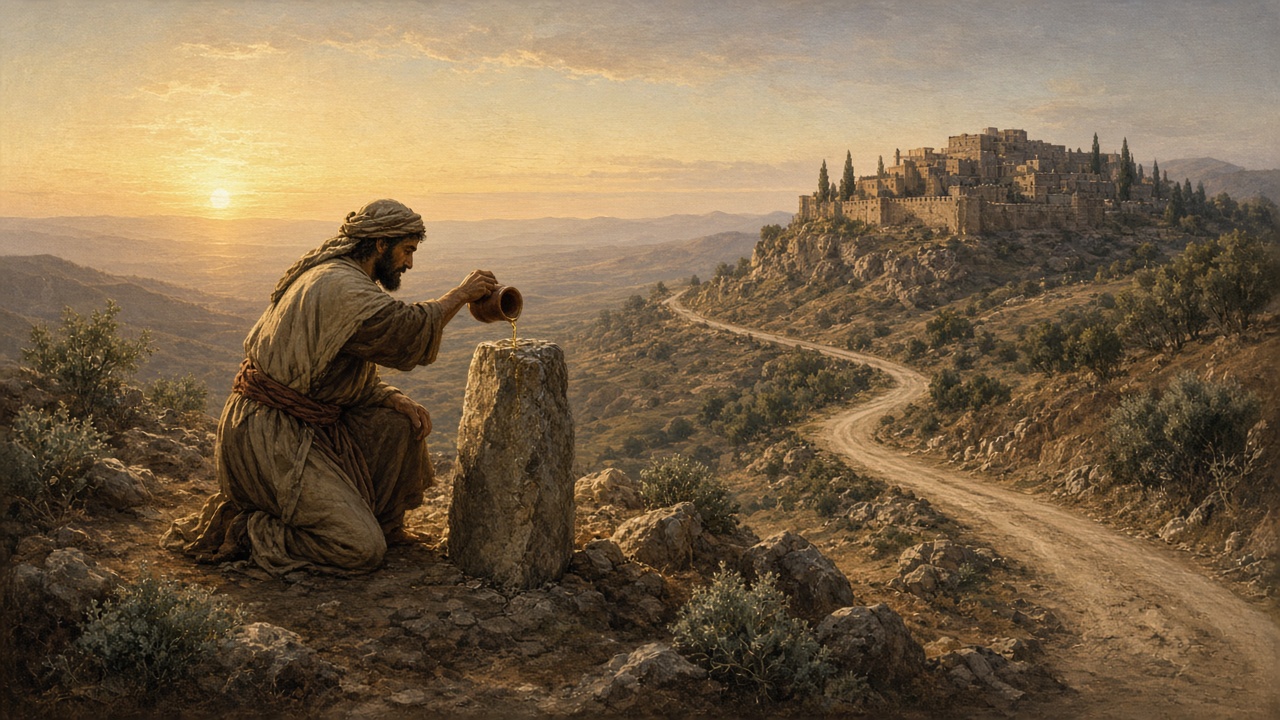
18Taie ata kowaroho nou na-gerebua nou eputa edi nadi to na-gorowasiai nou ro komidai mea mino to iato gowotobowa taie nou ro Godi aboto aiwai ri dehoro to iato gemaseduti ohu rudo.
19Taie iedi moro ato na-gorobu, nou masiro Rusi. Iakobo ro ina dese orio masiro to giduti Betere, ibo owamo ‘Godi komidiro moto ie’.
20Taie iato nou hodo a-gemakakaubiai-ro Godi aboudo, nou ro ibo, ‘Godi mo mutu nama-imidirotiti-ri, mo nou ro namadi-iaurititi-ri nedi kou ro nato, mo nou ro ohona namadi-omiotiti-ri kiroidiro namabu namadi-omiotiti-ri, mo nou ro mea se nama-owaboi-ri 21ioudo namadi-owameai-ri mea se mo abera moto to, iato nou ubi tanaro anama-isioidirotiti-ri, 22iato iedi nadi ro mo ro mea mino to na-nowotobowa nedi duriomoro nou anama-arapoi-ri Iawe nato namadime-emewabutiti-ri. Ina mo nou ro 10 namabu komio ato nou mo ro kaupoti kemowameai ie.’
Did you know?
Jacob's Journey and Dream at Bethel
- Isaac sent Jacob from Beersheba to Paddan-aram to take a wife from the daughters of Laban, his mother Rebekah's brother, rather than from the Canaanite women. Paddan-aram, called the plain of Aram, is commonly regarded as the Mesopotamian district around Haran, where Laban lived; Haran, also called the city of Nahor, was where Abraham stayed after leaving Ur until his father Terah died.Sources: the Bible text itself · Paddan-aram · Haran · Laban
- The place where Jacob dreamed, set up as a pillar the stone he had put under his head, and poured oil on it was the royal Canaanite city of Luz; he renamed it Bethel. Easton's Bible Dictionary (1897) locates Bethel in central Palestine, about ten miles north of Jerusalem, and notes that the name was at first apparently given to a sanctuary in the neighborhood of Luz, and was not given to the city itself until after the tribe of Ephraim conquered it.Sources: the Bible text itself · Luz · Bethel (of Palestine)
- When Esau learned that Isaac had blessed Jacob and ordered him not to marry a Canaanite woman, he went to Ishmael and married Mahalath, sister of Nebaioth and daughter of Abraham's son Ishmael, in addition to the wives he already had. Easton's Bible Dictionary (1897) also calls her Bashemath and notes that Esau's three wives receive different names in the Edomite genealogy of Genesis 36 from those given in the narrative of Genesis 26 and 28.Sources: the Bible text itself · Bashemath
Notes written with AI assistance from open sources (Theographic Bible Metadata, CC BY-SA 4.0; Easton’s Bible Dictionary, public domain) and reviewed before publishing.
Places in this chapter
- Canaan · 32.767, 35.333 · verses 1, 6, 8
- Haran · Today: Harran · 36.864, 39.033 · verse 10
- Luz · Today: Beitin · 31.923, 35.241 · verse 19
Only places identified with high confidence are shown (90% or more according to the scholarly sources compiled by OpenBible). Period map: DARE (Digital Atlas of the Roman Empire), CC BY 4.0; modern map: © OpenStreetMap contributors; places: OpenBible.info (CC BY 4.0).
Credits and license for this translation
Tareka Buka
Portions of the Holy Bible in the Bamu language of Western Province, Papua New Guinea
Buk Baibel long tokples Bamu long Niugini
copyright © 2023 SIL Papua New Guinea
Language: Bamu
This translation is made available to you under the terms of the
Creative Commons Attribution-Noncommercial-No Derivatives license 4.0.
You may share and redistribute this Bible translation or extracts from it in any format, provided that:
You include the above copyright and source information.
You do not sell this work for a profit.
You do not change any of the words or punctuation of the Scriptures.
Pictures included with Scriptures and other documents on this site are licensed just for use with those Scriptures and documents.
For other uses, please contact the respective copyright owners.
2026-08-26
Source: http://png.bible/bcf/ · eBible.org