Genesis 21
Tareka Buka · Tap a verse to see its cross-references.
Aisaki goroto Sera ro
1Iawe ro Sera mea se gowarebai nou ro kebase beda owera garo nou aboto, aise gororosioidiro. 2Taie, Sera niro aise gowea. Godi ro beda tau gemapoi, Aberaham nou 100 kisimisi na-gorobai, iedi tau ro Sera ro nato gemowahau Aberaham mere kainai. Iedi mere bamuai ro Aberaham ro masiro a-giduti Aisaki to. Taie, Aisaki bamuai 8 saiki to na-gorobu, Godi ro beda owera garo Aberaham aboto, nou ro aise gobodoro. Aberaham ro Aisaki dubu simara takamai nato gowasiai iato guriai.
6Sera ro ibo, ‘Mo Godi ro kamade ta-nowai-ro nou ri nirorouti gaga. Etio ro amadimi-irowidiro-ri mo bamuai koroto owera, neio ie mo ie nimo atu se gaga auna se anamadimi-irorouti-ri. 7Urubia ibo imaragoidiro-mo “Sera modobo pua Aberaham mere kemowahau aboto,” kaupoti Aberaham oromano ro na-gorobai mo ro mere nato nemowahau.’
Isimere mamu mutu gitiodorai-ma Aberaham ro
8Aisaki buburubabo ro na-gorobai Aberaham ro kotopai ohona auna soriomu iato gosioidiro. 9Haga wisa tato woko besere na-gorobai-ro Isipi rido, Isimere Aberaham ro nou ato garasomai keba se. Sera ro na-gowea Isimere ro Aisaki na-gosobi, 10Sera ro ibo Aberaham aboto, ‘Abora nedi wisa tato woko orobo ro mere mutu, neido diwagare-ma! Mo ubi tato ie oro ie mo ie neitiro korowaburai ato Isimere ro kirahidimai neitiro edi namabu sirio ro. Modobo ie neitiro simara ia mere Aisaki nou ro kirahidimai.’
11Aberaham ro nedi owera ro na-girorowai, nou ubauba kimaragoidiro ro gorobai, mabu Isimere ibose nou mere ie.
12Taie, Godi ro ibo, ‘Oro ubauba kimaragoidiro na ie, wisa tato woko orobo mere mutu, neitiro sapuwo to. Sera ro beda owera aro-die, nou se dosioidiro. Mo ro beda owera naro keba se oro aboto, Aisaki aramio merebusere nedi duriomoro ro neio ro amadimi-irahidimai-ri. Aramio merebusere, korosa mutu, neio aboto anama-iaiwotiti-ri. 13Ibose wisa tato woko orobo nou edi mere ro, nou ro sipu ama-iwia-ri, mabu nou oro mere ie.’
14Saiki na-geredumudiro-ro Aberaham ro neitiro obo kimarate-ma, ohona kimia-ma, taie imese gitiodorai-ma urubia tato moro to, iato irohotiti-do duriomoro masiro Besiba. 15Neitiro obo na-goroporeai, Haga ro mere aise gowomi ota mabu ato, Isimere iato idobi aise gemai. Haga ro ibo gimaragoidiro, ‘Mo mere ama-araburai-ri, mo ro kiauri modobo pua.’
16Nou egea mere se na-gosiomai taie imese gomi, iato nou mere idobi gememai. 17Godi ro ta-gemororowai-ro mere idobi na-giroto, ina Godi sowake urio ro Adiri sabowa rido Haga ioudo gorumai-ro, ‘Oro etou ro ari? Tere na ie, oro Godi ro temewidiro-die mere idobi na-iroto. 18Dowoubua, tu to dorobai-ro, sipu nou aboudo amadimi-isuruwo-ri.’
19Taie, Godi ro nou iato gemapoi obo bobo beda moro ato gomidiro. Taie nou imese gou obo iapo ri, mere obo iato godio.
20Isimere na-ororomaititi, nou Godi ro ta-iaurititi-ro. Nou urubia tato moro ato irohotiti, masiro Parani, nou auna umoro ie moporo to kipedu. 21Taie, Haga ro Isimere orobo Isipi duriomoro rido gemerebai-ro, nou ro nou gedea.
Abimereki ra Aberaham ra Hodo Geremasaubiai-rido
22Abimereki, Gera duriomoro eputa dubu e, ata tau ato nou simara boso eputa dubu Pikoro mutu neitiro atu se iato gou-rido Aberaham aboto. Neitiro ro ibo, ‘Imese beda mutu tanaro sirio ra oro ro na-isioidirotiti, oro Godi ro owarebidirotiti-die. 23Abora Godi sosoro gabo ato oro ro hodo neitiro aboudo ba-demasaubiai-ro, ibo oro ro ama-isioidiro-ri meamea tanaro mo aboto, ibose mo merebusere aramio aboto. Oro ro modobo ie nirimagare tanaro kiwawuti mo aboto, ibose mo duriomoro urubia aboto, oro apira dubu sosoro na-imidirotiti neio abato. Oro mo ro keba se beda sosoro nirimagare nemati, mo oro ro wisa na idaibo sosoro nirimagare ba-demowapotai-ro.’
24Aberaham ro ibo ‘Mo ro hodo abora a-nebuai nitiro aboudo.’
25Ina Abimereki mibo owera iato gomia Aberaham ro, obo bobo sapuwo to, ‘Oro edi sowake urubia ro neio ro nowasiai-dumo obo kiaputi moro rido.’
26Abimereki ro ibo gemowameai, ‘Mo umoro oi pua, mo oro ro keba se emowapotai pua.’
27Abimereki amia sipisipi burumakau iato gomia Aberaham ro, ina neitiro hodo imese geremasaubiai-rido, sapuwo Abimereki aboudo ie, sapuwo Aberaham aboudo ie. 28Aberaham ro 7 upi sipisipi kainakaina nou gihodowa Abimereki sosoro gabo ato. 29Abimereki ro ibo, ‘Mo etou ri nemowou-die nedi 7 sipisipi ro?’
30Aberaham ro ibo, ‘Dimidai buro nedi sipisipi kainakaina ro, oro urubia mutu umoro nato amadimo-oi-ri ibo morobise ie nedi obo bobo ro mo ro noboba.’
31Iedi moro ro masiro Hiburu owera to neito asoro-dumo Besiba, maumo owamo ibo, ‘Hodo Kasaubiai Obo Bobo ie’, mabu neitiro hodo to nato geremasaubiai-rido, Besiba ato.
32Taie, Abimereki imese gorowameai simara duriomoro to, nou simara boso eputa dubu mutu. 33Aberaham ro ota iato garo, ota masiro tamarisiki. Nedi ota ro Besiba ato gotoi, iato Iawe na-imidirotiti imese imese sirio tau, nou aboto Aberaham ro aise gararatoro. 34Taie, Aberaham tuturu tau to iato imidirotiti, nou apira dubu e Pirisitia urubia duriomoro ato, iedi duriomoro ro Abimereki ro na-iaurititi.
Did you know?
Isaac’s birth, Hagar’s departure, and Beersheba
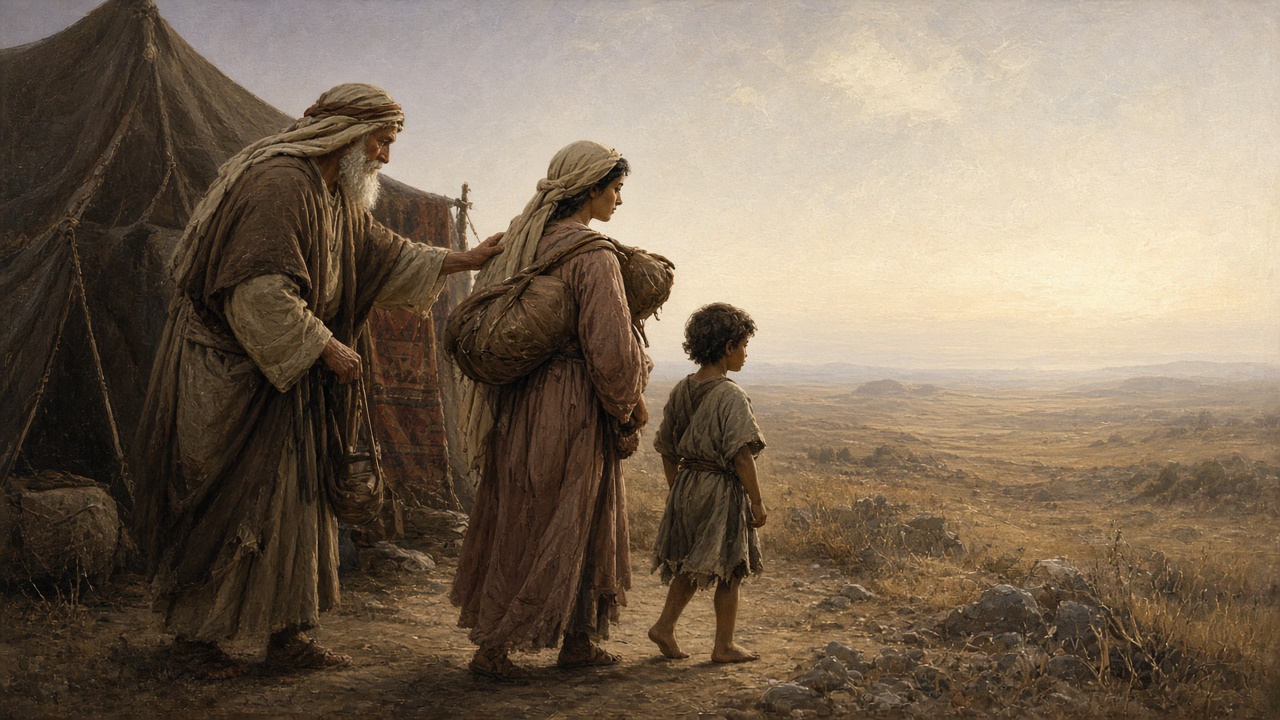
- Abraham was a hundred years old when Sarah bore him Isaac, their only son together, and he circumcised the child at eight days old, as God had commanded. Sarah said that God had made her laugh, and that everyone who heard of this would laugh with her. Easton's Bible Dictionary (1897) notes that a great feast was held when Isaac was weaned, probably when he was about two years old.Sources: the Bible text itself · Isaac
- Hagar, whose name is explained as “flight” or, according to others, “stranger,” was an Egyptian and Sarah’s handmaid, whom Sarah gave to Abraham as a secondary wife. After Isaac’s birth, Abraham sent Hagar and their son Ishmael into the Wilderness of Beersheba with bread and a skin of water. Ishmael later settled in the Wilderness of Paran, a desert tract in the northeastern Sinai Peninsula between the Arabah on the east and the wilderness of Shur on the west, became a great archer, and his mother got him a wife from Egypt.Sources: the Bible text itself · Hagar · Paran
- Beersheba, “well of the oath” or “well of seven,” was named when Abraham and Abimelech swore an oath there over a well that Abraham said he had dug; he set apart seven ewe lambs as a witness, and the two made a covenant. Phicol, chief captain of the army of Abimelech, the Philistine king of Gerar, entered that alliance with Abraham. Abraham then planted a tamarisk at Beersheba and lived for a long time in the land of the Philistines.Sources: the Bible text itself · Beersheba · Phichol
Notes written with AI assistance from open sources (Theographic Bible Metadata, CC BY-SA 4.0; Easton’s Bible Dictionary, public domain) and reviewed before publishing.
Places in this chapter
Only places identified with high confidence are shown (90% or more according to the scholarly sources compiled by OpenBible). Period map: DARE (Digital Atlas of the Roman Empire), CC BY 4.0; modern map: © OpenStreetMap contributors; places: OpenBible.info (CC BY 4.0).
Credits and license for this translation
Tareka Buka
Portions of the Holy Bible in the Bamu language of Western Province, Papua New Guinea
Buk Baibel long tokples Bamu long Niugini
copyright © 2023 SIL Papua New Guinea
Language: Bamu
This translation is made available to you under the terms of the
Creative Commons Attribution-Noncommercial-No Derivatives license 4.0.
You may share and redistribute this Bible translation or extracts from it in any format, provided that:
You include the above copyright and source information.
You do not sell this work for a profit.
You do not change any of the words or punctuation of the Scriptures.
Pictures included with Scriptures and other documents on this site are licensed just for use with those Scriptures and documents.
For other uses, please contact the respective copyright owners.
2026-08-26
Source: http://png.bible/bcf/ · eBible.org