Genesis 2
Tareka Buka · Tap a verse to see its cross-references.
1nou ro nou gisioidiro idaibo toboro duriomoro imese namabu sirio ibo gisioidiro, taie aise giporeai.
2Duwo na-garagare, ata kowaroho na-gowaroho nou a-gomidiro, ata nakomu ata nou ro osioidiro pua. 3Iedi saiki ro Godi ro korosa nato gomia ina tarena to gapoi, mabu nedi saiki ro nou nato gomidiro namabu na-giporeai. 4Imese sirio namabu patu nou ro na-gisioidiro nou totomu e. Taie.
Iawe Godi ro keba urubia beda sosoro gisioidiro
Iawe Godi ro duriomoro toboro imese namabu sirio na-gisioidiro, 5ota sugamuso mutu osuwoduti pua goto rido. Goto ia se gowamo daroho nou ro emeiriai pua nedi goto ro nouto, ata dubu tato ie goto odi na. 6Obo abere madawa sosoro maumo rido na-wiouriotiti-ro duriomoro papamo nou ro owaititi.
7Iawe Godi ro goto na-gaudai urubia dubu nouto gosioidiro. Nou ro huhuame punugo goro rido iato gemuhudurai. Taie nou keremiro dubu to aise gararapoi.
8Duriomoro masiro Ideni saiki boido idiawado-die, Iawe Godi ro pari nato gosioidiro. Nou ro urubia dubu na-gosioidiro ina iato gowomi iedi pari ro nou ato. 9Iawe Godi ro ota ta-gibouti, ina meamea ota iopu iato gisuwoduti-rimo ihona.
Pari turi ato Iawe Godi ro ta-garo ata ota, nedi ota iopu ro keremiro imio nari kiho ato, ibose ata ota ta-garo, nedi ota iopu ro umoro kimio sapuwo to kiho ato, mea na nou beda sosoro ra, ubauba beda sosoro ra.
10Gowo obo owahautiti-ro Ideni pari ato pari namabu nou ro iwaititi pupuwo kisuwoduti sapuwo to. Nodi gowo ro noudo Ideni pari na-gorohodorai 4 oromo nato giwameuti. 11Keba oromo masiro Pisoni, Habira duriomoro nou ro gemowagegediro-ro iato edi moro ro nato meamea gorodi tiamo. 12Iedi gorodi ro meamea agoago nadi sosoro ie. Ina mea nibo dehoro iato tiamo, ibose auna wisa nadi onikisi iato tiamo. 13Ata oromo masiro Gihoni, Kusi duriomoro nou ro gemowagegeidiro. 14Ata oromo masiro Tigirisi, Asiria duriomoro rudo ororuwotiti-die saiki boido idiawado-die, ata oromo masiro owamo ibo Iupereitisi.
15Urubia dubu Iawe Godi ro a-gowomi Ideni ato iedi pari ro mea mino to iauri ri. 16Iawe Godi ro umoro owera iato garo urubia dubu aboto, ‘Ba-dihotiti beda mutu ota iopu ra na-orowotoi pari ato, 17kaupoti oro umoro komia ota iopu meana ra ubauba ra sapuwo to oro ro ouho ate! Oro ro nama-ouho-ri oro ama-araburai-ri!’
18Iawe Godi nou na-gimaragoidiro urubia dubu nou ro na-gosioidiro, nou ro ibo, ‘Nou nakara se komidiro modobo pua. Mo ro komidiro boinana anama-emesioidiro-ri, nou mea se kowarebai sapuwo to.’
19Taie, nou ro iato ta-gisioidiro amia namabu sirio idaibo pawa, ina tumu namabu mutu. Nou ro iato gemowawuti urubia dubu, nou ro masiro imio ri. Taie, urubia dubu ro iato giasoro masiro to. 20Nimo abora nouto niasoro-dumo nou ro kimio masiro to. Nou na-gimaragoidiro nou mea se kowarebai boinana potoro ie.
21Taie, Iawe Godi ro urubia dubu maumo norou iato gowotodai. Nou maumo norou korobu maumo ato dadaru iopu nato gowagare-ro ina takamai iato gematorai, 22urubia orobo neito gosioidiro.
Nou ro kosioidiro na-goporeai nou ro aise gemowawea urubia dubu. Orobo urubia dubu ro na-gowea, nou kamade aise goi.
23Nou ro ibo, ‘Nou e! Nou mo boinana ie, nou mo aboudo osioidiro, mo sosoro ie, ina nou rie mo ro orobo to kapoi.’
24Taie, nou rie nimo abora nou nemodohodai-dumo mere ro orobo na-wedea nou simara mamu ra abera ra kimeserai-ma ie nou orobo mutu karadabuai ie neitiro kaupoti aise koi ie.
25Dubu ra orobo ra neitiro porose se wimidiro-do, neitiro siripo tato ie.
Did you know?
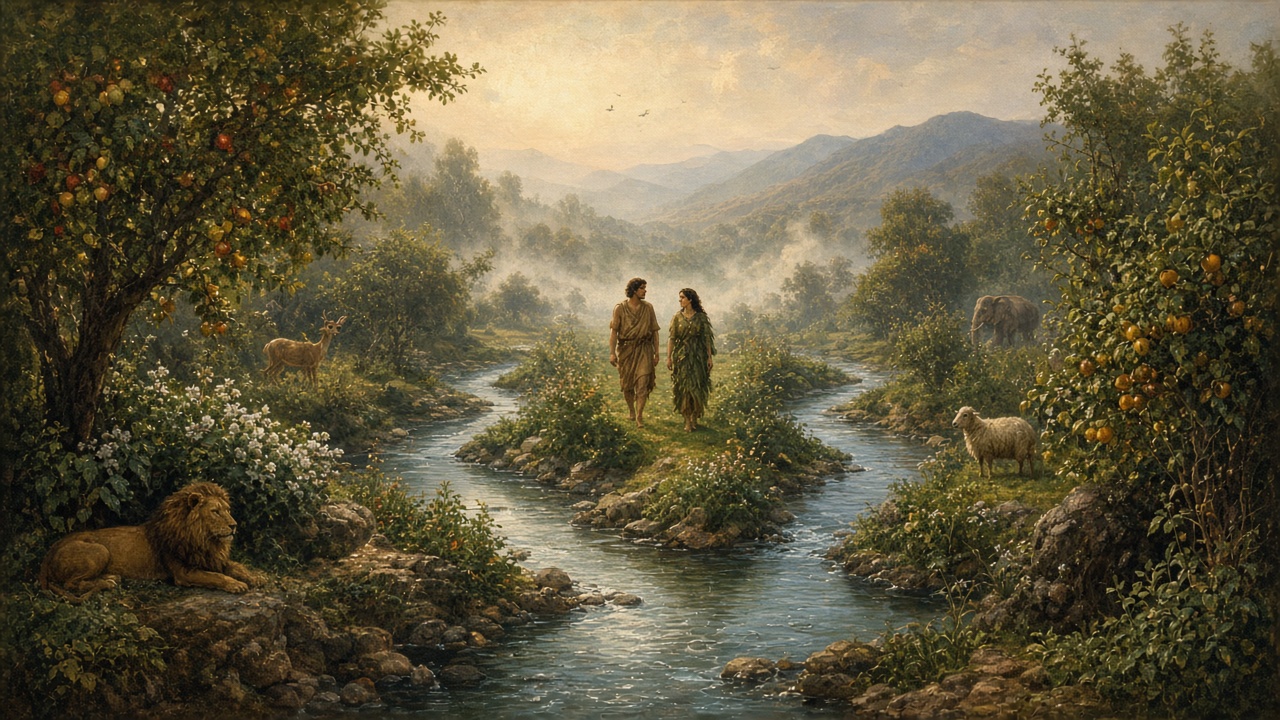
Adam, Eden, and the Four Rivers
- Adam, meaning “red,” is a Babylonian word and the ordinary name for a human being, with the same sense in Hebrew and in Assyrian. It was given to the first man. He was formed from the dust of the ground—hence the name—and God breathed into his nostrils the breath of life.Sources: Adam · the Bible text itself
- A river flowed out of Eden and divided into four headwaters: the Pishon, the Gihon, the Hiddekel, and the Euphrates. Some identify the Pishon with the Phasis or the Halys, others with the Indus, the Ganges, or still other rivers; the Gihon has been identified with the Nile, and others regard it as the Oxus, the Araxes, or the Ganges. The Hiddekel is the Tigris, called by the Accadians the river of Idikla; Gesenius understood the name as “the rapid Tigris.”Sources: the Bible text itself · Pison · Gihon · Hiddekel
- The site of Eden, the garden in which the first parents lived, has been discussed more than almost any other geographical question. It has been placed in Armenia, in the region west of the Caspian Sea, in Media, near Damascus, in Palestine, in southern Arabia, and in Babylonia. Easton's Bible Dictionary (1897) seeks it along the Tigris and the Euphrates of western Asia, in the land of Shinar, or Babylonia.Sources: Eden
Notes written with AI assistance from open sources (Theographic Bible Metadata, CC BY-SA 4.0; Easton’s Bible Dictionary, public domain) and reviewed before publishing.
Places in this chapter
- Assyria · 36.359, 43.153 · verse 14
- Euphrates · Today: Euphrates River · 31.004, 47.442 · verse 14
- Tigris · Today: Tigris River · 31.004, 47.442 · verse 14
Only places identified with high confidence are shown (90% or more according to the scholarly sources compiled by OpenBible). Period map: DARE (Digital Atlas of the Roman Empire), CC BY 4.0; modern map: © OpenStreetMap contributors; places: OpenBible.info (CC BY 4.0).
Credits and license for this translation
Tareka Buka
Portions of the Holy Bible in the Bamu language of Western Province, Papua New Guinea
Buk Baibel long tokples Bamu long Niugini
copyright © 2023 SIL Papua New Guinea
Language: Bamu
This translation is made available to you under the terms of the
Creative Commons Attribution-Noncommercial-No Derivatives license 4.0.
You may share and redistribute this Bible translation or extracts from it in any format, provided that:
You include the above copyright and source information.
You do not sell this work for a profit.
You do not change any of the words or punctuation of the Scriptures.
Pictures included with Scriptures and other documents on this site are licensed just for use with those Scriptures and documents.
For other uses, please contact the respective copyright owners.
2026-08-26
Source: http://png.bible/bcf/ · eBible.org