Genesis 10
Tareka Buka · Tap a verse to see its cross-references.
Noa mere peteibi neibi aramio merebusere nou e
1Noa ro edi mere peteibi ro na-girasomai-ibi Sem ie Iapeti ie Ham ie, neibi ro abata saro gabo ato dubu mere sirio girasomo-birimo.
Iapeti aramio merebusere
2Ina Iapeti ro na-girasomo dubu mere sirio, neio masiro nou e, Goma, Magoga, Madai, Iabeni, Tubara, Meseki, saro mere Tirasi. 3Iapeti keba mere Goma, nou ro girasomai-ibi dubu mere peteibi, neibi masiro Asakenasi, Ripa, ina Togama. 4Ina Iabeni ro girasomai-bi 4 dubu mere peteibi, neibi masiro nou e, Erisa, Tarasisi, Kitimi, saro mere Rodanimi. 5Neio Mediterenien oromo bara ato irowomidirotiti. Erere gu simara owera to na-iremowautiti-mo, erere goto kere to ibo gororoburutai-rimo, sipu neio ro auna nato gowai-rimo.
Ham aramio merebusere
6Ina nou Ham dubu mere neibi masiro ie Kusa, Misiraim, Putu, Keineni. 7Ina ibose Kusa dubu mere neibi masiro ie Seba, Habira, Sabata, Rama, Sabateka. Ina Rama netewa teibo mere teibo ie, Seba ra Dedani ra.
8Kusa ata mere masiro Nimorodi, nou auna boso eputa dubu e, 9ibose nedi sopu duriomoro ro nato auna ometa koroho dubu e Iawe sosoro gabo ato. Ina noudo ie, urubia ro ibo karo, ‘Urubia dubu Iawe sosoro gabo ato nou auna ometa koroho dubu e, Nimorodi beda sosoro irohotiti.’
10Ina Nimorodi ro awawo sabowa iaurititi Babironia duriomoro ato, sabowa masiro neio ie, Babironi, Ereki, Akada, ata Karene. 11Ina Nimorodi Babironia duriomoro na-gemeserai, taie nou imese gou ata duriomoro to, masiro Asiria. Nou ro iato awawo sabowa gisioidiro, sabowa masiro neio ie Niniba, Rehobotiri, Karaha mutu. 12Ina nou ro auna negere sabowa, Reseni, iato gosioidiro, Niniba ra Karaha ra turituri ato.
13Isipi, nou ata masiro Misiraim, nou nasaio ibo ie, Ruda urubia, Anam urubia, Rehaba urubia, Naputu urubia, 14Paturusi urubia, Kasuru urubia, ina Kiriti urubia. Pirisitia urubia neio Kasuru urubia aboudo orobu-die.
15Keineni ro netewa teibo dubu mere teibo girasomai-ma, keba mere Sidoni, saro mere Hiti. 16Ina nou nasaio ie Iebusi urubia, Amore urubia, Girigase urubia, 17Hiwi urubia, Aki urubia, Sini urubia, 18Awadi urubia, Demari urubia, Hamati urubia. Keineni urubia gu gabogabo aise gororoburutai-rimo 19womu tato Keineni duriomoro gebari ti-girobai-rimo. Neio ro nedi duriomoro gebari ro nou gorobai-rimo, Iodeni oromo bara rido womu tato koriri duriomoro ti-gorobai-rimo. Sidoni sabowa koriri duriomoro ato ata sapuwo ato na-owamo, womu tato Gasa sabowa, Gera sabowa mutu, imese neio ro ta-gorobai-rimo. Ina Iodeni oromo bara iedi duriomoro ro Keineni urubia ro imese ta-gorobai-rimo. Iato nedi sabowa ro neio ro giamo, Sodom, Gomora, Adima, Seboimi, Rasa mutu. Ina iedi duriomoro gebari ro koriri ra Iodeni oromo ra turituri ato na-gowamo, Keineni urubia ro aise gorobai-rimo. 20Nedi urubia ro imese Ham urubia ie. Neio erere gu, erere owera, duriomoro gabogabo gorowomidiro.
Sem aramio merebusere
21Sem Iapeti naramu e, nou nasa Eberu, Hiburu urubia abera ie. 22Sem ro dubu mere girasomai, nu neio masiro ie Erama, Asura, Apakisadi, Rudi, ina Arama. 23Arama ro dubu mere girasomai Usa, Huri, Getere, Meseki. 24Apakisadi ro Sera garasomai, ina Sera ro garasomai Eberu. 25Eberu ro girasomai-ma Perege Iokatani mutu. Perege na-gomidiro, urubia iato duriomoro gabogabo aise gorohodowa-rimo. Ina noudo ie nou abera ro masiro a-gapoi Perege, maumo owamo ibo Korohodowa. 26Iokatani sirio dubu mere girasomai nu neio masiro ie, Aromodati, Serepe, Hasamaweti, Dera, 27Hadorama, Usara, Dikara, 28Obara, Abimaeri, Seba, 29Opiri, Habira ina Dobabi. Neio imese Iokatani dubu mere ie, 30neio ta-gorowomidiro podo duriomoro ato saiki boido idiawado-die Mesa ra Sepa ra turituri ato. 31Nedi urubia ro imese Sem urubia ie. Neio erere gu, erere owera, duriomoro gabogabo gorowomidiro.
32Nedi sipu ro Noa edi mere peteibi ro neibi aboudo orobu-die, ina nato gororoburutai-rimo imese duriomoro gabogabo to.
Did you know?
The Nations after the Flood
- Genesis 10 follows the families of Noah’s three sons, Shem, Ham, and Japheth, and says that after the flood the nations of the earth spread out from them, grouped by clans, languages, lands, and nations. Japheth’s line is linked with peoples of eastern Europe and northern Asia: Gomer is generally regarded as an ancestor of the Celts and the Cimmerians, who in early times settled north of the Black Sea, and Javan became the Hebrew name that the peoples of the East used for the Greeks, especially those of Ionia.Sources: the Bible text itself · Japheth · Gomer (son of Japheth) · Javan
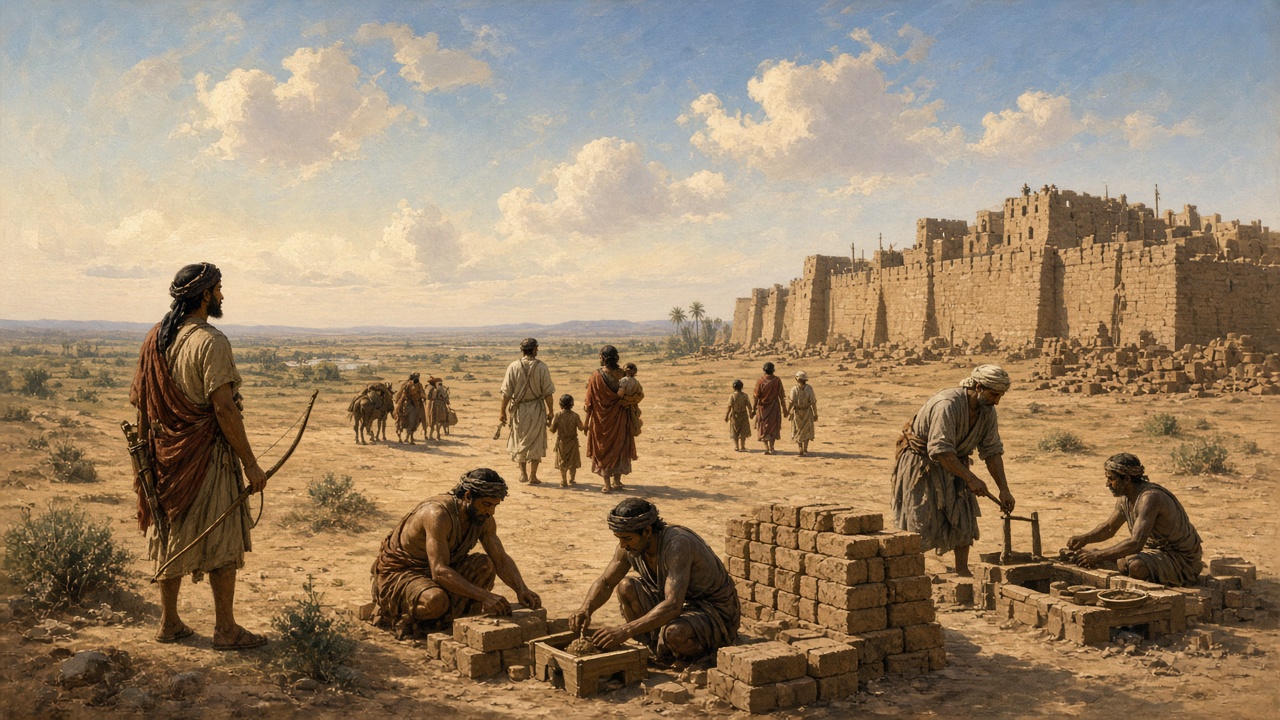
- Cush, a son of Ham, was the father of Nimrod, remembered as a mighty hunter before the Lord, whose kingdom began at Babylon, Erech, Accad, and Calneh in the land of Shinar, probably Babylonia or southern Mesopotamia. From that land he went into Assyria and built Nineveh, Rehoboth-Ir, Calah, and Resen; Calah’s site is probably the Nimrud ruins on the left bank of the Tigris.Sources: the Bible text itself · Shinar · Nineveh · Calah
- Mizraim, the dual form of a Hebrew word for a mound or fortress, may point to Upper and Lower Egypt and is the name the Hebrews usually gave that country; Arabic still calls it Muzr. Shem is called the older brother of Japheth and the forefather of all the sons of Eber, regarded as the founder of the Hebrew people, while an Arab tradition remembers Eber’s son Joktan, Kahtan in Arabic, as the ancestor of tribes of central and southern Arabia.Sources: the Bible text itself · Mizraim · Eber (Heber) · Joktan
Notes written with AI assistance from open sources (Theographic Bible Metadata, CC BY-SA 4.0; Easton’s Bible Dictionary, public domain) and reviewed before publishing.
Places in this chapter
- Erech · Today: Uruk · 31.322, 45.636 · verse 10
- Shinar · Today: Babylonia · 32.543, 44.422 · verse 10
- Assyria · 36.359, 43.153 · verse 11
- Calah · Today: Nimrud · 36.098, 43.329 · verses 11, 12
- Nineveh · 36.359, 43.153 · verses 11, 12
- Canaan · 32.767, 35.333 · verse 19
- Gaza · Today: Tell Harube · 31.504, 34.464 · verse 19
- Sidon · Today: Sandikli archaeological site in Sidon · 33.561, 35.372 · verse 19
Only places identified with high confidence are shown (90% or more according to the scholarly sources compiled by OpenBible). Period map: DARE (Digital Atlas of the Roman Empire), CC BY 4.0; modern map: © OpenStreetMap contributors; places: OpenBible.info (CC BY 4.0).
Credits and license for this translation
Tareka Buka
Portions of the Holy Bible in the Bamu language of Western Province, Papua New Guinea
Buk Baibel long tokples Bamu long Niugini
copyright © 2023 SIL Papua New Guinea
Language: Bamu
This translation is made available to you under the terms of the
Creative Commons Attribution-Noncommercial-No Derivatives license 4.0.
You may share and redistribute this Bible translation or extracts from it in any format, provided that:
You include the above copyright and source information.
You do not sell this work for a profit.
You do not change any of the words or punctuation of the Scriptures.
Pictures included with Scriptures and other documents on this site are licensed just for use with those Scriptures and documents.
For other uses, please contact the respective copyright owners.
2026-08-26
Source: http://png.bible/bcf/ · eBible.org