Psalms 29
Bibeli Gusunɔn Gari · Tap a verse to see its cross-references.
1Dɑfidin womu.
Bɛɛ be i wɑ̃ɑ wɔllɔ, i Yinni Gusunɔ siɑro
win yiiko kɑ win dɑm sɔ̃.
2I win yĩsiru wɔlle suo,
kpɑ i yiirɑ win wuswɑɑɔ win dɛɛrɑrun sɔ̃.
3Yinni Gusunɔ yiiko kpuroɡii
u derɑ ɡurɑ yɑ ɡbɑ̃rɑmɔ.
Win nɔɔ ɡɑ nɔɔrɑ ɡuru winu sɔɔ.
U dɑm mɔ nim bɑkɑm wɔllɔ.
4Win nɔɔ ɡɑ nɔɔrɑ kɑ dɑm kɑ yiiko.
5Win nɔɔ ɡe, ɡɑ Libɑnin dɑ̃ɑ dɑmɡinu bɛsukumɔ.
6U derɑ Libɑnin ɡuunu nu yɔ̃ɔkumɔ
nɡe kɛtɛ kpɛmminu.
Mɑ ɡuu te bɑ mɔ̀ Hɛɛmɔɔ tɑ suɑrɑ dikɑ
nɡe kɛtɛ ɡbeeku kpɛmbu.
7Win nɔɔ ɡɑ derɑ ɡuru mɑɑkinu koorɑmɔ.
8Win nɔɔ ɡɑ nɔɔrɑ,
mɑ ye yɑ wɑ̃ɑ Kɑdɛsin ɡbɑburɔ kpuro yɑ diirɑ.
9U ɡbɑ̃rɑ sere nɛm ɡurɑɡinu nu nɑndɑ nu mɑrɑ.
Mɑ dɑ̃nu kpuron wurusu dɛllɑ sɔ̃ɔwɔ.
Yerɑ win sinɑ kpɑɑrun di bɑ mɔ̀,
yiikoɡiiwɑ Yinni Gusunɔ.
10Wiyɑ u dɑm mɔ nim wɔllɔ.
Wiyɑ u ko n sɑ̃ɑ sunɔ sere kɑ bɑɑdommɑɔ.
11Wiyɑ u koo mɑɑ tɔmbu dɑm kɛ̃.
Wiyɑ u koo bu domɑru kuɑ u bu bɔri yɛndu wɛ̃.
Did you know?
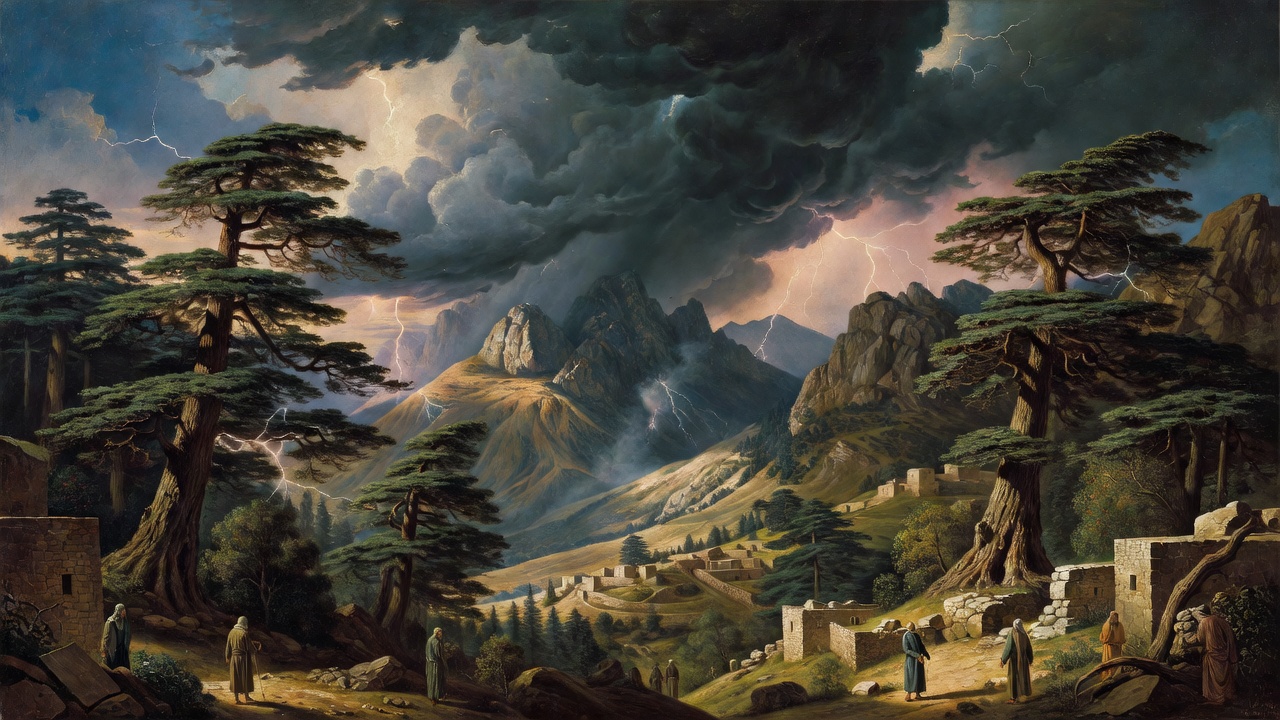
The Voice of the Lord in the Storm
- The name Sirion used alongside Lebanon is the ancient Sidonian name for Mount Hermon. The poet depicts these towering northern mountain peaks leaping like young oxen at the sound of the Lord's thunderous voice.Sources: Sirion · the Bible text itself
- The psalm traces a storm sweeping across the entire land, moving from the celebrated cedar-covered mountain range of Lebanon in the far north to the arid wilderness of Kadesh on the southern border.Sources: Lebanon · Kadesh · the Bible text itself
Notes written with AI assistance from open sources (Theographic Bible Metadata, CC BY-SA 4.0; Easton’s Bible Dictionary, public domain) and reviewed before publishing.
Places in this chapter
- Lebanon · 33.540, 35.584 · verses 5, 6
- Mount Hermon · 33.400, 35.850 · verse 6
- Zin · Today: Zin Desert · 30.971, 35.325 · verse 8
Only places identified with high confidence are shown (90% or more according to the scholarly sources compiled by OpenBible). Period map: DARE (Digital Atlas of the Roman Empire), CC BY 4.0; modern map: © OpenStreetMap contributors; places: OpenBible.info (CC BY 4.0).
Credits and license for this translation
Bibeli Gusunɔn Gari
The Holy Bible in the Baatonum language of Benin, also called the Bariba language
copyright © 2013 SIM
Language: Bariba (Baatonum)
Translation by: SIM International
Bariba, Bibeli Gusunɔn Gari
This translation, published by the UEEB/SIM au Benin, was published in 1996.
If you are interested in obtaining a printed copy, please contact the SIM at SIM, BP 15, Parakou, Benin.
This translation text is made available to you under the
terms of the Creative Commons License: Attribution-Noncommercial-No Derivative Works.
( http://creativecommons.org/licenses/by-nc-nd/3.0/ )
In addition, you have permission to port the text to different file formats, as long as you
do not change any of the text or punctuation of the Bible.
You may share, copy, distribute, transmit, and extract portions
or quotations from this work, provided that you include the above copyright
information:
You must give Attribution to the work.
You do not sell this work for a profit.
You do not make any derivative works that change any of the actual words or punctuation of the Scriptures.
Permissions beyond the scope of this license may be
available if you contact
us with your request.
This translation is made available to you under the terms of the
Creative Commons Attribution-Noncommercial-No Derivatives license 4.0.
You may share and redistribute this Bible translation or extracts from it in any format, provided that:
You include the above copyright and source information.
You do not sell this work for a profit.
You do not change any of the words or punctuation of the Scriptures.
Pictures included with Scriptures and other documents on this site are licensed just for use with those Scriptures and documents.
For other uses, please contact the respective copyright owners.
2014-09-10
Source: http://ebible.org/bba/ · eBible.org