Psalms 129
Bibeli Gusunɔn Gari · Tap a verse to see its cross-references.
1Sɑ̃ɑ dɑɑrun womu. Ge wee.
Isirelibɑ bu ɡeruo sɑnnu sɑnnu bu nɛɛ,
ɡeemɑ, tɔn kɔ̃sobu bɑ rɑ n sun dɑm dɔremɔwɑ
sɑɑ bɛsɛn bweserun toren di.
2Bɑ sun nɔni sɔ̃ɔwɑ bɛsɛn bweserun toren di.
Adɑmɑ bɑ ǹ nɑsɑrɑ wɑ bɛsɛn wɔllɔ.
3Bɑ wukɑ bɛsɛn birusun wɔllɔ bɑ kpĩi wunɑ wunɑ.
4Adɑmɑ Yinni Gusunɔ u sɑ̃ɑwɑ ɡemɡii,
u ben wɛ̃ɛ kɑsukɑ.
5Yinni Gusunɔ, ɑ de be bɑ Yerusɑlɛmu tusɑ bu sekuru wɑ,
kpɑ bu biruku yirɑ wurɑ,
6bɑ n sɑ̃ɑ nɡe yɑkɑ si su rɑ kpi diru wɔllɔ.
Su rɑ ɡberewɑ bɑ kun su wukurɑ.
7Wi u su ɡɛ̃ɛmɔ, su ku rɑ win nɔmu yibu.
Wi u mɑɑ su ɡurɑmɔ, su ku rɑ win nɔm koto teeru turi.
8Be bɑ sɑrɔ mi, bu ku bu domɑru kuɑ bu nɛɛ,
Gusunɔn domɑru tɑ n kɑ bu wɑ̃ɑ.
Bu ku rɑɑ mɑɑ nɛɛ, bɑ bu domɑru kuɑ kɑ Yinni Gusunɔn yĩsiru.
Did you know?
Endurance in Affliction and the Fate of Zion’s Foes
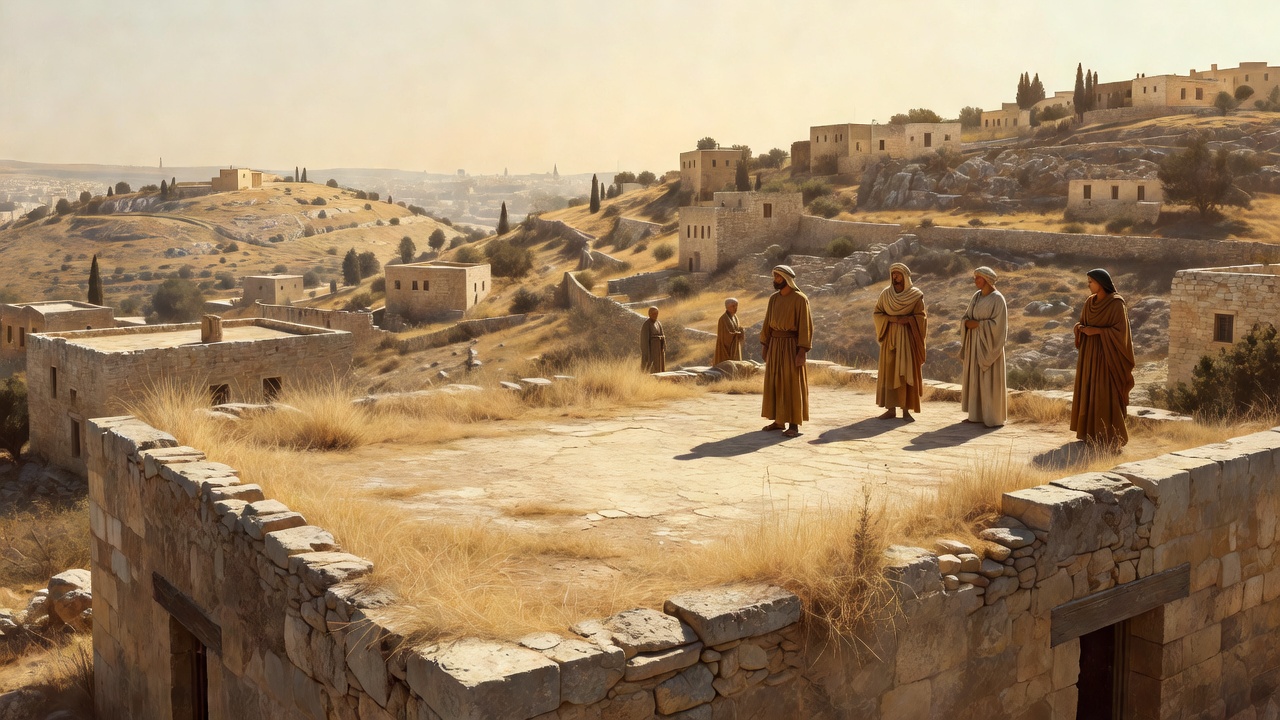
- The imagery of grass growing on rooftops reflects ancient construction, where flat roofs were often covered with packed earth. Seeds might sprout there after rains, but because the soil layer was shallow and exposed to the sun, the grass withered before it could mature or produce a harvest.Sources: the Bible text itself
- The phrase spoken by passersby in verse 8 mirrors the traditional agricultural greetings exchanged in ancient Israel, where travelers routinely blessed reapers and laborers working in the fields.Sources: the Bible text itself
- Zion was the prominent hill in Jerusalem where King David built his citadel, and in biblical poetry it often stands as a representation of God’s dwelling place and His people.Sources: the Bible text itself · Zion
Notes written with AI assistance from open sources (Theographic Bible Metadata, CC BY-SA 4.0; Easton’s Bible Dictionary, public domain) and reviewed before publishing.
Places in this chapter
Only places identified with high confidence are shown (90% or more according to the scholarly sources compiled by OpenBible). Period map: DARE (Digital Atlas of the Roman Empire), CC BY 4.0; modern map: © OpenStreetMap contributors; places: OpenBible.info (CC BY 4.0).
Credits and license for this translation
Bibeli Gusunɔn Gari
The Holy Bible in the Baatonum language of Benin, also called the Bariba language
copyright © 2013 SIM
Language: Bariba (Baatonum)
Translation by: SIM International
Bariba, Bibeli Gusunɔn Gari
This translation, published by the UEEB/SIM au Benin, was published in 1996.
If you are interested in obtaining a printed copy, please contact the SIM at SIM, BP 15, Parakou, Benin.
This translation text is made available to you under the
terms of the Creative Commons License: Attribution-Noncommercial-No Derivative Works.
( http://creativecommons.org/licenses/by-nc-nd/3.0/ )
In addition, you have permission to port the text to different file formats, as long as you
do not change any of the text or punctuation of the Bible.
You may share, copy, distribute, transmit, and extract portions
or quotations from this work, provided that you include the above copyright
information:
You must give Attribution to the work.
You do not sell this work for a profit.
You do not make any derivative works that change any of the actual words or punctuation of the Scriptures.
Permissions beyond the scope of this license may be
available if you contact
us with your request.
This translation is made available to you under the terms of the
Creative Commons Attribution-Noncommercial-No Derivatives license 4.0.
You may share and redistribute this Bible translation or extracts from it in any format, provided that:
You include the above copyright and source information.
You do not sell this work for a profit.
You do not change any of the words or punctuation of the Scriptures.
Pictures included with Scriptures and other documents on this site are licensed just for use with those Scriptures and documents.
For other uses, please contact the respective copyright owners.
2014-09-10
Source: http://ebible.org/bba/ · eBible.org