Isaiah 60
Bibeli Gusunɔn Gari · Tap a verse to see its cross-references.
1Yerusɑlɛmu, ɑ seewo kpɑ ɑ n bɑllimɔ,
domi yɑm bururɑm mu nun nɑɑwɑ.
Nɛ, Yinni Gusunɔn yiiko yɑ nun wukiri.
2Wee yɑm wɔ̃kurɑ tem kɑ tɔn
tukobu wukiri.
Adɑmɑ wunɛ, nɛn yiiko yɑ nun yɑm bururɑsie nɡe sɔ̃ɔ.
3Bwesenu kɑ nin sinɑmbu
bɑ koo nɑ bu sĩ yɑm bururɑm mɛ sɔɔ.
4A mɛɛrio ɑ kɑ sikerenɑ.
Be kpuro bɑ mɛnnɑmɑ
bɑ sisi wunɛn mi.
Bɑ kɑ wunɛn bibu wee tontonden di,
bɑ wɔndiɑbɑ bɛɛwɑ.
5À n bu wɑ bɑ wee,
kɑɑ nuku dobu ko.
Wunɛn ɡɔ̃ru ɡɑ koo dorɑ
sɑnɑm mɛ bwesenu nu koo kɑ nun ɑrumɑni nɑɑwɑ
sɑɑ nim wɔ̃kun ɡuru ɡiɔn di.
6Bɑ koo nɑwɑ kɑ yooyoo dɑbi dɑbiru
Mɑdiɑnin di kɑ Efɑn di.
Gɑbɑ koo mɑɑ nɑ Sebɑn di,
bɑ n wurɑ kɑ turɑre sɔɔwɑ,
kpɑ bɑ n nɛ, Yinni Gusunɔ tɔmɑmɔ.
7Bɑ koo nun Kedɑɑn yɑɑ sɑbenu mɛnnɑmɑ,
kpɑ bu kɑ nun Nɛbɑyɔtun yɑ̃ɑ kinɛnu nɑɑwɑ
ɑ kɑ nu yɑ̃kuru ko
ni nu koo mɑn wɛ̃re,
kpɑ n nɛn sɑ̃ɑ yeru bɛɛrɛ sosi n kere yellu.
8Mbɑ n wee mɛ,
nɡe ɡuru wii wuroru,
ǹ kun mɛ nɡe totobɛrɛ
ni nu wee nin dirɔ.
9Wunɛn bibɑ bɑ wee tem mi n tomɑn di.
Goo nimkuu bɑkɑsɑ su ɡbiɑ
su kɑ bu sisi tontonden di,
kɑ ben sii ɡeesu kɑ wurɑ
bu kɑ mɑn bɛɛrɛ wɛ̃,
nɛ, wunɛn Yinni Dɛɛro,
nɛ wi nɑ nun wɔlle suɑ.
10Tɔn tukobɑ koo wunɛn ɡɑni seeyɑ,
kpɑ ben sinɑmbu bu ko wunɛn yobu bu nun sɑ̃.
Yellu, nɑ rɑɑ nun sɛɛyɑsiɑ kɑ mɔru,
ɑdɑmɑ tɛ̃, nɛn durom sɔ̃, nɑ wunɛn wɔnwɔndu wɑ.
11Yerusɑlɛmu, wunɛn ɡbɑ̃rɑrun ɡɑmbobɑ
bɑ ko n kɛniɑrewɑ bɑɑdommɑ.
Bɑ ǹ bu kɛnumɔ sɔ̃ɔ sɔɔ kɑ wɔ̃kuru,
kpɑ bwesenu kɑ nin sinɑmbu
bu kɑ du bu nun dukiɑ wɛ̃.
12Domi bwese ni nu yinɑ nu nun sɑ̃ mi, nu koo ɡbiwɑ. Bɑ koo ni kpuro kpeerɑsiɑwɑ.
13Libɑnin bɛɛrɛ yɑ koo kpe,
domi bɑ koo kɑ nun yen dɑ̃ɑ ɡeɑ nɑɑwɑ
ye bɑ mɔ̀ sipɛrɛ kɑ oromu kɑ buyi,
kpɑ bu kɑ nɛn sɑ̃ɑ yeru burɑru kuɑ,
kpɑ n nɛn wɑ̃ɑ yeru bɛɛrɛ wɛ̃.
14Be bɑ rɑɑ nun dɑm dɔremɔ mi,
ben bibɑ koo nɑ wunɛn wuswɑɑɔ bu tii kɑwɑ.
Be bɑ rɑɑ mɑɑ nun yɑɑkoru mɔ̀,
bɑ koo yiirɑ wunɛn wuswɑɑɔ bu nun sɑ̃,
kpɑ bu nun soku Siɔni,
Isirelibɑn Yinni Dɛɛron wuu.
15Wunɛ wi tɔmbu bɑ rɑɑ tusɑ bɑ deri,
bɑ ku rɑ mɑɑ nɛ wunɛn mi,
kon nun ko wuu burɔ sere kɑ bɑɑdommɑɔ,
kpɑ ɑ n wunɛn tɔmbu nuku dobu wɛ̃ɛmɔ
sere kɑ ben bibun bibɔ.
16Bwese tukunu kɑ nin sinɑmbu
bɑ koo nun nɔɔri
nɡe mɛ bii mɛro u rɑ win bii bɔm kɛ̃,
kpɑ ɑ ɡiɑ
mɑ nɛnɑ nɑ sɑ̃ɑ Gusunɔ
Yɑkɔbun Yinni dɑmɡii
wi u nun yɑkiɑ
mɑ u nun fɑɑbɑ mɔ̀.
17Kon de wurɑ yu koorɑ mi sii ɡɑndɑ rɑɑ wɑ̃ɑ,
sii ɡeesu mɑɑ mi sii wɔ̃kusu rɑɑ wɑ̃ɑ.
Kon dɑ̃ɑ wunɑ n sii ɡɑndu kɔsire ko,
kpɑ n kpenu wunɑ n sisu kɔsire ko.
Kpɑ n de bu nun kpɑrɑ ɡem kɑ bɔri yɛndu sɔɔ.
18Sɑɑ ye sɔɔ, bɑ ǹ mɑɑ sɑnnɔsun dɑmu nɔɔmɔ wunɛn temɔ.
Mɛyɑ bɑ ǹ mɑɑ mu wɔrimɔ bu mɛn yɑ̃nu ɡurɑ
kpɑ bu mu deri bɑnsu.
Domi kon nun kɔ̃su nɡe ɡbɑ̃rɑru,
kpɑ ɑ mɑn siɑrɑ nɛn fɑɑbɑn sɔ̃.
19N ǹ mɑɑ sɔ̃ɔ u koo nun yɑm
bururɑsiɑ sɔ̃ɔ sɔɔ.
N ǹ mɑɑ suru u koo nun yɑm dɛɛrɑsiɑ wɔ̃kuru.
Adɑmɑ nɛ, Yinni Gusunɔwɑ
ko nɑ n nun yɑm bururɑsie sere kɑ bɑɑdommɑɔ,
kpɑ ɑ bɛɛrɛ wɑ nɛn sɔ̃.
20Wunɛn nuku sɑnkirɑnu kpuro nu koo doonɑ.
Domi nɛ, Yinni Gusunɔwɑ
ko nɑ n nun yɑm bururɑsie sere kɑ bɑɑdommɑɔ.
Sɔ̃ɔ u rɑ du, suru rɑ mɑɑ wɔ̃kuru ko,
ɑdɑmɑ nɛn yɑm bururɑm mɛ, mu ku rɑ kpe.
21Wunɛn tɔmbu kpuro bɑ ko n sɑ̃ɑwɑ ɡemɡibu,
kpɑ bɑ n tem mɛ mɔ sere kɑ bɑɑdommɑɔ.
Nɑ bu ɡirɑwɑ nɡe dɑ̃ɑ kɑ̃ɑsɑ.
Bɑ sɑ̃ɑwɑ be nɑ tɑkɑ kuɑ
bu kɑ nɛn kpɑ̃ɑru sɔ̃ɔsi.
22Bwese kɛrɑ ye yɑ piiburu bo,
yɑ koo ko bwese bɑkɑ dɑmɡirun nuuru.
Nɛ, Yinni Gusunɔwɑ kon ye ko fuuku
yen sɑɑ yɑ̀ n turɑ.
Yinni Gusunɔn ɡɔro
kɑ win ɡɑri
Did you know?
The Glorious Restoration of Zion
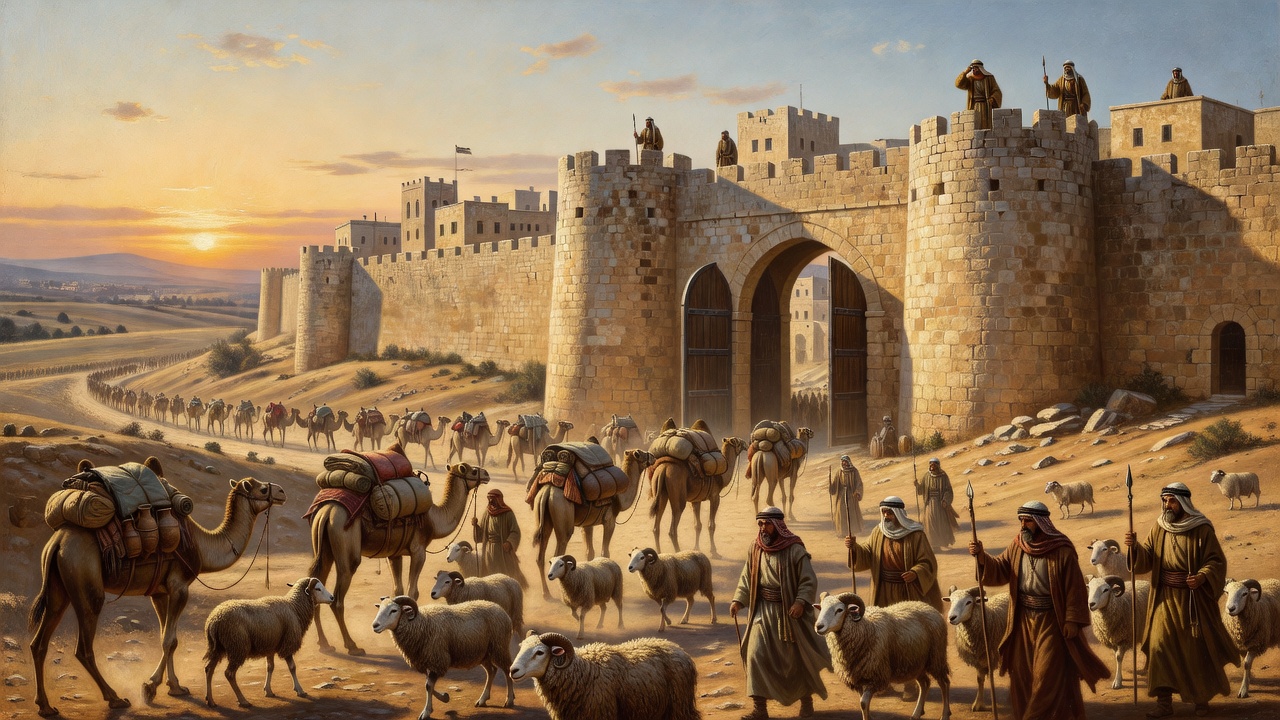
- Sheba was a kingdom in southern Arabia renowned for its ancient trade in gold and spices, while Midian was a nomadic Arabian tribe long engaged in desert commerce. Isaiah 60 envisions these distant peoples arriving on vast camel caravans, bearing gold and frankincense to praise the Lord.Sources: Sheba · Midian · the Bible text itself
- Kedar and Nebaioth trace back in biblical genealogies to the sons of Ishmael, with Kedar designating pastoral nomadic tribes of northwestern Arabia known for their large flocks and black tents. In this prophetic vision, their sheep and rams are brought to Jerusalem to be accepted as offerings upon the altar.Sources: Kedar · Nebajoth · Kedar · the Bible text itself
Notes written with AI assistance from open sources (Theographic Bible Metadata, CC BY-SA 4.0; Easton’s Bible Dictionary, public domain) and reviewed before publishing.
Places in this chapter
- Jerusalem · 31.777, 35.234 · verses 1, 14
- Ephah · Today: Midian · 28.495, 35.012 · verse 6
- Midian · 28.495, 35.012 · verse 6
- Sheba · 15.348, 44.206 · verse 6
- Kedar · 29.811, 39.868 · verse 7
- Lebanon · 33.540, 35.584 · verse 13
- Zion · Today: Jerusalem · 31.777, 35.234 · verse 14
Only places identified with high confidence are shown (90% or more according to the scholarly sources compiled by OpenBible). Period map: DARE (Digital Atlas of the Roman Empire), CC BY 4.0; modern map: © OpenStreetMap contributors; places: OpenBible.info (CC BY 4.0).
Credits and license for this translation
Bibeli Gusunɔn Gari
The Holy Bible in the Baatonum language of Benin, also called the Bariba language
copyright © 2013 SIM
Language: Bariba (Baatonum)
Translation by: SIM International
Bariba, Bibeli Gusunɔn Gari
This translation, published by the UEEB/SIM au Benin, was published in 1996.
If you are interested in obtaining a printed copy, please contact the SIM at SIM, BP 15, Parakou, Benin.
This translation text is made available to you under the
terms of the Creative Commons License: Attribution-Noncommercial-No Derivative Works.
( http://creativecommons.org/licenses/by-nc-nd/3.0/ )
In addition, you have permission to port the text to different file formats, as long as you
do not change any of the text or punctuation of the Bible.
You may share, copy, distribute, transmit, and extract portions
or quotations from this work, provided that you include the above copyright
information:
You must give Attribution to the work.
You do not sell this work for a profit.
You do not make any derivative works that change any of the actual words or punctuation of the Scriptures.
Permissions beyond the scope of this license may be
available if you contact
us with your request.
This translation is made available to you under the terms of the
Creative Commons Attribution-Noncommercial-No Derivatives license 4.0.
You may share and redistribute this Bible translation or extracts from it in any format, provided that:
You include the above copyright and source information.
You do not sell this work for a profit.
You do not change any of the words or punctuation of the Scriptures.
Pictures included with Scriptures and other documents on this site are licensed just for use with those Scriptures and documents.
For other uses, please contact the respective copyright owners.
2014-09-10
Source: http://ebible.org/bba/ · eBible.org