Isaiah 24
Bibeli Gusunɔn Gari · Tap a verse to see its cross-references.
1Wee Yinni Gusunɔ u koo tem kpuro kpeerɑsiɑ
mu ko bɑnsu.
U koo mɛn tɔmbu kpuro yɑrinɑsiɑ,
2yɑ̃ku kowobu kɑ tɔn dirobu,
yinnibu kɑ yobu,
wi u dɔrɑmɔ kɑ wi u dwemɔ,
wi u mɔ bɑ bɔkurɑmɔ kɑ wi u bɔkurɑmɔ,
wìn dibu bɑ nɛni kɑ wi u dibu nɛni.
3Bɑ koo tem kpuro wɔri,
kpɑ bu mɛn yɑ̃nu ɡurɑ,
kpɑ mu ko bɑnsu.
Yinni Gusunɔwɑ u yeni ɡeruɑ. 4Tem mu koo ɡberɑ.
Mu ǹ mɑɑ ɡɑ̃ɑnu kpiisiɑmɔ.
Mɛn tɔmbu bɑ ko n wɑsikirɑmɔ bɑ n ɡɔɔ dɔɔ.
Mɛn wiruɡibu bɑ ǹ ko n mɑɑ dɑm mɔ.
5Domi mɛn tɔmbu bɑ mu disi doke,
bɑ Yinni Gusunɔn woodɑbɑ kɑ win yiirebu yinɑ.
Mɑ bɑ ɑrukɑwɑni nɔru sɑriɡiɑ
ye u rɑɑ kɑ bu bɔkuɑ kusiɑ.
6Yen sɔ̃nɑ bɔ̃ri yi koo tem mɛ di,
kpɑ mɛn tɔmbu bu nɔni sɔ̃ɔrɑ
kɔ̃sɑ ye bɑ kuɑn sɔ̃.
Bɑ koo bu kpeerɑsiɑ.
Be bɑ koo tiɑrɑ bɑ ǹ ko n mɑɑ dɑbi.
7Ben resɛm ɡbɑɑnu nu koo ɡberɑ,
kpɑ ben tɑm durom mu kpe.
Be bɑ rɑɑ nuku dobu mɔ̀,
bɑ koo weeweenu ko.
8Bɑ ǹ mɑɑ bɑrɑnu kɑ mɔrɔkunu soomɔ,
ni bɑ rɑ kɑ nuku dobu ko.
Nuku dobun kuuki yi koo kpe.
9Bɑ ǹ mɑɑ tɑm nɔrumɔ bɑ n kɑ womusu koosimɔ.
Tɑm bɔɔbɔm mu koo sosiɑ be bɑ mu nɔrumɔn mi.
10Wuu ɡe, ɡɑ koo ko bɑnsu.
Yɛnusu su ko n wɑ̃ɑ dirisu.
Goo kun mɑɑ duɔ mi.
11Bɑ ko n weeweenu mɔ̀ swɛɛ sɔɔ,
yèn sɔ̃ tɑm sɑri.
Nuku dobu koo doonɑ ben tem di.
12Wuu ɡe, ɡɑ ko n sɑ̃ɑwɑ bɑnsu,
kpɑ ɡen duu yenu nu n wɔrukɑ,
13kpɑ tɔmbu bɑ n kɔ̃ɔkire tiɑ tiɑ tem mɛ sɔɔ,
nɡe dɑ̃ɑ bii ni nu tiɑrɑ
sɑnɑm mɛ bɑ dɑ̃ru sirɑ,
ǹ kun mɛ nɡe resɛm ye bɑ kunɔnu mɔ̀.
Bɑ nuku dobu kuɑ kɑm
14Be Yinni Gusunɔ u koo deri bɑ n wɑsi
bɑ ko n kuuki mɔ̀ kɑ nuku dobu.
Be bɑ wɑ̃ɑ sɔ̃ɔ duu yeru ɡiɑ,
bɑ koo Yinni Gusunɔ tɔmɑ win kpɑ̃ɑrun sɔ̃,
bɑ n mɔ̀,
15bɛɛ be i wɑ̃ɑ sɔ̃ɔ yɑri yeru ɡiɑ
kɑ be bɑ wɑ̃ɑ nim wɔ̃kun ɡooru ɡiɑ,
i Gusunɔ Isirelibɑn Yinni bɛɛrɛ wɛ̃ɛyɔ.
16Sɑ ko nɔ bɑ womusu mɔ̀ bɑɑmɑ
hɑnduniɑn ɡoonu nnɛ sɔɔ
bɑ mɔ̀, i ɡemɡii bɛɛrɛ wɛ̃ɛyɔ.
Adɑmɑ nɛ, kon nɔɔɡiru suɑ nɑ n mɔ̀,
ɡberɑ mɑn di, nɑ kɑm kuɑ,
domi yibɛrɛbɑ bɑ hɑniɑ mɔ̀ bɑ yɑ̃nu ɡurɑmɔ.
17Bɛɛ tem mɛn tɔmbu i ko i bɛrum soorɑ
domi bɑ bɛɛ yɛ̃ri kɑ suuri bɛrie,
18wi u dukɑ mɔ̀ bɛrum sɔ̃,
kpɑ u suurɑ wɔri.
Wi u mɑɑ yɑriɔ suurɑn di,
kpɑ u yinɑ mwɑɑrɑ.
Domi ɡurɑ bɑkɑ koo kindɑmɑ wɔllun di.
Kpɑ tem kpɛɛkpɛɛku ɡu diiri.
19Tem mu koo yĩiri kpɑ mu beu ko,
kpɑ mu bɛsikirɑ.
20Mu ko n bɑ̃ɑrimɔ nɡe tɑm nɔro,
kpɑ mu n yĩirumɔ nɡe kuu te woo ɡɑ sweemɔ.
Mɛn durum yɑ ko n mu buniɛ,
kpɑ mu wɔrumɑ mu kpɑnɑ mu se.
Bɑnnun kpeeru
21Sɑɑ ye sɔɔ, Yinni Gusunɔ u koo kperi sɛɛyɑsiɑ wɔllɔ. U koo sinɑmbu sɛɛyɑsiɑ tem mini, 22kpɑ bu bu yoru mwɑ bu bu tɑɑsi wɔrusɔ nɡe pirisɔmbɑ. Sɔ̃ɔ dɑbi dɑbirun biru, kpɑ bu bu sɛɛyɑsiɑ.
23Sɔ̃ɔ kɑ suru bɑ koo sekuru wɑ.
Gusunɔ, wɔllu kɑ tem Yinni,
u ko n win bɑndu diiwɑ Siɔnin ɡuurɔ, Yerusɑlɛmuɔ,
kpɑ win tɔmbun ɡuro ɡurobu bu win yiiko wɑ.
Siɑrɑbun womu
Did you know?
Universal Judgment and the Reign on Mount Zion
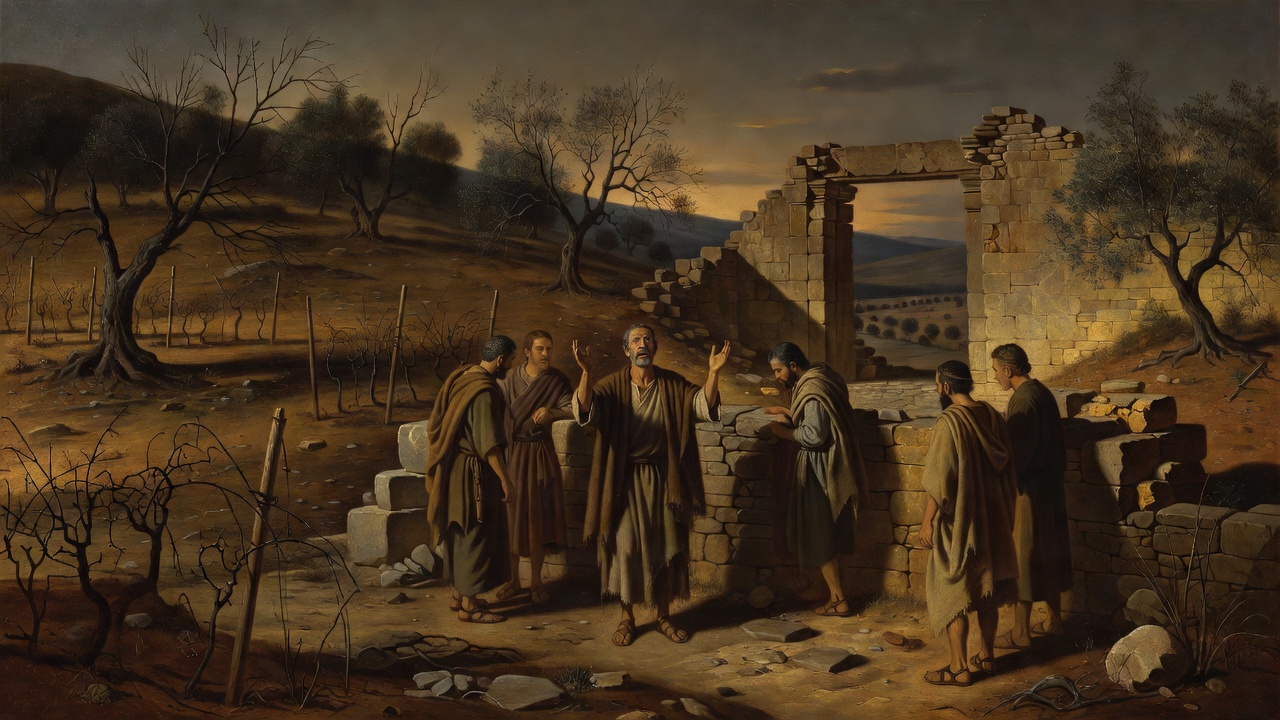
- The judgment depicted in this chapter reaches across all social distinctions equally, falling alike upon priest and people, master and servant, buyer and seller, and creditor and debtor. The devastation also silences everyday music, ending the sounds of the harp and tambourine as well as wine celebrations.Sources: the Bible text itself
- The scattered survivors are compared to the few olives left on a tree after harvest or the gleanings left behind after grapes are gathered. Despite the widespread ruins, voices of praise to God are described as rising from distant coasts and islands.Sources: the Bible text itself
- The vision concludes with the Lord reigning in glory before his elders on Mount Zion and in Jerusalem, outshining the sun and the moon. Mount Zion was the southeastern hill of Jerusalem where King David had earlier built his citadel.Sources: the Bible text itself · Mount Zion · Jerusalem
Notes written with AI assistance from open sources (Theographic Bible Metadata, CC BY-SA 4.0; Easton’s Bible Dictionary, public domain) and reviewed before publishing.
Places in this chapter
Only places identified with high confidence are shown (90% or more according to the scholarly sources compiled by OpenBible). Period map: DARE (Digital Atlas of the Roman Empire), CC BY 4.0; modern map: © OpenStreetMap contributors; places: OpenBible.info (CC BY 4.0).
Credits and license for this translation
Bibeli Gusunɔn Gari
The Holy Bible in the Baatonum language of Benin, also called the Bariba language
copyright © 2013 SIM
Language: Bariba (Baatonum)
Translation by: SIM International
Bariba, Bibeli Gusunɔn Gari
This translation, published by the UEEB/SIM au Benin, was published in 1996.
If you are interested in obtaining a printed copy, please contact the SIM at SIM, BP 15, Parakou, Benin.
This translation text is made available to you under the
terms of the Creative Commons License: Attribution-Noncommercial-No Derivative Works.
( http://creativecommons.org/licenses/by-nc-nd/3.0/ )
In addition, you have permission to port the text to different file formats, as long as you
do not change any of the text or punctuation of the Bible.
You may share, copy, distribute, transmit, and extract portions
or quotations from this work, provided that you include the above copyright
information:
You must give Attribution to the work.
You do not sell this work for a profit.
You do not make any derivative works that change any of the actual words or punctuation of the Scriptures.
Permissions beyond the scope of this license may be
available if you contact
us with your request.
This translation is made available to you under the terms of the
Creative Commons Attribution-Noncommercial-No Derivatives license 4.0.
You may share and redistribute this Bible translation or extracts from it in any format, provided that:
You include the above copyright and source information.
You do not sell this work for a profit.
You do not change any of the words or punctuation of the Scriptures.
Pictures included with Scriptures and other documents on this site are licensed just for use with those Scriptures and documents.
For other uses, please contact the respective copyright owners.
2014-09-10
Source: http://ebible.org/bba/ · eBible.org