Hosea 10
Bibeli Gusunɔn Gari · Tap a verse to see its cross-references.
1Isirelin bweseru tɑ rɑɑ sɑ̃ɑwɑ nɡe resɛm ɡeɑ
ye yɑ rɑ mɑ too.
Adɑmɑ nɡe mɛ bɑ dɑbiɑmɔ,
nɡe mɛyɑ bɑ bũu yenu dɑbiɑsiɑmɔ.
Nɡe mɛ ben tem mu kuurɑmɔ,
nɡe mɛyɑ bɑ bũu yenu sɔmmɔ kɑ kpee ɡeenu.
2Tɔn be, bɑ sɑ̃ɑwɑ ɡɔ̃rusu yiruɡibu.
Bɑ koo yen ɑre sɔbe.
Yinni Gusunɔ u koo ben bũu yee ni kɑ nin kpee ɡeenu kɔsuku.
3Bɑ koo tɛ̃ nɛɛ, yèn sɔ̃ sɑ ǹ Gusunɔ nɑsie,
yen sɔ̃nɑ sɑ ǹ sinɑ boko mɔ.
Adɑmɑ tɛ̃n wɑ̃ɑ te sɑ wɑ̃ɑ mini,
mbɑ sinɑ boko koo mɑɑ kpĩ u sun wunɑnɑ.
4Wee bɑ ɡɑri kɑm ɡerumɔ,
mɑ bɑ ɑrukɑwɑni bɔkumɔ kɑ bɔ̃ri weesuɡii.
Yen sɔ̃, siribu dɑbiɑmɔ nɡe yɑkɑ kɔ̃susu
si su rɑ kpi ɡbee te bɑ wukɑ sɔɔ.
5Kpɑ Sɑmɑriɡii be bɑ nɑɑ buu wurɑɡuu sɑ̃ɑmɔ
ɡe ɡe wɑ̃ɑ Betɛli Afɛniɔ bu nɑndɑ
kpɑ bu ɡɔɔ sinɑ ɡen sɔ̃.
Gen yɑ̃ku kowobu bɑ koo diiri
bɑ̀ n wɑ ɡen bɛɛrɛ yɑ kpɑ.
6Domi bɑ koo kɑ ɡu dɑ Asiriɔ
bu ɡu ben sinɑ boko wɛ̃.
Isirelibɑ bɑ koo sekuru wɑ.
Bɑ koo nɑ̀ n dɑɑ yɛ̃ ko
ye bɑ kɑ bũu kuɑ ben suunu sɔɔ.
7Ǹ n Sɑmɑrin sɔ̃n nɑ, ye kpuro yɑ kpɑwɑ mi.
Domi bɑ koo kɑ yen sinɑ boko doonɑ
nɡe dɛkɑ ye nim mu kɑ doonɔ.
8Bɑ koo ben bũu yenu kpuro kɔsuku mi bɑ torɑ.
Kpɑ yɑkɑsu kɑ sɑ̃ki yi kpi mi.
Sɑɑ ɡɑɑ sisi yè sɔɔ bɑ koo ɡuunu kɑ ɡunɡunu sɔ̃ bu nɛɛ,
i sun sɛ̃sikio i wukiri.
Isirelibɑ
bɑ koo ɡɛ̃ ye bɑ duurɑ
9Yinni Gusunɔ u nɛɛ,
sɑɑ dɔmɑ tèn di Isirelibɑ bɑ durum kuɑ Gibeɑɔ,
bɑ torɑmɔ bɑ dɔɔwɑ.
N ǹ weenɛ tɑbu bu tɔn kɔ̃so be wɔri mi?
10Nɛ, Yinni Gusunɔ kon bu sɛɛyɑsiɑ nɡe mɛ nɑ kĩ,
kpɑ bwesenu nu nɔɔ tiɑ ko nu bu wɔri ben torɑ bɑkɑnun sɔ̃.
11Isirelibɑ bɑ sɑ̃ɑwɑ nɡe nɑɑ kpɛmi yi yi rɑ dobi tɑɑku.
Adɑmɑ kon suɡu doke ben wĩi burɑ ni sɔɔ.
Kon de Yudɑbɑ bu kɔrɔ ko,
kpɑ be, Yɑkɔbun bweseru bu tem kusɑnu kɔsuku.
12Yen sɔ̃ tɛ̃, bɛɛ Isirelibɑ i ɡbee kpɑɑru koowo i ɡem duure.
Kpɑ i durom ɡɛ̃.
Domi sɑɑ yɑ turɑ i kɑ ɡɔsirɑmɑ nɛ, Yinni Gusunɔn mi,
kpɑ n bɛɛ susi n bɛɛ ɡeɑ kuɑ.
13Adɑmɑ bɛɛ, i kɔ̃sɑ duurɑ mɑ i kɔ̃sɑ ɡɑ̃.
Mɑ i bɛɛn weesun ɑre di.
I bɛɛn nɑɑnɛ doke bɛɛn tiin dɑm
kɑ tɑbu kowo dɑbi dɑbiru sɔɔ.
14Yen sɔ̃nɑ tɑbun wurenu koo nɔɔrɑ bɛɛn suunu sɔɔ.
Kpɑ bu bɛɛn ɡbɑ̃rɑnu kpuro kɔsuku
nɡe mɛ Sɑlumɑn sinɑ boko u Bɛti Aribɛli wɔri,
mɑ u bii mɛrobu kɑ ben bibu munkɑ.
15Bɛɛ Betɛliɡibu, wee ye kon bɛɛ kuɑ bɛɛn nuku kɔ̃surun sɔ̃.
Bururu yɑm sɑ̃reru yɑnde,
tɑbu sɔɔrɑ bɑ koo bɛɛn sinɑ boko ɡo.
Yinni Gusunɔ u win tɔmbu kĩ
bɑɑ mɛ bɑ nùn seesimɔ
Did you know?
Judgment on Idols and Broken Altars
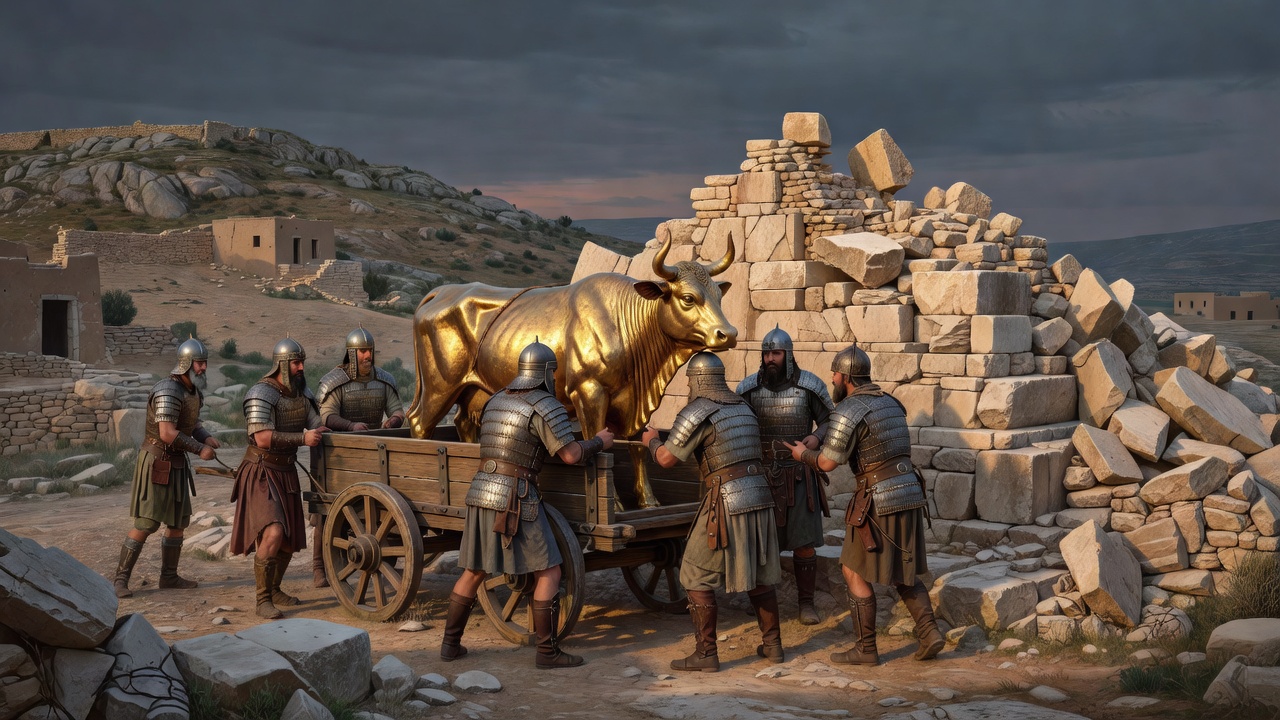
- The prophet refers to Bethel, which means house of God, by the derogatory name Beth-aven, meaning house of nothingness or house of idols. This wordplay highlights how the calf shrine erected there transformed a sacred site into a center of idolatry, whose revered calf would eventually be carried away to Assyria.Sources: Beth-aven · the Bible text itself
- Hosea evokes the days of Gibeah to remind Israel of a historic moral catastrophe recorded in Judges 19 and 20, where horrific violence in the town of Gibeah led to a disastrous civil war against the tribe of Benjamin.Sources: Gibeah · the Bible text itself
- The text warns of devastating military defeat by citing the ruin of Beth-arbel by Shalman. Scholars generally identify Shalman with the Assyrian monarch Shalmaneser, whose brutal conquests served as a vivid warning to Israel.Sources: Beth-arbel · Shalmaneser · the Bible text itself
Notes written with AI assistance from open sources (Theographic Bible Metadata, CC BY-SA 4.0; Easton’s Bible Dictionary, public domain) and reviewed before publishing.
Places in this chapter
- Beth-aven · Today: Beitin · 31.923, 35.241 · verse 5
- Samaria · 32.276, 35.195 · verses 5, 7
- Assyria · 36.359, 43.153 · verse 6
Only places identified with high confidence are shown (90% or more according to the scholarly sources compiled by OpenBible). Period map: DARE (Digital Atlas of the Roman Empire), CC BY 4.0; modern map: © OpenStreetMap contributors; places: OpenBible.info (CC BY 4.0).
Credits and license for this translation
Bibeli Gusunɔn Gari
The Holy Bible in the Baatonum language of Benin, also called the Bariba language
copyright © 2013 SIM
Language: Bariba (Baatonum)
Translation by: SIM International
Bariba, Bibeli Gusunɔn Gari
This translation, published by the UEEB/SIM au Benin, was published in 1996.
If you are interested in obtaining a printed copy, please contact the SIM at SIM, BP 15, Parakou, Benin.
This translation text is made available to you under the
terms of the Creative Commons License: Attribution-Noncommercial-No Derivative Works.
( http://creativecommons.org/licenses/by-nc-nd/3.0/ )
In addition, you have permission to port the text to different file formats, as long as you
do not change any of the text or punctuation of the Bible.
You may share, copy, distribute, transmit, and extract portions
or quotations from this work, provided that you include the above copyright
information:
You must give Attribution to the work.
You do not sell this work for a profit.
You do not make any derivative works that change any of the actual words or punctuation of the Scriptures.
Permissions beyond the scope of this license may be
available if you contact
us with your request.
This translation is made available to you under the terms of the
Creative Commons Attribution-Noncommercial-No Derivatives license 4.0.
You may share and redistribute this Bible translation or extracts from it in any format, provided that:
You include the above copyright and source information.
You do not sell this work for a profit.
You do not change any of the words or punctuation of the Scriptures.
Pictures included with Scriptures and other documents on this site are licensed just for use with those Scriptures and documents.
For other uses, please contact the respective copyright owners.
2014-09-10
Source: http://ebible.org/bba/ · eBible.org