Deuteronomy 5
Bibeli Gusunɔn Gari · Tap a verse to see its cross-references.
1Mɔwisi u Isirelibɑ kpuro sokusiɑ bɑ mɛnnɑ mɑ u bu sɔ̃ɔwɑ u nɛɛ, bɛɛ Isirelibɑ i woodɑ kɑ yiirebu swɑɑ dɑkio i nɔ bi nɑ bɛɛ wɛ̃ɛmɔ ɡisɔ. I bu nɛnuɔ kpɑ i bu mɛm nɔɔwɑ mɑm mɑm. 2Gusunɔ bɛsɛn Yinni u kɑ sun ɑrukɑwɑni bɔkuɑ Horɛbun ɡuurɔ. 3N ǹ bɛsɛn bɑɑbɑbɑ tɔnɑ u kɑ ye bɔkuɑ, ɑdɑmɑ kɑ bɛsɛn tiiwɑ bɛsɛ be sɑ wɑ̃ɑ sɑ wɑsi mini ɡisɔ. 4Yinni Gusunɔ u kɑ bɛɛ ɡɑri kuɑ nɔni kɑ nɔni ɡuuru wɔllɔ sɑɑ dɔ̃ɔ yɑrɑ sɔɔn di. 5Sɑɑ ye sɔɔ, mɑ nɑ yɔ̃ bɛɛ kɑ win suunu suunukɑ sɔɔ nɑ kɑ bɛɛ tusiɑmɔ ye u ɡerumɔ, domi i ǹ yɔɔwe ɡuu ten wɔllɔ yèn sɔ̃ i dɔ̃ɔ win bɛrum mɔ. U nɛɛ,
6wiyɑ u sɑ̃ɑ Gusunɔ bɛsɛn Yinni. Wiyɑ u sun yɑrɑmɑ Eɡibitin di mi sɑ rɑɑ wɑ̃ɑ sɑ yoru dimɔ.
7U mɑɑ nɛɛ, sɑ ǹ ko n mɑɑ Yinni ɡoo mɔ wi bɑɑsi.
8Su ku rɑ tii bwɑ̃ɑroku ɡɑɡu kuɑ ɡɑ n kɑ ɡɑ̃ɑnu weenɛ wɔllɔ, ǹ kun mɛ temɔ, ǹ kun mɛ nim sɔɔ. 9Su ku rɑ yiirɑ su nu sɑ̃. Domi wi, Gusunɔ bɛsɛn Yinni u sɑ̃ɑwɑ nisinuɡii. U rɑ bɑɑbɑbɑn durum mɔɔru mwɛ ben bibun mi, be bɑ nùn tusɑn suunu sɔɔ sere kɑ ben bibun bibɔ. 10Adɑmɑ be bɑ nùn kĩ mɑ bɑ win woodɑbɑ mɛm nɔɔwɑmmɛ u rɑ ben bibun bweserun nɔrɔm nɔrɔm (1.000) wɔnwɔndu kue.
11Su ku rɑ wi, Gusunɔ bɛsɛn Yinnin yĩsiru soku kɑm. Domi wi u win yĩsiru sokɑ kɑm, u koo yɛ̃ro sɛɛyɑsiɑ.
12Su tɔ̃ɔ wɛ̃rɑruɡiru mɛm nɔɔwɔ su tu bɛɛrɛ wɛ̃ nɡe mɛ wi, Gusunɔ bɛsɛn Yinni u sun yiire. 13Sɔ̃ɔ nɔɔbɑ tiɑ sɔɔrɑ sɑ ko n dɑ bɛsɛn sɔmɑ kpuro ko. 14Adɑmɑ sɔ̃ɔ nɔɔbɑ yiruseru tɑ sɑ̃ɑwɑ Gusunɔ bɛsɛn Yinnin tɔ̃ru tè sɔɔ u wɛ̃rɑ. Yen sɔ̃, su ku rɑ sɔmburu ɡɑru ko bɛsɛ kɑ bɛsɛn bibu kɑ bɛsɛn sɔm kowobu kɑ bɛsɛn kɛtɛbɑ kɑ bɛsɛn kɛtɛkunu, bɛsɛn yɑɑ sɑbenu kpuro ɡesi, kɑ mɑɑ sɔɔ wi u wɑ̃ɑ bɛsɛn yɛnuɔ. Bɛsɛ kpuro sɑ ko wɛ̃rɑwɑ. 15Su yɑɑyo nɡe mɛ sɑ rɑɑ yoru dimɔ Eɡibitiɔ, mɑ wi, Gusunɔ bɛsɛn Yinni u sun yɑrɑmɑ min di kɑ win dɑm bɑkɑm. Yen sɔ̃nɑ u sun yiire su tɔ̃ɔ wɛ̃rɑruɡii te mɛm nɔɔwɑ.
16Su bɛsɛn tundobu kɑ bɛsɛn mɛrobu bɛɛrɛ wɛ̃ɛyɔ nɡe mɛ wi, Gusunɔ bɛsɛn Yinni u sun yiire kpɑ bɛsɛn wɑ̃ɑru tu dɑkɑɑ dɑ kpɑ sɑ n bɔri yɛndu mɔ tem mɛ u sun wɛ̃ sɔɔ.
17Su ku rɑ tɔnu ɡo.
18Su ku rɑ sɑkɑrɑru ko.
19Su ku rɑ ɡbɛni.
20Su ku rɑ ɡoo ɡɑri mɑni.
21Su ku rɑ bɛsɛn tɔnusin kurɔ binɛ ko, ǹ kun mɛ win diru, ǹ kun mɛ win ɡberu, ǹ kun mɛ win sɔm kowo tɔn durɔ ǹ kun mɛ tɔn kurɔ, ǹ kun mɛ win kɛtɛ, ǹ kun mɛ win kɛtɛku, win ɡɑ̃ɑnu kpuro ɡesi.
22Gɑri yiniwɑ Yinni Gusunɔ u nɔɔ suɑ ɡuuru wɔllɔ u bɛsɛ win tɔmbu kpuro sɔ̃ɔwɑ dɔ̃ɔ yɑrɑ sɔɔn di kɑ ɡuru wii wuroru sɔɔn di kɑ ɡuru wii sinumɡirun di, u ǹ ɡɑ̃ɑnu sosi. Yen biru, u ye yoruɑ kpee bɛsi yiru sɔɔ u mɑn wɛ̃.
Mɔwisi u sɑ̃ɑwɑ Yinni Gusunɔn ɡɔro
23Sɑnɑm mɛ i Yinni Gusunɔn nɔɔ ɡe nuɑ ɡuru wii sinumɡiru sɔɔn di, ɡuuru wɔllɔ tèn mi dɔ̃ɔ u wɑ̃ɑ, yerɑ bɛɛn bwese kɛrin wiruɡibu kɑ bɛɛn ɡuro ɡurobu bɑ nɑ nɛ Mɔwisin mi. 24Mɑ bɑ nɛɛ, wee Gusunɔ bɛsɛn Yinni u bu win yiikon ɡirimɑ kɑ win kpɑ̃ɑru sɔ̃ɔsi. Bɑ win nɔɔ nuɑ dɔ̃ɔ yɑrɑ sɔɔn di. Gisɔ, bɑ wɑ mɑ Gusunɔ u kɑ tɔmbu ɡɑri kuɑ mɑ bɑ wɑ̃ɑ bɑ ǹ ɡu. 25Adɑmɑ mbɑn sɔ̃nɑ bɑ koo de dɔ̃ɔ boko wi, u bu di kpɑ bu ɡbi. Domi bɑ̀ n Gusunɔn nɔɔ nɔɔmɔ mɛ, bɑ koo ɡbi. 26Wɑrɑ u Yinni Gusunɔ wi u rɑ n wɑ̃ɑn ɡɑri nɔɔre dɔ̃ɔ yɑrɑ sɔɔn di nɡe be, mɑ yɛ̃ro u wɑ̃ɑ u ǹ ɡu. 27Yen sɔ̃, nɛ Mɔwisi, n susio Gusunɔ bɛsɛn Yinnin bɔkuɔ kpɑ n swɑɑ dɑki ye u ɡeruɑ. Yen biru, kpɑ n bu ye nɔɔsiɑ. Bɑ koo ye nɔ, kpɑ bu kɑ ye sɔmburu ko. 28Mɑ Yinni Gusunɔ u nuɑ ye bɑ mɑn sɔ̃ɔwɑ. Mɑ u nɛɛ, ye bɑ ɡeruɑ mi kpuro ɡɑri burɛyɑ. 29Bɑ̀ n koo rɑɑ kpĩ bu nùn ben ɡɔ̃ru wukiɑ nɡe mɛ, bu kɑ nùn bɛɛrɛ wɛ̃ kpɑ bu win woodɑbɑ mɛm nɔɔwɑ, bɑ ko n dɑɑ bɔri yɛndu mɔ be kɑ ben bibun bweseru sere kɑ bɑɑdommɑɔ. 30Yen sɔ̃ tɛ̃, u nɛɛ, n doo n bu sɔ̃ bu wuro ben kuu bekuruɡinɔ. 31Adɑmɑ u nɛɛ, nɛ, n sinɔ kɑ wi, kpɑ u mɑn woodɑbɑ kɑ sɔ̃ɔsinu kɑ yiirebu sɔ̃ ye kon bu wɛ̃ bu mɛm nɔɔwɑ tem mɛ u bu wɛ̃ɛmɔ sɔɔ.
32Mɑ Mɔwisi u mɑɑ bu sɔ̃ɔwɑ u nɛɛ, i woodɑ be kpuro mɛm nɔɔwɔ mɑm mɑm be Gusunɔ bɛsɛn Yinni u bɛɛ wɛ̃. I ku rɑ ɡɑm ɡɛrɑ be sɔɔn di. 33I swɑɑ ye swĩiyɔ mɑm mɑm kpɑ bɛɛn wɑ̃ɑru tu dɑkɑɑ dɑ kpɑ i n bɔri yɛndu mɔ tem mɛ wi, Gusunɔ bɛsɛn Yinni u koo bɛɛ wɛ̃ sɔɔ.
I Gusunɔ bɛɛn Yinni kĩɔ
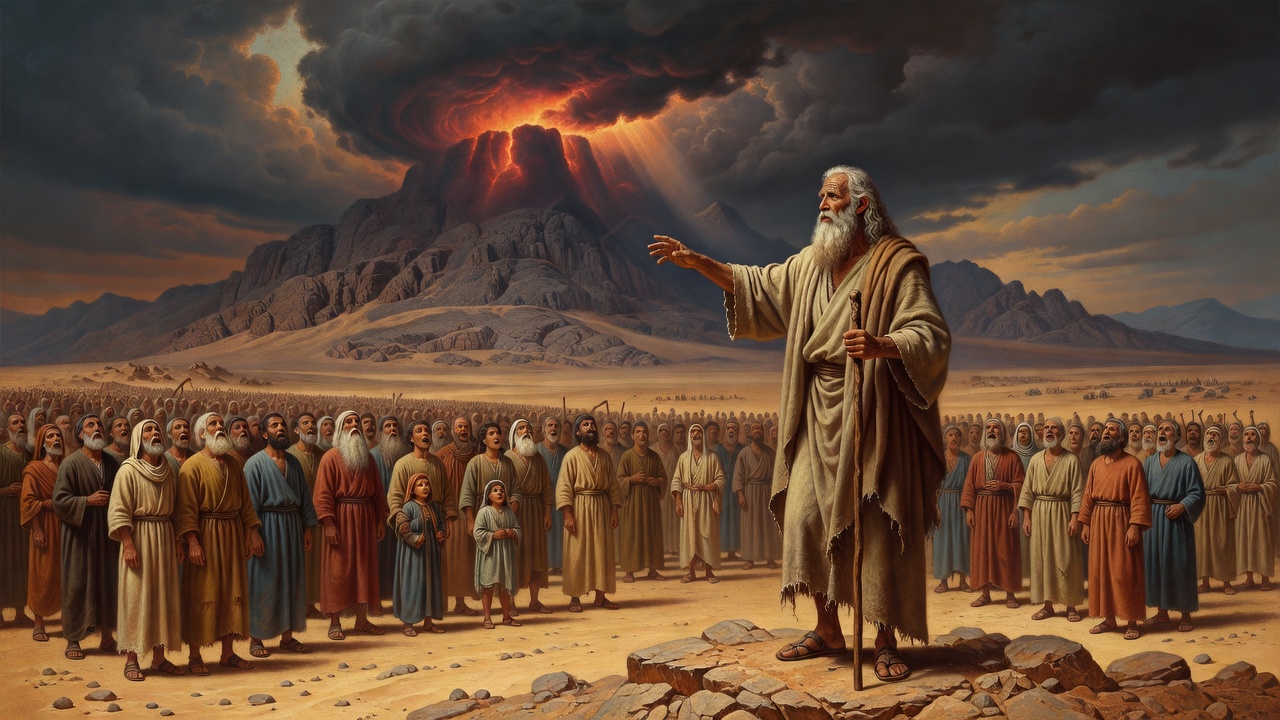
Did you know?
The Covenant and the Ten Commandments
- In Deuteronomy, the mountain where the covenant and commandments were given is called Horeb. Horeb refers to the broader mountain range of which Sinai was a peak, situated beside a spacious plain where the Israelites could camp.Sources: Horeb · the Bible text itself
- In Deuteronomy's account of the Sabbath commandment, the requirement of rest is explicitly tied to Israel's history of slavery in Egypt. Because the Israelites had been liberated from forced labor, their servants, foreigners, and working animals were also granted complete rest on the seventh day.Sources: the Bible text itself
- Moses served as an intermediary between God and the people because the tribal heads and elders feared they would die if they continued hearing the divine voice from the fire and deep darkness. They asked Moses to go near, receive the remaining statutes, and report them to the assembly.Sources: the Bible text itself
Notes written with AI assistance from open sources (Theographic Bible Metadata, CC BY-SA 4.0; Easton’s Bible Dictionary, public domain) and reviewed before publishing.
Places in this chapter
Only places identified with high confidence are shown (90% or more according to the scholarly sources compiled by OpenBible). Period map: DARE (Digital Atlas of the Roman Empire), CC BY 4.0; modern map: © OpenStreetMap contributors; places: OpenBible.info (CC BY 4.0).
Credits and license for this translation
Bibeli Gusunɔn Gari
The Holy Bible in the Baatonum language of Benin, also called the Bariba language
copyright © 2013 SIM
Language: Bariba (Baatonum)
Translation by: SIM International
Bariba, Bibeli Gusunɔn Gari
This translation, published by the UEEB/SIM au Benin, was published in 1996.
If you are interested in obtaining a printed copy, please contact the SIM at SIM, BP 15, Parakou, Benin.
This translation text is made available to you under the
terms of the Creative Commons License: Attribution-Noncommercial-No Derivative Works.
( http://creativecommons.org/licenses/by-nc-nd/3.0/ )
In addition, you have permission to port the text to different file formats, as long as you
do not change any of the text or punctuation of the Bible.
You may share, copy, distribute, transmit, and extract portions
or quotations from this work, provided that you include the above copyright
information:
You must give Attribution to the work.
You do not sell this work for a profit.
You do not make any derivative works that change any of the actual words or punctuation of the Scriptures.
Permissions beyond the scope of this license may be
available if you contact
us with your request.
This translation is made available to you under the terms of the
Creative Commons Attribution-Noncommercial-No Derivatives license 4.0.
You may share and redistribute this Bible translation or extracts from it in any format, provided that:
You include the above copyright and source information.
You do not sell this work for a profit.
You do not change any of the words or punctuation of the Scriptures.
Pictures included with Scriptures and other documents on this site are licensed just for use with those Scriptures and documents.
For other uses, please contact the respective copyright owners.
2014-09-10
Source: http://ebible.org/bba/ · eBible.org