2 Samuel 2
Bibeli Gusunɔn Gari · Tap a verse to see its cross-references.
1Yenibɑ kpuron biru ye yɑ koorɑ wee. Dɑfidi u Yinni Gusunɔ bikiɑ u nɛɛ, n doo n Yudɑn wuu ɡɑɡu mwɑ?
Mɑ Yinni Gusunɔ u nɛɛ, oo, ɑ doo.
Mɑ u nɛɛ, ɡen ɡeren miyɑ kon dɑ.
Yinni Gusunɔ u nùn wisɑ u nɛɛ, ɑ doo Heboroniɔ.
2Mɑ Dɑfidi u dɑ mi kɑ win kurɔbu yiru beni, Akinɔɑmu Yisirɛɛliɡii kɑ Abiɡɑli Nɑbɑlin ɡɔmini. 3Mɑ u derɑ win bwɑ̃ɑ be bɑ wɑ̃ɑ kɑ wi, be kɑ ben tɔmbu bɑ dɑ bɑ wɑ̃ɑ Heboroniɔ kɑ yen bɑru kpɑɑnɔ. 4Yudɑbɑ bɑ nɑ Dɑfidin mi, bɑ nùn ɡum tɑ̃re wirɔ u kɑ ko ben sunɔ.
Mɑ bɑ nùn sɔ̃ɔwɑ bɑ nɛɛ, Yɑbɛsi Gɑlɑdiɡibu bɑ Sɔɔlun ɡoru sikuɑ.
5Yerɑ Dɑfidi u bu sɔmɔbu ɡɔriɑ u nɛɛ, i bu sɔ̃ɔwɔ i nɛɛ, Yinni Gusunɔ u koo be bu domɑru kuɑ yèn sɔ̃ bɑ ben yinni Sɔɔlu ɡeɑ kuɑ, bɑ win ɡoru sikuɑ. 6Tɛ̃, Yinni Gusunɔ u be bu durom kuo. Kpɑ u bu bɔrɔkiniru sɔ̃ɔsi. Nɛn tii kon mɑɑ bu durom kuɑ ben ye bɑ kuɑ min sɔ̃. 7Ǹ n mɛn nɑ, bu be yɔ̃ro dim dim kpɑ bu ko tɑbu durɔ wɔruɡɔbɑ domi ben yinni Sɔɔlu u ɡu. Adɑmɑ bɑ n yɛ̃ mɑ Yudɑbɑ bɑ mɑn ɡum tɑ̃re wirɔ n kɑ ko ben sunɔ.
Bɑ Isi Bosɛti kuɑ
Isirelibɑn sunɔ
8Yerɑ Abinɛɛ, Nɛrin bii wi u sɑ̃ɑ Sɔɔlun tɑbu kowobun wiruɡii, u Sɔɔlun bii Isi Bosɛti suɑ u kɑ dɑ Mɑhɑnɑimuɔ. 9Miyɑ u nùn kuɑ Isirelibɑ kpuron sunɔ be bɑ wɑ̃ɑ Gɑlɑdiɔ kɑ Asuriɔ kɑ Yisirɛɛliɔ kɑ Efɑrɑimun temɔ kɑ sere mɑɑ Bɛnyɑmɛɛn temɔ. 10Isi Bosɛti wi, u mɔwɑ wɔ̃ɔ weeru sɑnɑm mɛ u bɑndu di Isirelibɑ sɔɔ. Adɑmɑ Dɑfidiwɑ Yudɑbɑ bɑ kɑ yɔ̃rɑ. 11Mɑ u kuɑ ben sunɔ wɔ̃ɔ nɔɔbɑ yiru kɑ suru nɔɔbɑ tiɑ Heboroniɔ.
Tɑbu duɑ Isirelibɑ
kɑ Yudɑbɑn suunu sɔɔ
12Abinɛɛ, Nɛrin bii kɑ Isi Bosɛtin tɑbu kowobu bɑ yɑrɑ sɑɑ Mɑhɑnɑimun di bɑ dɑ Gɑbɑoniɔ. 13Yerɑ Yoɑbu Seruyɑn bii, Dɑfidin tɑbu sunɔ kɑ win tɑbu kowobu bɑ mɑɑ dɑ Gɑbɑoni mi. Mɑ bɑ yinnɑ dɑɑ burerɔ kɑ Isi Bosɛtin tɑbu kowo be, kɑ Abinɛɛ wi. Mɑ dɑɑ te, tɑ bu burɑnɛ. Dɑfidi kɑ wiɡibu bɑ wɑ̃ɑ ɡuru ɡee. Mɑ Isi Bosɛtiɡibu bɑ mɑɑ wɑ̃ɑ ɡuru ɡiɔ. 14Abinɛɛ u Yoɑbu sɔ̃ɔwɑ u nɛɛ, ɑ de wunɛn ɑluwɑɑsi beni bu seemɑ bu ɡɑbirinɑ kɑ nɛɡibu bɛsɛn wuswɑɑɔ, ben bɑɑwure kɑ win sɑro. Kpɑ su wɑ wi u kere.
Mɑ Yoɑbu u nɛɛ, oo, nɑ wurɑ.
15Yerɑ bɑ seewɑ bɑ dɑ bɑ yinnɑ ben bɑɑwure kɑ win sɑro Isi Bosɛtin berɑ ɡiɑ be bɑ sɑ̃ɑ Bɛnyɑmɛɛn bweseru, tɔmbu wɔkurɑ yiruwɑ bɑ yɑrimɑ. Dɑfidin tɔmbu sɔɔ mɑɑ, tɔmbu wɔkurɑ yiru. 16Yerɑ ɑluwɑɑsi be, bɑ ɡɑbirinɑ. Ben bɑɑwure u win yibɛrɛn wiru nɛni, mɑ bɑ tɑkobi sɔkirinɑ yɛ̃sɑɔ bɑ wɔrukɑ sɑnnu sɑnnu bɑ ɡbisukɑ. Yerɑ bɑ yɑm mi yĩsiru kɑ̃, tɑkobin ɡberu.
17Yen dɔmɑ te, tɑɑ bi, bu swĩɑ. Mɑ Dɑfidin tɔmbu bɑ Abinɛɛ kɑ wiɡibu kɑmiɑ. 18Dɑfidin tɑbu kowo be sɔɔ, Seruyɑn bibu itɑwɑ bɑ wɑ̃ɑ mi. Beyɑ Yoɑbu kɑ Abisɑi kɑ Asɑɛli. Asɑɛli u dukɑ mɔwɑ wi, nɡe nɛm tɑɑkɔ. 19Yerɑ u dɔmɑ te Abinɛɛ nɑɑ ɡirɑ, u ǹ wure u nùn deri bɑɑ fiiko. 20Mɑ Abinɛɛ u sĩirɑ u Asɑɛli bikiɑ u nɛɛ, Asɑɛli, wunɑ mi?
Mɑ u wisɑ u nɛɛ, oo, nɛnɑ mi.
21Yerɑ Abinɛɛ u nɛɛ, ɑ mɑn derio n doonɑ, ɑ ku mɑn swĩi. A nɛn ɑluwɑɑsibɑn turo mɛɛrio ɑ mwɑ kpɑ ɑ win yɑ̃nu wɔrɑ ɑ kɑ doonɑ.
Adɑmɑ Asɑɛli u yinɑ u nùn deri. 22Abinɛɛ u kpɑm nùn sɔ̃ɔwɑ u nɛɛ, ɑ dɛsiro nɛn bɔkun di. Domi nɑ̀ n nun so nɑ ɡo, ɑmɔnɑ nɛ kɑ wunɛn mɔɔ Yoɑbu sɑ ko n mɛɛrinɛ.
23Adɑmɑ Asɑɛli u yinɑ u nùn deri. Yerɑ Abinɛɛ u kɑ nùn yɑɑsɑn koru sɔkɑ nukurɔ mɑ yɑ yɑrɑ win biruɔ. Mɑ u wɔrumɑ yɑnde u ɡu. Wi u tunumɑ mi Asɑɛlin ɡoo te, tɑ kpĩ, u rɑ ɡinɑ yɔ̃rewɑ.
24Mɑ Yoɑbu kɑ Abisɑi bɑ Abinɛɛ nɑɑ ɡirɑ. Ye sɔ̃ɔ u duɔ yerɑ bɑ turɑ Amɑn ɡunɡurɔ te tɑ wɑ̃ɑ Giɑsin deedeeru Gɑbɑonin swɑɑɔ mi ɡɑ̃ɑnu ku rɑ kpin berɑ ɡiɑ. 25Bɛnyɑmɛɛɡibu bɑ mɛnnɑ bɑ kɑ Abinɛɛ yɔ̃rɑ. Mɑ bɑ dɑ bɑ yɔɔwɑ ɡuuru ɡɑrun wɔllɔ. 26Yerɑ Abinɛɛ u Yoɑbu sokɑ u nùn sɔ̃ɔwɑ u nɛɛ, sɑɑ yerɑ̀ kɑɑ wunɛɡibu sɔ̃ bu ku mɑɑ ben mɛro bisibu nɑɑ swĩi. Kɑɑ de sɑ n tɑbu mɔ̀wɑ sere kɑ tɛ̃? A ǹ yɛ̃ mɑ bin wii ɡoberu, nisinɑ tɑ koo mɑ?
27Yoɑbu u nùn wisɑ u nɛɛ, kɑ Yinni Gusunɔn wɑ̃ɑru, ɑ̀ kun dɑɑ yeni ɡeruɑ, sere siɑ bururɑ nɛn tɔmbɑ koo rɑɑ tɑbu yɔ̃rɑ.
28Mɑ u kɔbɑ so. Yerɑ tɔn be kpuro bɑ tɑbu yɔ̃rɑ bɑ Isirelibɑ deri. 29Abinɛɛ kɑ wiɡibu bɑ sĩɑwɑ wɔ̃ku ɡiriru Yuudɛnin wɔwɑɔ, mɑ bɑ Yuudɛni tɔburɑ bɑ Bitoroni bukiɑnɑ mɑ bɑ turɑ Mɑhɑnɑimuɔ. 30Mɑ Yoɑbu u Abinɛɛ deri u doonɑ. Yerɑ win tii u ɡɔsirɑmɑ u win tɑbu kowobu mɛnnɑ u ɡɑrɑ. Mɑ u deemɑ Dɑfidin tɔn be sɔɔ, tɔmbu yɛndu tiɑ sɑriwɑ bɑ ɡo, kɑ sere mɑɑ Asɑɛli. 31Adɑmɑ Dɑfidin tɔmbu bɑ Bɛnyɑmɛɛbɑ kɑ Abinɛɛn tɑbu kowobu ɡɑbu ɡowɑ tɔmbu ɡoobɑ wunɔbu kɑ wɑtɑ (360). 32Mɑ bɑ dɑ bɑ Asɑɛlin ɡoru suɑ bɑ sikuɑ win tundon sikirɔ Bɛtelehɛmuɔ. Yoɑbu kɑ win tɔmbu bɑ dɔmɑ te sĩɑwɑ wɔ̃ku ɡiriru. Sɑnɑm mɛ bɑ Heboroni duɔ, yerɑ yɑm mu n sɑ̃rɑmɔ.
Did you know?
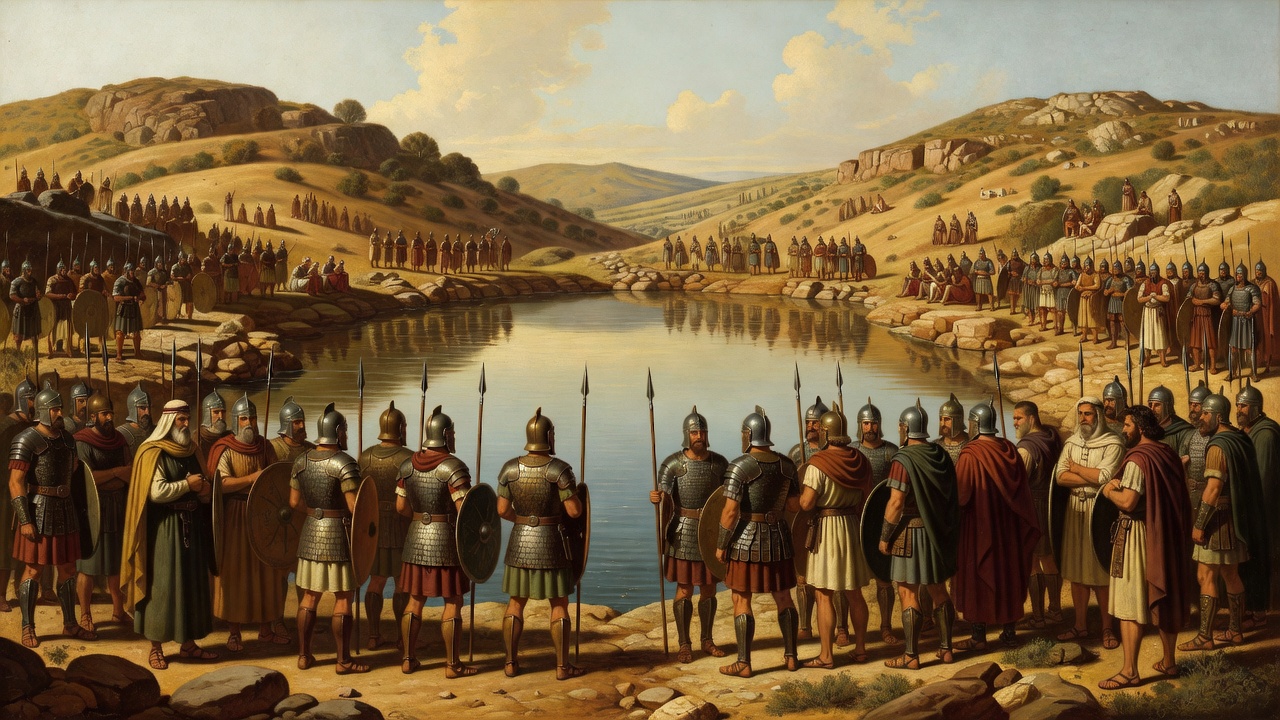
Two Kings and the Clash at Gibeon
- Following the death of Saul, the nation split into two rival realms. The tribe of Judah anointed David king in the southern city of Hebron, while Saul's general Abner established Saul's surviving son Ish-bosheth to rule the northern tribes from Mahanaim, east of the Jordan River.Sources: the Bible text itself · Abner · Ish-bosheth · Mahanaim
- David's leading military commanders—Joab, Abishai, and Asahel—were the sons of Zeruiah, who was David's sister. This close family tie placed David's nephews at the head of Judah's forces throughout the hostilities against the house of Saul.Sources: the Bible text itself · Joab · Zeruiah · Asahel
- The civil conflict escalated at the pool of Gibeon through a representative combat between twelve young men from Benjamin and twelve from David's forces. Because all twenty-four fighters perished together in the struggle, the site was named Helkath-hazzurim before full-scale battle erupted.Sources: the Bible text itself · Gibeon
Notes written with AI assistance from open sources (Theographic Bible Metadata, CC BY-SA 4.0; Easton’s Bible Dictionary, public domain) and reviewed before publishing.
Places in this chapter
- Hebron · Today: Tel Rumeida · 31.525, 35.102 · verses 1, 3, 4, 11, 32
- Gilead · Today: Gilead 1 · 32.187, 35.692 · verse 9
- Gibeon · Today: El Jib · 31.847, 35.183 · verses 12, 13, 16, 24
- Helkath-hazzurim · Today: within 500 m of El Jib · 31.847, 35.183 · verse 16
- Arabah · 30.417, 35.151 · verse 29
- Jordan · Today: Jordan River · 31.761, 35.558 · verse 29
- Bethlehem · 31.704, 35.208 · verse 32
Only places identified with high confidence are shown (90% or more according to the scholarly sources compiled by OpenBible). Period map: DARE (Digital Atlas of the Roman Empire), CC BY 4.0; modern map: © OpenStreetMap contributors; places: OpenBible.info (CC BY 4.0).
Credits and license for this translation
Bibeli Gusunɔn Gari
The Holy Bible in the Baatonum language of Benin, also called the Bariba language
copyright © 2013 SIM
Language: Bariba (Baatonum)
Translation by: SIM International
Bariba, Bibeli Gusunɔn Gari
This translation, published by the UEEB/SIM au Benin, was published in 1996.
If you are interested in obtaining a printed copy, please contact the SIM at SIM, BP 15, Parakou, Benin.
This translation text is made available to you under the
terms of the Creative Commons License: Attribution-Noncommercial-No Derivative Works.
( http://creativecommons.org/licenses/by-nc-nd/3.0/ )
In addition, you have permission to port the text to different file formats, as long as you
do not change any of the text or punctuation of the Bible.
You may share, copy, distribute, transmit, and extract portions
or quotations from this work, provided that you include the above copyright
information:
You must give Attribution to the work.
You do not sell this work for a profit.
You do not make any derivative works that change any of the actual words or punctuation of the Scriptures.
Permissions beyond the scope of this license may be
available if you contact
us with your request.
This translation is made available to you under the terms of the
Creative Commons Attribution-Noncommercial-No Derivatives license 4.0.
You may share and redistribute this Bible translation or extracts from it in any format, provided that:
You include the above copyright and source information.
You do not sell this work for a profit.
You do not change any of the words or punctuation of the Scriptures.
Pictures included with Scriptures and other documents on this site are licensed just for use with those Scriptures and documents.
For other uses, please contact the respective copyright owners.
2014-09-10
Source: http://ebible.org/bba/ · eBible.org