2 Chronicles 3
Bibeli Gusunɔn Gari · Tap a verse to see its cross-references.
Sɑ̃ɑ yerun bɑnɑ
1Sɑlomɔɔ u sɑ̃ɑ yee ten bɑnɑ toruɑ Yerusɑlɛmuɔ ɡuu te bɑ mɔ̀ Mɔriyɑn wɔllɔ mi bɑ win tundo Dɑfidi sɔ̃ɔsi. N deemɑ yɑm mi n dɑɑ sɑ̃ɑwɑ Ɔɔnɑni, Yebusin doo soo yeru. 2U sɑ̃ɑ yee ten bɑnɑ toruɑwɑ win bɑndun wɔ̃ɔ nnɛsen suru yirusen sɔ̃ɔ yiruse sɔɔ.
3Bɑ dii te yĩirɑwɑ kɑ yellun yĩirutiɑ ye bɑ rɑ kɑ ɡɑ̃ɑnu yĩire. Ten dɛ̃ɛbu bu sɑ̃ɑwɑ ɡɔm soonu wɑtɑ. Ten yɑsum mɑɑ sɑ̃ɑ ɡɔm soonu yɛndu. 4Dii ten yɑsum kɑ ten duu yee ɡbiikirun dɛ̃ɛbu n nɛwɑ. N sɑ̃ɑwɑ ɡɔm soonu yɛndu. Mɑ ten ɡunum mu sɑ̃ɑ ɡɔm soonu wunɑɑ teeru. Mɑ Sɑlomɔɔ u ten sɔɔwɔ wurɑ ɡeɑ pote. 5Mɑ u dii ten tiin ɡɑni dɑ̃ɑ ye bɑ mɔ̀ sipɛrɛ wukiri. Yen biru, u mɑɑ ye wurɑ ye yɑ ɡeɑ sɑ̃ɑ pote. Mɑ u derɑ bɑ kpɑkpɑ wurusu kɑ yɔnin weenɑsii kuɑ kuɑ ɡɑni yi sɔɔ. 6Mɑ u tu burɑru kuɑ kɑ kpee ɡobiɡinu. N deemɑ wurɑ ye u kɑ sɔmɑ ye kpuro kuɑ mi, yɑ weewɑ sɑɑ Pɑɑfɑimun di. 7U dii te wurɑ potewɑ kɑ ten ɡberebɑ sɔɔ, kɑ ten kɔnnɔ suukusɔ kɑ ten ɡɑniɔ, kɑ ten ɡɑmbobɑ sɔɔ, mɑ u wɔllun kɔ̃sobun weenɑsibu kuɑ ten ɡɑni sɔɔ.
8Mɑ u dii te tɑ dɛɛre ɡem ɡem bɑnɑ mi. Ten dɛ̃ɛbu kɑ dii ten tiin yɑsum mu nɛwɑ. Mu sɑ̃ɑwɑ ɡɔm soonu yɛndu. Mɑ ten yɑsum mɑɑ sɑ̃ɑ ɡɔm soonu yɛndu. Mɑ u tu wurɑ ɡeɑ pote. Wurɑ yen ɡeerɑ sɑ̃ɑwɑ tɔnnu yɛndu. 9Wurɑ ye bɑ kɑ kulumbɑ kuɑn ɡeerɑ sɑ̃ɑwɑ kilon bɔnu. Bɑɑ kɑ diɑ ye yɑ wɑ̃ɑ wɔllɔ kpuro bɑ ye wurɑ potewɑ.
10U mɑɑ kɔ̃sobun weenɑsibu yiru kuɑ dii te tɑ dɛɛre ɡem ɡem mi sɔɔ. Mɑ u ye wurɑ pote. 11Wɔllun kɔ̃so ben kɑsɑ nnɛ ye kpuron dɛ̃ɛbu bu sɑ̃ɑwɑ ɡɔm soonu yɛndu. Kɑsɑ yen tiɑn dɛ̃ɛbu bu sɑ̃ɑwɑ ɡɔm soonu nɔɔbu. Mɑ ben turon kɑse teeru tɑ ɡɑnɑ ɡirɑri. Mɑ tee teni tɑ kɑ kɔ̃so yiruseɡirun teeru ɡirɑrinɛ. 12Mɑ kɔ̃so yiruse win kɑse teeru tɑ mɑɑ dii ten ɡoo teɔnɔ ɡirɑri. N deemɑ ten yirusewɑ tɑ kɑ ɡbiikoo wiɡiru ɡirɑrinɛ. 13Kɔ̃so be kpuron kɑsɑ yɑ dɛriɑrewɑ. Mɑ yen dɛ̃ɛbu kuɑ ɡɔm soonu yɛndu. Mɑ bɑ yɔ̃ bɑ wuswɑɑ tĩi dii ten kɔnnɔ ɡiɑ. 14Mɑ u dii ten beku kɑreru kuɑ kɑ wɛ̃ɛ dɑmɡii yi bɑ wɔ̃kuɑ kɑ ɡɑɑdurɑ kɑ wunɔm kɑ sere mɑɑ tom. Mɑ bɑ mɑɑ kɔ̃sobun weenɑsibu kuɑ beku te sɔɔ.
Dii ten ɡbere be bɑ kuɑ
kɑ sii ɡɑndu
15U dii ten wuswɑɑɔ ɡbere yiru kuɑ. Yen bɑɑyeren ɡunum mu sɑ̃ɑwɑ ɡɔm soonu tɛnɑ kɑ nɔɔbu. Mɑ bɑ ye furɔsu sɔndiɑ wɔllɔ. Sin ɡunum mu sɑ̃ɑwɑ ɡɔm soonu nɔɔbu. 16U mɑɑ yɔnin weenɑsiin burɑru ɡɑru kuɑ nɡe te u rɑɑ kuɑ sɑ̃ɑ yeru mi. Mɑ u burɑ te doke furɔ sin wɔllɔ. Mɑ u dɑ̃ɑ mɑrum ɡɑm weenɑsim kuɑ wunɔbu (100) u doke yɔni yi sɔɔ. 17Mɑ u ɡbere yiru ye ɡirɑ sɑ̃ɑ yee ten wuswɑɑɔ. Tiɑ nɔm ɡeuɔ, tiɑ mɑɑ nɔm dwɑrɔ. Mɑ u nɔm ɡeuɡiɑ ye yĩsiru kɑ̃ Yɑkini. Mɑ u mɑɑ nɔm dwɑruɡiɑ ye yĩsiru kɑ̃ Boɑsi.
Did you know?
Building the Temple of Solomon
- Solomon began constructing the temple in Jerusalem on Mount Moriah, on the site of the threshing floor of Ornan the Jebusite. David had previously insisted on purchasing this property at full price after the angel of destruction was stayed there, preparing it for the house of the LORD.Sources: the Bible text itself · Ornan · Mount Moriah
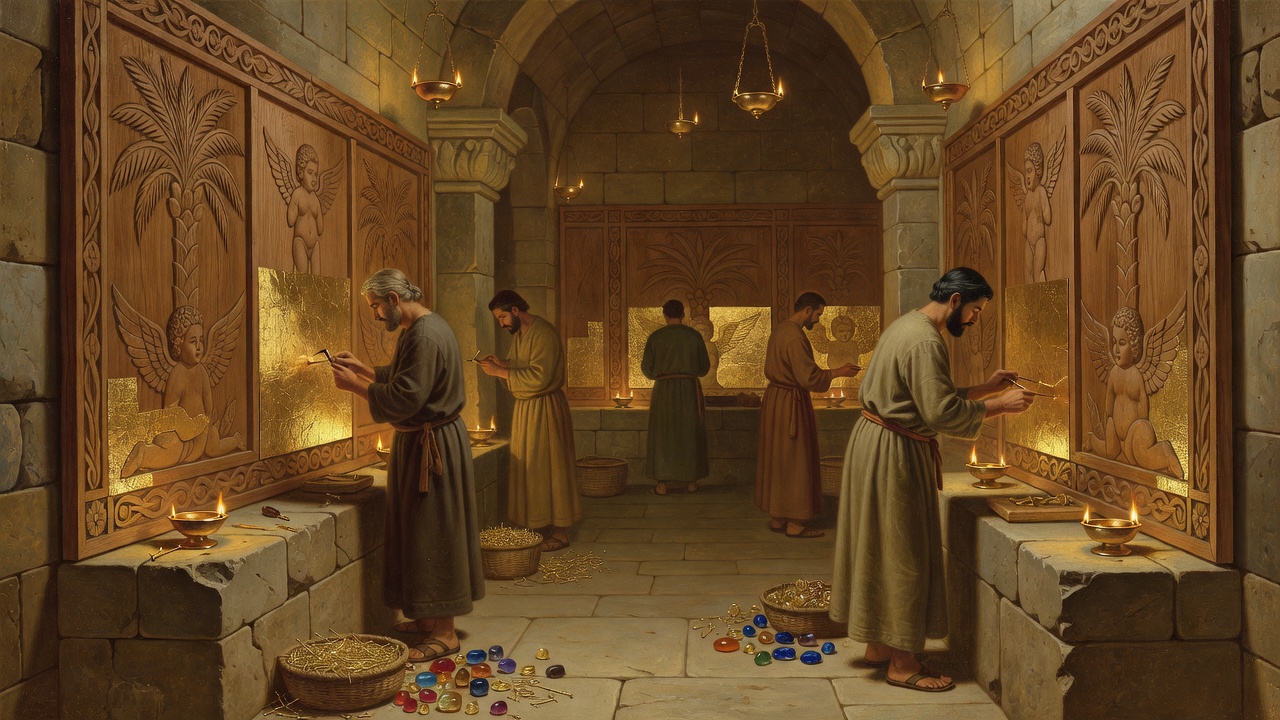
- The interior of the temple was overlaid with fine gold and decorated with precious stones, with gold brought from Parvaim. The exact identity of Parvaim is uncertain, though some have associated it with Ophir or taken it to mean eastern regions generally.Sources: the Bible text itself · Parvaim
- In front of the temple stood two prominent pillars topped with decorative capitals, interwoven chains, and a hundred carved pomegranates. Solomon named the southern pillar Jachin and the northern pillar Boaz.Sources: the Bible text itself
Notes written with AI assistance from open sources (Theographic Bible Metadata, CC BY-SA 4.0; Easton’s Bible Dictionary, public domain) and reviewed before publishing.
Places in this chapter
- Jerusalem · 31.777, 35.234 · verse 1
- Mount Moriah · 31.778, 35.236 · verse 1
- Most Holy Place · Today: on Mount Moriah · 31.778, 35.236 · verses 8, 10, 14
Only places identified with high confidence are shown (90% or more according to the scholarly sources compiled by OpenBible). Period map: DARE (Digital Atlas of the Roman Empire), CC BY 4.0; modern map: © OpenStreetMap contributors; places: OpenBible.info (CC BY 4.0).
Credits and license for this translation
Bibeli Gusunɔn Gari
The Holy Bible in the Baatonum language of Benin, also called the Bariba language
copyright © 2013 SIM
Language: Bariba (Baatonum)
Translation by: SIM International
Bariba, Bibeli Gusunɔn Gari
This translation, published by the UEEB/SIM au Benin, was published in 1996.
If you are interested in obtaining a printed copy, please contact the SIM at SIM, BP 15, Parakou, Benin.
This translation text is made available to you under the
terms of the Creative Commons License: Attribution-Noncommercial-No Derivative Works.
( http://creativecommons.org/licenses/by-nc-nd/3.0/ )
In addition, you have permission to port the text to different file formats, as long as you
do not change any of the text or punctuation of the Bible.
You may share, copy, distribute, transmit, and extract portions
or quotations from this work, provided that you include the above copyright
information:
You must give Attribution to the work.
You do not sell this work for a profit.
You do not make any derivative works that change any of the actual words or punctuation of the Scriptures.
Permissions beyond the scope of this license may be
available if you contact
us with your request.
This translation is made available to you under the terms of the
Creative Commons Attribution-Noncommercial-No Derivatives license 4.0.
You may share and redistribute this Bible translation or extracts from it in any format, provided that:
You include the above copyright and source information.
You do not sell this work for a profit.
You do not change any of the words or punctuation of the Scriptures.
Pictures included with Scriptures and other documents on this site are licensed just for use with those Scriptures and documents.
For other uses, please contact the respective copyright owners.
2014-09-10
Source: http://ebible.org/bba/ · eBible.org