1 Kings 18
Bibeli Gusunɔn Gari · Tap a verse to see its cross-references.
1Yenibɑn biru, ɡbebu ten wɔ̃ɔ itɑse sɔɔ, Yinni Gusunɔ u Eli sɔ̃ɔwɑ u nɛɛ, ɑ doo, Akɑbu u nun wɑ domi kon de ɡurɑ yu nɛ.
2Sɑɑ ye, ɡɔ̃ɔrɑ dɑm mɔ Sɑmɑriɔ. Mɑ Eli u seewɑ u dɔɔ Akɑbun mi.
3N deemɑ sɑɑ ye sɔɔrɑ Akɑbu u Abudiɑsi sokusiɑ, wi u sɑ̃ɑ win sinɑ kpɑɑrun sɔm kowobun wiruɡii. 4Sɑɑ yè sɔɔ Yesɑbɛli u Yinni Gusunɔn sɔmɔbu ɡoomɔ, yerɑ Abudiɑsi wi, u ben wunɔbu (100) suɑ u bɔnu kuɑ weerɑɑkuukuubu u beruɑ kpee wɔru sɔɔ. Miyɑ u rɑ n kɑ bu dĩɑnu kɑ nim dɑɑwɑmmɛ. 5Ye u tunumɑ Akɑbun mi, Akɑbu u nùn sɔ̃ɔwɑ u nɛɛ, ɑ de su dɑ su mɛɛri nɡe sɑ ko yɑkɑ bekusu wɑ mi bwii kɑ dɑru koki yi wɑ̃ɑ kpɑ bɛsɛn yooyoosu kɑ dumi kɑ kɛtɛkunu nu wɑ nu di. Kpɑ bɛsɛn sɑbenun ɡɔɔ u kɑ sɑkɑ nɛrɑ.
6Mɑ Akɑbu kɑ Abudiɑsi, bɑ yɑm mi bɔnu kuɑ, bɑ yɑkɑ bekusu kɑso wɔri. Ben bɑɑwure u win swɑɑ mwɑ. 7Ye Abudiɑsi u swɑɑ mɔ̀ u dɔɔ, yerɑ u kɑ Eli yinnɑ. Mɑ u nùn tubɑ. Yerɑ u yiirɑ u wuswɑɑ tem ɡirɑri u nɛɛ, wunɑ mini, nɛn yinni Eli?
8Yerɑ Eli u nùn wisɑ u nɛɛ, nɛnɑ mi. A doo ɑ wunɛn yinni Akɑbu sɔ̃ mɑ ɑ mɑn wɑ.
9Mɑ Abudiɑsi u nɛɛ, torɑru mbɑ nɑ torɑ yinni, ɑ kɑ kĩ ɑ mɑn Akɑbu nɔmu sɔndiɑ u mɑn ɡo. 10Kɑ Gusunɔ wunɛn Yinnin wɑ̃ɑru, bweseru ɡɑru sɑri tèn mi nɛn yinni kun ɡɔre bu nun kɑsumɑ. Bwese te, tɑ̀ n nɛɛ, tɑ ǹ nun wɑ mi, u rɑ bu bɔ̃rusiewɑ kpɑ u n kɑ yɛ̃ mɑ ɡeemɑ ɑ ǹ wɑ̃ɑ mi. 11Miyɑ ɑ nɛɛ, n seewo n dɑ tɛ̃ n nɛɛ, nɑ nun wɑ? 12Nɑ̀ n doonɑ kpɑ Gusunɔn Hunde u nun suɑ u kɑ dɑ mi nɑ ǹ yɛ̃. Sɑɑ ye sɔɔ, nɑ̀ n Akɑbu sɔ̃ɔwɑ nɑ nun wɑ kpɑ u nɑ u nun biɑ, ɑ n yɛ̃ mɑ u koo mɑn ɡowɑ. N deemɑ nɑ Gusunɔ nɑsiewɑ sɑɑ nɛn piiburun di. 13Yinni, bɑ ǹ nun sɔ̃ɔwɑ ye nɑ kuɑ ye Yesɑbɛli u Yinni Gusunɔn sɔmɔbu ɡoomɔ? Sɔmɔbu wunɔbuwɑ (100) nɑ beruɑ. Nɑ bu bɔnu kuɑ weerɑɑkuukuubu. Nɑ derɑ bɑ duɑ kpee wɔrusu sɔɔ. Miyɑ nɑ rɑ kɑ bu dĩɑnu kɑ nim dɑɑwe. 14Yerɑ ɑ nɛɛ, n doo tɛ̃ n nɛn yinni sɔ̃ n nɛɛ, wunɛ Eli ɑ wɑ̃ɑ mini. U ǹ koo mɑn ɡo?
15Adɑmɑ Eli u nùn wisɑ u nɛɛ, sere kɑ Yinni Gusunɔ dɑm kpuroɡii wi nɑ sɑ̃ɑmɔn wɑ̃ɑru kon dɑ n yɔ̃rɑ Akɑbun wuswɑɑɔ ɡisɔ.
Eli kɑ Akɑbu bɑ wɑɑnɑ
16Yerɑ Abudiɑsi u dɑ u kɑ Akɑbu yinnɑ mɑ u nùn sɔ̃ɔwɑ kpuro ye u wɑ. Mɑ Akɑbu u Eli sennɔ dɑ. 17Sɑɑ ye u Eli wɛndɛ kuɑ, yerɑ u nùn sɔ̃ɔwɑ u nɛɛ, wunɑ mi, wunɛ wi ɑ nɔni swɑ̃ɑ teni doke bɛsɛ Isirelibɑn temɔ?
18Eli u nùn wisɑ u nɛɛ, n ǹ nɛ nɑ nɔni swɑ̃ɑru doke tem mɛ sɔɔ. Wunɑ. Domi wunɛ kɑ wunɛn tundon yɛnuɡibu, bɛɛyɑ i Yinni Gusunɔn woodɑbɑ deri, mɑ i dɑ i bũu wi bɑ sokumɔ Bɑɑli sɑ̃ɑmɔ. 19Yen sɔ̃ tɛ̃, ɑ de Isirelibɑ bu mɛnnɑmɑ ɡuu te bɑ mɔ̀ Kɑɑmɛliɔ kɑ sere bũu wi bɑ sokumɔ Bɑɑlin yɑ̃ku kowobu tɔnu nɛɛru kɑ weerɑɑkuru (450) kɑ mɑɑ bũu wi bɑ sokumɔ Asitɑɑten yɑ̃ku kowobu tɔnu nɛɛru (400) be bɑ rɑ mɛnnɛ bu di sɑnnu kɑ Yesɑbɛli.
Eli kɑ bũu yɑ̃ku kowobu
20Yerɑ Akɑbu u ɡɔrɑ bɑ Isirelibɑ mɛnnɑ kɑ bũu yɑ̃ku kowo be, ɡuu te bɑ mɔ̀ Kɑɑmɛliɔ. 21Mɑ Eli u bu susi u nɛɛ, dommɑ i ko i bɛɛn ɡɔ̃rusu yiru deri. Ǹ n Yinni Gusunɔn nɑ u sɑ̃ɑ kpuron Yinni, i nùn sɑ̃ɑwɔ. Ǹ n mɑɑ Bɑɑlin nɑ, i nùn sɑ̃ɑwɔ.
Adɑmɑ tɔn be, bɑ ǹ nùn ɡɑ̃ɑnu ɡɑnu wisɑ. 22Mɑ u mɑɑ bu sɔ̃ɔwɑ u nɛɛ, wee tɛ̃, nɛ turowɑ nɑ tie Yinni Gusunɔn sɔmɔbu sɔɔ. Adɑmɑ be, be bɑ sɑ̃ɑ Bɑɑlin yɑ̃ku kowobu, bɑ sɑ̃ɑwɑ tɔnu nɛɛru kɑ weerɑɑkuru (450). 23Yen sɔ̃ tɛ̃, bu sun nɑɑ kinɛnu yiru wɛ̃ɛmɑ. Kpɑ Bɑɑlin yɑ̃ku kowo be, bu teeru suɑ bu ten yɑɑ muriri bu sɔndi dɑ̃ɑ ɡbebi wɔllɔ bu ku dɔ̃ɔ doke. Kpɑ nɛ n mɑɑ teeru suɑ n ko mɛ. 24Yen biru kpɑ bu ben bũnu soku, kpɑ n mɑɑ Yinni Gusunɔ soku kpɑ su wɑ wìn Yinni u koo wisi u dɔ̃ɔ doke dɑ̃ɑ ye sɔɔ.
Mɑ tɔn be kpuro, bɑ nɛɛ, too, yɑ wɑ̃.
25Mɑ Eli u yɑ̃ku kowo be sɔ̃ɔwɑ u nɛɛ, i ɡbio i bɛɛn nɑɑ kinɛru suɑ i ɡo, domi bɛɛyɑ i dɑbiru bo, kpɑ i bɛɛn bũu soku. Adɑmɑ i ku rɑ dɔ̃ɔ doke dɑ̃ɑ ye sɔɔ kɑ bɛɛn tii.
26Mɑ bɑ nɑɑ kinɛ te bɑ bu wɛ̃ mi ɡo. Yerɑ bɑ bũu wi sokɑ sɑɑ bururun di sere sɔ̃ɔ u kɑ nɑ wiru wɔllɔ. Bɑ mɔ̀, Bɑɑli, ɑ sun wurɑrio! Mɑ bɑ yɑɑmɔ bɑ kɑ ben yɑ̃ku yerun turɑ te sikerenɑmɔ. Adɑmɑ bɑ ǹ nɔɔ ɡɑɡu nuɑ. Bɑ ǹ mɑɑ wisibu ɡɑbu wɑ. 27Sɔ̃ɔ wii wɔɔ te, yerɑ den Eli u bu yɑɑkoru mɔ̀, u mɔ̀, i ɡbɑ̃ro kɑ dɑm, domi u sɑ̃ɑwɑ bɛɛn bũu. Sɔrɔkudo u ɡɑ̃ɑnu bwisikumɔwɑ, ǹ kun mɛ, u ɡɑ̃ɑnu mɔ̀wɑ ni nu nùn nɛni ǹ kun mɛ u ɡɑm dɑwɑ, ǹ kun mɛ, u do! Yen sɔ̃, i ɡbɑ̃ro kpɑ u dom yɑndɑ.
28Mɑ bɑ ɡbɑ̃sukɑ tɑ̃ɑ tɑ̃ɑ bɑ seewɑ bɑ tii tɑkobi kɑ yɑɑsi sɔkirimɔ nɡe mɛ ben komɑru. Mɑ yɛm mu kokumɔ sɑɑ ben wɑsin di. 29Ye sɔ̃ɔ u kɛllɑ, yerɑ bɑ mɑɑ sɑ̃ɑru wɔri kɑ dɑm, sere yokɑn yɑ̃kurun sɑɑ yɑ kɑ turɑ. Adɑmɑ bɑ ǹ bũu ɡoon nɔɔ nuɑ, bɑ ǹ mɑɑ wisibu ɡɑbu nuɑ, ǹ kun mɛ ɡɑ̃ɑ ni nu koo tɔmbun lɑɑkɑri seeyɑ.
30Ye Eli u tɔn be kpuro sɔ̃ɔwɑ u nɛɛ, i susimɑ nɛn ɡee, mɑ be kpuro bɑ susi win mi. Yerɑ u Yinni Gusunɔn yɑ̃ku yerun turɑ te bɑ rɑɑ sɑnkɑ mi sɔnwɑ. 31Mɑ u kpenu wɔkurɑ yiru suɑ nɡe mɛ Yɑkɔbun bibun ɡeerɑ nɛ. Yɑkɔbu wiyɑ Yinni Gusunɔ u mɑɑ yĩsiru kɑ̃ Isireli. 32Kpee niyɑ Eli u kɑ yɑ̃ku yee te kuɑ mɑ u wɔru ɡbɑ u kɑ tu sikerenɑ. Wɔru ɡe, ɡɑ koo nim kotosu yirun sɑkɑ mwɑ. 33Mɑ u dɑ̃ɑ ɡbebi yoruɑ turɑ ten wɔllɔ u nɑɑ kinɛ te ɡo, u ten yɑɑ mururɑ u sɔndi dɑ̃ɑ yen wɔllɔ. 34Yen biru u nɛɛ, bu kotosu nnɛ nim yibio bu wisi yɑ̃ku yɑɑ ye kɑ dɑ̃ɑ yen wɔllɔ.
Mɑ bɑ kuɑ mɛ. Mɑ u mɑɑ nɛɛ, bu wureo bu nim mɛ wisi.
Mɑ bɑ kuɑ mɛ. U mɑɑ nɛɛ, bu wureo bu wisi nɔn itɑse.
Mɑ bɑ kuɑ mɛ. 35Mɑ nim mɛ, ku kokumɔ turɑ ten min di, sere mu wɔru ɡe ɡɑ kɑ tu sikerenɛ mi yibɑ.
36Ye yokɑn yɑ̃kurun sɑɑ yɑ turɑ, yerɑ Gusunɔn sɔmɔ Eli u susi yɑ̃ku turɑ ten mi, u nɛɛ, Gusunɔ, Aburɑhɑmu kɑ Isɑki kɑ Yɑkɔbun Yinni, ɑ de bu ɡiɑ ɡisɔ mɑ wunɑ ɑ sɑ̃ɑ Gusunɔ Isireliɔ, mɑ nɑ mɑɑ sɑ̃ɑ wunɛn bɔ̃ɔ. Kpɑ bɑ n yɛ̃ mɑ ɡɑ̃ɑ ni nɑ kuɑ, wunɛn min diyɑ nu koorɑ. 37A mɑn wisio Yinni Gusunɔ, ɑ mɑn wisio, kpɑ tɔn be, bu ɡiɑ mɑ wunɑ ɑ sɑ̃ɑ kpuron Yinni, wunɑ kɑɑ de bu ben ɡɔ̃ru ɡɔsie wunɛn mi.
38Yerɑ Yinni Gusunɔ u derɑ dɔ̃ɔ u sɑrɑmɑ u yɑ̃ku yee te wɔri. Yɑɑ ye, kɑ dɑ̃ɑ ye, kɑ kpee ni, ye kpurowɑ yɑ dɔ̃ɔ mwɑɑrɑ sere kɑ temɔ. Mɑ wɔru ɡen nim mɛ, mu ɡberɑ. 39Sɑɑ ye tɔn be, bɑ wɑ mɛ, yerɑ bɑ yiirɑ bɑ wuswɑɑ tem ɡirɑri bɑ nɛɛ, Yinni Gusunɔwɑ u sɑ̃ɑ kpuron Yinni. 40Mɑ Eli u nɛɛ, ǹ n mɛn nɑ, bu bũu wi bɑ mɔ̀ Bɑɑlin yɑ̃ku kowo be mwɛɛrimɑ, bu ku rɑɑ de ben ɡoo u kisirɑ.
Yerɑ bɑ bu mwɛɛrɑ. Eli u derɑ bɑ kɑ bu dɑ Kisionin dɑɑrɔ. Miyɑ u bu sɑkirɑ.
Gurɑ yɑ wurɑmɑ
41Yen biru Eli u Akɑbu sɔ̃ɔwɑ u nɛɛ, ɑ doo ɑ di kpɑ ɑ nɔ. Domi ɡbɑ̃rɑ bi ɑ nɔɔmɔ mini, ɡurɑ yɑ wee mi.
42Mɑ Akɑbu u doonɑ u kɑ di kpɑ u nɔ. Adɑmɑ Eli u dɑ ɡuu ten wii kpiirɔ. Miyɑ u yiirɑ u win wiru bɛri win dũɑn bɑɑ sɔɔ. 43Mɑ u win bɔ̃ɔ ɑluwɑɑsi sɔ̃ɔwɑ u nɛɛ, ɑ yɔɔmɑ kpɑ ɑ mɛɛri nim wɔ̃kun berɑ ɡiɑ.
Yerɑ ɑluwɑɑsi wi, u yɔɔwɑ u mɛɛrɑ u nɛɛ, nɑ ǹ ɡɑ̃ɑnu ɡɑnu wɑ.
Mɑ Eli u nùn dɑɑsiɑ mɛ sere nɔn nɔɔbɑ yiru. 44Ye u mɛɛrɑ nɔn nɔɔbɑ yiruse, yerɑ u nɛɛ, ɡuru wii wuro piibu ɡɑɡu wee ɡɑ seemɑ nim wɔ̃kun di, ɡɑ kɑ tɔnun nɔm tɑrɑru nɛ.
Yerɑ Eli u nùn sɔ̃ɔwɑ u nɛɛ, ǹ n mɛn nɑ, ɑ sɑro ɑ dɑ ɑ Akɑbu sɔ̃ u win tɑbu kɛkɛ ye dumi ɡɑwe sɔɔru ko u dɑ yɛnuɔ fuuku kpɑ ɡurɑ yu ku rɑɑ nùn yɔ̃rɑsiɑ.
45Ye n sosi fiiko wɔllɑ tĩrɑ ɡuru wirun sɑɑbu. Mɑ woo ɡɑ seewɑ, ɡurɑ yɑ tunumɑ kɑ dɑm. Yerɑ Akɑbu u win tɑbu kɛkɛ ye wɔri u dɑ Yisirɛɛliɔ. 46N deemɑ Yinni Gusunɔn dɑm mu wɑ̃ɑ kɑ Eli. Yerɑ u kpɑkɑ sɛ̃kɑ pɔrɑɔ, mɑ u dukɑ wukɑ u Akɑbu ɡbiiri, u ɡbiɑ u turɑ Yisirɛɛli mi.
Eli u mwiɑ kpɑnɑ
Did you know?
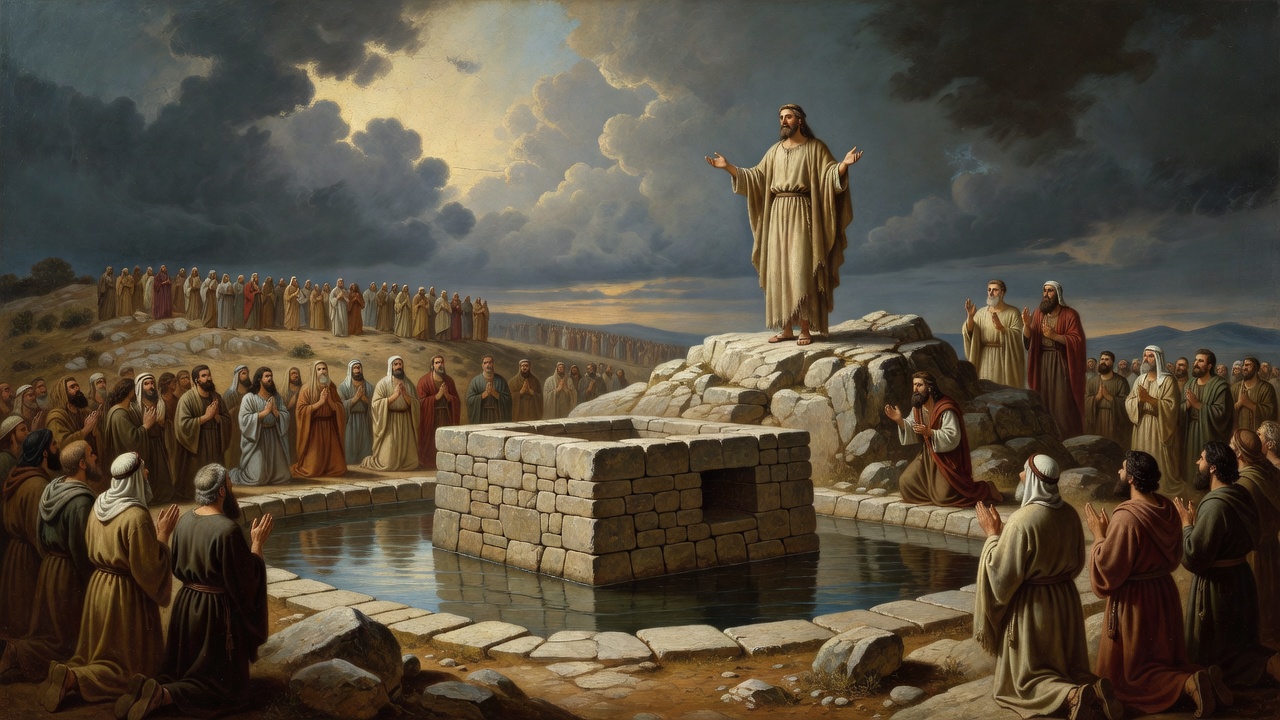
The Contest on Mount Carmel
- Obadiah, the chief administrator of King Ahab's royal palace, maintained his fidelity to God and secretly sheltered one hundred prophets of the Lord in caves, fifty per cave, providing them with food and water when Queen Jezebel sought to slaughter them.Sources: Obadiah · Jezebel · the Bible text itself
- Baal was the primary male deity of the Phoenicians, whose worship spread widely across northern Israel under King Ahab and his Phoenician queen, Jezebel. The assembly on Mount Carmel brought together 450 prophets of Baal against Elijah alone to test which deity would respond with fire.Sources: Baal · Jezebel · Mount Carmel · the Bible text itself
- The Kishon, where the prophets of Baal were taken after the contest, is a winter torrent flowing along the base of Mount Carmel toward the Mediterranean Sea. After praying for rain on the summit, Elijah ran ahead of Ahab's chariot all the way to Jezreel, an important royal residence.Sources: Kishon · Jezreel · the Bible text itself
Notes written with AI assistance from open sources (Theographic Bible Metadata, CC BY-SA 4.0; Easton’s Bible Dictionary, public domain) and reviewed before publishing.
Places in this chapter
Only places identified with high confidence are shown (90% or more according to the scholarly sources compiled by OpenBible). Period map: DARE (Digital Atlas of the Roman Empire), CC BY 4.0; modern map: © OpenStreetMap contributors; places: OpenBible.info (CC BY 4.0).
Credits and license for this translation
Bibeli Gusunɔn Gari
The Holy Bible in the Baatonum language of Benin, also called the Bariba language
copyright © 2013 SIM
Language: Bariba (Baatonum)
Translation by: SIM International
Bariba, Bibeli Gusunɔn Gari
This translation, published by the UEEB/SIM au Benin, was published in 1996.
If you are interested in obtaining a printed copy, please contact the SIM at SIM, BP 15, Parakou, Benin.
This translation text is made available to you under the
terms of the Creative Commons License: Attribution-Noncommercial-No Derivative Works.
( http://creativecommons.org/licenses/by-nc-nd/3.0/ )
In addition, you have permission to port the text to different file formats, as long as you
do not change any of the text or punctuation of the Bible.
You may share, copy, distribute, transmit, and extract portions
or quotations from this work, provided that you include the above copyright
information:
You must give Attribution to the work.
You do not sell this work for a profit.
You do not make any derivative works that change any of the actual words or punctuation of the Scriptures.
Permissions beyond the scope of this license may be
available if you contact
us with your request.
This translation is made available to you under the terms of the
Creative Commons Attribution-Noncommercial-No Derivatives license 4.0.
You may share and redistribute this Bible translation or extracts from it in any format, provided that:
You include the above copyright and source information.
You do not sell this work for a profit.
You do not change any of the words or punctuation of the Scriptures.
Pictures included with Scriptures and other documents on this site are licensed just for use with those Scriptures and documents.
For other uses, please contact the respective copyright owners.
2014-09-10
Source: http://ebible.org/bba/ · eBible.org