Proverbs 30
Azərbaycan dilində Müqəddəs Kitab · Tap a verse to see its cross-references.
Aqurun müdrik məsəlləri
1Yaqe oğlu Aqurun sözləri, onun kəlamı.
Bu adam Yetielə, Yetiel və Ukala belə dedi:
2Həqiqətən, mən hamıdan ağılsızam,
İnsan idrakına malik deyiləm.
3Nə hikmət öyrənmişəm,
Nə də Müqəddəsin biliyindən xəbərim var.
4Kim göylərə qalxıb endi?
Kim yeli ovcunda topladı?
Kim suları paltarına sarıdı?
Yer üzünün qurtaracağınadək hər yeri kim yaratdı?
Adı nədir? Oğlunun adı nədir?
Bilirsənmi?
5Allahın hər bir kəlamı safdır,
Ona pənah gətirənlərin sipəri Odur.
6Onun sözünə heç nəyi əlavə etmə,
Yoxsa səni tənbeh edər, yalanını çıxarar.
7Ey Allah, Səndən iki şey istəyirəm,
Nə qədər ömrüm var, məndən onları əsirgəmə:
8Saxta, yalan sözlər qoy məndən uzaq olsun;
Məni nə yoxsul, nə də zəngin et,
Ancaq mənə gündəlik çörəyimi ver.
9Varlansam, «Rəbb kimdir?» deyə Sənə küfr edərəm,
Yoxsul olsam, oğurlaram və Allahımın adını ləkələrəm.
10Qul barədə ağasına pis sözlər demə,
Yoxsa sənə qarğış edər, bu təqsirlə yüklənərsən.
11Adam var ki, atasına qarğış edir,
Anasına alqış etmir.
12Adam var ki, özünü təmiz sanır,
Amma murdarlıqdan təmizlənməyib.
13Adam var ki, yuxarıdan aşağı baxar,
Təkəbbürlə baxmaq üçün gözlərini qaldırar.
14Adam var ki, dişləri qılınca bənzər,
Elə bil çənəsinə bıçaqlar düzüb,
Yer üzündən məzlumları udar,
İnsanların içindən fəqirləri məhv edər.
15Zəlinin iki qızı var,
«Ver, ver» deyib bağırar.
Üç şey var ki, heç doymaz,
Dörd şey var ki, «bəsdir» deməz:
16Ölülər diyarı, qısır bətn,
Sudan doymayan torpaq,
«Bəsdir» deməyən alov.
17Kim ki atasına rişxənd edir,
Anasının sözünə xor baxır,
Dərələrdəki qarğalar onun gözlərini deşəcək,
Qartal balaları onun bəbəklərini yeyəcək.
18Mənim ağlım kəsməyən üç şey var,
Anlamadığım dörd şey var:
19Səmada qartalın yolu,
Qayada ilanın yolu,
Dənizdə gəminin yolu,
Kişi ilə gənc qadının yolu.
20Zinakar qadının da yolu belədir:
Yeyər, ağzını silər,
«Nə pis iş görmüşəm ki?» deyər.
21Yer üç şeydən lərzəyə gəlir,
Dörd şey var ki, ona tab gətirmir:
22Qulun padşah olması,
Sarsağın doyunca çörək tapması,
23Nifrətəlayiq qadının ərə getməsi,
Qarabaşın öz xanımının yerinə keçməsi.
24Yer üzündə dörd şey var,
Kiçik olsa da, hikməti çoxdur:
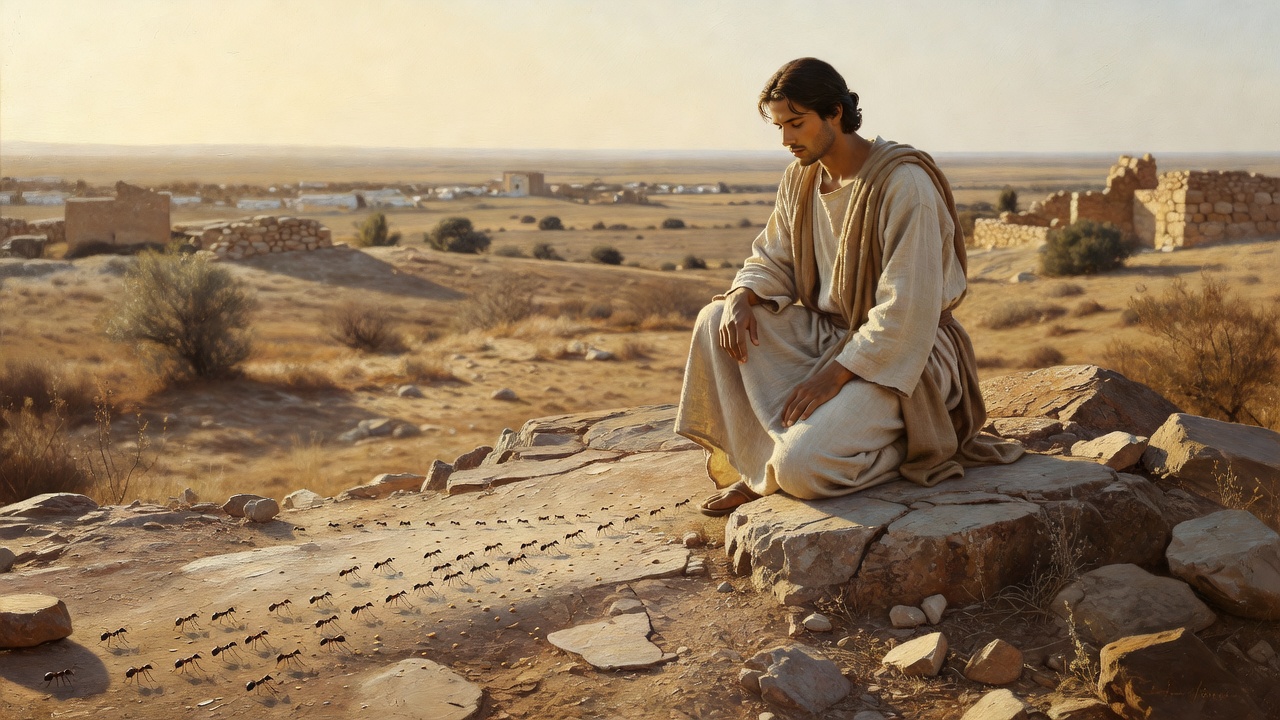
25Qarışqalar qüvvətli olmayan birlikdir,
Yemini yayda tədarük edir;
26Qayadovşanları da güclü olmayan birlikdir,
Evlərini qaya içində tikir;
27Çəyirtkələrin şahı yoxdur,
Lakin hamısı dəstə-dəstə irəliləyir;
28Kərtənkələni əllə tutmaq olur,
Amma o, padşah saraylarına çıxır.
29Üç məxluq var ki, yerişi gözəldir,
Dörd məxluq var ki, gedişi gözəldir:
30Heyvanların ən güclüsü,
Heç nəyin qarşısından geri dönməyən şir,
31Döyüşkən xoruz, təkə,
Qoşun qabağına çıxan padşah.
32Əgər özünü ucaltmaqla sarsaqlıq etmisənsə,
Fikrində pis niyyətin varsa, əlinlə ağzını tut.
33Çünki südü çalxalayanda yağ çıxdığı kimi,
Burnu sıxanda qan çıxdığı kimi
Qəzəbi qızışdıranda da dava yaranar.
Did you know?
The Sayings of Agur
- Proverbs 30 is attributed to Agur son of Jakeh, who addressed his sayings to Ithiel and Ucal. Beyond what is recorded in this chapter, nothing further is known about Agur or his father.Sources: Agur · Jakeh · Ucal · the Bible text itself
- The chapter frequently uses a graded numerical pattern ('three things... four that...') to group observations about nature and human behavior. Agur applies this structure to marvels of creation, social disruptions, stately walkers, and four small creatures that display remarkable wisdom: ants, rock badgers, locusts, and lizards.Sources: the Bible text itself
- Agur makes a specific two-part request, asking to be granted neither poverty nor riches, but only his daily portion of food. He explains that having too much might lead someone to disown the Lord, while falling into poverty might tempt a person to steal.Sources: the Bible text itself
Notes written with AI assistance from open sources (Theographic Bible Metadata, CC BY-SA 4.0; Easton’s Bible Dictionary, public domain) and reviewed before publishing.
Credits and license for this translation
Azərbaycan dilində Müqəddəs Kitab
The Holy Bible in the Azerbaijani language, also known as the Azeri language, of Azerbaijan, Iran, Iraq, Syria, and Turkey
Copyright © 2008 Müqəddəs Kitab Sirkəti
Language: Azeri (Azerbaijani, South)
Translation by: Institute for Bible Translation
Contributor: Bible Society of Azerbaijan
This translation text is made available to you under the
terms of the Creative Commons License: Attribution-Noncommercial-No Derivative Works.
( http://creativecommons.org/licenses/by-nc-nd/3.0/ )
In addition, you have permission to port the text to different file formats, as long as you
do not change any of the text or punctuation of the Bible.
You may share, copy, distribute, transmit, and extract portions
or quotations from this work, provided that you include the above copyright
information:
You must give Attribution to the work.
You do not sell this work for a profit.
You do not make any derivative works that change any of the actual words or punctuation of the Scriptures.
Permissions beyond the scope of this license may be
available if you contact
us with your request.
This translation is made available to you under the terms of the
Creative Commons Attribution-Noncommercial-No Derivatives license 4.0.
You may share and redistribute this Bible translation or extracts from it in any format, provided that:
You include the above copyright and source information.
You do not sell this work for a profit.
You do not change any of the words or punctuation of the Scriptures.
Pictures included with Scriptures and other documents on this site are licensed just for use with those Scriptures and documents.
For other uses, please contact the respective copyright owners.
2018-11-09
Source: http://ebible.org/azb/ · eBible.org