Numbers 19
Azərbaycan dilində Müqəddəs Kitab · Tap a verse to see its cross-references.
Qırmızı düyə və paklama suyu
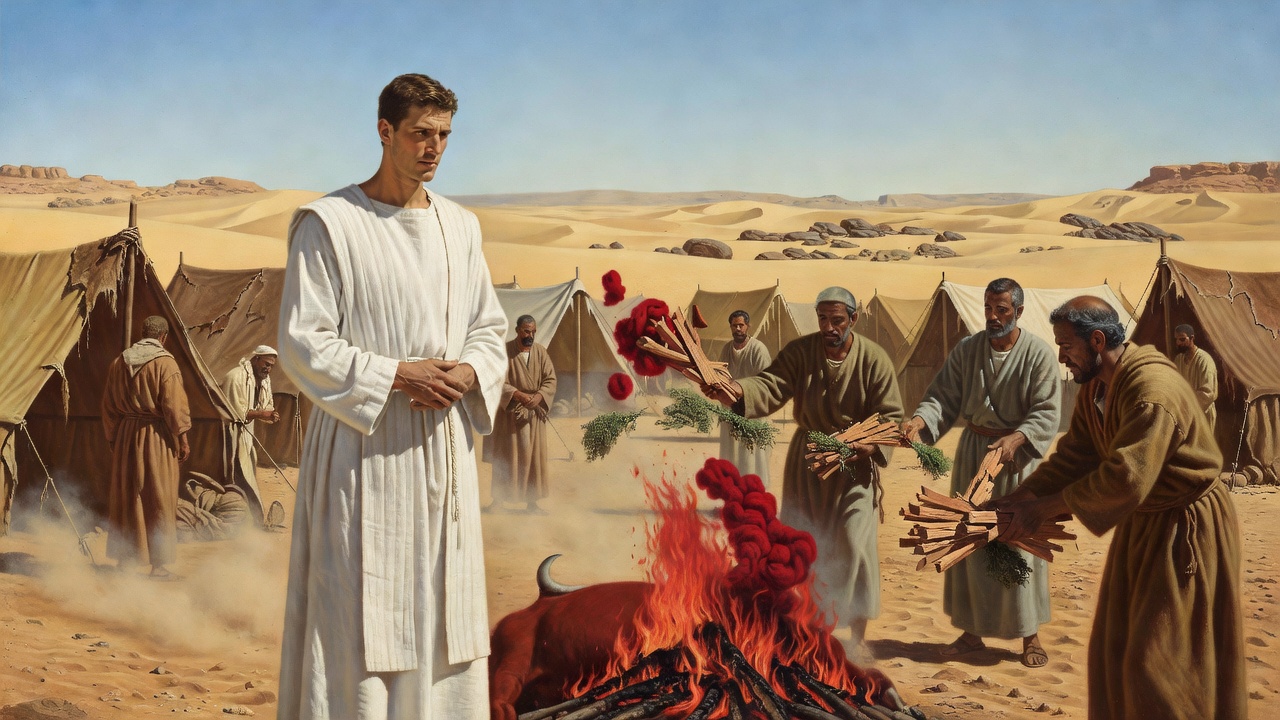
1Rəbb Musaya və Haruna dedi: 2«Bu, Rəbbin əmr etdiyi qanunun qaydasıdır: İsrail övladlarına deyin ki, qüsursuz, eyibsiz, heç vaxt boynuna bir boyunduruq taxılmayan bir qırmızı düyə gətirsinlər. 3Onu kahin Eleazara verin. Düyə düşərgənin kənarına çıxarılsın və onun önündə kəsilsin. 4Kahin Eleazar barmağı ilə onun qanından götürərək Hüzur çadırının önünə doğru yeddi dəfə çiləsin. 5Onun gözləri önündə düyə yandırılsın. Dərisi, əti və qanı, bağırsağı ilə birgə yansın. 6Kahin sidr ağacının budağını, züfa otunu və al rəngli ipi götürüb yandırılan düyənin üstünə atsın. 7Kahin geyimlərini yusun, bədənini su ilə yusun, sonra düşərgəyə girsin. O, axşama qədər murdar sayılsın. 8Qoy düyəni yandıran adam da geyimlərini yusun, bədənini də su ilə yusun və axşama qədər murdar sayılsın. 9Düyənin külünü pak adam toplayıb düşərgənin kənarında pak bir yerə qoysun və İsrail övladlarının icması naminə paklama suyu düzəltmək üçün saxlanılsın. Bu, günah qurbanıdır. 10Düyənin külünü toplayan adam geyimlərini yusun və axşama qədər murdar sayılsın. Bu, İsrail övladları üçün və aralarında yaşayan yadellilər üçün də əbədi bir qaydadır.
11Hər hansı bir insan meyitinə toxunan yeddi gün murdar olacaq. 12Üçüncü və yeddinci gün özünü paklama suyu ilə paklasın ki, pak olsun. Əgər üçüncü və yeddinci gün özünü paklamasa, pak olmayacaq. 13Bir ölüyə, hər hansı bir insan meyitinə toxunan və özünü pak etməyən adam Rəbbin məskənini murdar edər, o şəxs İsraildən qovulsun. Paklama suyu onun üzərinə səpilmədiyi üçün murdar sayılsın. Onun murdarlığı hələ üzərində qalır.
14Çadırda ölən adam üçün təlimat belədir: çadıra girən və çadırda olan hər kəs yeddi gün murdar sayılsın. 15İplə bağlanmış qapağı olmayan hər açıq qab murdar sayılsın. 16Çöldə qılıncla öldürülmüş olana, bir ölüyə yaxud bir insan sümüyünə yaxud da qəbirə toxunan şəxs yeddi gün murdar sayılsın. 17Murdar adam üçün yanmış günah qurbanı külündən götürüb onun üzərinə axar su tökün. 18Pak bir adam züfa otunu götürüb, o suya batırsın və çadırın, bütün qabların və orada olanların üzərinə çiləsin. Sümüyə, öldürülən adama, meyitə yaxud da qəbirə toxunan adamın üzərinə də çiləsin. 19Pak adam murdar adamın üzərinə üçüncü gün və yeddinci gün çiləsin və yeddinci gün bu pak olacaq. O, geyimlərini yusun, su ilə yuyunsun və axşam pak sayılsın.
20Ancaq murdar olub özünü pak etməyən adam camaat arasından qovulsun, çünki Rəbbin Müqəddəs məkanını murdarlayıb. Onun üzərinə paklama suyu çilənmədiyi üçün o murdar sayılsın. 21Bu onlara əbədi qayda olsun: paklama suyu çiləyən adam geyimlərini yusun və paklama suyuna toxunan adam axşama qədər murdar sayılsın. 22Murdar adamın toxunduğu hər şey murdar sayılsın. O şeyə toxunan adam axşama qədər murdar sayılsın».
Did you know?
The Red Heifer and Purification from Death
- Unlike typical sacrifices offered at the tabernacle altar, the unblemished red heifer that had never worn a yoke was taken outside the camp. There it was slaughtered in the presence of the priest Eleazar and burned whole along with cedar wood, hyssop, and scarlet wool.Sources: the Bible text itself · Eleazar
- The ashes of the heifer were stored outside the camp to prepare the water of purification. Paradoxically, while this mixture purified individuals who were defiled by death, everyone who handled the burning heifer, gathered its ashes, or sprinkled the water became temporarily unclean until evening.Sources: the Bible text itself
- Contact with a corpse, a human bone, a grave, or merely being inside a tent where someone died caused seven days of ceremonial uncleanness. To be restored, the person had to be sprinkled with the purification water on the third and seventh days and wash their clothes and body.Sources: the Bible text itself
Notes written with AI assistance from open sources (Theographic Bible Metadata, CC BY-SA 4.0; Easton’s Bible Dictionary, public domain) and reviewed before publishing.
Credits and license for this translation
Azərbaycan dilində Müqəddəs Kitab
The Holy Bible in the Azerbaijani language, also known as the Azeri language, of Azerbaijan, Iran, Iraq, Syria, and Turkey
Copyright © 2008 Müqəddəs Kitab Sirkəti
Language: Azeri (Azerbaijani, South)
Translation by: Institute for Bible Translation
Contributor: Bible Society of Azerbaijan
This translation text is made available to you under the
terms of the Creative Commons License: Attribution-Noncommercial-No Derivative Works.
( http://creativecommons.org/licenses/by-nc-nd/3.0/ )
In addition, you have permission to port the text to different file formats, as long as you
do not change any of the text or punctuation of the Bible.
You may share, copy, distribute, transmit, and extract portions
or quotations from this work, provided that you include the above copyright
information:
You must give Attribution to the work.
You do not sell this work for a profit.
You do not make any derivative works that change any of the actual words or punctuation of the Scriptures.
Permissions beyond the scope of this license may be
available if you contact
us with your request.
This translation is made available to you under the terms of the
Creative Commons Attribution-Noncommercial-No Derivatives license 4.0.
You may share and redistribute this Bible translation or extracts from it in any format, provided that:
You include the above copyright and source information.
You do not sell this work for a profit.
You do not change any of the words or punctuation of the Scriptures.
Pictures included with Scriptures and other documents on this site are licensed just for use with those Scriptures and documents.
For other uses, please contact the respective copyright owners.
2018-11-09
Source: http://ebible.org/azb/ · eBible.org