Joshua 5
Azərbaycan dilində Müqəddəs Kitab · Tap a verse to see its cross-references.
İsraillilərin Qilqalda sünnət olunması
1İordan çayının qərb tərəfində olan bütün Emorluların padşahları və dəniz kənarında yaşayan bütün Kənan padşahları biz İordan çayını keçərkən, Rəbbin İsrail övladlarının qarşısında suları necə qurutduğunu eşidərkən ürəkləri qorxuya düşdü. İsrail övladlarının vahiməsindən onlarda taqət qalmadı.
2O zaman Rəbb Yeşuaya dedi: «Özün üçün çaxmaq daşından bıçaqlar düzəlt və İsrail övladlarını ikinci dəfə sən sünnət et». 3Yeşua özü üçün çaxmaq daşından bıçaqlar düzəldib Giveat-Haaralotda İsrail övladlarını sünnət etdi. 4Yeşuanın sünnət etməsinin səbəbi budur: bütün döyüş qabiliyyəti olan kişilər Misirdən çıxandan sonra səhrada – yolda öldülər. 5Oradan çıxan xalqın hamısı sünnətli idi, ancaq Misirdən çıxandan sonra səhrada – yolda doğulanların heç biri sünnət olunmamışdı. 6Misirdən çıxan döyüş qabiliyyəti olan adamların hamısı ölüb qurtarana qədər İsrail övladları qırx il səhrada dolaşdı, çünki onlar Rəbbin sözünə qulaq asmamışdı. Rəbb bizə vermək üçün atalarımıza and içdiyi süd və bal axan torpağı itaətsizlərə göstərməmək üçün də and içdi. 7Bunun əvəzinə Rəbb onların övladlarını yetişdirdi və Yeşua onları sünnət etdi. Çünki onlar sünnətsiz idilər və yolda onları heç kim sünnət etməmişdi.
8Bütün İsraillilərin sünnət olunması qurtardıqdan sonra onlar sağalana qədər ordugahda öz yerlərində qaldılar. 9Rəbb Yeşuaya dedi: «Misir rüsvayçılığını bu gün üzərinizdən atdım». Ona görə də bu günə qədər o yerin adına Qilqal deyilir.
10İsrail övladları Qilqalda ordugah qurdular. Ayın on dördü axşam vaxtı Yerixo düzənliklərində Pasxa bayramı keçirdilər. 11Pasxanın ertəsi günü – həmin o gün bu torpağın bəhrəsindən olan mayasız çörək və qovurğa yedilər. 12Onlar o torpağın bəhrəsindən yedikləri günün səhəri mannanın tökülməsi kəsildi. Artıq İsrail övladlarının mannası yox idi və o il Kənan torpağının məhsulları ilə dolandılar.
Yeşua və qılınclı adam
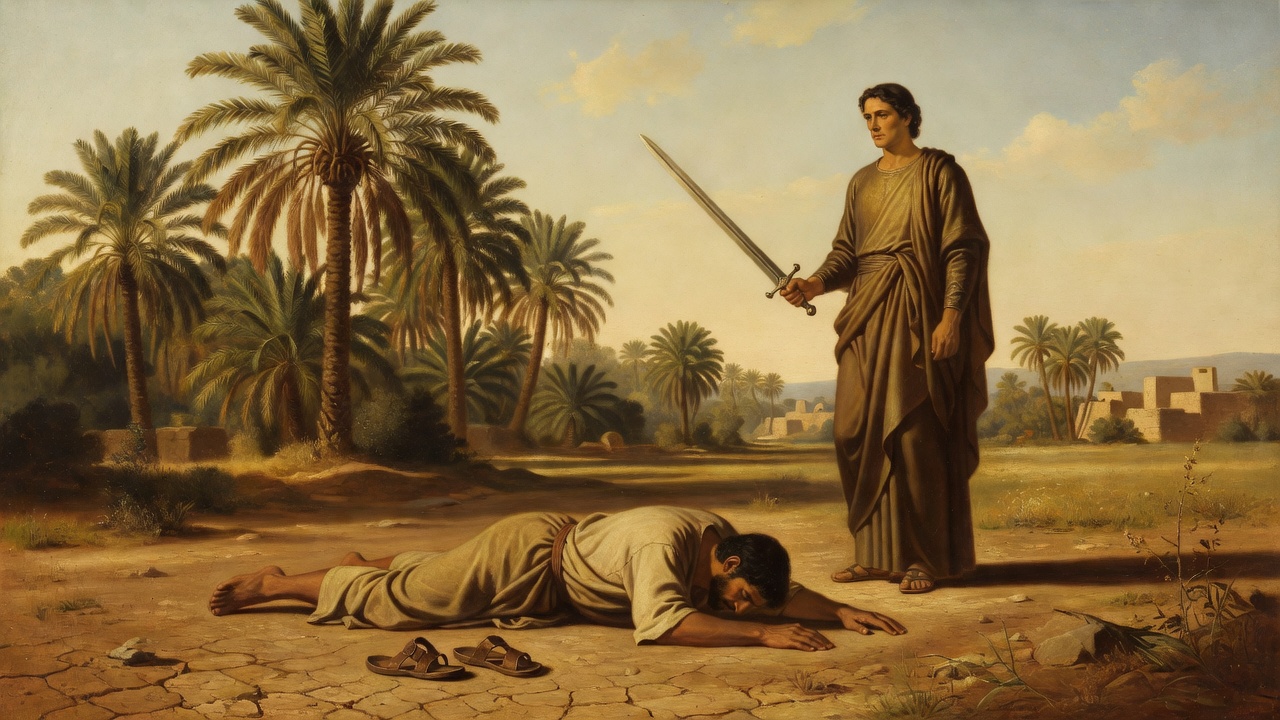
13Yeşua Yerixo yaxınlığında olanda başını qaldırıb baxdı və əlində sıyrılmış qılınc olan bir şəxsi qarşısında gördü. Yeşua onun yanına gəlib «Sən bizim tərəfdənsən, yoxsa düşmənlərimiz tərəfdən?» deyə soruşdu. 14O dedi: «Xeyr, mən Rəbbin ordusunun başçısıyam, indi gəlmişəm». Yeşua üzüstə yerə yıxıldı və ona səcdə edib dedi: «Ağamın quluna nə sözü var?» 15Rəbbin ordusunun başçısı Yeşuaya dedi: «Çarığını ayağından çıxart, çünki üstündə durduğun yer müqəddəsdir». Yeşua belə də etdi.
Did you know?
Covenant Renewal and the Commander of the Lord's Army
- During the forty years of wandering in the wilderness, the generation of Israelites born on the journey had not been circumcised. After crossing the Jordan, Joshua performed the rite at Gibeath-haaraloth near Gilgal using flint knives, marking the renewal of the covenant and the removal of the reproach of Egypt.Sources: the Bible text itself · Gilgal · Gibeath-haaraloth
- The Israelites celebrated the Passover on the plains of Jericho on the fourteenth day of the month. The day after they ate roasted grain and unleavened bread from the produce of the land of Canaan, the miraculous manna ceased to appear.Sources: the Bible text itself · Jericho · Canaan
- Near Jericho, Joshua encountered a man with a drawn sword who identified himself as the commander of the army of the LORD rather than taking sides. Joshua fell facedown in reverence and was instructed to remove his sandals because the ground on which he stood was holy.Sources: the Bible text itself · Joshua · Jericho
Notes written with AI assistance from open sources (Theographic Bible Metadata, CC BY-SA 4.0; Easton’s Bible Dictionary, public domain) and reviewed before publishing.
Places in this chapter
- Great Sea · Today: Mediterranean Sea · 31.805, 34.170 · verse 1
- Jordan · Today: Jordan River · 31.761, 35.558 · verse 1
- Egypt · 30.129, 31.308 · verses 4, 5, 6, 9
- Jericho · Today: Tell es Sultan · 31.872, 35.445 · verses 10, 13
- Canaan · 32.767, 35.333 · verse 12
Only places identified with high confidence are shown (90% or more according to the scholarly sources compiled by OpenBible). Period map: DARE (Digital Atlas of the Roman Empire), CC BY 4.0; modern map: © OpenStreetMap contributors; places: OpenBible.info (CC BY 4.0).
Credits and license for this translation
Azərbaycan dilində Müqəddəs Kitab
The Holy Bible in the Azerbaijani language, also known as the Azeri language, of Azerbaijan, Iran, Iraq, Syria, and Turkey
Copyright © 2008 Müqəddəs Kitab Sirkəti
Language: Azeri (Azerbaijani, South)
Translation by: Institute for Bible Translation
Contributor: Bible Society of Azerbaijan
This translation text is made available to you under the
terms of the Creative Commons License: Attribution-Noncommercial-No Derivative Works.
( http://creativecommons.org/licenses/by-nc-nd/3.0/ )
In addition, you have permission to port the text to different file formats, as long as you
do not change any of the text or punctuation of the Bible.
You may share, copy, distribute, transmit, and extract portions
or quotations from this work, provided that you include the above copyright
information:
You must give Attribution to the work.
You do not sell this work for a profit.
You do not make any derivative works that change any of the actual words or punctuation of the Scriptures.
Permissions beyond the scope of this license may be
available if you contact
us with your request.
This translation is made available to you under the terms of the
Creative Commons Attribution-Noncommercial-No Derivatives license 4.0.
You may share and redistribute this Bible translation or extracts from it in any format, provided that:
You include the above copyright and source information.
You do not sell this work for a profit.
You do not change any of the words or punctuation of the Scriptures.
Pictures included with Scriptures and other documents on this site are licensed just for use with those Scriptures and documents.
For other uses, please contact the respective copyright owners.
2018-11-09
Source: http://ebible.org/azb/ · eBible.org