Job 35
Azərbaycan dilində Müqəddəs Kitab · Tap a verse to see its cross-references.
1Elihu sözünü belə davam etdirdi:
2«Allah önündə haqlı olduğunu deyirsən.
Bunun doğru olduğunumu düşünürsən?
3Bəs niyə soruşursan ki, “əgər günah işlətməsəm,
Bundan xeyrim, qazancım nə ola bilər?”
4Həm sənə, həm də dostlarına
Belə cavab verəcəyəm.
5Bir bax səmaya,
Nəzər sal başının üstündəki buludlara.
6Günah işlətsən, bunun Allaha nə ziyanı dəyər?
Nə qədər üsyankar olsan da, Ona bir şey olarmı?
7Sənin salehliyin Ona nə verir?
Yaxud da O, əlindən nəyi alıb götürür?
8Pisliyin özün kimisinə ziyan vurur,
Salehliyin isə bəşər oğlu üçündür.
9İnsanlar ağır təzyiq altında fəryad edir,
Güclülərə qarşı yardım istəyir.
10Amma deyən yoxdur: “Hanı məni yaradan Allah?
Hanı bizə gecələr ilahilər oxutduran Allah?
11O bizi yer üzünün heyvanlarından çox öyrədib,
Bizə göydəki quşlardan daha çox hikmət verib”.
12Orada pislərin qüruru üzündən
İnsanlar fəryad edir,
Amma Allah cavab vermir.
13Əslində Allah boş fəryadı dinləmir,
Külli-İxtiyar buna əhəmiyyət vermir.
14Sən onu görmədiyini söylədiyin anda belə,
Mübahisən önündədir, Onu gözlə.
15İndi qəzəblənib cəzalandırmırsa,
Təqsirin çoxluğuna baxmır.
16Ona görə Əyyub boş yerə ağzını yorur,
Avam-avam danışdıqca danışır».
Did you know?
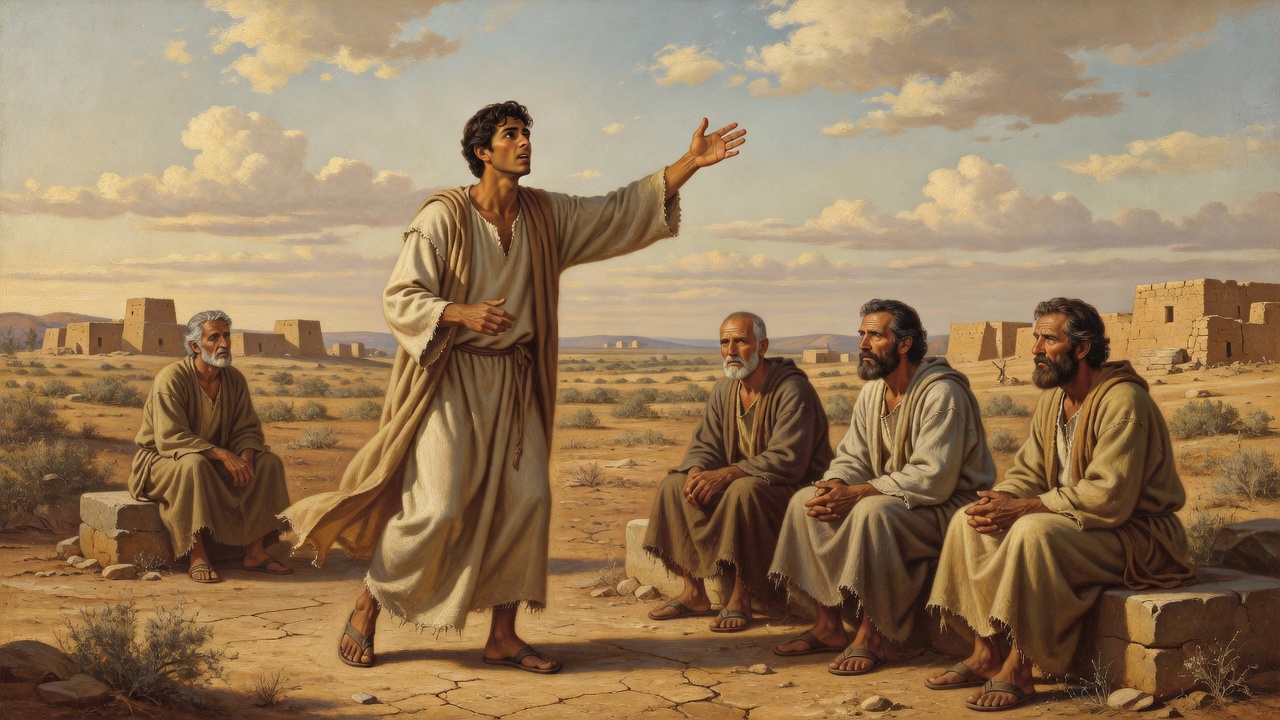
Elihu on God's Independence and Human Cry
- Elihu intervenes after the debate between Job and his three companions has ended, offering an extended series of speeches across chapters 32 through 37.Sources: Elihu · the Bible text itself
- In this chapter, Elihu argues for God's transcendence by asking Job to observe the heavens and the clouds, asserting that human sin does not harm God nor does human righteousness enrich Him.Sources: the Bible text itself
- Elihu also addresses why cries for help under oppression sometimes go unanswered, contending that people often cry out purely for relief from pain rather than seeking God their Maker in true humility.Sources: the Bible text itself
Notes written with AI assistance from open sources (Theographic Bible Metadata, CC BY-SA 4.0; Easton’s Bible Dictionary, public domain) and reviewed before publishing.
Credits and license for this translation
Azərbaycan dilində Müqəddəs Kitab
The Holy Bible in the Azerbaijani language, also known as the Azeri language, of Azerbaijan, Iran, Iraq, Syria, and Turkey
Copyright © 2008 Müqəddəs Kitab Sirkəti
Language: Azeri (Azerbaijani, South)
Translation by: Institute for Bible Translation
Contributor: Bible Society of Azerbaijan
This translation text is made available to you under the
terms of the Creative Commons License: Attribution-Noncommercial-No Derivative Works.
( http://creativecommons.org/licenses/by-nc-nd/3.0/ )
In addition, you have permission to port the text to different file formats, as long as you
do not change any of the text or punctuation of the Bible.
You may share, copy, distribute, transmit, and extract portions
or quotations from this work, provided that you include the above copyright
information:
You must give Attribution to the work.
You do not sell this work for a profit.
You do not make any derivative works that change any of the actual words or punctuation of the Scriptures.
Permissions beyond the scope of this license may be
available if you contact
us with your request.
This translation is made available to you under the terms of the
Creative Commons Attribution-Noncommercial-No Derivatives license 4.0.
You may share and redistribute this Bible translation or extracts from it in any format, provided that:
You include the above copyright and source information.
You do not sell this work for a profit.
You do not change any of the words or punctuation of the Scriptures.
Pictures included with Scriptures and other documents on this site are licensed just for use with those Scriptures and documents.
For other uses, please contact the respective copyright owners.
2018-11-09
Source: http://ebible.org/azb/ · eBible.org