Ezekiel 15
Azərbaycan dilində Müqəddəs Kitab · Tap a verse to see its cross-references.
Yerusəlimin tənəklə müqayisəsi
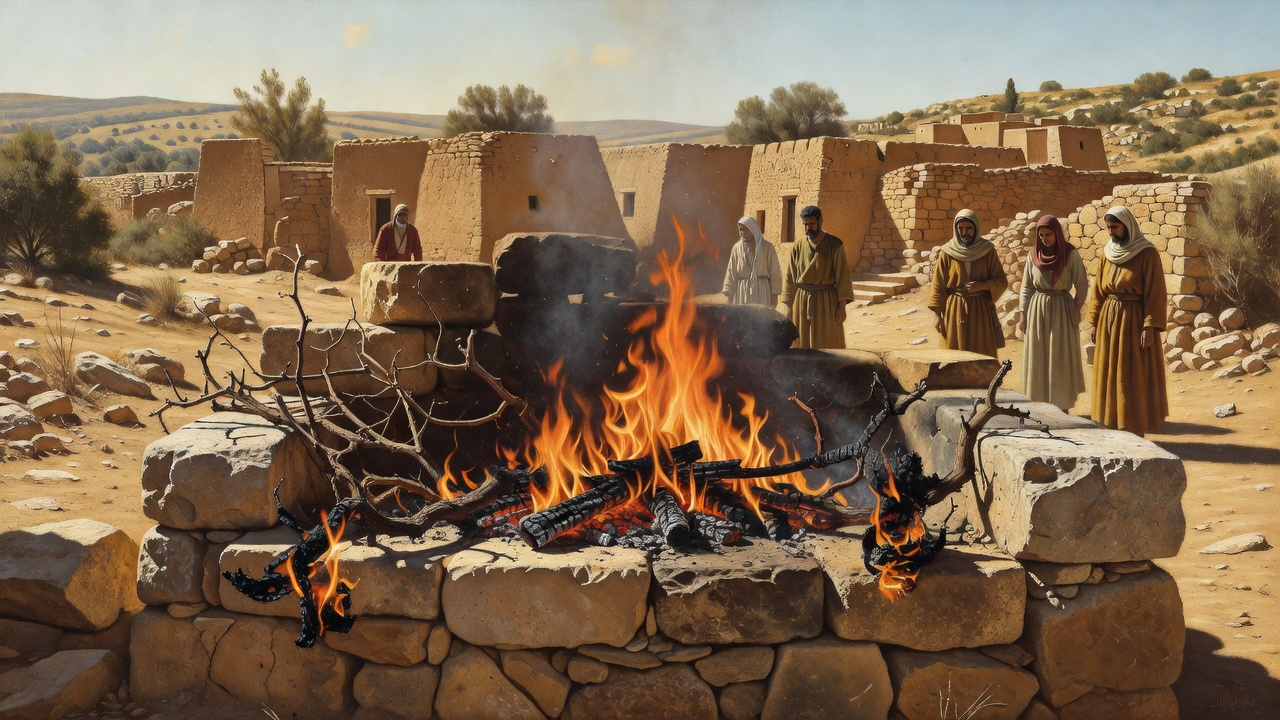
1Mənə Rəbbin bu sözü nazil oldu: 2«Ey bəşər oğlu, üzüm tənəyinin ağacı hər hansı bir meşə ağacındakı budağın ağacından nə ilə üstündür? 3Bir işdə istifadə etmək üçün ondan ağac alınırmı? Üstünə əşyalar asmaq üçün ondan payacıq düzəldilirmi? 4Budur, o yanmaq üçün oda atılır. Od onun uclarını yandırandan və ortası qovrulandan sonra daha bir işə yarayarmı? 5Bütöv olanda da bir işə yaramırdı, od onu yandırıb-qurtaranda və ortası qovrulanda heç bir işə yaramayacaq.
6Buna görə də Xudavənd Rəbb belə deyir: “Meşə ağacları arasında üzüm tənəyini yanan şey kimi necə oda verdimsə, Yerusəlimdə yaşayanları da eləcə oda atacağam. 7Mən üzümü onlara qarşı çevirəcəyəm. Oddan qaçsalar da, od yenə onları yandıracaq. Üzümü onlara qarşı çevirəndə biləcəksiniz ki, Rəbb Mənəm. 8Ölkəni viran edəcəyəm, çünki onlar xainlik etdi” Xudavənd Rəbb belə bəyan edir».
Did you know?
The Parable of the Useless Vine Wood
- Unlike the timber from sturdy forest trees, vine branches are soft, crooked, and brittle. The text highlights that vine wood is unfit for crafting even simple household objects like a wall peg to hang utensils, leaving it useful only as kindling.Sources: the Bible text itself
- Ezekiel uses the image of a charred, double-burned vine branch to symbolize the inhabitants of Jerusalem, declaring that the city would face fiery judgment and desolation because of its unfaithfulness.Sources: the Bible text itself · Jerusalem
- The prophetic ministry of Ezekiel began around 592 BC and spanned approximately 23 years, during which he repeatedly conveyed warnings of Jerusalem's impending downfall to the Jewish exiles.Sources: Prophecies of Ezekiel · the Bible text itself · Jerusalem
Notes written with AI assistance from open sources (Theographic Bible Metadata, CC BY-SA 4.0; Easton’s Bible Dictionary, public domain) and reviewed before publishing.
Places in this chapter
- Jerusalem · 31.777, 35.234 · verse 6
Only places identified with high confidence are shown (90% or more according to the scholarly sources compiled by OpenBible). Period map: DARE (Digital Atlas of the Roman Empire), CC BY 4.0; modern map: © OpenStreetMap contributors; places: OpenBible.info (CC BY 4.0).
Credits and license for this translation
Azərbaycan dilində Müqəddəs Kitab
The Holy Bible in the Azerbaijani language, also known as the Azeri language, of Azerbaijan, Iran, Iraq, Syria, and Turkey
Copyright © 2008 Müqəddəs Kitab Sirkəti
Language: Azeri (Azerbaijani, South)
Translation by: Institute for Bible Translation
Contributor: Bible Society of Azerbaijan
This translation text is made available to you under the
terms of the Creative Commons License: Attribution-Noncommercial-No Derivative Works.
( http://creativecommons.org/licenses/by-nc-nd/3.0/ )
In addition, you have permission to port the text to different file formats, as long as you
do not change any of the text or punctuation of the Bible.
You may share, copy, distribute, transmit, and extract portions
or quotations from this work, provided that you include the above copyright
information:
You must give Attribution to the work.
You do not sell this work for a profit.
You do not make any derivative works that change any of the actual words or punctuation of the Scriptures.
Permissions beyond the scope of this license may be
available if you contact
us with your request.
This translation is made available to you under the terms of the
Creative Commons Attribution-Noncommercial-No Derivatives license 4.0.
You may share and redistribute this Bible translation or extracts from it in any format, provided that:
You include the above copyright and source information.
You do not sell this work for a profit.
You do not change any of the words or punctuation of the Scriptures.
Pictures included with Scriptures and other documents on this site are licensed just for use with those Scriptures and documents.
For other uses, please contact the respective copyright owners.
2018-11-09
Source: http://ebible.org/azb/ · eBible.org